
Affiliate Disclosure
HVAC Guide Guys is a participant in the Amazon Services LLC Associates Program, an affiliate advertising program designed to provide a means for sites to earn advertising fees by advertising and linking to Amazon.
Are you having trouble keeping your vaulted ceiling room comfy without ruining its beauty? Installing HVAC in these spaces is tricky. It can make homeowners feel stuck and stressed.
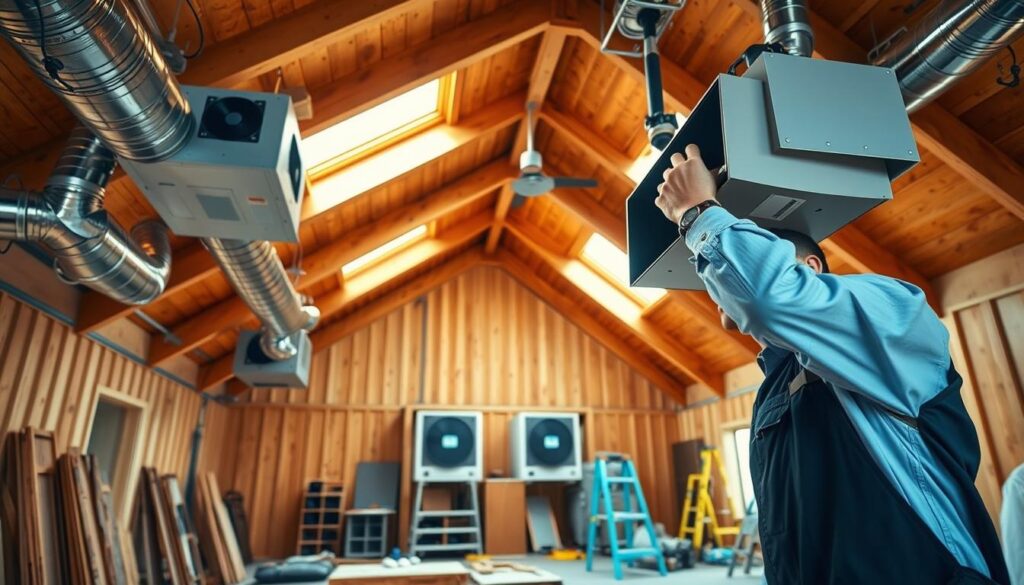
Vaulted ceiling HVAC needs a special touch that’s different from usual heating and cooling. Your high ceilings need expert plans for comfort, saving energy, and keeping things looking good.
This detailed guide will show you all about installing HVAC in vaulted ceilings. You’ll learn about air flow issues and picking the best systems. You’ll know how to make your tricky space into a cozy, climate-controlled area.
Key Takeaways
- Vaulted ceilings require unique HVAC design considerations
- Proper vent placement is critical for effective air distribution
- Energy efficiency depends on precise system capacity calculation
- Moisture and insulation management are essential
- Multiple HVAC solutions exist for high-ceiling rooms
Table of Contents
Understanding the Unique Challenges of Vaulted Ceiling HVAC Systems
Cooling a space with cathedral ceiling air conditioning isn’t as straightforward as you might think. Your vaulted ceiling creates unique challenges that standard HVAC systems struggle to address effectively.
High ceiling cooling solutions require a deep understanding of how air behaves in tall spaces. Traditional cooling approaches fall short when dealing with the complex physics of air movement in rooms with dramatic vertical dimensions.
Why Standard HVAC Approaches Fall Short
Standard HVAC systems are designed for rooms with uniform ceiling heights. When you have a vaulted or cathedral ceiling, these traditional approaches create significant cooling inefficiencies:
- Thermostats typically measure temperature at 5 feet, missing temperature variations at higher levels
- Air volume increases dramatically with ceiling height
- Uneven cooling creates uncomfortable temperature zones
The Science of Air Stratification in Tall Spaces
“In a vaulted room, your cooling system doesn’t just battle heat—it fights against the natural physics of air movement.”
Air stratification is the silent challenge in cathedral ceiling air conditioning. Warm air naturally rises, creating distinct temperature layers that make your cooling system work harder.
| Ceiling Height | Air Volume | Cooling Challenge |
|---|---|---|
| 8 feet | 3,200 cubic feet | Standard cooling |
| 18 feet | 7,200 cubic feet | Complex cooling required |
Your high ceiling cooling solutions must account for these vertical temperature differences. Strategic vent placement, advanced circulation techniques, and specialized HVAC design become critical for maintaining consistent comfort.
Explore Our HVAC Shop
Looking for top-rated HVAC tools, parts, and accessories? Visit our shop and find the perfect solution for your needs.
Visit the ShopCalculating Proper HVAC Capacity for Vaulted Ceilings
When you’re planning to install HVAC in a vaulted ceiling, knowing the right system size is key. Standard methods don’t work well for high ceilings. You need special calculations to cool these spaces efficiently.
For regular 8-foot ceilings, HVAC sizing is simple: 20 BTU per square foot. But vaulted ceilings need a different approach. They have more air and temperature differences.
Two Proven Calculation Methods
There are two good ways to figure out the right HVAC size:
- Quick Adder Method: Add about 1,000 BTU/hr for each foot over 8 feet
- Percentage Method: Boost capacity by 12.5% to 16.7% for each foot over standard height
Let’s say you have a 16 × 20 room with a 14-foot vaulted ceiling:
| Calculation Step | BTU Requirement |
|---|---|
| Base Calculation (8-foot ceiling) | 6,400 BTU/hr |
| Additional Height Adjustment | +6,000 BTU/hr |
| Total Recommended Capacity | 12,400 BTU/hr |
Signs of the wrong size include the system always running, uneven temperatures, and not enough comfort in different areas.
For vaulted ceilings, getting a pro to assess your HVAC needs is the best way to ensure efficient cooling.
How to Install HVAC in Vaulted Ceiling
Installing an HVAC system in a vaulted ceiling needs careful planning. It also requires special techniques. Your unique space needs a strategic approach for comfort and energy savings.
Preparing Your Attic Space for Conditioned HVAC Installation
Turning your attic into a conditioned space is key for attic hvac installation. Begin by making an airtight environment with specific insulation:
- Apply closed-cell spray foam directly to the roof deck
- Use open-cell insulation on exterior walls
- Ensure complete air sealing to prevent energy loss
Running Ductwork Through Vaulted Ceiling Structures
Ductwork for high ceilings has its own challenges. You must carefully route ducts around rafters and ridge beams.
| Ductwork Consideration | Recommended Approach |
|---|---|
| Duct Sizing | Calculate precise CFM requirements for tall spaces |
| Routing | Minimize bends and maintain consistent diameter |
| Air Distribution | Create balanced supply runs to prevent short-cycling |
Installing Supply and Return Vents in High Ceiling Locations
Choosing the right spot for vents is vital in vaulted ceilings. Here are some tips:
- Place high returns near ceiling peaks to capture warm air
- Install adjustable registers to direct airflow across the ceiling
- Use special mounting for drywall or tongue-and-groove ceilings
Pro Tip: Angle your registers to mix air better and avoid direct drafts.
Best Placement Strategies for Vents and Registers in Vaulted Spaces
Designing a vaulted ceiling HVAC system needs careful vent placement. Your choices can greatly affect comfort and looks. It’s all about balancing air flow and keeping your space’s beauty.
- Put supply registers along the ceiling slope for better air flow
- Angle vents for a ceiling washing effect that mixes air well
- Don’t place vents under can lights or big architectural features
- Install return vents near the ceiling peak to catch warm air
The best sloped ceiling ventilation options focus on smart register placement. Adjustable vents can:
- Spread cool air across the ceiling
- Stop cold air from gathering at floor level
- Keep your room’s design looking good
| Vent Placement Location | Air Circulation Effectiveness | Visual Impact |
|---|---|---|
| Ceiling Slope | High | Moderate |
| Wall Near Ceiling Peak | Excellent | Low |
| Above Door/Window Openings | Good | Minimal |
Your aim is to make a cozy space without losing your vaulted ceiling’s beauty. With careful planning and expert advice, you can find the right mix of function and style.
Choosing Between Ductless Mini-Splits and Traditional Systems for Cathedral Ceilings
Homeowners have to decide between traditional HVAC systems and ductless mini-splits for cathedral ceilings. Your choice affects comfort, energy use, and how the room looks.
Today, there are many ways to cool high ceilings. Knowing what each system does best helps you choose wisely.
When Mini-Split Systems Outperform Ducted Options
Mini split systems are great for vaulted ceilings because they:
- Control temperature well in big, open spaces
- Can be installed easily without changing the structure
- Use less energy by cooling only the areas you need
Concealed Duct Solutions for Maintaining Aesthetic Appeal
Homeowners who care about looks can choose hidden mini-split options. They fit well with your home’s design:
| System Type | Visibility | Installation Complexity |
|---|---|---|
| Ceiling Cassette Units | Low | Moderate |
| Concealed Duct Mini-Splits | Minimal | High |
| Wall-Mounted Units | High | Low |
Your best choice depends on your home’s design, budget, and what you like. Talking to an HVAC expert can guide you through these options.
Explore Our HVAC Shop
Looking for top-rated HVAC tools, parts, and accessories? Visit our shop and find the perfect solution for your needs.
Visit the ShopPreventing Mold and Moisture Issues in Vaulted Ceiling HVAC Installations
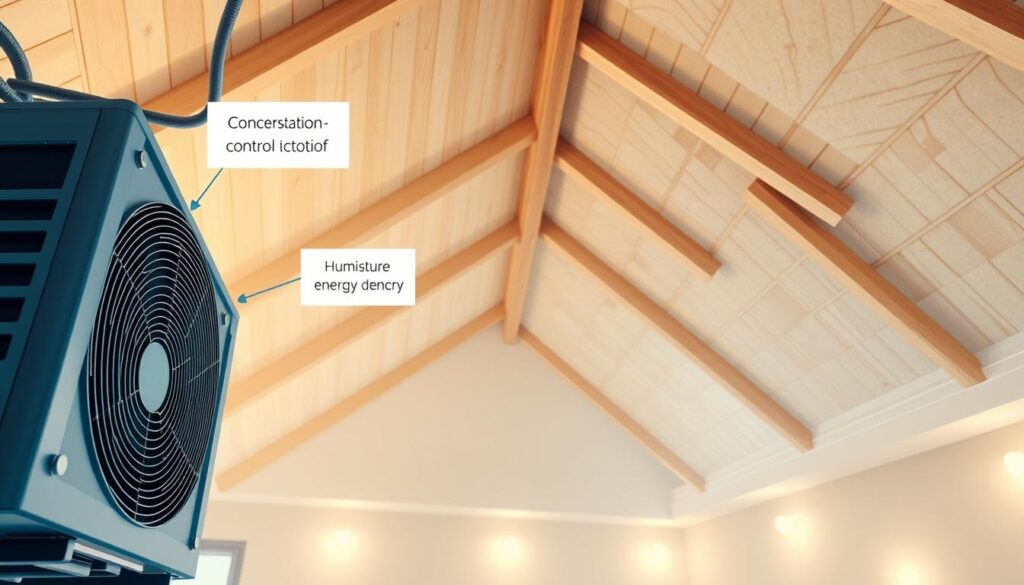
Vaulted ceiling HVAC installations face special challenges with moisture. Without the right steps, your attic could become a mold and damage hotspot.
Understanding air and temperature in high ceilings is key. Warm, humid air rises to the ceiling, creating spots where moisture can condense. This can lead to big problems.
- Implement a conditioned attic space strategy
- Use closed-cell spray foam insulation
- Create proper vapor barriers
- Ensure balanced airflow in vaulted ceiling hvac installation
Your plan to stop moisture should cover a few main points:
- Temperature Control: Keep the temperature between the ceiling and living areas even
- Ventilation: Keep air pressure neutral to stop humid air from getting in
- Insulation: Protect ducts and roof from moisture
Experts say to use closed-cell foam insulation on roof sheathing. It’s great for keeping moisture out and stopping mold in your vaulted ceiling HVAC.
Proper moisture management is not just about preventing mold—it’s about protecting your home’s structural integrity and indoor air quality.
Optimizing Air Circulation with Ceiling Fans and Return Air Placement
Getting your high ceiling to cool down is more than just an HVAC system. Vaulted spaces need special care for cooling, making air flow key for comfort.
Ceiling fans are vital for moving air in high-ceiling rooms. They help mix the air and make cooling more efficient.
Strategic High Return Placement Near Ceiling Peaks
Putting return air vents near the ceiling peaks boosts your cooling system’s power. These vents catch the warm air that rises, cutting down on heat and energy loss.
- Install returns within 12-18 inches of the ceiling peak
- Ensure high returns handle 30-40% of total return airflow
- Balance aesthetic design with functional placement
Balancing Airflow Between Floor and Ceiling Levels
To get even air flow in vaulted spaces, you need to plan and adjust your HVAC system.
| Airflow Technique | Benefit |
|---|---|
| Adjustable Dampers | Direct more cooling to upper zones |
| Angled Supply Registers | Improve vertical air circulation |
| Low-Speed Ceiling Fans | Gentle air mixing without drafts |
With these strategies, you can make your vaulted space cool and comfy. It will keep the temperature even from floor to ceiling.
Explore Our HVAC Shop
Looking for top-rated HVAC tools, parts, and accessories? Visit our shop and find the perfect solution for your needs.
Visit the ShopInsulation Requirements for Conditioned Attic Spaces with Vaulted Ceilings
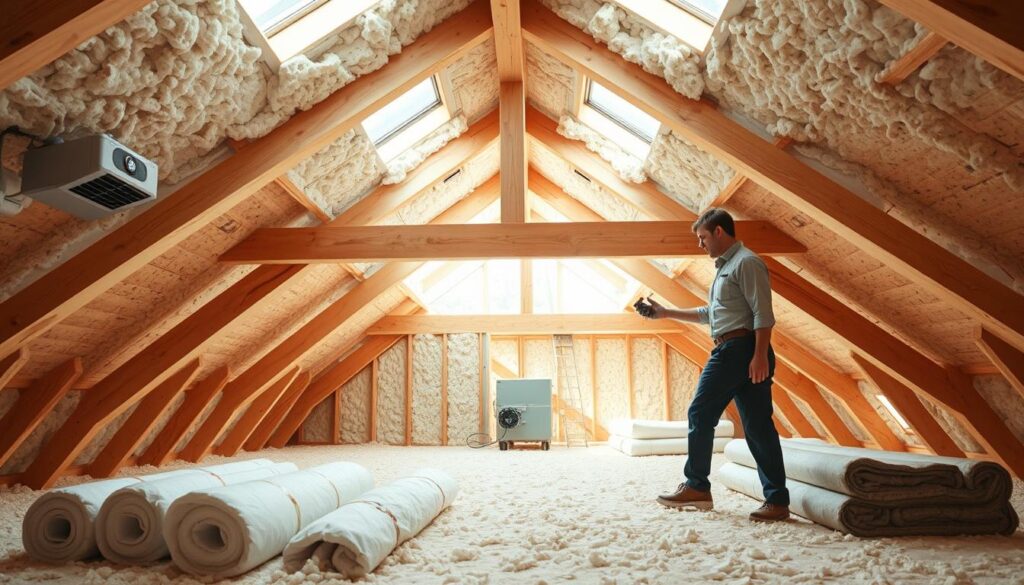
When you plan to install HVAC in your attic with vaulted ceilings, insulation is key. Traditional methods don’t work well in high-ceiling rooms. You need a better strategy to keep your space cool and save energy.
To succeed, you must make your attic a conditioned attic space. This means turning your attic into a controlled area within your home’s thermal envelope.
- Use closed-cell spray foam for roof deck insulation
- Target R-value between R-30 to R-38
- Ensure complete coverage without gaps
- Select insulation based on your specific climate zone
Closed-cell spray foam is great for cooling vaulted spaces:
- It has a high R-value per inch
- It’s very good at stopping moisture
- It strengthens the structure
- It stops thermal bridges
Your climate affects your insulation choice. Southern areas need extra moisture control, while northern areas need more R-value to keep warm. Quality insulation can save you money in 5-8 years by cutting energy costs.
Proper insulation turns your vaulted ceiling into an efficient cooling zone.
Common Mistakes to Avoid When Installing HVAC in High Ceiling Rooms
Installing HVAC in vaulted ceiling spaces can be tricky. Many homeowners and contractors make critical errors. These mistakes can compromise comfort and system efficiency. Knowing these common mistakes can help you avoid expensive retrofitting and ensure optimal performance when installing ductwork for high ceilings.
Here are the most significant mistakes to watch out for when installing HVAC in a vaulted ceiling:
- Incorrect Sizing: Undersizing or oversizing your HVAC system can lead to poor performance. An undersized system will run continuously, struggle to reach desired temperatures, and create uncomfortable temperature variations.
- Poor Ductwork Design: Improperly sized or routed ducts can restrict airflow, create noise, and reduce overall system efficiency in high ceiling spaces.
- Inadequate Return Air Placement: Failing to strategically position return air vents can prevent proper air circulation and temperature equalization.
When planning how to install HVAC in vaulted ceiling rooms, pay special attention to:
- Calculating precise BTU requirements based on ceiling height
- Designing flexible ductwork that can navigate complex ceiling structures
- Creating multiple air circulation points
Professional HVAC contractors recommend a thorough approach to high ceiling installations. This includes precise load calculations, strategic vent placement, and considering supplemental air circulation methods like ceiling fans. These methods help overcome natural air stratification.
Remember: In vaulted ceiling HVAC installations, precision is key to achieving optimal comfort and efficiency.
Conclusion
High ceiling cooling solutions need careful planning and a smart approach. Your vaulted ceiling HVAC installation is more than just picking equipment. It’s about tackling the special challenges of vertical space and making a full comfort plan.
For a successful vaulted ceiling HVAC system, you must do precise calculations and smart design. You’ll need to think about more air volume, possible stratification, and the best air distribution. HVAC experts say to add about 1,000 BTU for each extra foot of ceiling height to cool well.
When you’re looking at vaulted ceiling HVAC installation, remember that your equipment choices are key. Whether you go for traditional ducted systems or ductless mini-splits, choose ones that help mix air well and keep temperatures steady. Smart vent placement, ceiling fans, and high return air systems will greatly boost your comfort and save energy.
Your investment in a well-designed high ceiling cooling solution will pay off in the long run. Work with skilled HVAC pros who get the unique needs of vaulted spaces. By using the strategies from this guide, you’ll make a cozy, efficient space that showcases your unique design.