Affiliate Disclosure
HVAC Guide Guys is a participant in the Amazon Services LLC Associates Program, an affiliate advertising program designed to provide a means for sites to earn advertising fees by advertising and linking to Amazon.
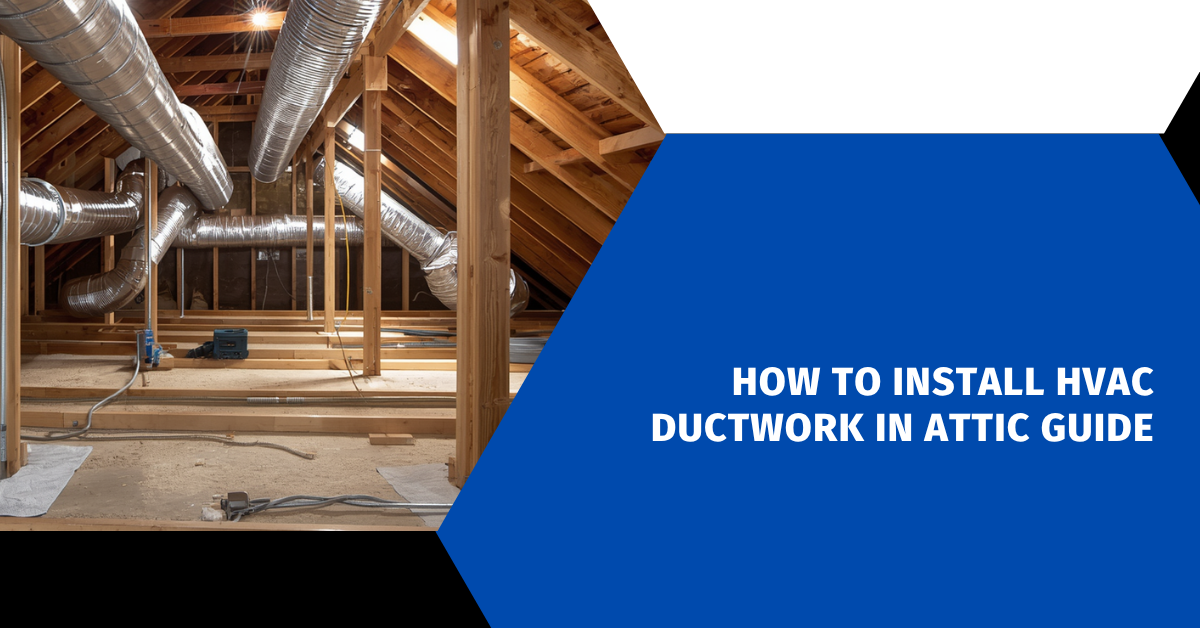
Are you tired of high energy bills and uneven temperatures at home? You can make your home more comfortable and efficient by learning to install attic ductwork.
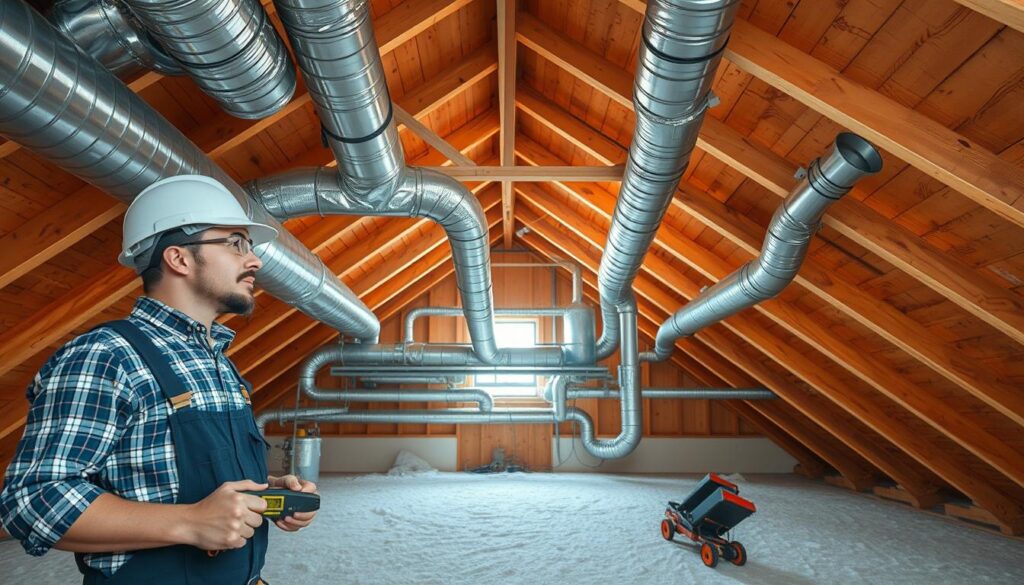
Installing HVAC ductwork in your attic is a tough but rewarding project. It can save you a lot of money. Quantum Heating & Air Conditioning says it can cut down on energy waste and make your home’s heating and cooling better.
Starting your DIY attic ductwork installation needs careful planning and the right tools. This guide will help you through each important step. You’ll learn how to improve your home’s climate control system.
Key Takeaways
- Understand the critical importance of proper attic ductwork installation
- Learn how to select appropriate ductwork materials
- Discover techniques to maximize energy efficiency
- Recognize the cost savings of DIY installation
- Gain insights into professional-level installation practices
Table of Contents
Understanding Attic Ductwork Fundamentals
Before starting a flexible duct installation in your attic, it’s key to know the basics of ductwork. Ductwork is the heart of your home’s heating and cooling system. It carries conditioned air to every room.
Types of Ductwork Materials
Choosing the right ductwork material is important for your attic’s ventilation system. You have three main options:
- Fiberglass Ductwork: It’s light, easy to install, and affordable.
- Metal Ductwork: It’s very durable and efficient, great for harsh weather.
- Plastic Ductwork: It’s flexible, less expensive, and doesn’t corrode.
Flexible vs. Rigid Duct Systems
Deciding between flexible and rigid ducts depends on your attic’s layout. Flexible ducts are perfect for tight spaces, making DIY installation easier. They can bend around obstacles. Rigid ducts are harder to install but last longer and are more stable.
The Importance of Proper Insulation
Insulation is a key part of your attic duct installation project. Attics have big temperature swings that can hurt your HVAC system’s efficiency. Good insulation stops heat transfer, cuts energy use, and keeps your home comfortable.
Pro tip: Always choose insulation that matches your local climate and provides maximum energy efficiency.
Explore Our HVAC Shop
Looking for top-rated HVAC tools, parts, and accessories? Visit our shop and find the perfect solution for your needs.
Visit the ShopEssential Tools and Materials for Duct Installation
Getting ready for a DIY attic duct installation means you need the right tools and materials. Your guide starts with knowing what you need to do the job well.
Before you head up into your attic, make sure you have a good toolkit. This list will help you install ductwork smoothly and professionally.
Cutting and Measuring Tools
- Metal snips for precise ductwork cutting
- 25-foot measuring tape
- Permanent marker or chalk
- Utility knife
Fastening and Sealing Materials
- HVAC foil tape
- Mastic sealant
- Screwdrivers (Phillips and flathead)
- Zip ties
- Sheet metal collars
| Category | Essential Items | Purpose |
|---|---|---|
| Support Hardware | Duct straps | Suspending ductwork from rafters |
| Insulation | R-6 or R-8 insulation | Temperature control and energy efficiency |
| Safety Equipment | Protective gloves, safety goggles | Personal protection during installation |
Pro tip: Invest in quality tools that can be reused for future HVAC maintenance projects. While the initial cost might seem high, proper equipment ensures a professional-grade DIY attic duct installation.
“Preparation is the key to a successful ductwork installation. Having the right tools makes the job easier and more efficient.” – HVAC Professional
Always check your tools and materials before starting your attic ductwork installation guide. A well-prepared workspace leads to a smoother, more successful project.
Planning Your Attic Ductwork Layout
Creating a good HVAC duct layout in your attic needs careful planning. Your attic’s layout affects your heating and cooling system’s performance. Getting it right saves you money and ensures good airflow in your home.
Before you start, think about important factors that affect duct installation. Good attic ductwork layout tips suggest a detailed approach for better system efficiency.
Assessing Your Attic Space
First, check your attic’s layout. Important things to look at include:
- Measuring vertical and horizontal space availability
- Identifying roof pitch and working room
- Locating structural elements like rafters and trusses
- Mapping existing HVAC unit position
- Documenting any obstacles
Determining Optimal Duct Routing
Plan the ductwork path to save energy and boost system performance. Focus on:
- Designing the shortest routes
- Reducing bends and turns
- Keeping duct diameter clear
- Staying away from heat sources
Sizing Ducts for Maximum Efficiency
Picking the right duct size is key for airflow. Small ducts block air, and big ones slow it down. Use HVAC load calculation guides to find the right size for each room.
Pro Tip: When unsure, get a professional HVAC technician for accurate sizing and routing.
Explore Our HVAC Shop
Looking for top-rated HVAC tools, parts, and accessories? Visit our shop and find the perfect solution for your needs.
Visit the ShopSafety Precautions When Working in the Attic
When you’re installing hvac ductwork in the attic, safety comes first. Working in the attic has its own set of challenges. You need to be ready and take the right steps to avoid getting hurt.
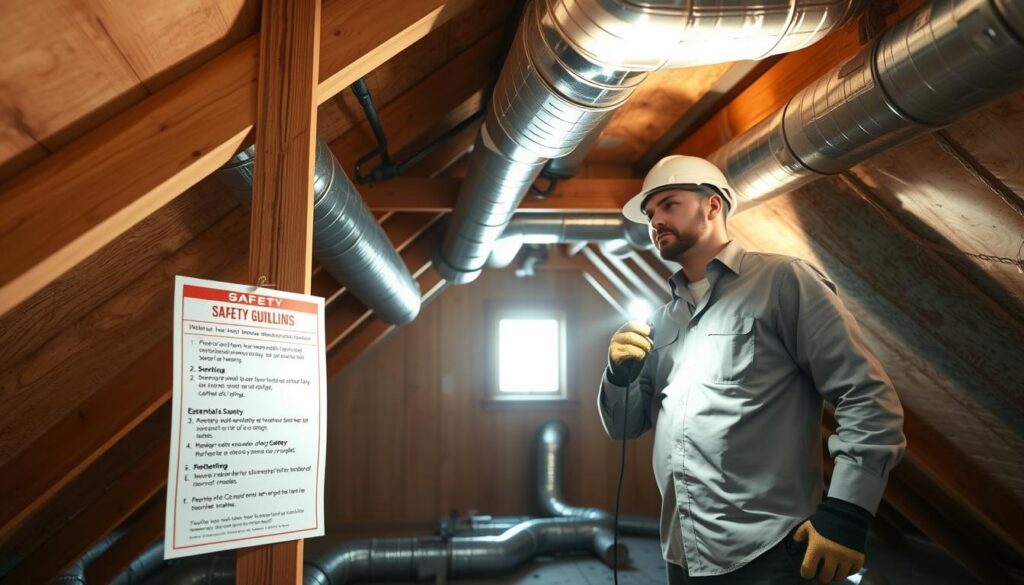
Before starting your hvac ductwork project in the attic, make sure you have the right safety gear:
- Long-sleeved, tightly woven clothing to protect against insulation fibers
- Heavy-duty work gloves to shield hands from sharp edges
- ANSI-approved safety goggles for eye protection
- N95 respirator to prevent dust inhalation
- Sturdy work boots with excellent traction
When using ladders in attic spaces, safety is key. Always:
- Use a commercial-grade ladder rated for your weight
- Position the ladder on stable, level ground
- Maintain a 4:1 angle (1 foot out for every 4 feet up)
- Have someone spot you when possible
Be aware of environmental hazards in the attic. Watch out for:
| Hazard | Prevention Strategy |
|---|---|
| Extreme Heat | Work during cooler hours, stay hydrated |
| Poor Lighting | Use headlamp or multiple work lights |
| Limited Ventilation | Take frequent breaks, watch for dizziness |
Remember: If you feel uncomfortable or unsafe at any point during your hvac ductwork installation, stop work immediately. Professional HVAC contractors can help with complex attic configurations.
How to Install HVAC Ductwork in Attic
Installing HVAC ductwork in your attic needs precision and planning. The steps to install it ensure air flows well and the system works right. Doing it right can make your home more comfortable and save energy.
Measuring and Cutting Ductwork
Getting the measurements right is key for attic ductwork. Here’s what to do:
- Check your attic layout plan
- Measure each duct run carefully
- Add 2-3 inches for overlap
- Use sharp metal snips to cut
- Smooth out cut edges with sandpaper
Securing and Supporting Ducts
Right support keeps ducts from sagging and air flowing well. For attic ducts, follow these tips:
- Support horizontal ducts every 5 feet
- Support vertical ducts every 6 feet
- Use 1.5-inch wide straps
- Minimize bends
- Keep sag to 1/2 inch per foot
Sealing Joints and Connections
Stopping air leaks is vital for attic ductwork. Seal connections with these methods:
- Use approved HVAC foil tape
- Apply at least two tape wraps
- Use metal clamps for extra security
- Check for air leaks during testing
- Reapply sealant if gaps are found
Pro Tip: Take your time during installation to prevent future efficiency losses and system problems.
Proper Ductwork Insulation Techniques for Attics
Insulating your attic ductwork is key for keeping your home comfy and saving energy. Without insulation, your HVAC system works too hard. This raises your energy bills.
Here are some top tips for insulating your attic ducts:
- Choose high-quality insulation like fiberglass or foam, made for HVAC use
- Make sure insulation covers every inch without gaps or squishes
- Use staples to hold insulation in place at regular spots
- Put a vapor barrier on to stop moisture from getting in
Flexible ducts usually come with insulation (R-4.2 to R-8). In very cold or hot areas, you might need more insulation. Wrap the insulation all around the duct and seal it with foil tape.
Rigid metal ducts need extra care. Use fiberglass duct wrap (R-6 or R-8) to cover them. Make sure no metal is left exposed. Use a vapor barrier facing outwards and seal seams with foil tape.
Pro tip: Never bury ductwork completely in attic floor insulation. Maintain air space around ducts to prevent condensation and possible moisture damage.
By following these steps, you’ll make your home more energy-efficient. You’ll save on bills and improve your HVAC system’s performance.
Common Installation Mistakes to Avoid
Getting your attic ductwork right is key to saving energy. Even pros can slip up, hurting your HVAC’s performance. This guide will show you how to dodge common mistakes that cut down your system’s efficiency.
Preventing Air Leaks and Efficiency Loss
Air leaks are a big problem for your HVAC system. They can lose up to 40% of conditioned air if not sealed right. Here’s how to stop this energy loss:
- Use HVAC foil tape or mastic sealant at all connections
- Apply at least two complete wraps of tape around joints
- Inspect connections visually and by feel while the system runs
- Repair any tears in vapor barriers immediately
Avoiding Compression and Bending Errors
Flexible ductwork needs special care. Wrong handling can cut down airflow and efficiency:
| Common Error | Potential Consequence |
|---|---|
| Compressing ducts to fit tight spaces | Severe airflow restriction |
| Sharp bends near plenums | Increased friction and reduced airflow |
| Inadequate duct support | Sagging and condensation buildup |
Ensuring Adequate Airflow Around Ducts
Where you place your ducts matters a lot. Never completely cover ducts with insulation. This keeps air flowing and stops problems like mold and insulation damage.
- Condensation buildup
- Mold growth
- Insulation damage
By sticking to these tips, you’ll make your HVAC system more efficient. This saves energy and cuts down on maintenance costs over time.
Explore Our HVAC Shop
Looking for top-rated HVAC tools, parts, and accessories? Visit our shop and find the perfect solution for your needs.
Visit the ShopTesting Your Ductwork System
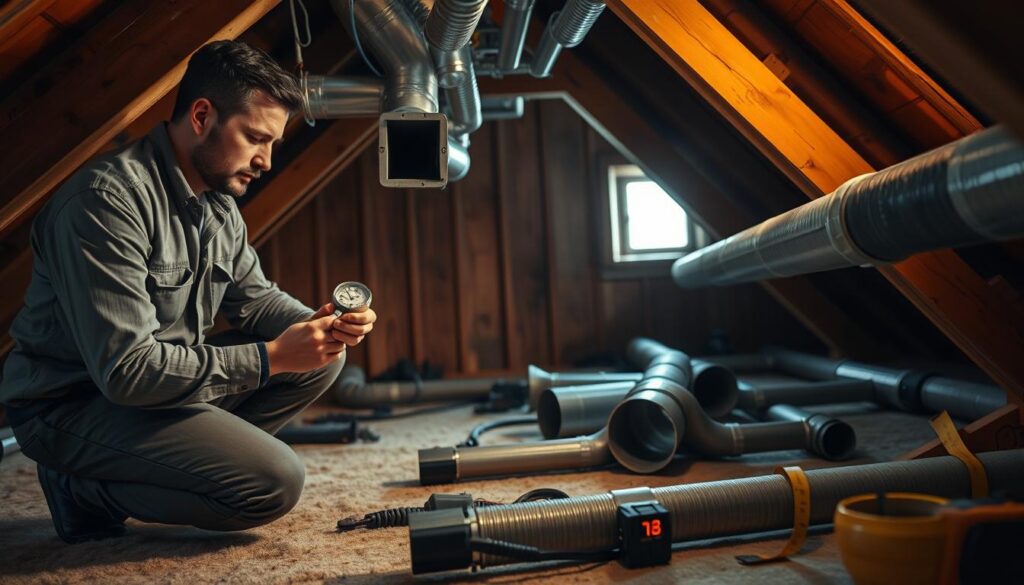
After you’ve installed your attic ductwork, it’s important to test it. This ensures it works well and efficiently. Testing early can help avoid expensive problems later.
First, visually inspect your ductwork. Look for these important things:
- Secure connections with proper tape and clamps
- Adequate support straps
- Minimal duct sagging
- Complete and intact insulation
Next, test the airflow:
- Turn on your HVAC system and let it run for 15-30 minutes
- Check air movement at each register using a tissue or light paper
- Listen carefully for unusual noises like whistling or rattling
- Feel around connections for air leaks
Pro tip: For a simple leak detection method, place a shallow water pan near attic vents. Watch for water movement or ripples, which indicate proper airflow during your diy attic duct installation.
Also, watch for condensation. Moisture on duct surfaces can mean insulation issues or poor airflow. Fixing these problems early helps your system run better.
If you find big problems, get help from a professional HVAC technician. They can do more detailed checks and fix any issues.
Conclusion
Finishing an attic ductwork installation is a big win for homeowners. This guide has taught you how to boost your home’s HVAC efficiency. Learning to install ductwork in the attic takes time, patience, and attention to detail.
Investing in good ductwork brings many benefits. You’ll feel more comfortable at home, save on energy bills, and make your HVAC last longer. Every step is important, from picking the right materials to insulating and sealing.
Some homeowners might feel scared, but this guide makes it easier. Quantum Heating & Air suggests getting help if you’re unsure. Cool Pro Heating and Cooling says knowing the process helps you decide if you should do it yourself or get a pro.
Keeping your ductwork in check is essential. Check it often for leaks or damage. Your effort in installing it well will make your home more comfortable and energy-efficient for years.
FAQ
How difficult is it to install HVAC ductwork in an attic?
What are the most important tools needed for attic ductwork installation?
How much can I save by installing ductwork myself?
How difficult is it to install HVAC ductwork in an attic?
What are the most important tools needed for attic ductwork installation?
How much can I save by installing ductwork myself?
FAQ
How difficult is it to install HVAC ductwork in an attic?
Installing HVAC ductwork in an attic is a bit of a challenge. It needs careful planning and the right tools. If you’re good at DIY, you might be able to do it. But, you need to know about HVAC systems and follow safety rules closely.
What are the most important tools needed for attic ductwork installation?
You’ll need metal snips, a measuring tape, and HVAC foil tape. Also, mastic sealant, screwdrivers, and zip ties are essential. Don’t forget protective gloves, safety goggles, a dust mask, and a ladder.
It’s also good to have an infrared thermometer, level, and staple gun for insulation.
How much can I save by installing ductwork myself?
DIY can save you 50-70% on costs. Professional installation costs
FAQ
How difficult is it to install HVAC ductwork in an attic?
Installing HVAC ductwork in an attic is a bit of a challenge. It needs careful planning and the right tools. If you’re good at DIY, you might be able to do it. But, you need to know about HVAC systems and follow safety rules closely.
What are the most important tools needed for attic ductwork installation?
You’ll need metal snips, a measuring tape, and HVAC foil tape. Also, mastic sealant, screwdrivers, and zip ties are essential. Don’t forget protective gloves, safety goggles, a dust mask, and a ladder.
It’s also good to have an infrared thermometer, level, and staple gun for insulation.
How much can I save by installing ductwork myself?
DIY can save you 50-70% on costs. Professional installation costs $1,500 to $5,000. But, doing it yourself costs only $500-$1,500 for materials. Just make sure you can do it right to avoid wasting money.
What type of ductwork is best for attic installations?
Flexible ductwork is great for attics because it’s easy to install. It fits well around obstacles. But, rigid metal ducts are more durable and keep their shape better.
The best choice depends on your attic’s layout and climate.
How important is ductwork insulation in the attic?
Insulation is very important in attics. Temperatures can be very cold or very hot. Good insulation keeps the heat in and saves energy.
It’s recommended to use R-6 to R-8 insulation. Make sure to keep airflow around the ducts.
How long does a typical attic ductwork installation take?
Installing ductwork usually takes 1-3 days for a skilled DIYer. It depends on your attic’s size and your skill level. The more complex your attic, the longer it takes.
What are the most common mistakes to avoid during installation?
Avoid air leaks, poor duct support, and too many bends. Make sure insulation is enough and joints are sealed well. Keep ducts away from heat sources.
Use the right tape or mastic and follow the manufacturer’s instructions.
When should I consider hiring a professional instead of doing it myself?
Hire a pro if your attic is complex or you’re new to DIY. If you lack tools or face architectural challenges, it’s better to hire someone. They ensure proper installation and follow local codes.
,500 to ,000. But, doing it yourself costs only 0-
FAQ
How difficult is it to install HVAC ductwork in an attic?
Installing HVAC ductwork in an attic is a bit of a challenge. It needs careful planning and the right tools. If you’re good at DIY, you might be able to do it. But, you need to know about HVAC systems and follow safety rules closely.
What are the most important tools needed for attic ductwork installation?
You’ll need metal snips, a measuring tape, and HVAC foil tape. Also, mastic sealant, screwdrivers, and zip ties are essential. Don’t forget protective gloves, safety goggles, a dust mask, and a ladder.
It’s also good to have an infrared thermometer, level, and staple gun for insulation.
How much can I save by installing ductwork myself?
DIY can save you 50-70% on costs. Professional installation costs $1,500 to $5,000. But, doing it yourself costs only $500-$1,500 for materials. Just make sure you can do it right to avoid wasting money.
What type of ductwork is best for attic installations?
Flexible ductwork is great for attics because it’s easy to install. It fits well around obstacles. But, rigid metal ducts are more durable and keep their shape better.
The best choice depends on your attic’s layout and climate.
How important is ductwork insulation in the attic?
Insulation is very important in attics. Temperatures can be very cold or very hot. Good insulation keeps the heat in and saves energy.
It’s recommended to use R-6 to R-8 insulation. Make sure to keep airflow around the ducts.
How long does a typical attic ductwork installation take?
Installing ductwork usually takes 1-3 days for a skilled DIYer. It depends on your attic’s size and your skill level. The more complex your attic, the longer it takes.
What are the most common mistakes to avoid during installation?
Avoid air leaks, poor duct support, and too many bends. Make sure insulation is enough and joints are sealed well. Keep ducts away from heat sources.
Use the right tape or mastic and follow the manufacturer’s instructions.
When should I consider hiring a professional instead of doing it myself?
Hire a pro if your attic is complex or you’re new to DIY. If you lack tools or face architectural challenges, it’s better to hire someone. They ensure proper installation and follow local codes.
,500 for materials. Just make sure you can do it right to avoid wasting money.
What type of ductwork is best for attic installations?
Flexible ductwork is great for attics because it’s easy to install. It fits well around obstacles. But, rigid metal ducts are more durable and keep their shape better.
The best choice depends on your attic’s layout and climate.
How important is ductwork insulation in the attic?
Insulation is very important in attics. Temperatures can be very cold or very hot. Good insulation keeps the heat in and saves energy.
It’s recommended to use R-6 to R-8 insulation. Make sure to keep airflow around the ducts.
How long does a typical attic ductwork installation take?
Installing ductwork usually takes 1-3 days for a skilled DIYer. It depends on your attic’s size and your skill level. The more complex your attic, the longer it takes.
What are the most common mistakes to avoid during installation?
Avoid air leaks, poor duct support, and too many bends. Make sure insulation is enough and joints are sealed well. Keep ducts away from heat sources.
Use the right tape or mastic and follow the manufacturer’s instructions.
When should I consider hiring a professional instead of doing it myself?
Hire a pro if your attic is complex or you’re new to DIY. If you lack tools or face architectural challenges, it’s better to hire someone. They ensure proper installation and follow local codes.
FAQ
How difficult is it to install HVAC ductwork in an attic?
Installing HVAC ductwork in an attic is a bit of a challenge. It needs careful planning and the right tools. If you’re good at DIY, you might be able to do it. But, you need to know about HVAC systems and follow safety rules closely.
What are the most important tools needed for attic ductwork installation?
You’ll need metal snips, a measuring tape, and HVAC foil tape. Also, mastic sealant, screwdrivers, and zip ties are essential. Don’t forget protective gloves, safety goggles, a dust mask, and a ladder.
It’s also good to have an infrared thermometer, level, and staple gun for insulation.
How much can I save by installing ductwork myself?
DIY can save you 50-70% on costs. Professional installation costs
FAQ
How difficult is it to install HVAC ductwork in an attic?
Installing HVAC ductwork in an attic is a bit of a challenge. It needs careful planning and the right tools. If you’re good at DIY, you might be able to do it. But, you need to know about HVAC systems and follow safety rules closely.
What are the most important tools needed for attic ductwork installation?
You’ll need metal snips, a measuring tape, and HVAC foil tape. Also, mastic sealant, screwdrivers, and zip ties are essential. Don’t forget protective gloves, safety goggles, a dust mask, and a ladder.
It’s also good to have an infrared thermometer, level, and staple gun for insulation.
How much can I save by installing ductwork myself?
DIY can save you 50-70% on costs. Professional installation costs $1,500 to $5,000. But, doing it yourself costs only $500-$1,500 for materials. Just make sure you can do it right to avoid wasting money.
What type of ductwork is best for attic installations?
Flexible ductwork is great for attics because it’s easy to install. It fits well around obstacles. But, rigid metal ducts are more durable and keep their shape better.
The best choice depends on your attic’s layout and climate.
How important is ductwork insulation in the attic?
Insulation is very important in attics. Temperatures can be very cold or very hot. Good insulation keeps the heat in and saves energy.
It’s recommended to use R-6 to R-8 insulation. Make sure to keep airflow around the ducts.
How long does a typical attic ductwork installation take?
Installing ductwork usually takes 1-3 days for a skilled DIYer. It depends on your attic’s size and your skill level. The more complex your attic, the longer it takes.
What are the most common mistakes to avoid during installation?
Avoid air leaks, poor duct support, and too many bends. Make sure insulation is enough and joints are sealed well. Keep ducts away from heat sources.
Use the right tape or mastic and follow the manufacturer’s instructions.
When should I consider hiring a professional instead of doing it myself?
Hire a pro if your attic is complex or you’re new to DIY. If you lack tools or face architectural challenges, it’s better to hire someone. They ensure proper installation and follow local codes.
,500 to ,000. But, doing it yourself costs only 0-
FAQ
How difficult is it to install HVAC ductwork in an attic?
Installing HVAC ductwork in an attic is a bit of a challenge. It needs careful planning and the right tools. If you’re good at DIY, you might be able to do it. But, you need to know about HVAC systems and follow safety rules closely.
What are the most important tools needed for attic ductwork installation?
You’ll need metal snips, a measuring tape, and HVAC foil tape. Also, mastic sealant, screwdrivers, and zip ties are essential. Don’t forget protective gloves, safety goggles, a dust mask, and a ladder.
It’s also good to have an infrared thermometer, level, and staple gun for insulation.
How much can I save by installing ductwork myself?
DIY can save you 50-70% on costs. Professional installation costs $1,500 to $5,000. But, doing it yourself costs only $500-$1,500 for materials. Just make sure you can do it right to avoid wasting money.
What type of ductwork is best for attic installations?
Flexible ductwork is great for attics because it’s easy to install. It fits well around obstacles. But, rigid metal ducts are more durable and keep their shape better.
The best choice depends on your attic’s layout and climate.
How important is ductwork insulation in the attic?
Insulation is very important in attics. Temperatures can be very cold or very hot. Good insulation keeps the heat in and saves energy.
It’s recommended to use R-6 to R-8 insulation. Make sure to keep airflow around the ducts.
How long does a typical attic ductwork installation take?
Installing ductwork usually takes 1-3 days for a skilled DIYer. It depends on your attic’s size and your skill level. The more complex your attic, the longer it takes.
What are the most common mistakes to avoid during installation?
Avoid air leaks, poor duct support, and too many bends. Make sure insulation is enough and joints are sealed well. Keep ducts away from heat sources.
Use the right tape or mastic and follow the manufacturer’s instructions.
When should I consider hiring a professional instead of doing it myself?
Hire a pro if your attic is complex or you’re new to DIY. If you lack tools or face architectural challenges, it’s better to hire someone. They ensure proper installation and follow local codes.
,500 for materials. Just make sure you can do it right to avoid wasting money.
What type of ductwork is best for attic installations?
Flexible ductwork is great for attics because it’s easy to install. It fits well around obstacles. But, rigid metal ducts are more durable and keep their shape better.
The best choice depends on your attic’s layout and climate.
How important is ductwork insulation in the attic?
Insulation is very important in attics. Temperatures can be very cold or very hot. Good insulation keeps the heat in and saves energy.
It’s recommended to use R-6 to R-8 insulation. Make sure to keep airflow around the ducts.
How long does a typical attic ductwork installation take?
Installing ductwork usually takes 1-3 days for a skilled DIYer. It depends on your attic’s size and your skill level. The more complex your attic, the longer it takes.
What are the most common mistakes to avoid during installation?
Avoid air leaks, poor duct support, and too many bends. Make sure insulation is enough and joints are sealed well. Keep ducts away from heat sources.
Use the right tape or mastic and follow the manufacturer’s instructions.
When should I consider hiring a professional instead of doing it myself?
Hire a pro if your attic is complex or you’re new to DIY. If you lack tools or face architectural challenges, it’s better to hire someone. They ensure proper installation and follow local codes.
What type of ductwork is best for attic installations?
How important is ductwork insulation in the attic?
How long does a typical attic ductwork installation take?
What are the most common mistakes to avoid during installation?
When should I consider hiring a professional instead of doing it myself?
How difficult is it to install HVAC ductwork in an attic?
What are the most important tools needed for attic ductwork installation?
How much can I save by installing ductwork myself?
FAQ
How difficult is it to install HVAC ductwork in an attic?
Installing HVAC ductwork in an attic is a bit of a challenge. It needs careful planning and the right tools. If you’re good at DIY, you might be able to do it. But, you need to know about HVAC systems and follow safety rules closely.
What are the most important tools needed for attic ductwork installation?
You’ll need metal snips, a measuring tape, and HVAC foil tape. Also, mastic sealant, screwdrivers, and zip ties are essential. Don’t forget protective gloves, safety goggles, a dust mask, and a ladder.
It’s also good to have an infrared thermometer, level, and staple gun for insulation.
How much can I save by installing ductwork myself?
DIY can save you 50-70% on costs. Professional installation costs
FAQ
How difficult is it to install HVAC ductwork in an attic?
Installing HVAC ductwork in an attic is a bit of a challenge. It needs careful planning and the right tools. If you’re good at DIY, you might be able to do it. But, you need to know about HVAC systems and follow safety rules closely.
What are the most important tools needed for attic ductwork installation?
You’ll need metal snips, a measuring tape, and HVAC foil tape. Also, mastic sealant, screwdrivers, and zip ties are essential. Don’t forget protective gloves, safety goggles, a dust mask, and a ladder.
It’s also good to have an infrared thermometer, level, and staple gun for insulation.
How much can I save by installing ductwork myself?
DIY can save you 50-70% on costs. Professional installation costs $1,500 to $5,000. But, doing it yourself costs only $500-$1,500 for materials. Just make sure you can do it right to avoid wasting money.
What type of ductwork is best for attic installations?
Flexible ductwork is great for attics because it’s easy to install. It fits well around obstacles. But, rigid metal ducts are more durable and keep their shape better.
The best choice depends on your attic’s layout and climate.
How important is ductwork insulation in the attic?
Insulation is very important in attics. Temperatures can be very cold or very hot. Good insulation keeps the heat in and saves energy.
It’s recommended to use R-6 to R-8 insulation. Make sure to keep airflow around the ducts.
How long does a typical attic ductwork installation take?
Installing ductwork usually takes 1-3 days for a skilled DIYer. It depends on your attic’s size and your skill level. The more complex your attic, the longer it takes.
What are the most common mistakes to avoid during installation?
Avoid air leaks, poor duct support, and too many bends. Make sure insulation is enough and joints are sealed well. Keep ducts away from heat sources.
Use the right tape or mastic and follow the manufacturer’s instructions.
When should I consider hiring a professional instead of doing it myself?
Hire a pro if your attic is complex or you’re new to DIY. If you lack tools or face architectural challenges, it’s better to hire someone. They ensure proper installation and follow local codes.
,500 to ,000. But, doing it yourself costs only 0-
FAQ
How difficult is it to install HVAC ductwork in an attic?
Installing HVAC ductwork in an attic is a bit of a challenge. It needs careful planning and the right tools. If you’re good at DIY, you might be able to do it. But, you need to know about HVAC systems and follow safety rules closely.
What are the most important tools needed for attic ductwork installation?
You’ll need metal snips, a measuring tape, and HVAC foil tape. Also, mastic sealant, screwdrivers, and zip ties are essential. Don’t forget protective gloves, safety goggles, a dust mask, and a ladder.
It’s also good to have an infrared thermometer, level, and staple gun for insulation.
How much can I save by installing ductwork myself?
DIY can save you 50-70% on costs. Professional installation costs $1,500 to $5,000. But, doing it yourself costs only $500-$1,500 for materials. Just make sure you can do it right to avoid wasting money.
What type of ductwork is best for attic installations?
Flexible ductwork is great for attics because it’s easy to install. It fits well around obstacles. But, rigid metal ducts are more durable and keep their shape better.
The best choice depends on your attic’s layout and climate.
How important is ductwork insulation in the attic?
Insulation is very important in attics. Temperatures can be very cold or very hot. Good insulation keeps the heat in and saves energy.
It’s recommended to use R-6 to R-8 insulation. Make sure to keep airflow around the ducts.
How long does a typical attic ductwork installation take?
Installing ductwork usually takes 1-3 days for a skilled DIYer. It depends on your attic’s size and your skill level. The more complex your attic, the longer it takes.
What are the most common mistakes to avoid during installation?
Avoid air leaks, poor duct support, and too many bends. Make sure insulation is enough and joints are sealed well. Keep ducts away from heat sources.
Use the right tape or mastic and follow the manufacturer’s instructions.
When should I consider hiring a professional instead of doing it myself?
Hire a pro if your attic is complex or you’re new to DIY. If you lack tools or face architectural challenges, it’s better to hire someone. They ensure proper installation and follow local codes.
,500 for materials. Just make sure you can do it right to avoid wasting money.
What type of ductwork is best for attic installations?
Flexible ductwork is great for attics because it’s easy to install. It fits well around obstacles. But, rigid metal ducts are more durable and keep their shape better.
The best choice depends on your attic’s layout and climate.
How important is ductwork insulation in the attic?
Insulation is very important in attics. Temperatures can be very cold or very hot. Good insulation keeps the heat in and saves energy.
It’s recommended to use R-6 to R-8 insulation. Make sure to keep airflow around the ducts.
How long does a typical attic ductwork installation take?
Installing ductwork usually takes 1-3 days for a skilled DIYer. It depends on your attic’s size and your skill level. The more complex your attic, the longer it takes.
What are the most common mistakes to avoid during installation?
Avoid air leaks, poor duct support, and too many bends. Make sure insulation is enough and joints are sealed well. Keep ducts away from heat sources.
Use the right tape or mastic and follow the manufacturer’s instructions.
When should I consider hiring a professional instead of doing it myself?
Hire a pro if your attic is complex or you’re new to DIY. If you lack tools or face architectural challenges, it’s better to hire someone. They ensure proper installation and follow local codes.
FAQ
How difficult is it to install HVAC ductwork in an attic?
Installing HVAC ductwork in an attic is a bit of a challenge. It needs careful planning and the right tools. If you’re good at DIY, you might be able to do it. But, you need to know about HVAC systems and follow safety rules closely.
What are the most important tools needed for attic ductwork installation?
You’ll need metal snips, a measuring tape, and HVAC foil tape. Also, mastic sealant, screwdrivers, and zip ties are essential. Don’t forget protective gloves, safety goggles, a dust mask, and a ladder.
It’s also good to have an infrared thermometer, level, and staple gun for insulation.
How much can I save by installing ductwork myself?
DIY can save you 50-70% on costs. Professional installation costs
FAQ
How difficult is it to install HVAC ductwork in an attic?
Installing HVAC ductwork in an attic is a bit of a challenge. It needs careful planning and the right tools. If you’re good at DIY, you might be able to do it. But, you need to know about HVAC systems and follow safety rules closely.
What are the most important tools needed for attic ductwork installation?
You’ll need metal snips, a measuring tape, and HVAC foil tape. Also, mastic sealant, screwdrivers, and zip ties are essential. Don’t forget protective gloves, safety goggles, a dust mask, and a ladder.
It’s also good to have an infrared thermometer, level, and staple gun for insulation.
How much can I save by installing ductwork myself?
DIY can save you 50-70% on costs. Professional installation costs $1,500 to $5,000. But, doing it yourself costs only $500-$1,500 for materials. Just make sure you can do it right to avoid wasting money.
What type of ductwork is best for attic installations?
Flexible ductwork is great for attics because it’s easy to install. It fits well around obstacles. But, rigid metal ducts are more durable and keep their shape better.
The best choice depends on your attic’s layout and climate.
How important is ductwork insulation in the attic?
Insulation is very important in attics. Temperatures can be very cold or very hot. Good insulation keeps the heat in and saves energy.
It’s recommended to use R-6 to R-8 insulation. Make sure to keep airflow around the ducts.
How long does a typical attic ductwork installation take?
Installing ductwork usually takes 1-3 days for a skilled DIYer. It depends on your attic’s size and your skill level. The more complex your attic, the longer it takes.
What are the most common mistakes to avoid during installation?
Avoid air leaks, poor duct support, and too many bends. Make sure insulation is enough and joints are sealed well. Keep ducts away from heat sources.
Use the right tape or mastic and follow the manufacturer’s instructions.
When should I consider hiring a professional instead of doing it myself?
Hire a pro if your attic is complex or you’re new to DIY. If you lack tools or face architectural challenges, it’s better to hire someone. They ensure proper installation and follow local codes.
,500 to ,000. But, doing it yourself costs only 0-
FAQ
How difficult is it to install HVAC ductwork in an attic?
Installing HVAC ductwork in an attic is a bit of a challenge. It needs careful planning and the right tools. If you’re good at DIY, you might be able to do it. But, you need to know about HVAC systems and follow safety rules closely.
What are the most important tools needed for attic ductwork installation?
You’ll need metal snips, a measuring tape, and HVAC foil tape. Also, mastic sealant, screwdrivers, and zip ties are essential. Don’t forget protective gloves, safety goggles, a dust mask, and a ladder.
It’s also good to have an infrared thermometer, level, and staple gun for insulation.
How much can I save by installing ductwork myself?
DIY can save you 50-70% on costs. Professional installation costs $1,500 to $5,000. But, doing it yourself costs only $500-$1,500 for materials. Just make sure you can do it right to avoid wasting money.
What type of ductwork is best for attic installations?
Flexible ductwork is great for attics because it’s easy to install. It fits well around obstacles. But, rigid metal ducts are more durable and keep their shape better.
The best choice depends on your attic’s layout and climate.
How important is ductwork insulation in the attic?
Insulation is very important in attics. Temperatures can be very cold or very hot. Good insulation keeps the heat in and saves energy.
It’s recommended to use R-6 to R-8 insulation. Make sure to keep airflow around the ducts.
How long does a typical attic ductwork installation take?
Installing ductwork usually takes 1-3 days for a skilled DIYer. It depends on your attic’s size and your skill level. The more complex your attic, the longer it takes.
What are the most common mistakes to avoid during installation?
Avoid air leaks, poor duct support, and too many bends. Make sure insulation is enough and joints are sealed well. Keep ducts away from heat sources.
Use the right tape or mastic and follow the manufacturer’s instructions.
When should I consider hiring a professional instead of doing it myself?
Hire a pro if your attic is complex or you’re new to DIY. If you lack tools or face architectural challenges, it’s better to hire someone. They ensure proper installation and follow local codes.
,500 for materials. Just make sure you can do it right to avoid wasting money.
What type of ductwork is best for attic installations?
Flexible ductwork is great for attics because it’s easy to install. It fits well around obstacles. But, rigid metal ducts are more durable and keep their shape better.
The best choice depends on your attic’s layout and climate.
How important is ductwork insulation in the attic?
Insulation is very important in attics. Temperatures can be very cold or very hot. Good insulation keeps the heat in and saves energy.
It’s recommended to use R-6 to R-8 insulation. Make sure to keep airflow around the ducts.
How long does a typical attic ductwork installation take?
Installing ductwork usually takes 1-3 days for a skilled DIYer. It depends on your attic’s size and your skill level. The more complex your attic, the longer it takes.
What are the most common mistakes to avoid during installation?
Avoid air leaks, poor duct support, and too many bends. Make sure insulation is enough and joints are sealed well. Keep ducts away from heat sources.
Use the right tape or mastic and follow the manufacturer’s instructions.
When should I consider hiring a professional instead of doing it myself?
Hire a pro if your attic is complex or you’re new to DIY. If you lack tools or face architectural challenges, it’s better to hire someone. They ensure proper installation and follow local codes.