Affiliate Disclosure
HVAC Guide Guys is a participant in the Amazon Services LLC Associates Program, an affiliate advertising program designed to provide a means for sites to earn advertising fees by advertising and linking to Amazon.
Are you tired of dealing with complicated HVAC systems? They can seem as complex as a NASA control panel. What if installing your home’s heating and cooling system could be simpler than you think?
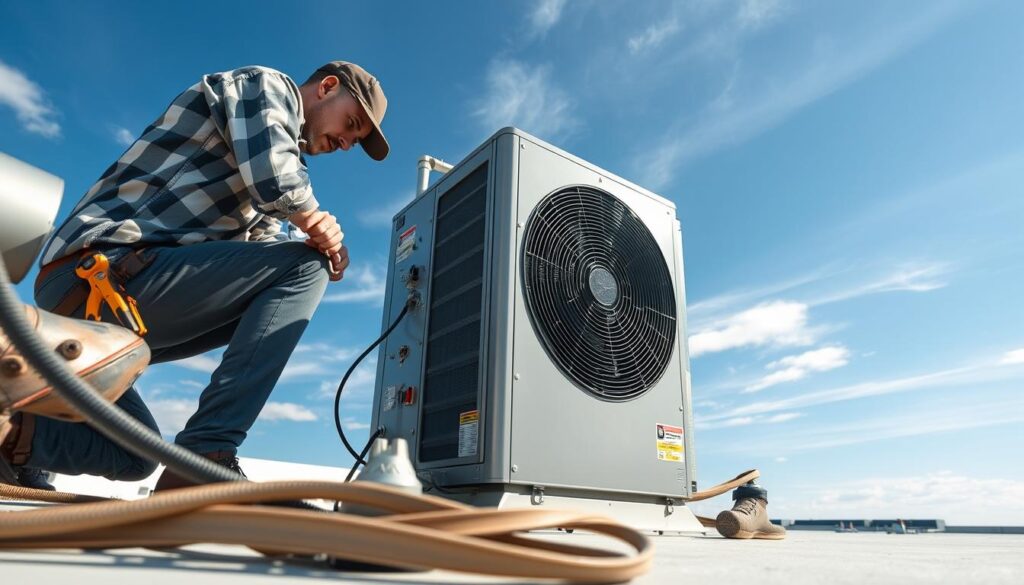
Package units offer a streamlined solution for homeowners. They combine all essential components into one, compact system. Learning how to install an HVAC package unit can save you time, money, and headaches.
When looking into hvac package unit installation, you’ll find these systems have unique benefits. They’re usually installed on rooftops or concrete pads. This makes them a great choice for homes with limited indoor space.
While it’s best to have a pro install your package unit, knowing the process helps. It lets you make better choices and talk clearly with your HVAC contractor.
Key Takeaways
- Package units combine all HVAC components in one compact system
- Professional installation ensures optimal performance and safety
- Rooftop or exterior pad installation saves indoor space
- Understanding installation process helps in contractor communication
- Cost-effective alternative to traditional split systems
Table of Contents
Understanding HVAC Package Units and Their Benefits
Exploring HVAC options for your home? Learning about package units can help. They offer a unique way to cool and heat your home, unlike split systems.
Package units are a compact way to control your home’s temperature. They are different from split systems because they have all the important HVAC parts in one unit.
What Makes Package Units Different from Split Systems
Here are the main differences:
- Component Location: Package units have all parts in one cabinet
- Installation Flexibility: They can be mounted on rooftops or concrete slabs
- Space Requirements: They need less space inside your home than split systems
Key Advantages of Package Unit Installation
There are many benefits to installing a package unit:
| Advantage | Description |
|---|---|
| Simplified Installation | No need to run refrigerant lines between units |
| Maintenance Ease | All parts are in one easy-to-reach spot |
| Cost-Effectiveness | They are often cheaper upfront than split systems |
But, package units have some downsides. They might not be as energy-efficient or quiet as top split systems. Your home’s needs, climate, and budget will decide if a package unit is best for you.
Explore Our HVAC Shop
Looking for top-rated HVAC tools, parts, and accessories? Visit our shop and find the perfect solution for your needs.
Visit the ShopChoosing the Right Time for Package Unit Installation
Timing is key when planning your HVAC package unit installation. Knowing the best time to install can save you money and stress. It also makes the process smoother.
The spring season is the best time for off-season HVAC installation. You’ll get several benefits during this time:
- Lower demand from HVAC contractors
- Potential cost savings on equipment and labor
- More flexible scheduling options
- Comfortable working conditions for technicians
Spring HVAC installation has unique benefits. Contractors are more available, giving you better service and attention. This makes your experience much better.
Spring is also a good time financially. Manufacturers offer rebates and discounts during slow months. You can find big savings not seen in summer or winter.
Pro Tip: Schedule your HVAC consultation in late winter to prepare for a spring installation, giving you ample time to plan and secure the best contractor.
Even though spring is the best time, emergencies might need quick action. Always put your home’s comfort and safety first when deciding on installation.
Selecting a Qualified HVAC Contractor for Your Project
Choosing the right HVAC contractor is key for a successful installation. The right choice can mean a smooth system or expensive repairs later. A skilled contractor adds expertise, precision, and reliability to your project.
When looking for a contractor, focus on important areas. This ensures your home stays comfortable and efficient.
Essential Credentials to Verify
Start by checking a contractor’s credentials. This protects your investment. Look for these important qualifications:
- Current state licensing
- Liability insurance documentation
- Workers’ compensation coverage
- Manufacturer-specific certifications
“A true professional will gladly share their credentials and provide proof of their qualifications.” – HVAC Industry Expert
Evaluating Contractor Experience
Your installation’s success depends on the contractor’s experience. Consider these factors:
- Years of HVAC installation experience
- Specific expertise with package unit installations
- Online customer reviews and ratings
- References from recent similar projects
A good contractor has a history of successful installations. They offer clear pricing, detailed estimates, and understand your needs.
Research and verify contractors. Check their ratings on Google, Yelp, and the Better Business Bureau. Look for contractors with 4.5 stars or higher from many reviews.
Remember, the right contractor is an investment in your home’s comfort and efficiency. Take your time to find a qualified professional who will deliver great results.
Explore Our HVAC Shop
Looking for top-rated HVAC tools, parts, and accessories? Visit our shop and find the perfect solution for your needs.
Visit the ShopPre-Installation Assessment and Home Evaluation
Before installing a package unit, a thorough home evaluation is key for the best HVAC performance. Professional contractors do a detailed check to lay the groundwork for a successful install.
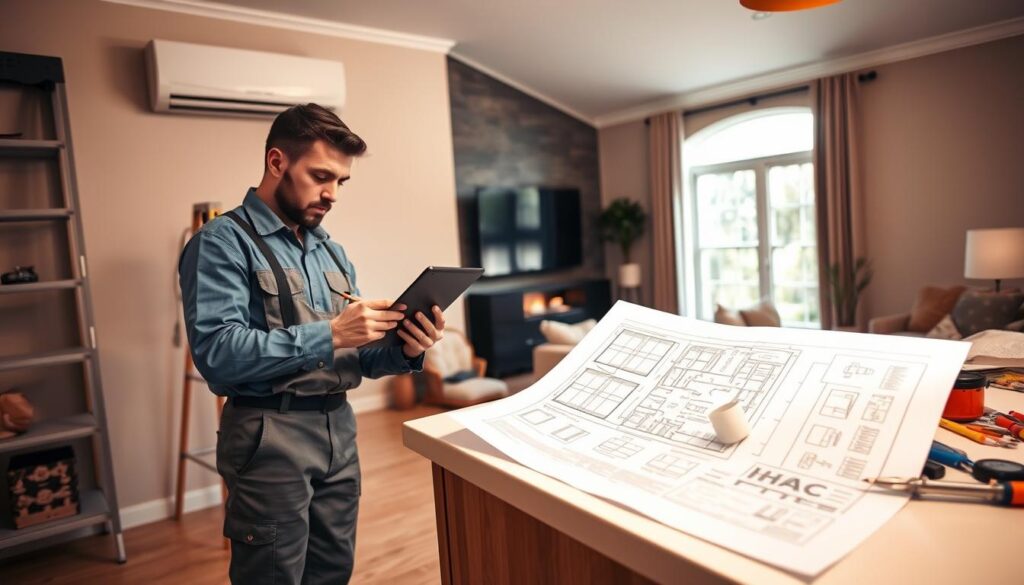
Your HVAC installation success relies on two main things: precise load calculations and detailed system checks. Let’s dive into these important steps before installation.
Conducting Precise HVAC Load Calculations
Manual J calculation is the standard for figuring out your home’s exact heating and cooling needs. It looks at several factors:
- Square footage and ceiling heights
- Insulation levels in walls, attic, and floors
- Window sizes, locations, and quality
- Local climate data
- Number of home occupants
- Heat-generating appliances
Getting the HVAC load right is vital to avoid common issues. Wrong sizing can cause higher energy bills, lower efficiency, and system failure sooner.
Comprehensive Ductwork and Electrical System Evaluation
Your contractor will do a thorough ductwork check to see:
- Proper ductwork sizing
- Potential leaks or damage
- Insulation quality
- Optimal register placement
Leaky ducts can cut system efficiency by up to 20 percent, making this check very important for long-term performance.
The electrical system check makes sure your package unit gets the right power. Contractors will check for dedicated circuits, correct amperage, and if panel upgrades are needed for safe electrical system assessment.
This careful pre-installation check ensures your new HVAC system works well, safely, and efficiently for many years.
Choosing the Right Package Unit for Your Home
Finding the perfect HVAC package unit is a big decision. It needs careful thought about many factors. Your home’s needs will help you pick the best system. It should be efficient, perform well, and fit your budget.
When looking at hvac package unit placement, consider a few important things:
- Home size and square footage
- Local climate conditions
- Energy efficiency ratings
- Budget constraints
Trane package unit installation experts say to focus on these key points:
- Capacity: Measured in tons (12,000 BTUs per ton)
- Efficiency ratings (SEER2 range from 14 to 18+)
- Compressor type: Single-stage, two-stage, or variable-speed
When picking a package unit size, think about your home’s cooling and heating needs. A professional load calculation ensures you don’t oversize or undersize your system.
Pro Tip: Upgrading to an energy efficient package unit can save up to 20% on heating and cooling costs over the system’s lifetime.
Your ideal package unit should make your home comfortable while using less energy. Work with a skilled HVAC professional to choose the best system for your home.
How to Install HVAC Package Unit: Step-by-Step Process
Installing an HVAC package unit needs precision and expertise. It’s best to hire professionals, but knowing the steps helps homeowners. This knowledge aids in choosing the right rooftop package unit installation.
Professional HVAC technicians have a clear plan for installing a DIY HVAC package unit. The process includes several key steps. These steps are vital for the system’s performance and safety.
Removing Old Equipment and Preparing the Installation Site
Before mounting a carrier package unit, a thorough site evaluation is necessary. Important steps include:
- Getting the right local permits
- Disconnecting the old HVAC equipment safely
- Cleaning the area for installation
- Ensuring enough space for the new unit
Positioning and Securing the Package Unit
Choosing the right spot for the HVAC package unit is key. It affects ductwork connection and system efficiency. Considerations include:
- A level mounting surface
- Sufficient airflow space
- Protection from the environment
- Strategies for reducing noise
Connecting Ductwork and Electrical Components
The last step is connecting ductwork and electrical parts:
| Connection Type | Critical Requirements |
|---|---|
| Ductwork | Secure, sealed connections, proper insulation |
| Electrical | Wiring that meets code, a dedicated circuit |
| Thermostat | Accurate low-voltage connections |
Professional installation is key for warranty protection, safety, and best system performance.
Package Unit Electrical Hookup and Safety Requirements
Installing a package unit needs careful attention to electrical needs and safety rules. The electrical hookup of your HVAC system is a key process. It requires professional skills and detailed technical knowledge.
Before starting the electrical hookup, you must know a few important things:
- Dedicated HVAC circuit specifications
- Electrical safety codes compliance
- Proper voltage and amperage requirements
- Professional installation standards
Electrical needs for HVAC package units involve specific details. Your system will need a dedicated hvac circuit. This circuit must handle the unit’s power needs. It usually ranges from 208-240 volts and 15-60 amps, based on the unit’s size and features.
Important safety points include:
- Using a properly sized circuit breaker
- Installing appropriate wire gauge
- Implementing a weatherproof disconnect switch
- Ensuring proper grounding
Only professional electricians should handle the electrical hookup. DIY electrical work can be risky. It may cause equipment damage, electrical fires, and personal injury.
Always prioritize professional installation to protect your home and HVAC investment.
Remember, warranties from manufacturers often require professional installation. Licensed technicians are key for your package unit’s electrical connections.
Explore Our HVAC Shop
Looking for top-rated HVAC tools, parts, and accessories? Visit our shop and find the perfect solution for your needs.
Visit the ShopTesting, Balancing, and System Startup Procedures
After installing your HVAC package unit, skilled technicians do thorough testing. They check if everything works right and keeps you comfortable. This is part of the startup process.
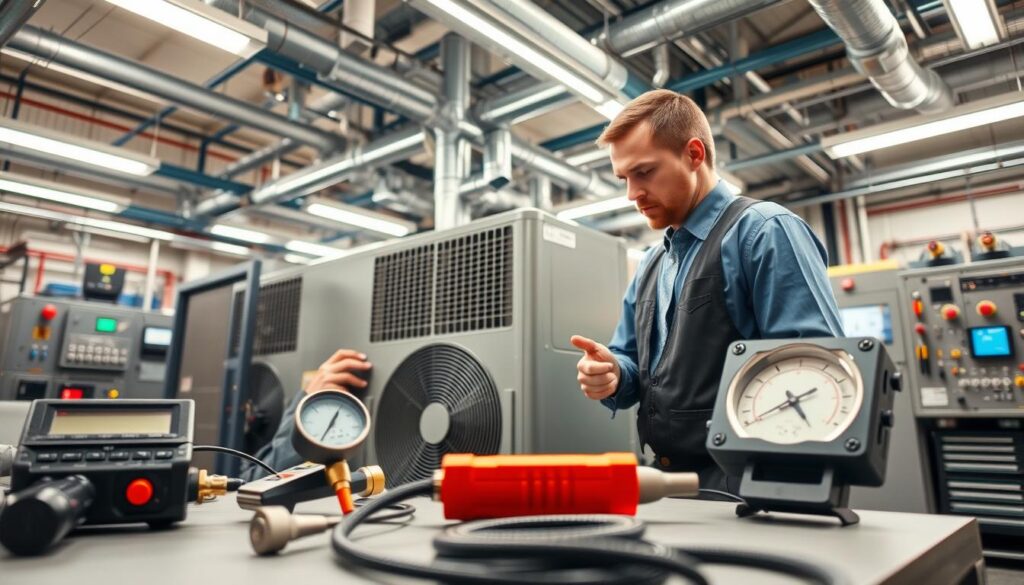
The last step of installation includes important checks. These ensure your system works well and reliably.
Performance Verification and Airflow Testing
Technicians make sure your HVAC system runs at its best. They do several key tests:
- Refrigerant charge verification
- Electronic leak detection
- Airflow measurement at each register
- Static pressure testing
- Temperature differential analysis
They adjust ductwork dampers for even heating and cooling. Sealed ducts can boost efficiency by 20 percent.
Thermostat Programming and System Calibration
Technicians focus on setting up your thermostat during startup. They customize it for comfort and saving energy.
| Thermostat Configuration | Energy Savings |
|---|---|
| Temperature setpoints | Up to 10% heating bill cut |
| Fan operation modes | Better air flow |
| Smart features programming | Smart temperature control |
Your technician checks temperature accuracy and system response. They also make sure safety controls work right. Being there for these checks helps you understand your new HVAC system better.
Post-Installation Maintenance and Care Tips
Keeping your new package unit in top shape is key for its long-term performance. A good hvac maintenance schedule can make your system last longer and save you from expensive fixes.
Both DIY tasks and professional services are part of your maintenance routine. Regular upkeep ensures your system works well and avoids sudden failures.
Essential Homeowner Maintenance Tasks
- Change the air filter every 1-3 months
- Clear debris from around the unit
- Check the unit for damage or wear
- Watch for sudden increases in utility bills
Professional Seasonal HVAC Maintenance
The Air Conditioning Contractors of America suggests a yearly professional check-up. Seasonal hvac maintenance includes:
- Cleaning the evaporator and condenser coils
- Checking the refrigerant levels
- Testing electrical connections
- Lubricating moving parts
- Ensuring proper airflow
Maintenance Frequency Guide
| Task | Frequency |
|---|---|
| Air Filter Replacement | 1-3 months |
| Professional Inspection | Annually |
| Visual System Check | Every 3-4 months |
Sticking to a maintenance plan can cut energy use by 5-15%. It can also extend your package unit’s life from 10-15 years to over 20 years.
Preventive maintenance is cheaper than emergency repairs. Spend time on regular care to ensure your HVAC system works efficiently and reliably.
Conclusion
Your journey into HVAC package unit installation is key to home comfort and energy savings. Professional installation means your system works well, uses less energy, and lasts longer. It keeps your home at the right temperature.
Choosing the right unit and a skilled technician changes your home’s comfort. It’s not just about the temperature. You also get better air quality, higher property value, and lower bills.
Knowing about the installation process helps you make smart choices. Even if it seems complex, experts know how to handle it. They ensure your system meets all requirements and works efficiently.
Your HVAC investment is about more than just buying a system. It’s about making your home comfortable and lasting. By choosing professional installation and regular maintenance, you get a system that works well for years. Look for qualified contractors, ask lots of questions, and see it as a smart home upgrade.