Affiliate Disclosure
HVAC Guide Guys is a participant in the Amazon Services LLC Associates Program, an affiliate advertising program designed to provide a means for sites to earn advertising fees by advertising and linking to Amazon.
Are you tired of uneven temperatures in your home? Some rooms feel freezing, while others are too hot. What if you could fix this without replacing your whole HVAC system?
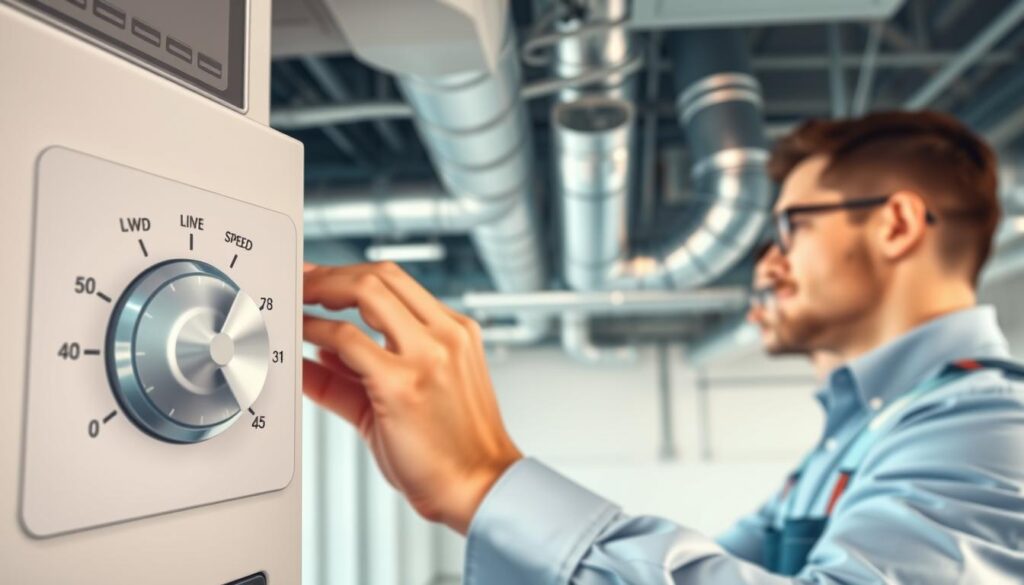
Many homeowners face airflow problems that make their homes uncomfortable. Adjusting your blower speed can help solve these issues. This guide will show you how to improve air circulation in your home, possibly avoiding expensive system replacements.
Finding the right way to adjust your blower speed can greatly improve your home’s comfort. Whether you’re okay with simple thermostat changes or ready for more complex wire-swapping, we’ve got you covered. You’ll find a solution that fits your skill level and system needs.
Key Takeaways
- Understand the impact of blower speed on home comfort
- Learn safe methods for adjusting HVAC airflow
- Identify solutions for uneven room temperatures
- Know when DIY fixes are right
- Avoid expensive HVAC system replacements
Table of Contents
Understanding Your HVAC Blower System
Your home’s comfort relies on a key part of your HVAC system: the blower motor. This important device helps move heated or cooled air around your home. It keeps the temperature and air quality steady.
The blower motor is the heart of your heating and cooling system. It pushes air through ducts and spreads it out in rooms. Without it, your HVAC system can’t keep your home at a comfortable temperature.
What Is a Blower Motor?
A blower motor is an electrical device that powers a fan. It moves air through your home’s ventilation system. It turns electrical energy into motion, making air flow that carries heated or cooled air from your furnace or air conditioner.
- Converts electrical energy to mechanical motion
- Drives air circulation through ductwork
- Regulates indoor temperature and air quality
Types of Blower Motors in HVAC Systems
HVAC systems use different blower motors. Each has its own features and how well it works.
| Motor Type | Efficiency | Speed Control |
|---|---|---|
| PSC (Permanent Split Capacitor) | Standard | Limited |
| ECM (Electronically Commutated Motor) | High | Variable |
| Variable Speed | Premium | Advanced |
“Understanding your blower motor is key to maintaining optimal home comfort and energy efficiency.” – HVAC Professional
Each motor type has its own benefits. Homeowners can pick the best one for their heating and cooling needs.
Explore Our HVAC Shop
Looking for top-rated HVAC tools, parts, and accessories? Visit our shop and find the perfect solution for your needs.
Visit the ShopSigns Your HVAC Blower Speed Needs Adjustment
Your home’s comfort depends on a well-working HVAC system. Knowing when to adjust the blower speed can stop problems and keep air quality good.
There are key signs that your HVAC blower speed needs a check:
- Inconsistent Room Temperatures: Rooms feeling unevenly heated or cooled
- Reduced Airflow: Weak air coming from vents
- Unusual noises from the HVAC system
- Increased energy bills without apparent reason
- Frequent system cycling
Professional HVAC technicians say to watch for these signs. Ignoring them can cause bigger problems.
“A well-maintained HVAC system is the key to home comfort and energy efficiency.” – HVAC Expert Mark Richardson
Some symptoms need quick attention:
- Extended system runtime
- Cold or hot spots in different rooms
- Persistent dustiness despite regular cleaning
- Unexplained allergic reactions or respiratory discomfort
Knowing these signs helps you take care of your home’s heating and cooling. It can save you money and keep your home comfortable.
Safety Precautions Before Adjusting Blower Speed
Working with HVAC systems needs careful preparation and strict safety rules. Before making any changes to your blower speed, your safety and the safety of your equipment are top priorities.
Turning Off Power to Your HVAC System
Electrical safety is key when working with HVAC parts. You must disconnect power in several ways:
- Find the dedicated wall switch near the furnace (usually a standard light switch in a metal box)
- Turn off the right circuit breaker at your home’s main electrical panel
- Know how the safety relay switch on the furnace door cover works to cut power when you open the access panel
Professional HVAC technicians always check each power source is off before touching any wiring. A non-contact voltage tester is critical for confirming power disconnection.
Essential Tools and Equipment
| Tool Category | Recommended Items |
|---|---|
| Basic Tools | Screwdriver set (Phillips and flathead) |
| Wire Handling | Needle-nose pliers |
| Illumination | Flashlight or headlamp |
| Documentation | Smartphone or camera |
| Optional Items | Work gloves, notepad |
Your thorough preparation ensures you can work safely and efficiently. This way, you minimize risks to yourself and your HVAC system.
Explore Our HVAC Shop
Looking for top-rated HVAC tools, parts, and accessories? Visit our shop and find the perfect solution for your needs.
Visit the ShopHow to Increase Blower Speed on HVAC
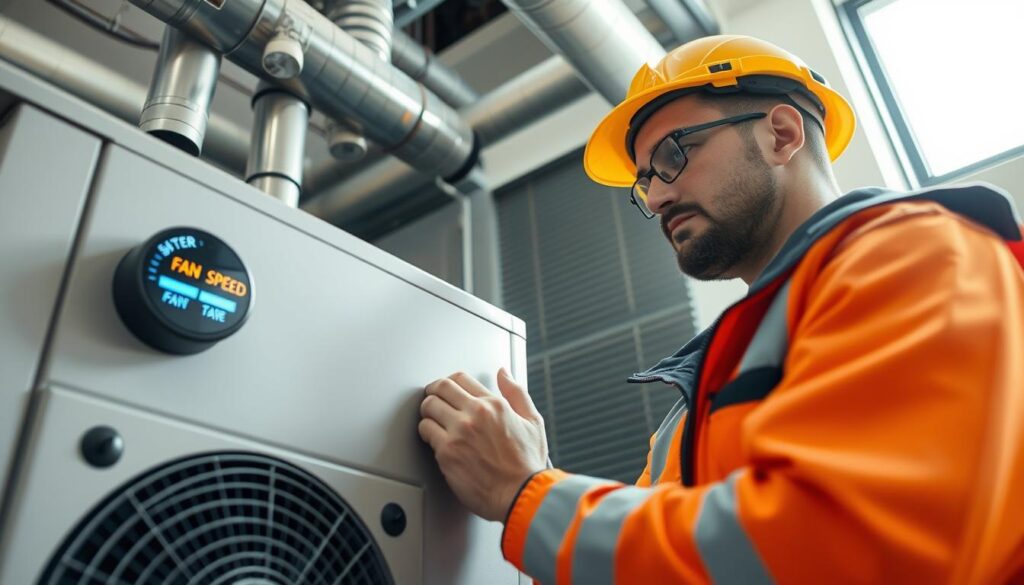
Learning how to boost your HVAC blower speed can make your home more comfortable. Most systems run fast for cooling and slower for heating. This lets you fine-tune your HVAC for better performance.
Two-speed blower systems are set up for different seasons. In summer, they run at high speed to cool your home. In winter, they use medium-high speed for heating.
“Increasing blower speed can help solve airflow challenges in hard-to-reach rooms without major system modifications.”
To increase blower speed, just swap the wires on the cool and heat terminals. This trick works great for gas furnaces with two-speed blowers. Swapping the wires can:
- Push air more forcefully through ductwork
- Improve temperature distribution
- Reach distant rooms with weak airflow
Important: This adjustment works best when your furnace filters are clean and ducts are properly insulated. Remember, it won’t fix problems from blocked returns or failing motors.
Before making any changes, know that wire swapping is for specific airflow issues. Always put safety first. If you’re not sure, it’s best to get help from an HVAC expert.
Locating the Integrated Furnace Control Board
Knowing your HVAC system’s integrated furnace control (IFC) board is key for adjusting blower speed. This part is like the brain of your heating and cooling system. It handles electrical connections and speed settings.
Before you start making changes, get to know the wiring and terminal setup. Safety and accuracy are very important when dealing with electrical systems.
Understanding Wire Colors and Speed Settings
HVAC systems use color-coded wires for different blower speeds:
- Black wire: Indicates high speed
- Yellow wire: Represents medium-high speed
- Blue or brown wire: Signifies medium-low speed
- Red wire: Indicates low speed
- White or purple wire: Common wire for electrical connections
Pro Tip: Always take clear reference photos of your current wiring configuration before making any changes.
Identifying Cool and Heat Terminals
Finding the right terminals is key for adjusting blower speed. Look for specific labels on your IFC board:
- Cool terminal: Typically connects the high-speed wire
- Heat terminal: Usually links to the medium-high speed wire
- Park terminals: Designated spaces for storing unused speed wires
Keep in mind, while these colors are common, systems can differ. Always check terminal labels and your system’s manual before making changes.
Explore Our HVAC Shop
Looking for top-rated HVAC tools, parts, and accessories? Visit our shop and find the perfect solution for your needs.
Visit the ShopStep-by-Step Wire Swapping Procedure
Adjusting your HVAC blower speed means swapping specific wires on the control board. This task needs precision and care to work right.
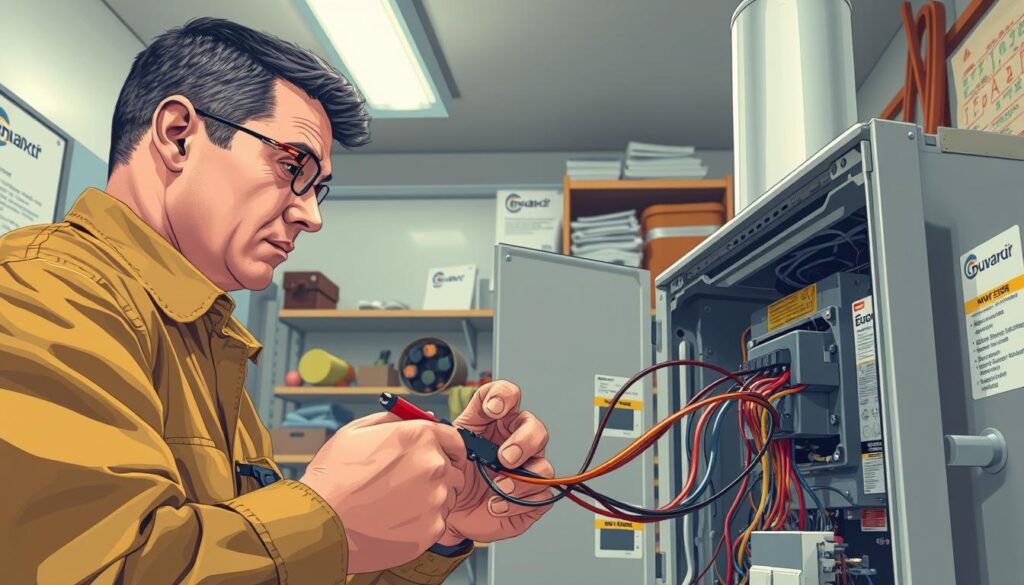
First, get your tools ready for the swap. Then, follow these important steps:
- Remove the black wire from the Cool terminal
- Disconnect the yellow wire from the Heat terminal
- Connect the yellow wire to the Cool terminal
- Place the black wire on the Heat terminal
Critical Safety Warning: Only swap these two wires. Never touch the common wire, as it can burn out your motor. Other wires should stay as they are.
Check your connections well. Make sure each wire is tight and in the right spot. A loose wire can harm your HVAC system or even damage the motor.
Precision is key when swapping wires on your HVAC control board. Take your time and double-check each step.
Once you’ve swapped the wires, turn on the power and test the new blower speed. Be careful and ask a pro if you’re unsure about anything.
Adjusting Thermostat Fan Settings for Better Airflow
Changing your thermostat’s fan settings can make your home more comfortable and improve air flow. Modern thermostats have advanced options that boost air circulation without needing to mess with your HVAC system.
Navigating Your Thermostat’s Fan Configuration
Smart and programmable thermostats let you control air flow in many ways. Here are the main settings to check:
- Find “Fan Speed” or “Airflow Settings” in your thermostat’s menu
- Look for different settings for heating, cooling, and circulation
- Try out different fan speeds
Understanding Auto vs. On Fan Settings
Your thermostat’s fan settings greatly affect your home’s comfort and energy use. Let’s look at the two main modes:
| Setting | Operational Mode | Energy Impact |
|---|---|---|
| Auto | Runs during heating/cooling cycles | Lower energy consumption |
| On | Continuous air circulation | Higher energy usage |
The “Auto” mode saves energy by only running the blower when heating or cooling. On the other hand, “On” mode keeps air moving all the time. This can help mix air better and filter it more effectively. But, some systems might run the blower too slow when just circulating air, which might not be enough.
Try both settings to see which one works best for you. Running the fan all the time might even mean you don’t need to make big changes to your HVAC system.
ECM Blower Motor Speed Control Options
Electronic Commutated Motor (ECM) technology is a big step forward in HVAC efficiency. These advanced motors offer several speed control options. They can greatly enhance your home’s comfort and cut down on energy use.
ECM blower motors bring many benefits for those wanting to improve their heating and cooling systems:
- Precise speed adjustments
- Improved energy efficiency
- Reduced electricity consumption
- Enhanced temperature consistency
Smart control technologies allow you to manage your ECM blower motor through multiple channels. Most modern systems offer three main speed control methods:
- Thermostat Programming
- Control Board Modifications
- Advanced Digital Interfaces
“ECM motors can reduce electrical consumption by up to 75% compared to traditional PSC motors.” – HVAC Energy Efficiency Report
Your ECM blower motor’s digital interface lets you make fine speed adjustments. By using these advanced controls, you can tailor airflow to your exact needs. This boosts system efficiency.
Professional HVAC technicians suggest trying out your motor’s full range of programmable options. This can lead to better performance and energy savings.
Explore Our HVAC Shop
Looking for top-rated HVAC tools, parts, and accessories? Visit our shop and find the perfect solution for your needs.
Visit the ShopTroubleshooting Weak Airflow After Adjustment
Adjusting your HVAC blower speed might lead to weak airflow. Knowing how to fix these problems can save you time and avoid damage to your system.
Common Issues and Quick Fixes
Start with these steps if you’re facing weak airflow:
- Verify wire connections are secure and correct
- Check for any airflow restrictions
- Inspect all important system parts
- Dirty air filters that block air flow
- Blocked return air grilles
- Closed supply registers
- Damaged or disconnected ductwork
These problems can make your system overheat and wear out faster. It’s also important to consider safety when working with different blower types.
When to Call a Professional HVAC Technician
Know when you need a pro:
- Blower motor doesn’t work after adjustment
- Burning smells or smoke
- Keep tripping circuit breakers
- Not sure about blower motor type
- Can’t fix airflow issues
Experts have the right tools to find and fix complex problems. They can do more than what you can at home.
Alternative Methods to Improve HVAC Air Circulation
When standard HVAC adjustments don’t work, you have other ways to boost your home’s air flow. These methods can make your home’s temperature more even and make it more comfortable.
Begin by adjusting the dampers in your ductwork. These controls help direct and balance air flow in your home. Make sure each room’s register is fully open to get the most air flow.
- Inspect and clean air registers regularly
- Verify damper settings in different zones of your home
- Remove any obstructions blocking air vents
For quick temperature fixes, try using space heaters in cold spots. Placing supplemental heating in key areas can solve comfort problems without stressing your main HVAC system.
If your current system always falls short, a bigger furnace might be the best long-term fix. A pro can check if your current equipment fits your home’s size.
Choosing the right HVAC solution now can save you a lot on energy costs and comfort issues later.
For the best results, mix different strategies to improve your home’s air flow and comfort.
Conclusion
Improving your home’s HVAC system needs a smart plan. The wire-swapping method for two-speed blower systems is a good start for airflow issues. But first, check air filters and make sure all registers are open.
When adjusting thermostat fan settings, safety is key. Always turn off power before working on electrical parts. Take photos of your setup before making changes. Knowing if your blower is two-speed or variable is important.
Programming ECM motors for variable-speed systems can be tricky. Know your limits. If DIY fixes don’t work or you’re unsure, call a pro. They can make your system work better, saving energy and keeping you comfortable.
Understanding your HVAC system is the first step to better climate control. You can make DIY changes or get help from experts. Either way, you’ll make your home more comfortable and your equipment last longer.