Affiliate Disclosure
HVAC Guide Guys is a participant in the Amazon Services LLC Associates Program, an affiliate advertising program designed to provide a means for sites to earn advertising fees by advertising and linking to Amazon.
Are you tired of rooms in your home feeling like different temperature zones? What if you could solve uneven heating and cooling with a simple HVAC system fan adjustment?
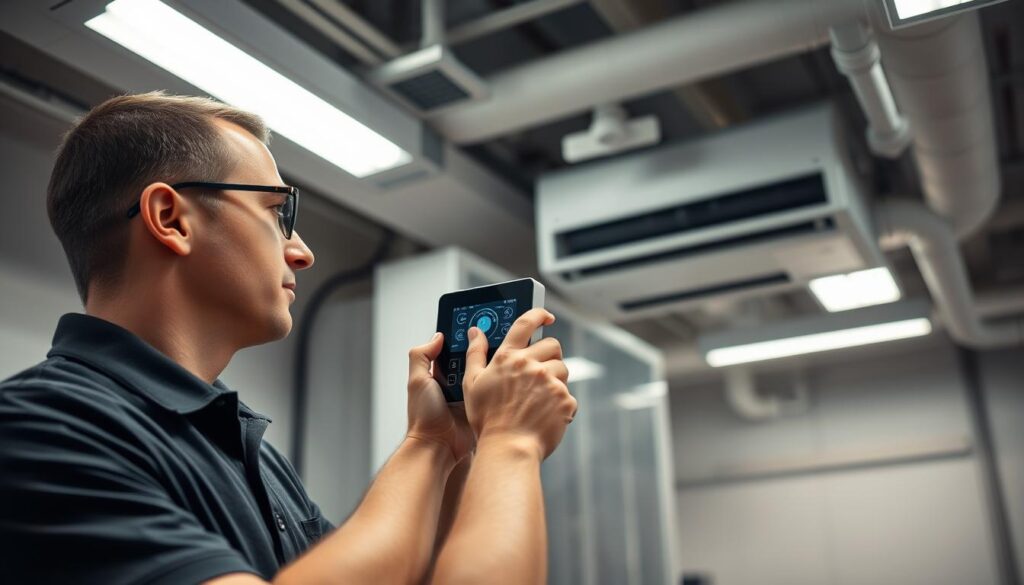
Homeowners often struggle with inconsistent temperatures throughout their living spaces. Your HVAC system’s fan speed is key to air distribution. By learning how to increase HVAC fan speed, you can make your home more comfortable.
This guide will show you how to adjust your two-speed blower system. It helps tackle temperature disparities and boosts home comfort. Whether it’s a chilly bedroom or an overheated living room, knowing how to increase HVAC fan speed can help a lot.
Key Takeaways
- Learn practical solutions for uneven home temperatures
- Understand the impact of fan speed on home comfort
- Discover DIY methods for HVAC system fan adjustment
- Identify when professional help might be necessary
- Improve airflow and temperature distribution
Table of Contents
Understanding Your HVAC Blower System
Your home’s comfort depends on how well your HVAC system moves air. The blower motor is key, making sure warm or cool air gets to every room. Knowing how to adjust the blower motor is important.
Residential HVAC fan controls come in two main types. They greatly affect how your home stays at the right temperature:
Two-Speed vs. Variable Speed Blowers
- Two-Speed Blowers: Work at fixed speeds
- They have high and low settings
- They’re cheaper and simple
- They don’t adjust air flow well
- Variable Speed Blowers: Change air flow as needed
- They adjust speed smartly
- They save energy
- They control temperature better
How Blower Speed Affects Home Comfort
Blower speed affects your home’s temperature and air quality. Faster speeds move air better, reaching all rooms evenly. Slower speeds help control humidity and keep temperatures steady.
The right blower speed can make a big difference in your home’s comfort and energy use.
Explore Our HVAC Shop
Looking for top-rated HVAC tools, parts, and accessories? Visit our shop and find the perfect solution for your needs.
Visit the ShopSigns Your HVAC Fan Speed Needs Adjustment
Knowing when your HVAC fan is slow can prevent uncomfortable temperatures and damage. Your home’s comfort relies on good airflow. Certain signs show it’s time to improve HVAC airflow.
Watch for these important signs that your HVAC fan might need adjustment:
- Uneven Room Temperatures: Rooms farthest from your furnace feel warmer or cooler than others
- Extended heating or cooling cycles that never reach desired temperatures
- Weak airflow from vents even when the system runs at full power
- Unusual noises coming from the blower motor
When you troubleshoot slow HVAC fan issues, check your thermostat’s fan-only mode. If the blower runs slowly or seems to struggle, it might need speed adjustment.
Your home’s layout and HVAC system design are key to finding the right fan speed. Older systems or wrong-sized ductwork can lead to less airflow. It’s important to find and fix problems early.
“Proper fan speed ensures consistent comfort and efficient energy use in your home.”
Before making changes, try simple fixes like cleaning air filters, opening vents, and ensuring ductwork is clear. These steps can often fix minor airflow issues without needing complex solutions.
Safety Precautions Before Adjusting Your Furnace
Changing your furnace fan settings needs careful safety steps. Electrical systems can be risky if not handled right. Taking the right precautions keeps you and your HVAC safe from harm.
- Completely shut down power to your HVAC system
- Verify the power is off using a voltage tester
- Wear protective gloves and safety glasses
- Keep your workspace clean and well-lit
Turning Off Power to Your HVAC System
Turning off power is the most important step for changing fan settings. Here’s how to do it:
- Check for a dedicated wall switch near your furnace
- Locate your home’s electrical panel
- Find the breaker labeled for your HVAC system
- Switch the breaker to the off position
“Always treat electrical systems with respect and caution.” – HVAC Safety Manual
Identifying Your Furnace Type
Not all furnaces are safe for DIY fan speed changes. Your method depends on your system type. Two-speed blowers are usually safe, but variable speed systems need a pro.
Look at your furnace’s model number or manual to find out what you have. If unsure, get an HVAC expert to avoid damage.
Explore Our HVAC Shop
Looking for top-rated HVAC tools, parts, and accessories? Visit our shop and find the perfect solution for your needs.
Visit the ShopLocating the Integrated Furnace Control Board
To increase air handler fan speed, start by finding the Integrated Furnace Control (IFC) board. It’s the heart of your HVAC system.
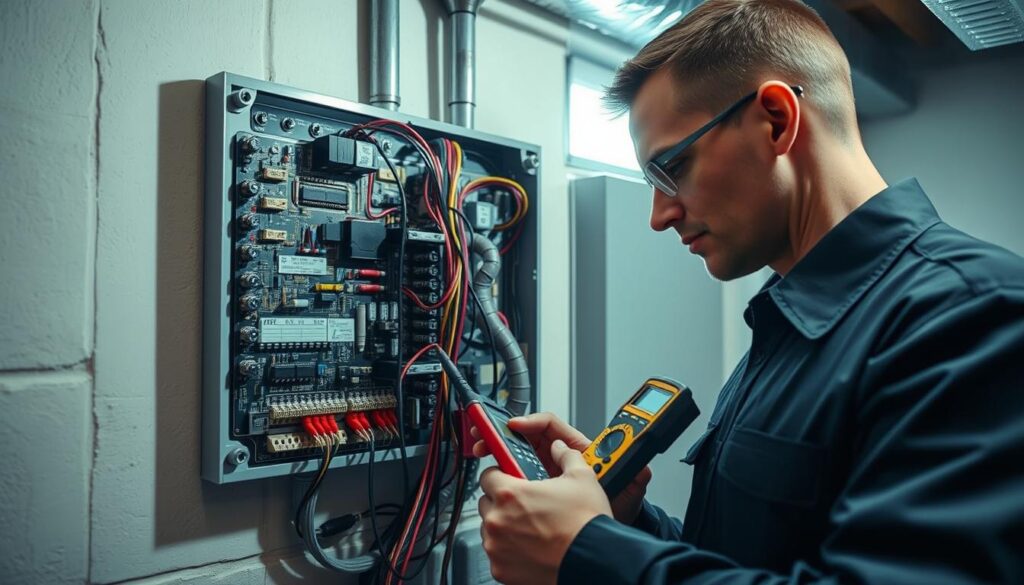
The IFC board is inside your furnace cabinet. You’ll need to remove the access panel to find it. Here’s what to look for:
- A rectangular circuit board with multiple wire terminals
- Indicator lights showing system status
- Labeled connection points for different functions
Always turn off your HVAC system before accessing the board. Safety is key when trying to increase fan speed.
Most furnaces have the IFC board in two places:
- On the blower compartment door
- On the interior wall of the furnace cabinet
Take a clear photo of the board before making changes. This helps if you need to go back to the original settings.
| Board Location | Typical Characteristics |
|---|---|
| Blower Compartment Door | Easily accessible, often near wire connections |
| Interior Cabinet Wall | More protected, requires careful panel removal |
Pro tip: Look for labels like “HEAT,” “COOL,” or “PARK” to find the right wire connections for fan speed adjustments.
How to Increase HVAC Fan Speed
Changing your HVAC fan speed can make your home more comfortable and improve air flow. It’s important to know how to adjust it safely and effectively. This means understanding the wire setup and speed options.
Most HVAC systems use a color-coded wire system. This system helps control the blower motor speeds. Here’s what you need to know about these wire colors:
- Black wire: High speed
- Yellow wire: Medium-high speed
- Blue or brown wire: Medium-low speed
- Red wire: Low speed
- White or purple wire: Common wire
Understanding Wire Colors and Speed Settings
Typical HVAC systems have different fan speed settings for heating and cooling. Cooling modes usually use higher fan speeds for better air circulation. To increase your HVAC fan speed, you’ll need to swap specific terminal wires carefully.
“Precision is key when adjusting HVAC fan speeds to prevent motor damage.” – HVAC Professional
Swapping the Cool and Heat Terminal Wires
Follow these steps to increase your HVAC fan speed:
- Turn off power to your HVAC system
- Locate the integrated furnace control board
- Identify the current wire connections on cool and heat terminals
- Carefully disconnect and swap the wires between terminals
- Ensure secure wire connections
Warning: Never move the common (white or purple) wire. This can burn out your blower motor and cause expensive repairs.
Maximizing AC Fan Performance for Better Airflow
To get better airflow, you need to improve your HVAC system’s fan performance. The right fan speed is key to comfort and saving energy.
- Optimize thermostat settings for balanced air circulation
- Maintain clean air filters regularly
- Ensure all vents remain unobstructed
- Check ductwork for any airflow restrictions
Knowing how your system works is important. Different fan speeds affect cooling and heating. Faster speeds move air better, but use more power.
| Fan Speed | Cooling Performance | Heating Performance | Energy Consumption |
|---|---|---|---|
| Low Speed | Moderate | Weak | Low |
| High Speed | Strong | Improved | Higher |
Experts say to check your fan often. Your home’s design and insulation affect airflow.
Adjusting your HVAC fan speed can make your home more comfortable. It also helps save energy.
When Not to Adjust Your HVAC Blower Motor
Knowing when to stay away from DIY HVAC work is key. Some tweaks can harm your heating and cooling system. This could lead to costly fixes or safety hazards.
Risks of Slowing Down Fan Speed
Lowering your HVAC blower motor speed can cause big issues. Here are some dangers to watch out for:
- Insufficient airflow across the heat exchanger
- Potential overheating of critical system components
- Increased risk of system failure
- Potential voiding of manufacturer warranties
Changing fan speed messes with your HVAC system’s balance. Less airflow can stress the heat exchanger. This can shorten its life and make it unsafe to operate.
Variable Speed Systems and Professional Help
Variable speed blowers need expert care when adjusting settings. These systems use advanced controls to optimize performance.
| System Type | Adjustment Recommendation |
|---|---|
| Two-Speed Blower | Potential DIY adjustment with caution |
| Variable Speed Blower | Professional adjustment only |
If you see complex displays, changing airflow, or odd noises, get help. An HVAC tech can fix your system safely. They’ll avoid costly damage.
When in doubt, always consult a professional HVAC technician to protect your home’s comfort system.
Explore Our HVAC Shop
Looking for top-rated HVAC tools, parts, and accessories? Visit our shop and find the perfect solution for your needs.
Visit the ShopTroubleshooting Slow HVAC Fan Issues
Dealing with a slow HVAC fan? Finding the problem takes a step-by-step method. Fixing it fast can save you money and keep your home comfy.
Begin by checking these important areas:
- Verify thermostat settings and battery condition
- Inspect air filter for excessive dirt or blockage
- Examine blower wheel for dust accumulation
- Listen for unusual mechanical noises
Common reasons for slow fan speed include:
| Issue | Potential Solution |
|---|---|
| Dirty blower wheel | Clean thoroughly or professional cleaning |
| Worn motor bearings | Motor replacement recommended |
| Failing capacitor | Electrical component replacement |
| Restricted ductwork | Professional duct inspection |
When you troubleshoot slow HVAC fan issues, watch for specific symptoms. A fan that’s much slower than usual might have electrical or mechanical issues. These often need a pro to fix.
Try some DIY fixes first. Clean the blower wheel, change air filters, and check wire connections. But, for serious problems like motor or electrical issues, get an HVAC expert. They can avoid bigger damage to your system.
Conclusion
Learning how to boost your HVAC fan speed can make your home much more comfortable. The wire swap trick is a simple fix for uneven heating or cooling in two-speed blower systems. It works best for certain gas furnace setups with standard two-speed blowers.
Remember, safety is key when you’re messing with your HVAC. Always turn off the power before you start making changes. You need to know your system type and follow the right steps to increase fan speed. Make sure you get the wire labels and setups right for the best results.
Not every HVAC system can be adjusted this way. Variable speed systems need a pro to handle them. If you’re unsure or notice any problems after changing the fan speed, get help from a HVAC expert. Keeping up with maintenance and watching your system’s performance will also help a lot.
By learning about increasing HVAC fan speed, you’re taking a big step towards better home comfort. Be careful, informed, and dedicated to keeping your HVAC system in top shape.