
Affiliate Disclosure
HVAC Guide Guys is a participant in the Amazon Services LLC Associates Program, an affiliate advertising program designed to provide a means for sites to earn advertising fees by advertising and linking to Amazon.
Are you tired of your home’s heating and cooling not working right? Learning how to install HVAC ductwork in your crawl space might be the answer. It’s all about precision, knowledge, and planning to make your home comfy and energy-saving.
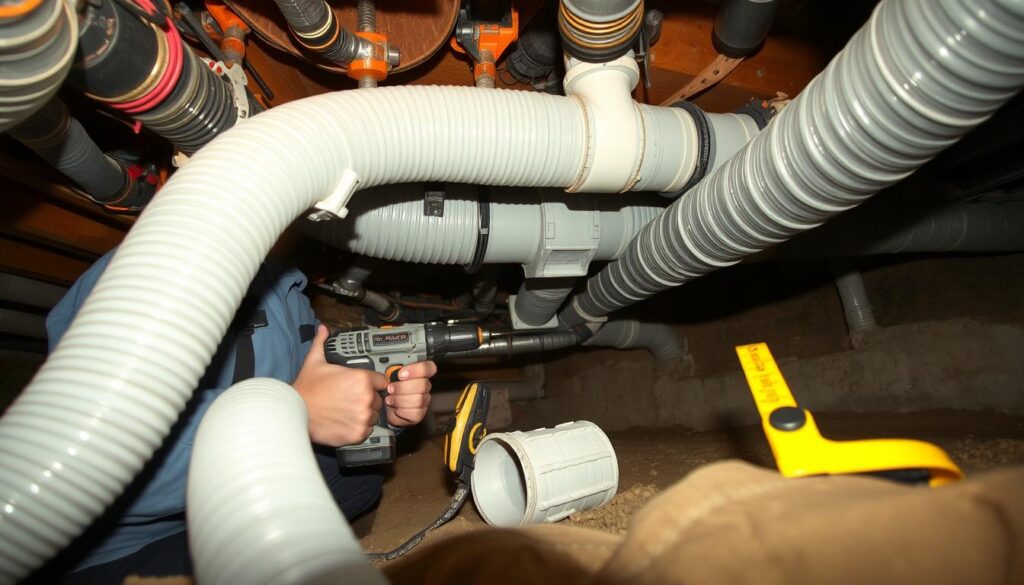
Installing ductwork in crawl spaces is a big home improvement step. It can really help control your home’s temperature. Experts and skilled DIY folks know it takes special skills and careful thought to get it right in these tight spots.
This guide will show you how to install HVAC ductwork in crawl spaces. We’ll cover prep, picking materials, and how to seal it all up. You’ll learn how to tackle the unique challenges of crawl spaces and make your cooling and heating systems work better.
Key Takeaways
- Understand the unique challenges of crawl space ductwork installation
- Learn proper techniques for measuring and preparing crawl spaces
- Select appropriate duct materials for optimal performance
- Implement effective sealing and insulation methods
- Ensure proper ventilation and airflow in confined spaces
Table of Contents
Understanding Crawl Space HVAC Systems
Crawl spaces are key parts of your home’s HVAC setup. They are small areas under your house. Installing HVAC ducts here can make your home more comfortable and save energy.
Many homeowners don’t see the value in these small areas. But, they are perfect for installing HVAC systems. Crawl spaces are usually 18 inches to 4 feet tall. This makes them great for hiding ductwork without taking up too much space.
Why Crawl Spaces Are Ideal for Ductwork
Crawl spaces have many benefits for HVAC duct placement:
- They don’t disrupt living areas much.
- They’re easy to get to for upkeep.
- It’s simple to connect ducts to different rooms.
- They protect against changes to interior walls.
Benefits and Challenges of Under-House HVAC Systems
Installing HVAC ducts in crawl spaces has many pluses, but there are also downsides:
| Benefits | Challenges |
|---|---|
| Ductwork is hidden from view. | They can get wet, which is bad. |
| It’s easier to keep them clean. | They might attract pests. |
| They offer flexible duct routing. | Working in them can be tough. |
Your crawl space’s condition affects your home’s air and energy use. Getting your under-house HVAC system installed and maintained right is essential.
Explore Our HVAC Shop
Looking for top-rated HVAC tools, parts, and accessories? Visit our shop and find the perfect solution for your needs.
Visit the ShopPreparing Your Crawl Space for Ductwork Installation
Starting your diy crawl space ductwork project needs careful prep. Your success depends on how well you get the space ready before starting. First, inspect your crawl space to make sure it’s right for your project.
Important steps for getting your crawl space ready include:
- Check crawl space height (minimum 18-24 inches)
- Verify clear pathways for movement
- Inspect for moisture issues
- Remove debris and old materials
- Address possible pest problems
Before starting your diy crawl space ductwork, do a full check. Look for water damage, foundation cracks, or pests. Fix these problems before installing ductwork to avoid future issues.
Keeping moisture under control is key. Here’s what to do:
- Check foundation grading
- Install or repair vapor barriers
- Seal any visible cracks
- Consider a dehumidifier for consistent humidity control
Get all the tools you need before starting. You’ll need a measuring tape, tin snips, screwdrivers, duct straps, mastic sealant, and safety gear like gloves and a dust mask.
Pro tip: Create a detailed diagram of your planned ductwork to minimize trips in and out of the crawl space.
By carefully preparing your crawl space, you’ll lay a solid foundation for a successful ductwork installation. This ensures efficient and lasting performance.
Choosing Between Rigid and Flexible Duct Materials
Choosing the right ductwork materials is key for your HVAC system’s performance. Knowing the difference between rigid and flexible ductwork helps you make the best choice for your crawl space.
The type of ductwork you pick can greatly affect air flow, energy use, and system reliability. HVAC installers look at several factors to suggest the best duct materials.
Rigid Sheet Metal Ductwork Advantages
Rigid ductwork has many benefits for crawl spaces:
- Superior air flow characteristics
- Minimal air resistance
- Permanent structural integrity
- Resistance to pest damage
- Extended lifespan (25-30 years)
Flexible ducts are better for certain situations, but rigid metal ducts are best for large crawl spaces.
When to Use Flexible Duct Installation Techniques
Flexible ductwork is great for tricky installations:
- Short connection runs
- Areas with multiple obstacles
- Tight spatial constraints
- Connecting trunk lines to registers
| Duct Type | Best Applications | Performance Rating |
|---|---|---|
| Rigid Metal Ducts | Long straight runs | Excellent |
| Flexible Ducts | Short connection runs | Good |
Installers suggest keeping flexible duct lengths short and avoiding bends. This helps keep air flow optimal. Proper installation is vital for both rigid and flexible ducts to ensure system efficiency.
Explore Our HVAC Shop
Looking for top-rated HVAC tools, parts, and accessories? Visit our shop and find the perfect solution for your needs.
Visit the ShopHow to Install HVAC Ductwork in Crawl Space
Installing HVAC ductwork in a crawl space needs careful planning and precise steps. DIY ductwork in crawl spaces can be tough but doable with the right steps. This guide will help you through the key steps for a successful HVAC system upgrade.
Removing Old Ductwork and Measuring
Start by removing all old ductwork before installing new. Measure your crawl space carefully. Note:
- Distance from HVAC unit to each register
- Height of floor joists
- Available clearance in the crawl space
- Dimensions for trunk line and branch lines
Trunk Line Hanging Technique
The trunk line is the main duct from your HVAC system. Proper installation is key for good airflow. Follow these steps:
- Use metal duct straps or hangers
- Space supports every 4-6 feet
- Secure straps into solid wood joists
- Maintain at least 12 inches clearance from ground
Vent Lines and Floor Register Installation
Finishing your DIY ductwork means precise vent line and register placement. Cut holes in the trunk line for branch lines, starting at the farthest register. Secure each vent line with supports to prevent sagging.
| Installation Step | Key Considerations |
|---|---|
| Branch Line Attachment | Use proper takeoff fittings |
| Vent Line Supports | Attach every 4-5 feet |
| Floor Register Placement | Ensure level and secure mounting |
Pro tip: Minimize flexible ductwork runs and avoid any kinks or compressions to maintain optimal air flow.
Sealing HVAC Ducts in Crawlspace for Energy Efficiency
Sealing HVAC ducts in your crawlspace is key to keeping your home energy-efficient. If ducts aren’t sealed right, you could lose up to 30% of your heating and cooling. Knowing how to seal ducts can save you money and make your home more comfortable.
To create an energy-efficient duct layout, focus on a few important sealing techniques:
- Use professional-grade mastic sealant for permanent connections
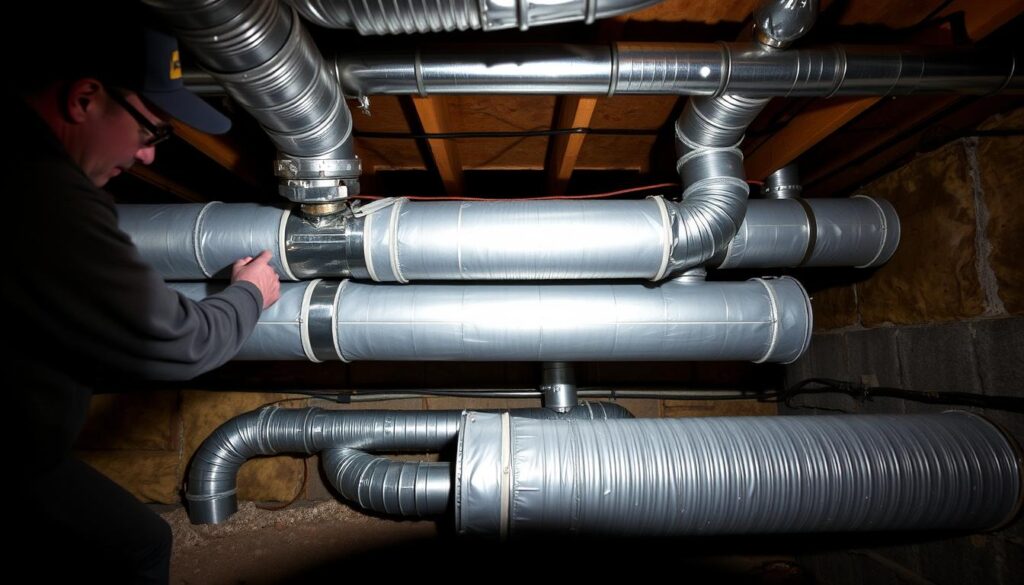
- Apply UL 181 rated foil-backed tape for additional reinforcement
- Seal all joint connections thoroughly
- Minimize unnecessary duct connections
The best duct sealing methods involve a detailed approach. First, find all possible leak spots, such as:
- Trunk line joints and seams
- Branch line connections
- Register boot connections
- HVAC unit connection points
| Sealing Method | Effectiveness | Recommended Use |
|---|---|---|
| Mastic Sealant | High | Primary sealing for all permanent connections |
| Foil-Backed Tape | Medium-High | Reinforcement for mastic seals |
| Metal Clamps | Medium | Securing flexible ductwork |
Pro tip: Don’t use regular cloth-backed duct tape. It doesn’t last long in a crawlspace. Use professional-grade materials for better results.
“Proper duct sealing is not just about efficiency—it’s about protecting your home’s air quality and comfort.” – HVAC Professional
By using these duct sealing methods, you’ll make your HVAC system more efficient. This will cut down on energy waste and boost your home’s comfort and air quality.
Explore Our HVAC Shop
Looking for top-rated HVAC tools, parts, and accessories? Visit our shop and find the perfect solution for your needs.
Visit the ShopProper Ductwork Insulation in Crawl Space
Keeping your HVAC ductwork in crawl spaces well-insulated is key. It helps save energy and stops moisture problems. Good insulation in crawl spaces keeps your home comfy and cuts down on energy bills.
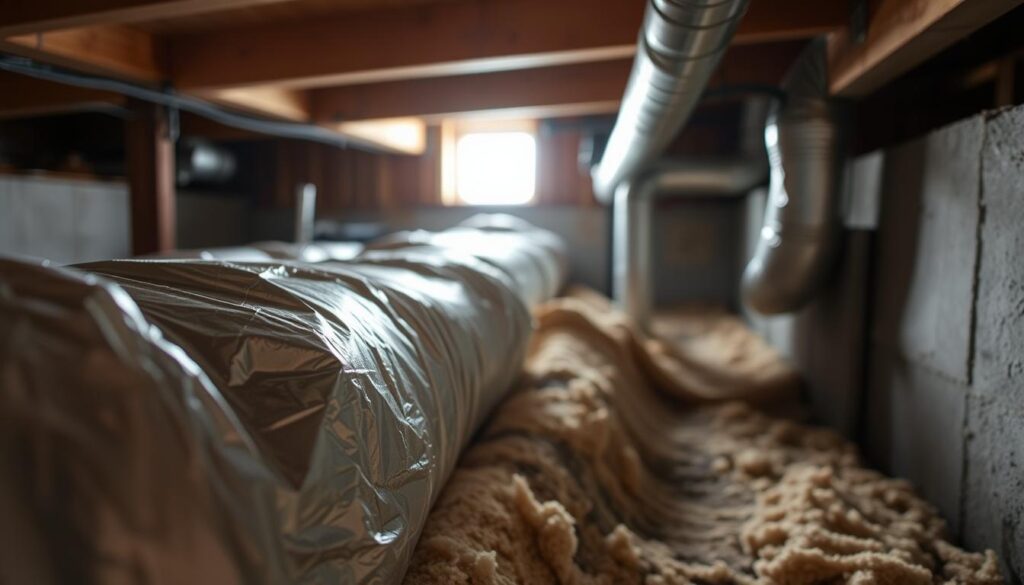
Knowing what insulation your ducts need is important. Without it, or with the wrong kind, you could lose a lot of energy. This can make your heating and cooling less effective by up to 30%.
Insulation Materials and R-Values
Choosing the right insulation for your crawl space ducts is important. Here are some good options:
- Pre-insulated flexible ductwork (R-4.2 to R-8 rating)
- Fiberglass duct wrap
- Rigid foam board insulation
- Duct board panels
Most places need at least R-6 insulation for supply ducts. In very cold or hot areas, aim for R-8, even more so in crawl spaces with vents.
Preventing Condensation and Moisture Issues
Stopping duct condensation is vital in crawl spaces. Moisture forms when warm, humid air meets cold ducts, often in summer.
Here are ways to manage moisture:
- Keep crawl space humidity under 60%
- Use proper vapor barriers
- Ensure good ventilation
- Check insulation for damage often
Watch for pest damage, as rodents and insects can harm your insulation. Replacing damaged insulation quickly keeps your system running well and avoids moisture problems.
Crawl Space Ventilation Requirements and Air Flow
Knowing about crawl space ventilation is key to a healthy home. It keeps your HVAC system safe. The air flow in your crawl space affects moisture, air quality, and ductwork performance.
Building codes have rules for crawl space air flow. Here are the main points:
- You need 1 square foot of ventilation for every 150 square feet of crawl space area
- Vapor barriers can help reduce ventilation needs
- Foundation vents should be placed strategically for good air flow
Today, there are two main ways to handle crawl space ventilation:
- Vented Crawl Spaces: The old way with foundation vents
- Sealed/Encapsulated Crawl Spaces: More common in humid areas
For sealed crawl spaces, you have two options:
- Extend your HVAC system into the crawl space
- Use a dedicated dehumidifier
For the best crawl space airflow, follow these tips:
- Keep ductwork at least 12 inches off the ground
- Check local building codes for ventilation rules
- Think about humidity and temperature changes by season
Your crawl space ventilation plan should manage moisture, save energy, and protect your home’s structure and HVAC system.
Common Mistakes When Installing Ductwork in Tight Crawl Spaces
Installing ductwork in tight crawl spaces is tricky. It can hurt your HVAC system’s performance. Knowing common mistakes helps avoid problems that lead to bad air flow and damage.
Avoiding Excessive Air Resistance
Problems with crawl space ducts often come from bad design and materials. When putting ductwork in tight spaces, think about airflow. This helps avoid performance issues.
- Minimize flexible duct runs longer than 10 feet
- Avoid compressing or kinking flexible ductwork
- Prevent sharp 90-degree turns that restrict airflow
- Maintain proper duct sizing according to HVAC calculations
Preventing Rodent and Pest Intrusion
Crawl spaces are perfect homes for rodents and insects. They can damage your ductwork. To protect your HVAC, use smart prevention methods.
| Prevention Strategy | Key Actions |
|---|---|
| Entry Point Sealing | Close foundation gaps, pipe penetrations, and utility openings |
| Duct Material Selection | Use rigid metal ductwork when possible |
| Pest Barrier Installation | Install metal mesh over foundation vents |
By knowing these key points, you can tackle ductwork installation in tight crawl spaces. This keeps your system running well and lasting longer.
Conclusion
Completing a crawl space duct installation needs precision and knowledge. The tips you learned will guide you in making a reliable home ventilation system. Every step, from choosing materials to sealing, is key for the best performance.
This installation is complex and requires respect for technical details and standards. You’ve learned that doing it right is more important than rushing. Planning well, choosing the right materials, and installing carefully will make your system work well for a long time. Understanding these details improves your home’s comfort and saves energy.
This guide helps DIY fans, but know when to call in the pros. Tasks like load calculations, following codes, and tricky installations might need HVAC experts. A quick check by a pro can avoid expensive errors and ensure your ductwork meets all standards.
Now, you know how to tackle this project with confidence. With careful planning, the right materials, and precise installation, you’re ready to create a top-notch HVAC system. This system will efficiently serve your home for many years.