
Affiliate Disclosure
HVAC Guide Guys is a participant in the Amazon Services LLC Associates Program, an affiliate advertising program designed to provide a means for sites to earn advertising fees by advertising and linking to Amazon.
Are you tired of dry, uncomfortable air? It makes your skin feel parched and your home feel lifeless. But, you can turn your living space into a perfect humidity haven with a few HVAC tweaks.

Indoor air quality is key to your home’s comfort and health. Many struggle with dry air, worse in winter when heaters lower moisture. Knowing how to manage humidity through your HVAC can greatly improve your home.
This guide will cover everything about increasing humidity in your HVAC system. You’ll learn from the basics to advanced moisture control strategies.
Key Takeaways
- Learn why humidity control is critical for home comfort
- Discover the impact of dry air on health and home environment
- Understand different humidity management techniques
- Explore whole-home humidification solutions
- Gain insights into maintaining optimal indoor moisture levels
Table of Contents
Understanding Humidity Control in Your HVAC System
Keeping the air inside your home clean and healthy is very important. Your HVAC system helps control the humidity levels. These levels affect your health and comfort.
What Is Relative Humidity and Why Does It Matter
Relative humidity shows how much moisture is in the air compared to what it can hold at a certain temperature. Keeping the right humidity levels is key for many reasons:
- It stops harmful bacteria and viruses from growing
- It lowers risks to your respiratory health
- It protects wood furniture and flooring
- It makes your home more comfortable
The Role of HVAC Systems in Indoor Moisture Management
Your HVAC system is a main tool for managing moisture inside. Studies show that homes should aim for 74°F and 50% relative humidity.
Optimal Indoor Humidity Levels for Comfort and Health
Finding the right humidity balance is about understanding temperature, moisture, and comfort. Too little or too much humidity can harm your health:
- Low Humidity (Below 30%): Causes dry skin, breathing problems, and static electricity
- High Humidity (Above 60%): Leads to mold and bacteria growth
Proper humidity management is key to creating a healthy indoor environment.
Common Causes of Low Humidity in Central Heating Systems
Central heating systems dry out indoor air. They heat air without adding moisture. This makes the air’s moisture level drop as the temperature goes up. Knowing this helps keep your home comfortable and healthy.
Several key factors contribute to low indoor humidity during heating seasons:
- Heating Process Dynamics: When air is heated, it can hold more moisture. But the moisture it actually has stays the same. This makes the air’s humidity lower.
- Building Envelope Leakage: Cracks and gaps in windows, doors, and walls let dry air in. This makes indoor humidity even lower.
- Forced air systems keep circulating heated air. This makes moisture evaporate faster.
- Inadequate humidity replacement in HVAC systems is another issue.
Knowing these causes helps you manage your home’s air quality. You can find ways to keep humidity levels right.
Winter makes these problems worse. Indoor air can get very dry. Most home heating systems make the air too dry, below 30-50% humidity. This is not good for comfort or health.
Explore Our HVAC Shop
Looking for top-rated HVAC tools, parts, and accessories? Visit our shop and find the perfect solution for your needs.
Visit the ShopTypes of Whole Home Humidification Systems
Choosing the right humidifier is key for good indoor air quality. It keeps your home comfortable and healthy. There are many humidifier types, each fitting different HVAC systems and moisture needs.
Bypass Humidifiers for Central Air Systems
Bypass humidifiers use air pressure to move air through a water panel. They fit well with your home’s ductwork, making them a budget-friendly choice. They’re great for homes with central air systems.
- Utilizes natural air pressure for water panel circulation
- Minimal additional energy consumption
- Integrates easily with existing HVAC infrastructure
Fan-Powered Humidifier Options
Fan-powered humidifiers blow air through the water panel, adding more moisture. They need special signals for control, making them perfect for big homes or complex humidity needs.
- Higher moisture generation capacity
- Advanced electronic control mechanisms
- Suitable for larger residential spaces
Steam Humidification for HVAC Applications
Steam humidifiers are the top choice for moisture control. They need special valves to avoid flooding in power outages. Electric pan humidifiers in this group adjust humidity quickly and precisely.
- Rapid humidity level adjustments
- Precise moisture control
- Enhanced safety features like spring return valves
How to Increase Humidity in HVAC System
Knowing how to manage your home’s humidity is key for comfort and air quality. You need to measure humidity accurately and plan well. This ensures your home’s environment is just right.
Assessing Your Current Humidity Levels
Finding out your home’s moisture levels is the first step. Use humidity sensors like HE-6310-1 or HE-6110-1 for accurate readings. They come in different output ranges:
- 0 to 5 VDC output
- 0 to 10 VDC output
- 1 to 2 VDC output
Place return air sensors in the return duct for a full view of your space’s moisture. These sensors help you know your home’s humidity level.
Calculating Required Humidification Capacity
To figure out your home’s humidification needs, you need to do some math. Humidification capacity depends on:
- Cubic feet of space
- Desired humidity increase
- Air changes per hour
- Outdoor temperature conditions
Think about your home’s size, the humidity you want, and your local climate. This will help you find the right humidification.
| Home Size | Typical Humidity Requirements | Daily Moisture Needed |
|---|---|---|
| 1,500 sq ft | 25-40% increase | 7-10 gallons |
| 2,000 sq ft | 30-45% increase | 10-15 gallons |
| 2,500 sq ft | 35-50% increase | 12-18 gallons |
Pro tip: Remember to consider things like high ceilings, air leaks, or very dry climates. They might make you need more humidification.
HVAC Humidifier Installation Process and Requirements
Installing a whole-home humidifier needs careful planning. You must pay attention to electrical and mechanical details. This ensures your HVAC system works well and avoids water damage.
Valve actuators are key for system safety when installing humidifiers. You’ll need to follow several important steps:
- Electrical connections for electronic humidifiers (0-10 VDC or 4-20 mA control signals)
- Spring return valves on steam humidifier lines
- Proper power supply (120V or 240V)
- Drain connection for water management
Steam humidifier setups require extra care. The valve actuator must always have power. It should have a spring return to close the valve during power outages. This stops duct flooding and protects your HVAC system from water damage.
| Humidifier Type | Power Requirements | Control Signal |
|---|---|---|
| Electronic Humidifiers | 120V/240V | 0-10 VDC |
| Electric Pan Humidifiers | 120V | Binary Outputs |
| Steam Humidifiers | 240V | 4-20 mA |
For complex systems, like steam humidifiers, get a pro to install it. A certified HVAC technician will make sure it’s done right. They’ll check for code compliance, electrical connections, and system performance.
When installing, place the humidistat in a dry spot. It should be on an interior wall, away from moisture. Connect it to your HVAC control board for automatic humidity control.
Explore Our HVAC Shop
Looking for top-rated HVAC tools, parts, and accessories? Visit our shop and find the perfect solution for your needs.
Visit the ShopStrategic Placement of Humidity Sensors in Your System
To control humidity in your HVAC system, placing sensors correctly is key. The right sensors turn your humidifier into a smart climate manager.
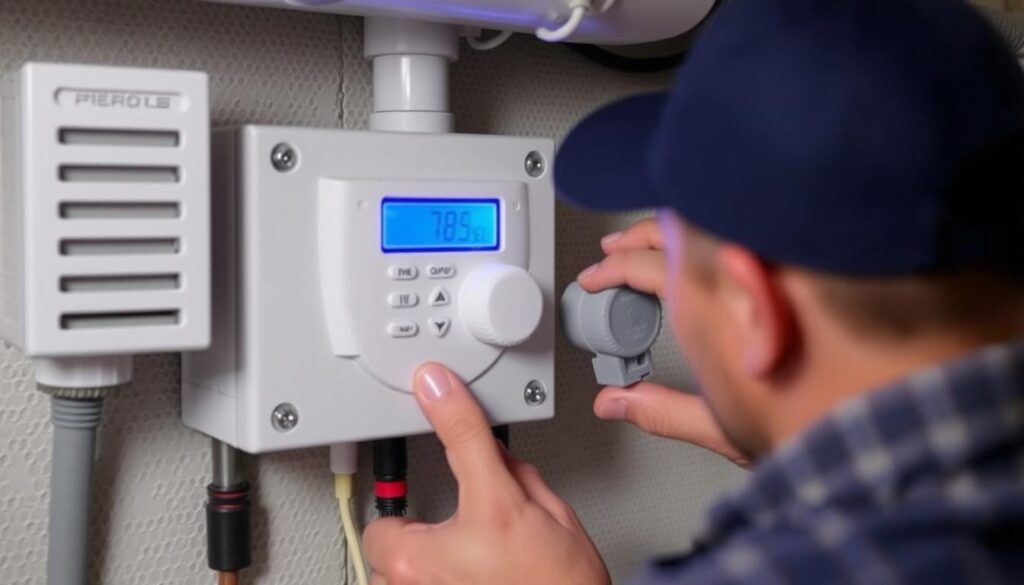
Humidity sensors are vital for keeping indoor moisture levels just right. The HE-6310 Humidity/Temperature Sensor is a top choice. It monitors your home’s air system thoroughly.
Return Air Humidity Sensor Installation
Putting the return air sensor in the return duct has big benefits:
- It gives a true average of space conditions
- It catches humidity from different rooms
- It helps manage humidity across the whole system
Here’s how to install the return air sensor right:
- Mount it 2-3 feet after return air enters the main trunk
- Make sure the sensing part is in the air flow
- Seal all holes to stop air leaks
Discharge Air Humidity Monitoring for High Limit Control
A discharge air humidity sensor is key for high-limit control. This sensor stops too much moisture by changing the steam valve or turning off the humidifier if humidity gets too high.
Your system can use HE-6310-1 or HE-6110-1 models. They come in different output ranges:
- 0 to 5 VDC
- 0 to 10 VDC
- 1 to 2 VDC (HE-6110-1 needs an external power supply)
Choosing the right sensor and where to put it keeps your home comfy and safe from moisture problems.
Maintaining Proper Moisture Levels Indoors Throughout the Year
Keeping the right humidity inside your home is key to comfort and HVAC system health. The cooling loads on your HVAC change with the seasons. Your home’s moisture affects your comfort and its lifespan.
Managing humidity well means knowing the challenges each season brings. In hot weather, the sensible-cooling load is usually higher. But in cooler, humid times, the latent-cooling load might be more.
Seasonal Adjustments for Optimal Performance
It’s important to make seasonal changes for the best indoor moisture. Here are some tips:
- Use a reliable hygrometer to check indoor humidity often
- Change your humidistat based on outside temperature and humidity
- Make sure high-moisture areas like bathrooms and kitchens have good ventilation
- Check your home’s building envelope for air leaks
Preventing Condensation and Over-Humidification
Look out for signs of moisture problems, like:
- Constant condensation on windows
- Musty smells
- Mold on walls or ceilings
- Peeling paint
- Warped wood floors
Controlling humidity helps keep you comfortable and your home safe.
Seasonal changes are needed to handle these shifts. By managing indoor moisture, you make your home healthier and more comfortable. You also protect your HVAC system and home from moisture damage.
AprilAire Humidifier Benefits for Residential Applications
AprilAire is a top name in whole-home humidifiers. They help improve indoor air quality for homeowners. Their systems tackle comfort and health issues in your home.
Their water panel tech is a game-changer. It uses a special aluminum mesh with ceramic coating. This design boosts water absorption and evaporation. It ensures moisture spreads evenly across your home.
- Comprehensive product line with multiple humidifier types
- Advanced digital humidistats for precise humidity control
- Durable construction with corrosion-resistant components
- Easy annual maintenance with simple water panel replacement
AprilAire offers a wide range of products. They have small bypass units for smaller homes and big fan-powered models for larger ones. Steam humidifiers are for those who want the best in humidity control.
Smart homeowners love the system’s smart features. The automatic digital humidistats control humidity well. They also prevent window condensation. You can adjust humidity levels from your phone with smart home integration.
Professional installation support and a robust dealer network ensure you’ll always have expert assistance when needed.
Choosing an AprilAire humidifier means your home will be comfortable and healthy for years to come.
Explore Our HVAC Shop
Looking for top-rated HVAC tools, parts, and accessories? Visit our shop and find the perfect solution for your needs.
Visit the ShopResidential HVAC Humidity Control Strategies
Keeping indoor humidity at the right level is key for a comfy and healthy home. Today’s HVAC systems have smart ways to keep moisture just right in your space.

Direct Digital Control (DDC) is a top-notch way to handle humidity. These systems use special controllers to control moisture levels with great accuracy.
Advanced Humidity Control Technologies
Modern humidity control uses smart sensors and advanced controls. The main parts are:
- Space and return air duct sensors
- NCM and DCM controllers
- Application-specific humidity management systems
Modulating Steam Valves and Electronic Humidifiers
Electrically-actuated valves bring a new level of control to humidity. These devices:
- Open based on humidity needs
- Keep humidity steady
- Save energy
The AS-AHU100 controller handles most humidity control tasks. For more complex needs, the NU-DCM101 controller with NU-NCM101 is better.
Integration with Building Automation Systems
Smart home tech has changed how we manage humidity. Today’s systems offer:
- Remote control and monitoring
- Seasonal adjustments
- Work with ventilation systems
When humidity needs to be adjusted, the system acts fast. The humidifier valve opens or the electronic humidifier turns on. As humidity rises, the system adjusts to keep it perfect. With the fan off, the steam valve closes or the electronic humidifier stops.
Tip: Pick a controller that’s easy to integrate and use. This will make your home’s humidity control more efficient.
Explore Our HVAC Shop
Looking for top-rated HVAC tools, parts, and accessories? Visit our shop and find the perfect solution for your needs.
Visit the ShopDry Air Solutions for Central Heating and Forced Air Systems
Dry air can be a big problem for homes with central heating and forced air systems. Keeping your home comfortable and healthy means keeping the right moisture levels. It’s important to know how to handle dry air to protect your home.
There are a few ways to fight dry air in your heating system:
- Install whole-house humidifiers
- Use portable room humidifiers
- Implement moisture-retention techniques
- Seal air leaks in ductwork
Finding the best solution depends on your home’s specific needs. Professional HVAC technicians can help figure out what’s best for you and suggest the right way to manage dry air.
| Dry Air Solution | Effectiveness | Cost Range |
|---|---|---|
| Bypass Humidifier | High | $300-$500 |
| Steam Humidifier | Very High | $500-$800 |
| Portable Humidifier | Medium | $50-$200 |
Keeping your home safe from dry air is key. Dry air can cause breathing problems, static shocks, and damage to wood furniture. By managing moisture, you can keep your home cozy and healthy all winter.
Troubleshooting and Maintenance for Humidification Equipment
Keeping your home’s humidifier in top shape is key. You need to pay close attention and take care of it regularly. This ensures it works well for a long time.
Knowing common problems and sticking to a maintenance plan can save you money. It also makes your humidifier last longer.
Common Issues with Whole Home Humidifiers
Many homeowners face issues with their humidifiers. These include:
- Insufficient moisture output
- White dust accumulation
- Unexpected water leaks
- Musty odors
Checking valve actuators, humidifier operation, and control sequences regularly is important. It keeps your system running smoothly and catches problems early.
Regular Maintenance Schedule and Best Practices
| Maintenance Frequency | Key Actions |
|---|---|
| Monthly | Inspect water flow, check for leaks, verify water panel coverage |
| Annually | Replace water panel, clean components, test electrical connections |
| Every 1-3 Years | Replace steam humidifier canister, descale heating elements |
“Preventive maintenance is the key to long-lasting and efficient humidification systems.” – HVAC Maintenance Experts
By sticking to these maintenance tips, you can avoid water damage. You’ll also save energy and keep your home comfortable all year.
Pro tip: Always check your manufacturer’s maintenance advice. It’s the best way to care for your humidifier.
Conclusion
Keeping indoor humidity in check is key for a comfy and healthy home. Your HVAC system is essential for keeping moisture levels just right. By learning about humidity control and choosing the right humidifier, you can greatly improve your air quality.
Investing in top-notch humidity management, like AprilAire humidifiers, can really change your home’s feel. Regular upkeep, seasonal tweaks, and smart sensor placement keep your system running smoothly all year. This helps keep you healthy, protects your home, and makes it more cozy.
Every home needs its own humidity plan. Working with HVAC experts to find what’s best for you is smart. This way, you’ll make your home a healthier, more comfy place for your family and keep it safe from moisture damage.
Humidity control is an ongoing effort, not a quick fix. Keep up with your system’s performance and be ready to tweak things as needed. With the right info and tools, you can get your home’s humidity just right, making it more comfortable and fresh.
FAQ
What is the ideal indoor humidity level for my home?
How can I tell if my home’s humidity is too low?
What types of whole home humidifiers are available?
How often should I maintain my HVAC humidification system?
Can low humidity affect my health?
Are AprilAire humidifiers recommended for residential use?
How much does a whole home humidification system cost?
What is the ideal indoor humidity level for my home?
How can I tell if my home’s humidity is too low?
What types of whole home humidifiers are available?
How often should I maintain my HVAC humidification system?
Can low humidity affect my health?
Are AprilAire humidifiers recommended for residential use?
How much does a whole home humidification system cost?
FAQ
What is the ideal indoor humidity level for my home?
The best humidity level in your home is between 30% and 50%. In winter, aim for 30-40% to avoid condensation on windows. Summer months are best at 40-50% for comfort and health.
How can I tell if my home’s humidity is too low?
Low humidity shows up as static electricity, dry skin, and breathing problems. You might also see wood furniture cracking and more dust. These signs are common in winter when it’s colder.
What types of whole home humidifiers are available?
There are three main types: bypass, fan-powered, and steam humidifiers. Each has its own benefits for different homes and needs.
How often should I maintain my HVAC humidification system?
Maintenance is key, done at least twice a year. Clean the humidifier, replace parts, and check for mineral buildup. This keeps it working well.
Can low humidity affect my health?
Yes, low humidity can harm your health. It causes dry skin, irritated breathing, and makes you more likely to get sick. It can also worsen allergies and asthma.
Are AprilAire humidifiers recommended for residential use?
AprilAire humidifiers are top-notch in the HVAC world. They’re reliable, efficient, and cover your whole home. They fit well with many heating and cooling systems.
How much does a whole home humidification system cost?
Prices vary from 0 to
FAQ
What is the ideal indoor humidity level for my home?
The best humidity level in your home is between 30% and 50%. In winter, aim for 30-40% to avoid condensation on windows. Summer months are best at 40-50% for comfort and health.
How can I tell if my home’s humidity is too low?
Low humidity shows up as static electricity, dry skin, and breathing problems. You might also see wood furniture cracking and more dust. These signs are common in winter when it’s colder.
What types of whole home humidifiers are available?
There are three main types: bypass, fan-powered, and steam humidifiers. Each has its own benefits for different homes and needs.
How often should I maintain my HVAC humidification system?
Maintenance is key, done at least twice a year. Clean the humidifier, replace parts, and check for mineral buildup. This keeps it working well.
Can low humidity affect my health?
Yes, low humidity can harm your health. It causes dry skin, irritated breathing, and makes you more likely to get sick. It can also worsen allergies and asthma.
Are AprilAire humidifiers recommended for residential use?
AprilAire humidifiers are top-notch in the HVAC world. They’re reliable, efficient, and cover your whole home. They fit well with many heating and cooling systems.
How much does a whole home humidification system cost?
Prices vary from $300 to $1,500. This depends on the type, size, and installation complexity. Adding professional installation can cost $200 to $600 more.
Can I install a humidifier myself?
Some people try DIY, but it’s best to hire a pro. They ensure the right size and correct installation for best performance.
How do steam humidifiers differ from other types?
Steam humidifiers create pure steam for precise humidity control. They work on their own, perfect for big spaces and even moisture.
What are the signs that my humidifier needs replacement?
Look for signs like low humidity, mineral buildup, strange noises, leaks, and reduced moisture. If your humidifier is over 10-15 years old, it’s time for a new one.
,500. This depends on the type, size, and installation complexity. Adding professional installation can cost 0 to 0 more.
Can I install a humidifier myself?
Some people try DIY, but it’s best to hire a pro. They ensure the right size and correct installation for best performance.
How do steam humidifiers differ from other types?
Steam humidifiers create pure steam for precise humidity control. They work on their own, perfect for big spaces and even moisture.
What are the signs that my humidifier needs replacement?
Look for signs like low humidity, mineral buildup, strange noises, leaks, and reduced moisture. If your humidifier is over 10-15 years old, it’s time for a new one.