Affiliate Disclosure
HVAC Guide Guys is a participant in the Amazon Services LLC Associates Program, an affiliate advertising program designed to provide a means for sites to earn advertising fees by advertising and linking to Amazon.
Are you tired of sweating through summer nights with an underperforming cooling system? What if you could transform your home’s HVAC performance without breaking the bank?
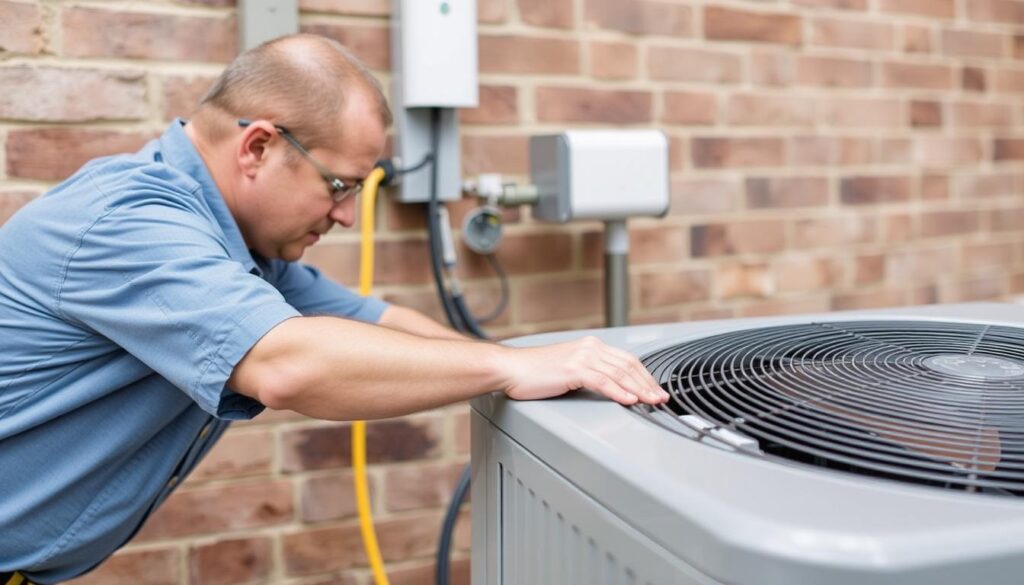
Improving your home cooling system isn’t just about lowering the thermostat—it’s about understanding how to make HVAC colder through strategic enhancements. Your air conditioning system works hard to keep you comfortable, but many homeowners overlook critical opportunities to boost its cooling efficiency.
This guide will show you how to make your cooling system better. You’ll learn about maintenance and smart technology upgrades. These steps will help you make your home cooler and more comfortable, and might even save you money on energy costs.
Key Takeaways
- Learn how HVAC systems generate cool air
- Understand the importance of regular system maintenance
- Discover cost-effective cooling improvement strategies
- Identify possible energy savings opportunities
- Explore professional and DIY cooling optimization techniques
Table of Contents
Understanding Your HVAC System and Cooling Capacity
Your home’s cooling system is a complex machine designed to create comfortable living spaces. Knowing how it works can help you increase HVAC cooling efficiency. It also boosts the cooling performance of hvac systems. Let’s explore the mechanics behind your air conditioning.
How Central Air Conditioning Works
Central air conditioning is a heat removal system. It doesn’t create cold air but removes heat from your indoor spaces. The process involves a continuous cycle of heat transfer that keeps your home comfortable during hot weather.
- Indoor coil absorbs heat from home’s air
- Compressor pressurizes refrigerant
- Outdoor coil releases heat outside
- Expansion valve resets pressure
The Role of Refrigerant in Heat Transfer
Refrigerant acts as a critical heat shuttle in your cooling system. This specialized fluid absorbs and releases heat as it circulates through your HVAC system. It enables efficient temperature management.
| Refrigerant Type | Environmental Impact | Efficiency Rating |
|---|---|---|
| R-410A | Higher Global Warming Potentia | Standard Efficiency |
| R-32 | Lower Global Warming Potentia | High Efficiency |
Key Components That Affect Cooling Performance
Several critical components work together to boost cooling performance of hvac systems. Understanding these parts can help you maintain optimal functionality:
- Compressor: The system’s “heart”
- Evaporator coil: Indoor heat absorption
- Condenser coil: Heat release mechanism
- Expansion valve: Pressure regulator
- Blower fan: Air circulation controller
By comprehending these elements, you can better maintain your HVAC system. This ensures maximum cooling efficiency throughout your home.
Explore Our HVAC Shop
Looking for top-rated HVAC tools, parts, and accessories? Visit our shop and find the perfect solution for your needs.
Visit the ShopHow to Make HVAC Colder Through Proper Maintenance
Keeping your AC system in good shape is key to a cool and energy-saving home. If you ignore regular maintenance, your cooling might not work as well. This can also make your energy bills go up. By following some simple tips, you can make your AC cooler and more comfortable.
Your HVAC system needs regular care to work its best. This care stops sudden breakdowns and makes your cooling system last longer.
- Inspect and replace air filters every 1-3 months
- Keep outdoor unit clear of debris
- Clean supply and return vents
- Check refrigerant levels
- Ensure proper airflow around the unit
Getting help from a pro is important for your AC’s smooth operation. Certified technicians can do detailed checks that you can’t do yourself.
| Maintenance Task | Frequency | Importance |
|---|---|---|
| Air Filter Replacement | Monthly/Quarterly | High |
| Coil Cleaning | Annually | Critical |
| Refrigerant Check | Annually | Essential |
When your AC isn’t cooling well, start with basic maintenance steps. Check for signs like less airflow, odd noises, or uneven cooling. These signs mean your system might need a pro’s help.
Pro Tip: Book professional HVAC maintenance early in the cooling season. This ensures your system works at its best.
By following these tips, you can make your home cooler, use less energy, and avoid expensive fixes. Regular maintenance is your strongest defense against summer heat and HVAC problems.
Optimize Your Thermostat Settings for Maximum Cooling
Your thermostat controls your home’s comfort and energy use. Learning to adjust it can cool your home better and save money.
Smart thermostats are more than just temperature controls. They offer advanced features to boost your comfort and cut energy costs.
Programming Temperature Setpoints Effectively
Effective cooling starts with smart temperature settings. Here are some tips:
- Set temperature to 78°F when at home and active
- Raise temperature to 85°F when away
- Implement 7-10°F setbacks for 8 hours to save up to 10% annually
Smart Thermostat Features That Boost Cooling
Modern smart thermostats have features to enhance cooling:
| Feature | Benefit |
|---|---|
| Occupancy Sensors | Automatically adjust temperature based on home occupancy |
| Geofencing | Cool home as you approach, using smartphone location |
| Remote Access | Control temperature from anywhere via smartphone app |
| Energy Reports | Track cooling patterns and suggest efficiency improvements |
Getting a smart thermostat can cut cooling costs by 10-15%. They cost $120-$250 and can save you money in two years.
Improve Airflow Throughout Your Home
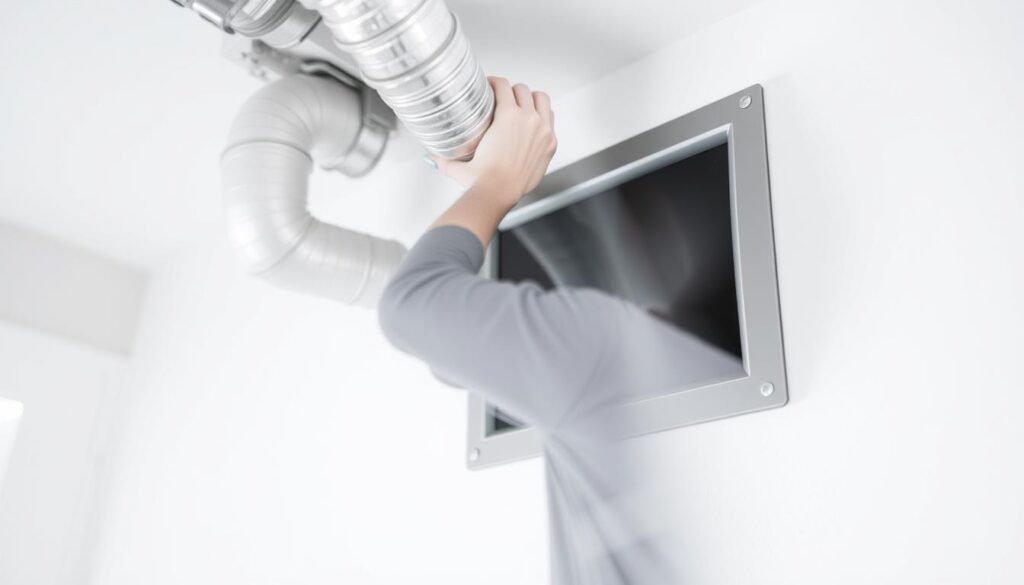
Understanding airflow is key to better cooling. If airflow is blocked, your air conditioner works less well. This makes your home less cool and raises your energy bills.
To cool your home better, try these tips:
- Keep supply and return vents open and clear
- Make sure there’s at least two feet around your outdoor unit
- Move furniture away from air registers
- Spread vents evenly in each room
Where you place vents matters a lot. Placing vents under windows helps fight heat and boosts air flow. But, don’t block vents with furniture. This can cut your cooling power by up to 30%.
Your duct system is also important. A well-made duct system ensures air flows right. Watch out for problems like:
- Ducts that are too small causing too much pressure
- Sharp turns in ducts that slow air
- Leaks in ducts that let air escape
By making these simple changes, you can make your cooling system work better. You won’t need to spend a lot on new equipment. Just a few tweaks can make your home cooler and more comfortable.
Clean and Replace Air Filters Regularly
Your HVAC system works best when air filters are well-maintained. A clean air filter keeps your system running smoothly. It also ensures good airflow and clean indoor air.
Choosing the Right MERV Rating for Your System
MERV ratings help pick the right air filter for your system. Not all filters are the same. Choosing the right one boosts your HVAC’s cooling efficiency.
- MERV 1-4: Basic protection, captures large particles
- MERV 5-8: Moderate filtration for dust and pollen
- MERV 9-12: High-efficiency capture for smaller particles
- MERV 13-16: Premium filtration for allergens and microscopic contaminants
How Often to Change Filters for Optimal Performance
Regular filter maintenance keeps your system running well. How often you need to change filters depends on a few things:
- Standard homes: Replace every 90 days
- Homes with pets: Replace monthly
- Allergy sufferers: Replace every 30-45 days
- Homes with smoke or high dust: Replace every 60 days
Quick tip: Hold your filter up to light. If no light passes through, it’s time for a new one. A clean filter keeps your HVAC efficient and your air fresh.
The EPA recommends using filters with MERV 13 ratings for optimal indoor air quality and system performance.
Explore Our HVAC Shop
Looking for top-rated HVAC tools, parts, and accessories? Visit our shop and find the perfect solution for your needs.
Visit the ShopSeal and Insulate Ductwork to Prevent Cool Air Loss
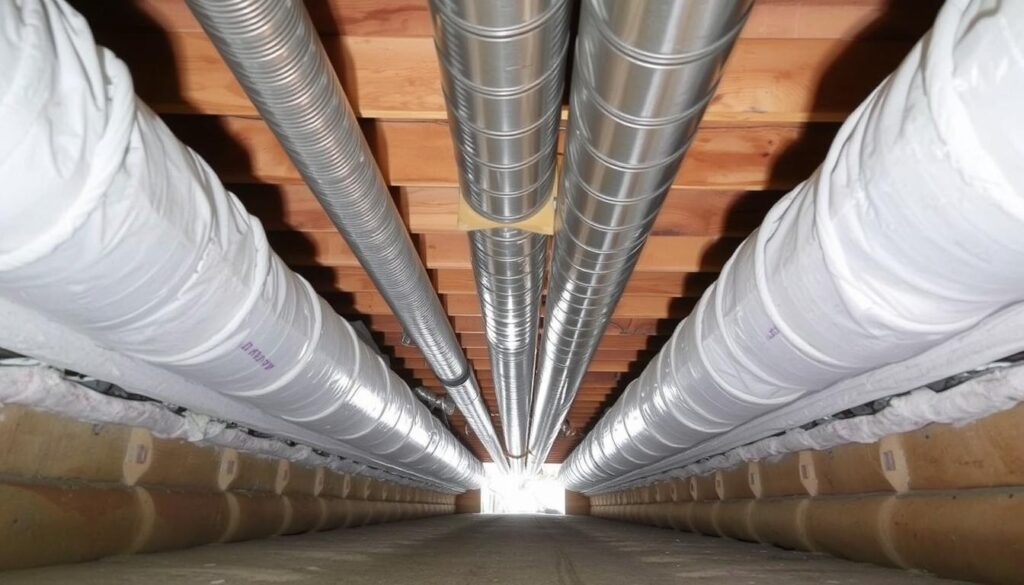
Your home’s ductwork might be secretly working against your cooling efforts. Sealing ducts for cooling is key but often ignored. It can greatly boost your HVAC system’s performance. Leaky ducts can lose up to 30% of cool air, making your energy efforts seem futile.
Improving ductwork efficiency starts with spotting common issues. These usually include:
- Joints and connections with visible gaps
- Disconnected duct segments in attics or crawl spaces
- Worn-out or damaged duct insulation
- Unsealed connections around the air handler
To stop cool air loss, a smart plan is needed. HVAC experts suggest using mastic sealant or UL-listed metallic tapes. Don’t rely on cloth duct tape; it breaks down fast and doesn’t seal well.
Look out for these signs that your ductwork needs fixing:
- Inconsistent room temperatures
- Unexpectedly high energy bills
- Excessive dust around air registers
- Visible tears or disconnections in ductwork
For the best cooling, get a professional to do a duct leakage test. This tool measures air loss accurately. It helps pinpoint areas for better sealing. Proper sealing boosts comfort and cuts cooling costs by up to 20%.
Explore Our HVAC Shop
Looking for top-rated HVAC tools, parts, and accessories? Visit our shop and find the perfect solution for your needs.
Visit the ShopUpgrade to a Higher Efficiency Cooling System
Upgrading your home’s cooling system can make your home more comfortable and save you money. A high-efficiency cooling system upgrade is great for those wanting better indoor climate and lower bills.
Your old air conditioning might be costing you more than you think. Getting a new, modern system can save you money and make your home more comfortable.
Understanding SEER2 and EER2 Ratings
The new efficiency ratings from 2023 give a clearer view of your cooling system’s performance. SEER2 and EER2 ratings show how well your air conditioner works in real life.
- SEER2 measures seasonal cooling efficiency
- EER2 provides snapshot efficiency at specific temperatures
- Higher ratings mean lower operating costs
Benefits of Variable-Speed Heat Pump Systems
Variable-speed HVAC systems offer more than just temperature control. They provide unmatched precision and energy savings.
| Feature | Traditional System | Variable-Speed System |
|---|---|---|
| Temperature Control | On/Off Cycling | Precise 0.25°F Adjustment |
| Energy Efficiency | Lower Efficiency | Up to 54% Higher Cooling Efficiency |
| Noise Level | Louder Cycling | Significantly Quieter Operation |
Choosing a variable-speed heat pump system can cut your cooling costs and enhance comfort. The initial cost is worth it for the energy savings and better climate control.
Professional HVAC Service and Tune-Up Checklist
Keeping your cooling system in top shape is more than just a DIY job. A professional HVAC tune-up can stop unexpected breakdowns and keep your system running smoothly all summer. Knowing what a certified HVAC technician does helps you make smart choices for your home’s cooling needs.
A detailed professional hvac tune-up includes several key steps:
- Refrigerant charge verification
- Airflow measurement across evaporator coils
- Thorough cleaning of indoor and outdoor coils
- Electrical connection inspection and tightening
- Blower motor and belt assessment
- Capacitor testing
- Duct system leakage evaluation
When looking for a certified HVAC technician, check for certain qualifications:
- NATE (North American Technician Excellence) certification
- ACCA (Air Conditioning Contractors of America) membership
- State-specific licensing and insurance
Pro tip: Always ask for Manual J load calculations when thinking about system replacements or upgrades. This makes sure your cooling system fits your home perfectly.
“Proper maintenance is the key to efficient cooling and long-lasting HVAC performance.” – HVAC Industry Expert
Before the cooling season starts, book your professional cooling system check with a skilled technician. This early action can save you from expensive emergency fixes and keep your home comfortable.
| Maintenance Task | Recommended Frequency |
|---|---|
| Professional HVAC Tune-Up | Annually (Spring) |
| Air Filter Replacement | Every 1-3 months |
| Outdoor Unit Cleaning | Before Cooling Season |
Regular professional maintenance not only makes your HVAC system last longer but also saves energy and keeps your home comfortable.
Conclusion
Your journey to keep your air conditioning cold starts now, not just by reading this guide. It involves taking action and using smart technology. You need to make your home cool and comfortable all summer.
Every little change you make helps a lot. Like changing air filters or sealing ducts. These small steps can save a lot of energy. They might even cut your cooling costs by up to 50%.
There are also ways to save money on these upgrades. The Energy Efficient Home Improvement Credit can cover up to 30% of costs, up to $3,200 a year. You can also find local rebates through ENERGY STAR’s Rebate Finder.
Keeping your home cool is easier than you think. Think about getting a professional to check your HVAC system. By following this guide, you’ll make your home cooler and more energy-efficient. This will save you money and keep you comfortable.