Affiliate Disclosure
HVAC Guide Guys is a participant in the Amazon Services LLC Associates Program, an affiliate advertising program designed to provide a means for sites to earn advertising fees by advertising and linking to Amazon.
Ever looked at your home’s heating and cooling system and felt lost? What’s behind those mysterious metal boxes that keep your home comfy?
Understanding your HVAC system is not just for pros. With the right info, you can unlock the secrets of heating, ventilation, and air conditioning. This guide will turn you from a confused homeowner into a confident system identifier.
Knowing your HVAC system’s details can save you cash and prevent costly repairs. It helps you make smart maintenance choices. Whether you’re new to homeownership or just curious about your indoor climate, this guide has got you covered.
Key Takeaways
- Learn to recognize different HVAC system types
- Understand the basic components of heating and cooling systems
- Discover how to locate critical system information
- Save money through proactive system identification
- Improve home comfort with targeted maintenance
Table of Contents
What Is an HVAC System and Why Identification Matters
Your home’s comfort depends on knowing about the heating, cooling, and ventilation systems. These systems work hard behind the scenes. An HVAC system is more than a machine; it’s a complex system that keeps your home at the right temperature and air quality.
At the heart of every HVAC system are key components. The refrigerant is like the system’s blood, moving heat around. The evaporator coils grab indoor heat, and the compressor changes the refrigerant’s state from gas to liquid.
Understanding HVAC Components
Important parts of your HVAC system include:
- Compressor: Converts refrigerant between gas and liquid states
- Condenser: Releases absorbed heat outdoors
- Blower motor: Circulates air through the system
- Ductwork: Transports air throughout your home
- Vents: Provide openings for air to enter rooms
The Importance of Knowing Your System Type
Knowing your HVAC system is important. It helps you:
- Talk better with HVAC experts
- Get the right parts
- Know how to take care of it
- Understand repair costs
- Choose energy-saving upgrades wisely
The ventilation part is key for clean air inside. It removes dust, allergens, and more. Knowing your system ensures it works well and lasts longer, whether it’s a furnace or heat pump.
Explore Our HVAC Shop
Looking for top-rated HVAC tools, parts, and accessories? Visit our shop and find the perfect solution for your needs.
Visit the ShopEssential Components That Define Your HVAC System
Understanding your HVAC system’s parts is key to keeping your home comfy. Each part is vital for a cozy and energy-saving home.
- Compressor: Increases refrigerant pressure and temperature, acting as the system’s pump
- Evaporator Coils: Located in the indoor unit where refrigerant absorbs heat from indoor air
- Condenser: The outdoor unit with coils that release heat to the environment
- Blower Motor: Circulates conditioned air through your home’s ductwork
Your thermostat controls the temperature, letting you set your comfort level. Today’s systems often use R410A refrigerant. It’s better for the environment than older R-22 systems.
The ductwork is a network of airways in your home. Vents let conditioned air into rooms. You might have a furnace or heat pump for warmth, each with its own features.
Knowing your system’s components empowers you to make informed maintenance and upgrade decisions.
How to Identify HVAC Systems in Your Home
Finding your home’s HVAC system might seem hard at first. But, with a little effort, you’ll get to know it well. Knowing where and what your system is helps with upkeep, fixes, and when it’s time for a new one.
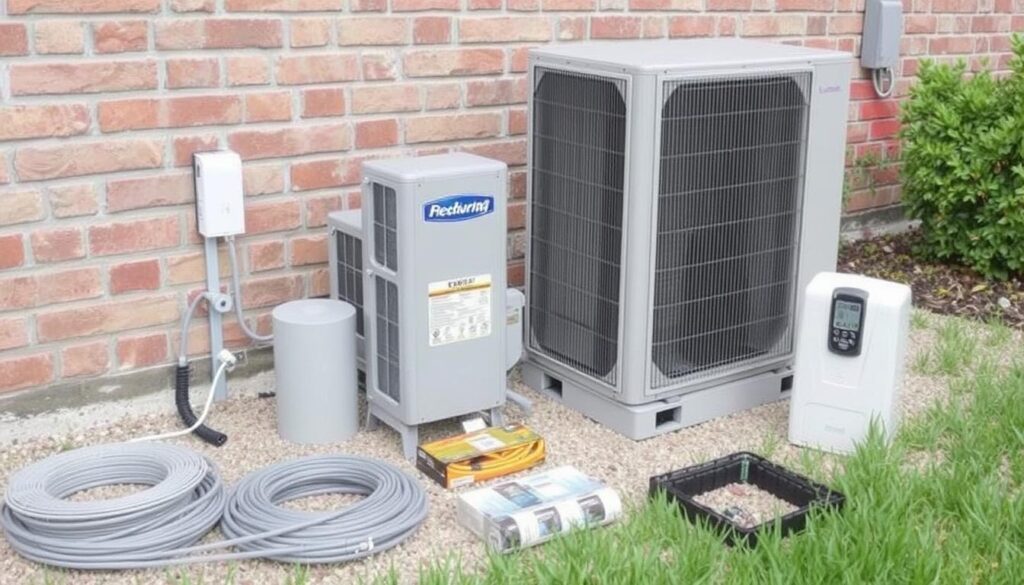
Your HVAC system has two main parts: indoor and outdoor units. They work together to keep your home at the right temperature and comfy.
Locating Indoor and Outdoor Units
Most home HVAC systems are set up in certain spots:
- Indoor units are usually found in:
- Basement
- Utility closet
- Garage
- Attic space
- Outdoor units are often placed:
- Beside the house
- On a concrete pad
- Near exterior walls
Checking Model Numbers and Manufacturer Labels
Finding your system’s model number is key to knowing its details. Look for labels on the outdoor unit and indoor air handler. These labels usually have:
- Manufacturer name
- Model number
- Serial number
- Manufacturing date
Pro tip: Take a clear photo of these labels. It helps when you talk about maintenance or need a new system with HVAC pros.
Recognizing Different Types of Heating Systems
Knowing about the heating systems in your home is key. It helps you keep them running well and comfortable. Each system has its own way of heating and using energy.
Gas Furnace Identification
Gas furnaces are a common choice for homes. They are usually found in basements, closets, or garages. Look for these signs:
- Visible yellow gas supply lines with a manual shut-off valve
- A burner assembly visible through an inspection window
- A heat exchanger (metal chamber where combustion occurs)
- A flue pipe or vent that exhausts combustion gases outdoors
- Connections to your home’s ductwork
There are two main types of furnaces. Standard-efficiency ones have a standing pilot light. High-efficiency ones use PVC vent pipes.
Heat Pump Recognition
Heat pumps work all year, unlike traditional systems. They look like air conditioners but have special features:
- Presence of reversing valves
- “Heat pump” labels on equipment
- Outdoor unit running during winter
- Specific heat pump setting on thermostat
There are two main types of heat pumps. Air-source is the most common. Ground-source/geothermal systems are another option.
Boiler and Radiant Heating Systems
Boilers and radiant heating systems are less common but important. They have unique parts:
- Water heating chamber
- Pressure gauges
- Expansion tanks
- Connections to radiators or radiant floor tubing
Boilers can be hot water or steam. They warm your home without forced air.
| Heating System | Primary Location | Key Characteristics |
|---|---|---|
| Gas Furnace | Basement/Closet | Ductwork, Pilot Light, Flue Pipe |
| Heat Pump | Outdoor/Indoor Units | Year-Round Operation, Reversing Valve |
| Boiler | Utility Room | Water Chamber, Radiator Connections |
Identifying Central Air Conditioning Units
Understanding your central air conditioning system is key to keeping your home comfortable. Central AC units cool your home through a complex process. This process involves several important parts working together smoothly.
The heart of a central AC system has two main parts:
- Outdoor condenser unit
- Indoor evaporator unit
Your air conditioning system uses a precise cooling cycle. Liquid refrigerant takes in heat from indoor air in the evaporator coils, turning into gas. The compressor then raises the gas’s pressure and temperature, moving it through the system.
In the outdoor unit’s condenser coils, the refrigerant gives up heat to the outside, turning back into liquid. The expansion valve is vital. It lowers the refrigerant’s pressure and cools it before it goes back to the evaporator.
Central AC units are connected by refrigerant lines and share ductwork with your heating system. The indoor unit is usually attached to the furnace or in an air handler.
Pro Tip: Regular maintenance of both indoor and outdoor units ensures efficient cooling and extends your system’s lifespan.
When checking your central AC system, look for these signs:
- Outdoor metal cabinet with fan
- Indoor unit near furnace
- Refrigerant line connections
- Manufacturer labels with model numbers
Knowing your central AC system’s components helps you communicate effectively with HVAC professionals and understand your home’s cooling infrastructure.
Explore Our HVAC Shop
Looking for top-rated HVAC tools, parts, and accessories? Visit our shop and find the perfect solution for your needs.
Visit the ShopUnderstanding Split Systems Versus Packaged Units
Homeowners face a choice between split systems and packaged units for HVAC. Each has its own benefits for comfort, energy use, and upkeep.
Split System Characteristics
Split systems stand out because they split into two main parts. The condenser and compressor are outside, while the evaporator or air handler is inside. Copper tubing connects these parts through your home’s wall.
- They use less energy than older systems
- They’re quieter inside because the compressor is outside
- They’re easier to maintain and access
Split systems can be set up in different ways. They can:
- Just cool your home (AC with a separate furnace)
- Keep your home cool and warm (heat pump)
Packaged System Features
Packaged units are a unique HVAC design. They have everything in one big cabinet.
They’re often placed:
- On a concrete pad next to your home
- On the roof (common in commercial buildings)
- In an attic (rarely in homes)
You can spot packaged units by their:
- Larger size than usual condensers
- Both supply and return ductwork
- No separate indoor air handler
There are three main types of packaged systems:
- Packaged air conditioners (cooling only)
- Packaged heat pumps (heating and cooling)
- Packaged gas-electric units (AC with gas furnace)
Identifying Ductless Mini-Split and Hybrid Systems
Ductless mini-split systems are a modern way to heat and cool homes. They offer efficient temperature control without the need for ductwork.
Finding a ductless mini-split system is easy. You’ll see two main parts:
- An indoor air handling unit mounted on a wall or ceiling
- An outdoor compressor/condenser unit connected by refrigerant lines
Key identification features of mini-split systems include:
- Compact indoor units with sleek, modern designs
- No visible ductwork throughout your living spaces
- Individual temperature controls for different rooms
“Ductless systems provide targeted comfort with remarkable energy efficiency.” – HVAC Professional
Hybrid systems mix different heating and cooling technologies. They often combine a heat pump with a gas furnace. These systems automatically switch to use the most efficient energy source.
Identifying a hybrid system involves looking for:
- Two distinct heating units
- Smart control mechanisms
- Integrated thermostat with multiple settings
Knowing your HVAC system’s setup is key. It helps keep it running well and makes maintenance easier.
Explore Our HVAC Shop
Looking for top-rated HVAC tools, parts, and accessories? Visit our shop and find the perfect solution for your needs.
Visit the ShopCommercial HVAC System Identification
Commercial HVAC systems are different from home setups. They face unique challenges in identification and upkeep. These systems are built for bigger spaces, handle multiple zones, and control the environment more strictly.
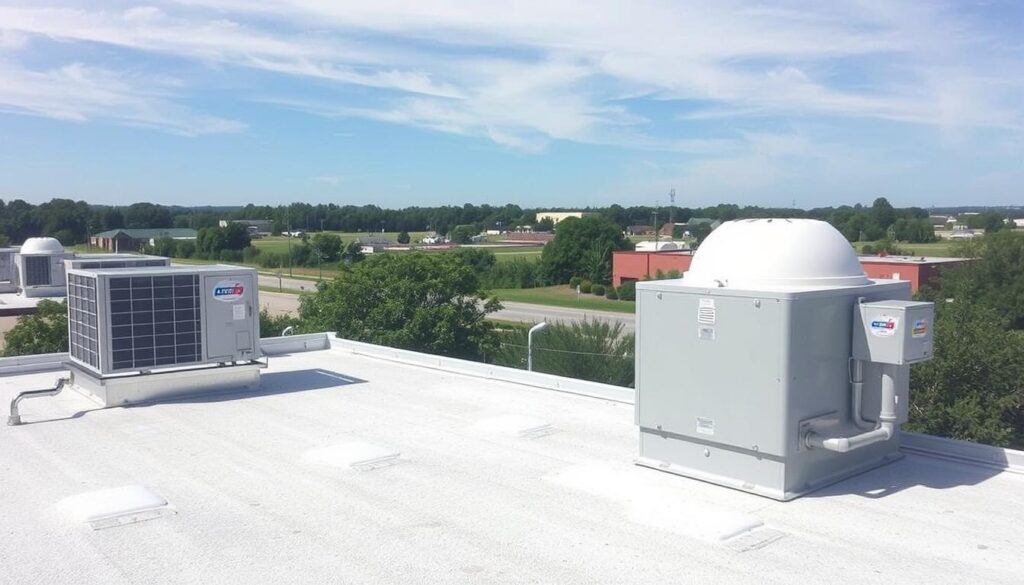
Knowing about commercial HVAC systems needs special knowledge. Facility managers and maintenance teams must be able to spot and check these complex systems well.
Rooftop Units: Powerful Climate Control Solutions
Rooftop units are a common choice for managing commercial climates. They come with:
- Compact, self-contained design
- Centralized cooling and heating capabilities
- Modular construction for easy replacement
- Enhanced energy efficiency features
“Commercial rooftop units can manage climate control for spaces ranging from small offices to large industrial complexes.” – HVAC Engineering Quarterly
Large-Scale Packaged Systems
Large-scale packaged HVAC systems are great for big commercial areas. They are known for:
- Integrated heating and cooling components
- High-capacity performance
- Scalable design for varied building requirements
- Advanced control mechanisms
Being able to spot these systems can make maintenance easier. It also boosts energy efficiency and cuts down on disruptions in commercial places.
Reading Your HVAC System’s Data Plate
Deciphering your HVAC system’s data plate is like unlocking a secret code. This small metal tag holds the key to understanding your system’s entire history and specifications. It’s located on the outdoor condenser unit’s side panel or the indoor unit’s access door. The data plate provides essential details that can save you time and money during repairs or replacements.
When examining your data plate, look for these key pieces of information:
- Manufacturer Name and Logo: Identifies the brand of your HVAC system
- Model Number: Encodes specifications about capacity, efficiency, and features
- Serial Number: Reveals the manufacturing date and specific unit identification
- Capacity/Tonnage: Shows cooling capacity measured in BTUs or tons
Pay special attention to efficiency ratings like SEER for air conditioners and heat pumps, or AFUE for furnaces. These numbers tell you how energy-efficient your system is. The refrigerant type and charge amount are critical for service and repairs. Electrical specifications including voltage, amperage, and phase ensure you understand the system’s power requirements.
Pro Tip: Always photograph the data plate for easy reference when scheduling maintenance or seeking replacement parts.
Safety comes first when accessing the data plate. Always turn off power to the unit before removing any panels. Major manufacturers like Carrier, Trane, Lennox, and Rheem use specific coding systems. These can help you decode the detailed information about your specific HVAC unit.
Conclusion
Understanding your HVAC system is more than just knowing what it looks like. By learning to find and check both indoor and outdoor units, you get to know your home’s heating and cooling better. Knowing about different setups like split, packaged, ductless, and hybrid systems helps you make smart choices about upkeep and upgrades.
Being able to read and understand data plates lets you talk clearly with service techs. Whether you have a gas furnace, heat pump, or boiler, this skill lets you discuss your equipment confidently. You’ll also know the difference between home and business systems, ensuring you get the right service for your setup.
Start by taking photos of your system’s data plate and setting up a regular maintenance plan. While this guide gives you great tips for identifying systems, remember that pros are key for tricky fixes and replacements. Your new knowledge will make working with them easier and help you save on energy costs.
Take on the role of an informed homeowner. By using the identification tips shared here, you can make your HVAC system last longer, cut down on bills, and keep your home cozy. Investing in learning about these systems will bring you long-term comfort and efficiency.