
Affiliate Disclosure
HVAC Guide Guys is a participant in the Amazon Services LLC Associates Program, an affiliate advertising program designed to provide a means for sites to earn advertising fees by advertising and linking to Amazon.
Ever wondered what makes top HVAC pros stand out? Getting a master license could open doors to new career heights in the HVAC world.

Going for an HVAC master license is a smart career step for ambitious techs. It means meeting education needs and getting the right work experience. This path takes dedication—usually 8-9 months of training and thousands of work hours.
It might seem tough to meet state rules and pass tough exams. But the benefits are big: better pay, more business chances, and a respected spot in the market.
Knowing the steps to get licensed is key. From filling out forms to getting insurance and bonds, each step gets you closer to being a master contractor.
Key Takeaways
- Master HVAC license requires significant time and financial investment
- Comprehensive training spans 8-9 months
- Licensure costs range from $500 to $2,000
- Offers enhanced career advancement opportunities
- Involves rigorous examination and work experience requirements
- Provides legal authorization for independent contracting
Table of Contents
Understanding the HVAC Master License and Its Importance
Becoming an HVAC master technician is a big step in your career. This advanced certification shows you’re more than just a basic technician. It shows you’re really good at heating, ventilation, and air conditioning.
The master license is a top honor. It proves you know a lot about complex HVAC systems. People with this certification are in high demand. They have skills that employers and clients really value.
What Distinguishes a Master License from Other Certifications
A master license is different from other certifications. It requires:
- Deep technical knowledge
- Years of work experience
- Great troubleshooting skills
- Understanding of complex systems
Career Advancement and Earning Capacity
Having a master-level certification can really help your career. You can earn more and move up faster. Here’s what you can expect:
| Career Level | Average Annual Salary | Potential Growth |
|---|---|---|
| Journeyman HVAC Technician | $55,000 | Standard |
| Master HVAC Technician | $85,000 – $110,000 | High |
Legal Requirements for Independent Contracting
A master license lets you work on your own. You can:
- Get professional permits
- Work on big commercial projects
- Manage other HVAC techs
- Start your own business
Getting a master license changes your career. It opens doors to more money and respect in the HVAC world.
Meeting the Educational and Training Prerequisites
To get an HVAC Master License, you need to plan your education well. Start by learning what training you need for your certification.
Most states want you to finish certain educational steps. You’ll need both formal classes and special training programs.
- High school diploma or equivalent (GED)
- Technical school or community college HVAC program
- Accredited vocational training certification
- Minimum of 2-4 years of HVAC coursework
Make sure your education covers important skills like:
- Electrical systems and circuit design
- Refrigeration principles
- Advanced heating and cooling technologies
- Energy efficiency standards
- Environmental regulations
Pro tip: Choose programs that are accredited by HVAC groups like HVAC Excellence or North American Technician Excellence (NATE) to boost your skills.
Technical schools have HVAC programs that last from 6 months to 2 years. These programs give you hands-on experience, theory, and prep for certification exams.
“Invest in quality education – it’s the cornerstone of your HVAC master license journey.” – HVAC Professional Training Association
Explore Our HVAC Shop
Looking for top-rated HVAC tools, parts, and accessories? Visit our shop and find the perfect solution for your needs.
Visit the ShopGaining Required Work Experience Under Licensed Supervision
To get an HVAC master license, you need to gather work experience at the journeyman level. Most states ask for 2,000 to 6,000 hours of work under a licensed master contractor. You must have at least one year as a licensed journeyman to apply for your master license.
Being a successful HVAC pro means more than just working hours. You need to gain skills through real, hands-on training.
Documenting Your Journeyman-Level Hours
Keeping accurate records is key to your licensing journey. You’ll need to keep detailed records that include:
- Exact dates of employment
- Specific tasks performed
- Systems worked on
- Verification signatures from supervising master contractors
State licensing boards usually have official forms or online portals for logging hours. If you don’t document your experience right, it can slow down your licensure.
Types of HVAC Systems Experience
Licensing boards want you to have experience with many system types and services. Your experience should include:
- Residential and commercial installations
- Service and repair work
- System design and load calculations
- Ductwork fabrication and installation
- Refrigerant handling and recovery
- Electrical troubleshooting and controls
- Preventive maintenance procedures
It’s important to have a wide range of experience. Working only in one area might not meet the full HVAC competency requirements.
How to Get HVAC Master License Through State-Specific Requirements
Getting an HVAC master license is complex. Each state has its own rules. This makes it hard for HVAC pros to know what to do.
States have different ways of licensing contractors. They can have:
- Comprehensive statewide master contractor licenses
- Multiple license classes based on system complexity
- Separate licenses for residential and commercial work
- No statewide licensing, leaving it to local areas
What you need to do depends on your state. You should look into:
- How old you must be (usually 18)
- How many hours of experience you need
- What education is required
- What tests you must pass
- Insurance and bonding needs
Licensing costs vary a lot. Some states charge less than $100, while others charge hundreds. Bond requirements also differ, from $10,000 to $25,000 or more.
| State Category | Licensing Approach | Typical Requirements |
|---|---|---|
| Comprehensive Licensing States | Statewide uniform standards | Detailed examination, experience verification |
| Multi-Class States | Tiered licensing based on complexity | Different requirements per system type |
| No Statewide Licensing | Local municipal regulation | Variable requirements by city/county |
17 states don’t have statewide HVAC licensing. In these places, you need to check local rules. Some areas have agreements that make moving licenses easier, like Alabama-Tennessee and Georgia-South Carolina.
It’s smart to talk to state boards, join professional groups, and ask experienced contractors. Rules change often, so it’s important to stay up to date.
Preparing for the Master HVAC Licensing Examination
To pass the master HVAC licensing exam, you need a solid plan. You must gather the right study materials, make a study schedule, and know what the exam covers.
- Get all the study resources you need, like textbooks, online courses, and practice exams.
- Make a study plan with set times each week.
- Join study groups for support and different views.
- Practice with many tests to get used to the exam format.
Essential Study Resources for Exam Success
Your study tools should cover both technical and business law topics. Studies show that using practice materials helps a lot. It lowers stress and boosts your time management skills.
| Resource Type | Key Focus Areas |
|---|---|
| Technical Textbooks | HVAC systems, load calculations, refrigeration cycles |
| Online Courses | Code compliance, electrical systems, energy efficiency |
| Practice Exams | Test format familiarity, time management skills |
Understanding Exam Components
The exam tests two main areas: trade knowledge and business law. Trade knowledge covers advanced technical skills. Business law looks at legal and professional duties.
“The key to passing the PE exam is to learn the key concepts that are assessed on the exam.” – HVAC Licensing Expert
Focus on mastering complex system checks, code rules, contract law, and ethics. Use a smart study plan that mixes technical skills with business knowledge.
Explore Our HVAC Shop
Looking for top-rated HVAC tools, parts, and accessories? Visit our shop and find the perfect solution for your needs.
Visit the ShopCompleting the License Application Process

Getting through the HVAC master license application process needs focus and preparation. You must put together a detailed application that shows your skills and experience.
First, collect important documents that show you’re eligible. You’ll need:
- Proof of completed educational requirements
- Verified work experience logs
- Passing examination scores
- Professional references
- Background check documentation
Every state has its own rules for applying, but they’re mostly the same. Precision is key when completing your application.
“The difference between a successful application and a rejected one often comes down to meticulous documentation.” – HVAC Licensing Board Representative
Your application should include:
| Document | Purpose | Verification Required |
|---|---|---|
| Educational Transcripts | Prove Training Completion | Notarized Copy |
| Work Experience Log | Demonstrate Professional Hours | Supervisor Signatures |
| Examination Results | Confirm Technical Competence | Official Score Report |
Plan enough time for processing. State licensing boards usually take 4-8 weeks to check applications. Make sure to double-check everything before you send it in to avoid delays.
Obtaining Required Insurance and Bonding
Master HVAC contractors face complex insurance and bonding rules to legally run their businesses. These steps protect both the contractor and the client from financial risks.
Licensing boards set strict insurance and bonding rules. They ensure high standards and protect consumers. As a master HVAC contractor, knowing these rules is key.
General Liability Insurance Essentials
General liability insurance is vital for your HVAC business. It covers:
- Property damage protection
- Bodily injury coverage
- Legal defense expenses
- Medical payment provisions
Insurance needs vary, from $300,000 to $1,000,000 per occurrence. Annual limits range from $500,000 to $2,000,000. Each state has its own rules.
Understanding Surety Bond Requirements
Surety bonds are agreements that ensure you follow licensing rules. Bond amounts differ a lot:
- Minimum amounts: $10,000
- Maximum amounts: $50,000+
- State-specific requirements: $15,000-$25,000
Your bond cost is based on your credit score. Good credit means lower costs, while poor credit means higher costs.
Practical Insurance and Bonding Strategies
To get the right coverage, follow these steps:
- Check your credit score
- Research specialized surety companies
- Compare multiple insurance quotes
- Understand policy exclusions
- Maintain continuous coverage
Keeping your insurance and bonding up to date is important. Regular checks and timely renewals help keep your credentials strong.
Understanding Continuing Education and License Renewal
Keeping your HVAC master license means you must always learn more. Continuing education helps you keep up with new technologies, safety rules, and laws.
Most states require you to take a certain number of continuing education hours each year. These hours can be between 6 and 16, depending on where you live.
- Track your education credits carefully
- Complete approved courses from accredited providers
- Maintain detailed documentation of completed training
Pro tip: Many professional organizations offer online and in-person continuing education courses for HVAC master license holders.
“Continuing education is not just a requirement—it’s an opportunity to enhance your professional skills and stay competitive in the HVAC industry.”
When it’s time to renew your license, you’ll need to:
- Submit proof of your continuing education hours
- Pay the renewal fees
- Update your insurance and bonding information
- Make sure your contact details are current
If you don’t meet the continuing education requirements, you could lose your license. Plan ahead and get your credits early to avoid any issues.
Explore Our HVAC Shop
Looking for top-rated HVAC tools, parts, and accessories? Visit our shop and find the perfect solution for your needs.
Visit the ShopNavigating State Reciprocity and Multi-State Licensing
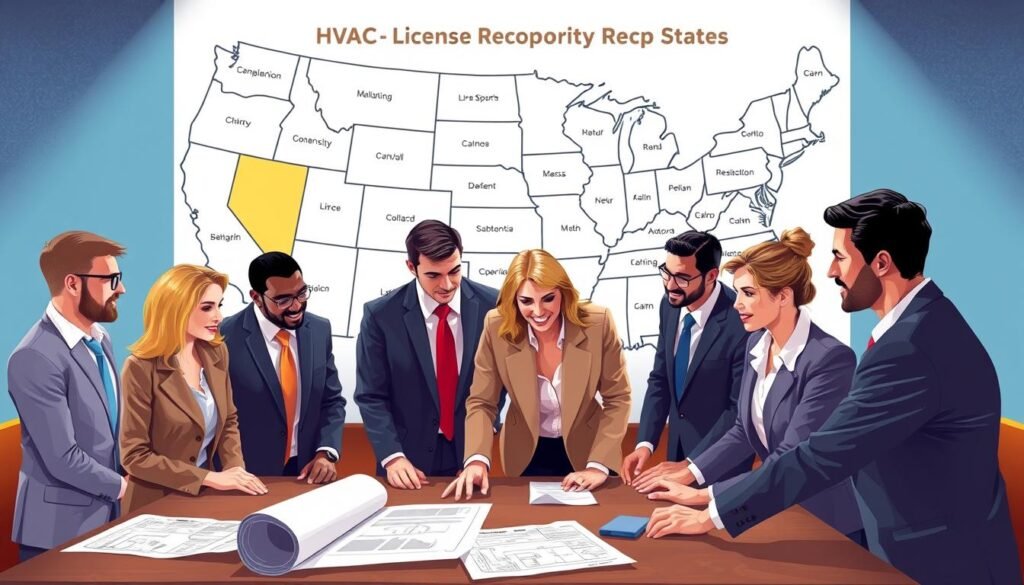
HVAC pros wanting to work in more states need to get the hang of license reciprocity. Moving your master HVAC license from one state to another is complex. It involves understanding different rules and regulations.
- Contact your current licensing board to confirm eligibility
- Check specific requirements in the new state
- Organize all necessary documentation
- Pay attention to fees and deadlines
- Plan for state-specific local codes and regulations
Understanding Reciprocity Agreements
Reciprocity deals differ a lot between states. Some states make it easy to transfer licenses, while others have strict rules.
| State Pair | Reciprocity Level | Additional Requirements |
|---|---|---|
| Alabama-Tennessee | High | Minimal documentation |
| Georgia-South Carolina | Moderate | Proof of current certification |
| California-Nevada | Limited | Supplemental examination |
Understanding each agreement’s details is key. Some states might ask for additional testing. Others just need proof of your current license and good standing.
Practical Strategies for Multi-State Licensing
Getting a multi-state license needs careful planning and research. Talk directly to licensing boards, keep detailed records, and stay up-to-date on reciprocity changes. This will help you grow your career smoothly.
Common Challenges and How to Overcome Them
Getting an HVAC master license comes with its own set of challenges. Many face big hurdles on their way to getting licensed. These challenges can really test your determination and love for the trade.
The biggest hurdles for those aiming to be master HVAC technicians include:
- Complex exam preparation that needs a lot of technical knowledge
- Dealing with strict state-specific licensing rules
- Gathering enough supervised work experience
- Handling the high costs of licensing and training
- Finding a balance between ongoing education and work
To beat these challenges, you need a solid plan. Breaking down your prep into smaller steps can turn big obstacles into reachable goals.
Here are some effective strategies for success:
- Make a detailed study plan
- Invest in top-notch exam prep materials
- Find a mentor among experienced HVAC pros
- Connect with other industry experts
- Keep up with the latest tech in HVAC
Your hard work and proactive steps are key to overcoming the complex journey to your HVAC master license. Remember, every challenge is a chance to grow and improve your skills.
Investment Costs and Timeline for Master License Achievement
Getting an HVAC Master License needs careful financial planning and dedication. Your path includes several costs that can shape your career and growth.
The cost to get a master HVAC license is usually $2,500 to $5,000. Knowing these costs helps you plan your budget for professional certification.
Breaking Down Application Fees, Exam Costs, and Training Expenses
Your investment will cover key areas:
- Educational Program Costs: $1,000 – $2,500
- Licensing Examination Fees: $150 – $500
- State Application Charges: $100 – $300
- Study Materials and Practice Tests: $200 – $500
Professional training programs offer flexible payment plans. Some technical colleges have financing plans or scholarships to ease costs.
The time to get your master license is 2-4 years. Good planning can reduce costs and increase your investment in your career.
“Investing in your HVAC master license is investing in your future career.” – HVAC Professional Association
Conclusion
Getting your HVAC master license is a big step in your career. It shows you’re an expert, dedicated, and committed to being the best in HVAC. By going through accredited programs, you’re setting yourself up for success.
Getting the right experience and documenting it is key. Understanding your state’s rules might seem hard, but it’s doable with the right prep. The exam tests your skills and knowledge, making sure you’re ready for the top job.
Having this license brings big rewards. You can start your own business and take on bigger projects. Plus, you’ll earn more, up to 50% more than others. It shows you’re serious about your work.
Many HVAC pros get their master licenses every year. With hard work and the right plan, you can too. Keep going, keep records, and see this as a chance to grow and succeed in your career.
FAQ
What is the difference between a Journeyman and Master HVAC License?
How long does it typically take to obtain a Master HVAC License?
What are the primary requirements for getting a Master HVAC License?
Do HVAC licensing requirements vary by state?
What is typically covered in the Master HVAC License examination?
How much does it cost to obtain a Master HVAC License?
What is the difference between a Journeyman and Master HVAC License?
How long does it typically take to obtain a Master HVAC License?
What are the primary requirements for getting a Master HVAC License?
Do HVAC licensing requirements vary by state?
What is typically covered in the Master HVAC License examination?
How much does it cost to obtain a Master HVAC License?
FAQ
What is the difference between a Journeyman and Master HVAC License?
A Journeyman license lets you work under a licensed master. A Master HVAC license lets you design, install, and run HVAC systems on your own. You can also supervise other technicians and start your own business.
How long does it typically take to obtain a Master HVAC License?
Getting a Master HVAC License takes 3-5 years. You need to finish educational training, gain 4-6 years of work experience, and pass state exams.
What are the primary requirements for getting a Master HVAC License?
To get a Master HVAC License, you need to complete an approved program, get 2-4 years of work experience, and pass a state exam. You also need to show insurance and meet state rules.
Do HVAC licensing requirements vary by state?
Yes, HVAC licensing rules change from state to state. Some states have strict rules, while others are more flexible. Always check with your state’s licensing board for details.
What is typically covered in the Master HVAC License examination?
The exam covers many topics. This includes advanced system design, refrigeration, electrical systems, and heating and cooling. It also includes safety, business rules, and local building codes.
How much does it cost to obtain a Master HVAC License?
The cost to get a Master HVAC License is between
FAQ
What is the difference between a Journeyman and Master HVAC License?
A Journeyman license lets you work under a licensed master. A Master HVAC license lets you design, install, and run HVAC systems on your own. You can also supervise other technicians and start your own business.
How long does it typically take to obtain a Master HVAC License?
Getting a Master HVAC License takes 3-5 years. You need to finish educational training, gain 4-6 years of work experience, and pass state exams.
What are the primary requirements for getting a Master HVAC License?
To get a Master HVAC License, you need to complete an approved program, get 2-4 years of work experience, and pass a state exam. You also need to show insurance and meet state rules.
Do HVAC licensing requirements vary by state?
Yes, HVAC licensing rules change from state to state. Some states have strict rules, while others are more flexible. Always check with your state’s licensing board for details.
What is typically covered in the Master HVAC License examination?
The exam covers many topics. This includes advanced system design, refrigeration, electrical systems, and heating and cooling. It also includes safety, business rules, and local building codes.
How much does it cost to obtain a Master HVAC License?
The cost to get a Master HVAC License is between $1,500 and $5,000. This includes program fees, exam costs, licensing fees, insurance, and training materials.
Do I need continuing education to maintain my Master HVAC License?
Yes, most states require 8-16 hours of continuing education each year. This keeps you up-to-date with new technologies and safety standards.
Can I transfer my HVAC license to another state?
License transfer rules vary by state. Some states make it easier, while others require more testing or specific requirements.
What insurance is required for a Master HVAC Contractor?
You’ll need general liability insurance ($500,000 to $1 million), workers’ compensation insurance, and possibly a surety bond. The bond amount varies by state.
How long is a Master HVAC License valid?
A Master HVAC License is usually good for 2-3 years. To renew, you’ll need to pay a fee and complete continuing education.
,500 and ,000. This includes program fees, exam costs, licensing fees, insurance, and training materials.
Do I need continuing education to maintain my Master HVAC License?
Yes, most states require 8-16 hours of continuing education each year. This keeps you up-to-date with new technologies and safety standards.
Can I transfer my HVAC license to another state?
License transfer rules vary by state. Some states make it easier, while others require more testing or specific requirements.
What insurance is required for a Master HVAC Contractor?
You’ll need general liability insurance (0,000 to
FAQ
What is the difference between a Journeyman and Master HVAC License?
A Journeyman license lets you work under a licensed master. A Master HVAC license lets you design, install, and run HVAC systems on your own. You can also supervise other technicians and start your own business.
How long does it typically take to obtain a Master HVAC License?
Getting a Master HVAC License takes 3-5 years. You need to finish educational training, gain 4-6 years of work experience, and pass state exams.
What are the primary requirements for getting a Master HVAC License?
To get a Master HVAC License, you need to complete an approved program, get 2-4 years of work experience, and pass a state exam. You also need to show insurance and meet state rules.
Do HVAC licensing requirements vary by state?
Yes, HVAC licensing rules change from state to state. Some states have strict rules, while others are more flexible. Always check with your state’s licensing board for details.
What is typically covered in the Master HVAC License examination?
The exam covers many topics. This includes advanced system design, refrigeration, electrical systems, and heating and cooling. It also includes safety, business rules, and local building codes.
How much does it cost to obtain a Master HVAC License?
The cost to get a Master HVAC License is between $1,500 and $5,000. This includes program fees, exam costs, licensing fees, insurance, and training materials.
Do I need continuing education to maintain my Master HVAC License?
Yes, most states require 8-16 hours of continuing education each year. This keeps you up-to-date with new technologies and safety standards.
Can I transfer my HVAC license to another state?
License transfer rules vary by state. Some states make it easier, while others require more testing or specific requirements.
What insurance is required for a Master HVAC Contractor?
You’ll need general liability insurance ($500,000 to $1 million), workers’ compensation insurance, and possibly a surety bond. The bond amount varies by state.
How long is a Master HVAC License valid?
A Master HVAC License is usually good for 2-3 years. To renew, you’ll need to pay a fee and complete continuing education.
million), workers’ compensation insurance, and possibly a surety bond. The bond amount varies by state.
How long is a Master HVAC License valid?
A Master HVAC License is usually good for 2-3 years. To renew, you’ll need to pay a fee and complete continuing education.
Do I need continuing education to maintain my Master HVAC License?
Can I transfer my HVAC license to another state?
What insurance is required for a Master HVAC Contractor?
FAQ
What is the difference between a Journeyman and Master HVAC License?
A Journeyman license lets you work under a licensed master. A Master HVAC license lets you design, install, and run HVAC systems on your own. You can also supervise other technicians and start your own business.
How long does it typically take to obtain a Master HVAC License?
Getting a Master HVAC License takes 3-5 years. You need to finish educational training, gain 4-6 years of work experience, and pass state exams.
What are the primary requirements for getting a Master HVAC License?
To get a Master HVAC License, you need to complete an approved program, get 2-4 years of work experience, and pass a state exam. You also need to show insurance and meet state rules.
Do HVAC licensing requirements vary by state?
Yes, HVAC licensing rules change from state to state. Some states have strict rules, while others are more flexible. Always check with your state’s licensing board for details.
What is typically covered in the Master HVAC License examination?
The exam covers many topics. This includes advanced system design, refrigeration, electrical systems, and heating and cooling. It also includes safety, business rules, and local building codes.
How much does it cost to obtain a Master HVAC License?
The cost to get a Master HVAC License is between
FAQ
What is the difference between a Journeyman and Master HVAC License?
A Journeyman license lets you work under a licensed master. A Master HVAC license lets you design, install, and run HVAC systems on your own. You can also supervise other technicians and start your own business.
How long does it typically take to obtain a Master HVAC License?
Getting a Master HVAC License takes 3-5 years. You need to finish educational training, gain 4-6 years of work experience, and pass state exams.
What are the primary requirements for getting a Master HVAC License?
To get a Master HVAC License, you need to complete an approved program, get 2-4 years of work experience, and pass a state exam. You also need to show insurance and meet state rules.
Do HVAC licensing requirements vary by state?
Yes, HVAC licensing rules change from state to state. Some states have strict rules, while others are more flexible. Always check with your state’s licensing board for details.
What is typically covered in the Master HVAC License examination?
The exam covers many topics. This includes advanced system design, refrigeration, electrical systems, and heating and cooling. It also includes safety, business rules, and local building codes.
How much does it cost to obtain a Master HVAC License?
The cost to get a Master HVAC License is between $1,500 and $5,000. This includes program fees, exam costs, licensing fees, insurance, and training materials.
Do I need continuing education to maintain my Master HVAC License?
Yes, most states require 8-16 hours of continuing education each year. This keeps you up-to-date with new technologies and safety standards.
Can I transfer my HVAC license to another state?
License transfer rules vary by state. Some states make it easier, while others require more testing or specific requirements.
What insurance is required for a Master HVAC Contractor?
You’ll need general liability insurance ($500,000 to $1 million), workers’ compensation insurance, and possibly a surety bond. The bond amount varies by state.
How long is a Master HVAC License valid?
A Master HVAC License is usually good for 2-3 years. To renew, you’ll need to pay a fee and complete continuing education.
,500 and ,000. This includes program fees, exam costs, licensing fees, insurance, and training materials.
Do I need continuing education to maintain my Master HVAC License?
Yes, most states require 8-16 hours of continuing education each year. This keeps you up-to-date with new technologies and safety standards.
Can I transfer my HVAC license to another state?
License transfer rules vary by state. Some states make it easier, while others require more testing or specific requirements.
What insurance is required for a Master HVAC Contractor?
You’ll need general liability insurance (0,000 to
FAQ
What is the difference between a Journeyman and Master HVAC License?
A Journeyman license lets you work under a licensed master. A Master HVAC license lets you design, install, and run HVAC systems on your own. You can also supervise other technicians and start your own business.
How long does it typically take to obtain a Master HVAC License?
Getting a Master HVAC License takes 3-5 years. You need to finish educational training, gain 4-6 years of work experience, and pass state exams.
What are the primary requirements for getting a Master HVAC License?
To get a Master HVAC License, you need to complete an approved program, get 2-4 years of work experience, and pass a state exam. You also need to show insurance and meet state rules.
Do HVAC licensing requirements vary by state?
Yes, HVAC licensing rules change from state to state. Some states have strict rules, while others are more flexible. Always check with your state’s licensing board for details.
What is typically covered in the Master HVAC License examination?
The exam covers many topics. This includes advanced system design, refrigeration, electrical systems, and heating and cooling. It also includes safety, business rules, and local building codes.
How much does it cost to obtain a Master HVAC License?
The cost to get a Master HVAC License is between $1,500 and $5,000. This includes program fees, exam costs, licensing fees, insurance, and training materials.
Do I need continuing education to maintain my Master HVAC License?
Yes, most states require 8-16 hours of continuing education each year. This keeps you up-to-date with new technologies and safety standards.
Can I transfer my HVAC license to another state?
License transfer rules vary by state. Some states make it easier, while others require more testing or specific requirements.
What insurance is required for a Master HVAC Contractor?
You’ll need general liability insurance ($500,000 to $1 million), workers’ compensation insurance, and possibly a surety bond. The bond amount varies by state.
How long is a Master HVAC License valid?
A Master HVAC License is usually good for 2-3 years. To renew, you’ll need to pay a fee and complete continuing education.
million), workers’ compensation insurance, and possibly a surety bond. The bond amount varies by state.
How long is a Master HVAC License valid?
A Master HVAC License is usually good for 2-3 years. To renew, you’ll need to pay a fee and complete continuing education.
How long is a Master HVAC License valid?
Do I need continuing education to maintain my Master HVAC License?
Can I transfer my HVAC license to another state?
What insurance is required for a Master HVAC Contractor?
What is the difference between a Journeyman and Master HVAC License?
How long does it typically take to obtain a Master HVAC License?
What are the primary requirements for getting a Master HVAC License?
Do HVAC licensing requirements vary by state?
What is typically covered in the Master HVAC License examination?
How much does it cost to obtain a Master HVAC License?
FAQ
What is the difference between a Journeyman and Master HVAC License?
A Journeyman license lets you work under a licensed master. A Master HVAC license lets you design, install, and run HVAC systems on your own. You can also supervise other technicians and start your own business.
How long does it typically take to obtain a Master HVAC License?
Getting a Master HVAC License takes 3-5 years. You need to finish educational training, gain 4-6 years of work experience, and pass state exams.
What are the primary requirements for getting a Master HVAC License?
To get a Master HVAC License, you need to complete an approved program, get 2-4 years of work experience, and pass a state exam. You also need to show insurance and meet state rules.
Do HVAC licensing requirements vary by state?
Yes, HVAC licensing rules change from state to state. Some states have strict rules, while others are more flexible. Always check with your state’s licensing board for details.
What is typically covered in the Master HVAC License examination?
The exam covers many topics. This includes advanced system design, refrigeration, electrical systems, and heating and cooling. It also includes safety, business rules, and local building codes.
How much does it cost to obtain a Master HVAC License?
The cost to get a Master HVAC License is between
FAQ
What is the difference between a Journeyman and Master HVAC License?
A Journeyman license lets you work under a licensed master. A Master HVAC license lets you design, install, and run HVAC systems on your own. You can also supervise other technicians and start your own business.
How long does it typically take to obtain a Master HVAC License?
Getting a Master HVAC License takes 3-5 years. You need to finish educational training, gain 4-6 years of work experience, and pass state exams.
What are the primary requirements for getting a Master HVAC License?
To get a Master HVAC License, you need to complete an approved program, get 2-4 years of work experience, and pass a state exam. You also need to show insurance and meet state rules.
Do HVAC licensing requirements vary by state?
Yes, HVAC licensing rules change from state to state. Some states have strict rules, while others are more flexible. Always check with your state’s licensing board for details.
What is typically covered in the Master HVAC License examination?
The exam covers many topics. This includes advanced system design, refrigeration, electrical systems, and heating and cooling. It also includes safety, business rules, and local building codes.
How much does it cost to obtain a Master HVAC License?
The cost to get a Master HVAC License is between $1,500 and $5,000. This includes program fees, exam costs, licensing fees, insurance, and training materials.
Do I need continuing education to maintain my Master HVAC License?
Yes, most states require 8-16 hours of continuing education each year. This keeps you up-to-date with new technologies and safety standards.
Can I transfer my HVAC license to another state?
License transfer rules vary by state. Some states make it easier, while others require more testing or specific requirements.
What insurance is required for a Master HVAC Contractor?
You’ll need general liability insurance ($500,000 to $1 million), workers’ compensation insurance, and possibly a surety bond. The bond amount varies by state.
How long is a Master HVAC License valid?
A Master HVAC License is usually good for 2-3 years. To renew, you’ll need to pay a fee and complete continuing education.
,500 and ,000. This includes program fees, exam costs, licensing fees, insurance, and training materials.
Do I need continuing education to maintain my Master HVAC License?
Yes, most states require 8-16 hours of continuing education each year. This keeps you up-to-date with new technologies and safety standards.
Can I transfer my HVAC license to another state?
License transfer rules vary by state. Some states make it easier, while others require more testing or specific requirements.
What insurance is required for a Master HVAC Contractor?
You’ll need general liability insurance (0,000 to
FAQ
What is the difference between a Journeyman and Master HVAC License?
A Journeyman license lets you work under a licensed master. A Master HVAC license lets you design, install, and run HVAC systems on your own. You can also supervise other technicians and start your own business.
How long does it typically take to obtain a Master HVAC License?
Getting a Master HVAC License takes 3-5 years. You need to finish educational training, gain 4-6 years of work experience, and pass state exams.
What are the primary requirements for getting a Master HVAC License?
To get a Master HVAC License, you need to complete an approved program, get 2-4 years of work experience, and pass a state exam. You also need to show insurance and meet state rules.
Do HVAC licensing requirements vary by state?
Yes, HVAC licensing rules change from state to state. Some states have strict rules, while others are more flexible. Always check with your state’s licensing board for details.
What is typically covered in the Master HVAC License examination?
The exam covers many topics. This includes advanced system design, refrigeration, electrical systems, and heating and cooling. It also includes safety, business rules, and local building codes.
How much does it cost to obtain a Master HVAC License?
The cost to get a Master HVAC License is between $1,500 and $5,000. This includes program fees, exam costs, licensing fees, insurance, and training materials.
Do I need continuing education to maintain my Master HVAC License?
Yes, most states require 8-16 hours of continuing education each year. This keeps you up-to-date with new technologies and safety standards.
Can I transfer my HVAC license to another state?
License transfer rules vary by state. Some states make it easier, while others require more testing or specific requirements.
What insurance is required for a Master HVAC Contractor?
You’ll need general liability insurance ($500,000 to $1 million), workers’ compensation insurance, and possibly a surety bond. The bond amount varies by state.
How long is a Master HVAC License valid?
A Master HVAC License is usually good for 2-3 years. To renew, you’ll need to pay a fee and complete continuing education.
million), workers’ compensation insurance, and possibly a surety bond. The bond amount varies by state.
How long is a Master HVAC License valid?
A Master HVAC License is usually good for 2-3 years. To renew, you’ll need to pay a fee and complete continuing education.
Do I need continuing education to maintain my Master HVAC License?
Can I transfer my HVAC license to another state?
What insurance is required for a Master HVAC Contractor?
FAQ
What is the difference between a Journeyman and Master HVAC License?
A Journeyman license lets you work under a licensed master. A Master HVAC license lets you design, install, and run HVAC systems on your own. You can also supervise other technicians and start your own business.
How long does it typically take to obtain a Master HVAC License?
Getting a Master HVAC License takes 3-5 years. You need to finish educational training, gain 4-6 years of work experience, and pass state exams.
What are the primary requirements for getting a Master HVAC License?
To get a Master HVAC License, you need to complete an approved program, get 2-4 years of work experience, and pass a state exam. You also need to show insurance and meet state rules.
Do HVAC licensing requirements vary by state?
Yes, HVAC licensing rules change from state to state. Some states have strict rules, while others are more flexible. Always check with your state’s licensing board for details.
What is typically covered in the Master HVAC License examination?
The exam covers many topics. This includes advanced system design, refrigeration, electrical systems, and heating and cooling. It also includes safety, business rules, and local building codes.
How much does it cost to obtain a Master HVAC License?
The cost to get a Master HVAC License is between
FAQ
What is the difference between a Journeyman and Master HVAC License?
A Journeyman license lets you work under a licensed master. A Master HVAC license lets you design, install, and run HVAC systems on your own. You can also supervise other technicians and start your own business.
How long does it typically take to obtain a Master HVAC License?
Getting a Master HVAC License takes 3-5 years. You need to finish educational training, gain 4-6 years of work experience, and pass state exams.
What are the primary requirements for getting a Master HVAC License?
To get a Master HVAC License, you need to complete an approved program, get 2-4 years of work experience, and pass a state exam. You also need to show insurance and meet state rules.
Do HVAC licensing requirements vary by state?
Yes, HVAC licensing rules change from state to state. Some states have strict rules, while others are more flexible. Always check with your state’s licensing board for details.
What is typically covered in the Master HVAC License examination?
The exam covers many topics. This includes advanced system design, refrigeration, electrical systems, and heating and cooling. It also includes safety, business rules, and local building codes.
How much does it cost to obtain a Master HVAC License?
The cost to get a Master HVAC License is between $1,500 and $5,000. This includes program fees, exam costs, licensing fees, insurance, and training materials.
Do I need continuing education to maintain my Master HVAC License?
Yes, most states require 8-16 hours of continuing education each year. This keeps you up-to-date with new technologies and safety standards.
Can I transfer my HVAC license to another state?
License transfer rules vary by state. Some states make it easier, while others require more testing or specific requirements.
What insurance is required for a Master HVAC Contractor?
You’ll need general liability insurance ($500,000 to $1 million), workers’ compensation insurance, and possibly a surety bond. The bond amount varies by state.
How long is a Master HVAC License valid?
A Master HVAC License is usually good for 2-3 years. To renew, you’ll need to pay a fee and complete continuing education.
,500 and ,000. This includes program fees, exam costs, licensing fees, insurance, and training materials.
Do I need continuing education to maintain my Master HVAC License?
Yes, most states require 8-16 hours of continuing education each year. This keeps you up-to-date with new technologies and safety standards.
Can I transfer my HVAC license to another state?
License transfer rules vary by state. Some states make it easier, while others require more testing or specific requirements.
What insurance is required for a Master HVAC Contractor?
You’ll need general liability insurance (0,000 to
FAQ
What is the difference between a Journeyman and Master HVAC License?
A Journeyman license lets you work under a licensed master. A Master HVAC license lets you design, install, and run HVAC systems on your own. You can also supervise other technicians and start your own business.
How long does it typically take to obtain a Master HVAC License?
Getting a Master HVAC License takes 3-5 years. You need to finish educational training, gain 4-6 years of work experience, and pass state exams.
What are the primary requirements for getting a Master HVAC License?
To get a Master HVAC License, you need to complete an approved program, get 2-4 years of work experience, and pass a state exam. You also need to show insurance and meet state rules.
Do HVAC licensing requirements vary by state?
Yes, HVAC licensing rules change from state to state. Some states have strict rules, while others are more flexible. Always check with your state’s licensing board for details.
What is typically covered in the Master HVAC License examination?
The exam covers many topics. This includes advanced system design, refrigeration, electrical systems, and heating and cooling. It also includes safety, business rules, and local building codes.
How much does it cost to obtain a Master HVAC License?
The cost to get a Master HVAC License is between $1,500 and $5,000. This includes program fees, exam costs, licensing fees, insurance, and training materials.
Do I need continuing education to maintain my Master HVAC License?
Yes, most states require 8-16 hours of continuing education each year. This keeps you up-to-date with new technologies and safety standards.
Can I transfer my HVAC license to another state?
License transfer rules vary by state. Some states make it easier, while others require more testing or specific requirements.
What insurance is required for a Master HVAC Contractor?
You’ll need general liability insurance ($500,000 to $1 million), workers’ compensation insurance, and possibly a surety bond. The bond amount varies by state.
How long is a Master HVAC License valid?
A Master HVAC License is usually good for 2-3 years. To renew, you’ll need to pay a fee and complete continuing education.
million), workers’ compensation insurance, and possibly a surety bond. The bond amount varies by state.
How long is a Master HVAC License valid?
A Master HVAC License is usually good for 2-3 years. To renew, you’ll need to pay a fee and complete continuing education.