Affiliate Disclosure
HVAC Guide Guys is a participant in the Amazon Services LLC Associates Program, an affiliate advertising program designed to provide a means for sites to earn advertising fees by advertising and linking to Amazon.
Are you thinking about joining an HVAC union for a stable, well-paying job? The HVAC field is full of chances for those ready to grow professionally.

Getting into an HVAC union is more than just a job. It’s a career with great benefits, good pay, and solid training. The steps might seem hard, but they’re doable for anyone eager to succeed.
This guide will show you how to join an HVAC union. You’ll learn insider tips to change your career path. From basic needs to apprenticeships, we’ll help you start a successful career in the trades.
Key Takeaways
- HVAC unions provide structured career pathways with extensive training
- Apprenticeship programs typically last 4-5 years
- Union membership offers higher wages and better worker protections
- No prior experience is required to start your HVAC union journey
- Comprehensive training is often provided at minimal personal cost
Table of Contents
Understanding HVAC Union Membership and Its Benefits
Joining an HVAC union opens doors to many professional opportunities and career stability. It’s not just a job; it’s a path with many benefits.
What Makes Union HVAC Work Different
Union HVAC work is unique in several ways:
- Standardized wage scales that reward experience and certification
- Clear contract guidelines for working conditions
- Collective bargaining power
- Professional dispatch systems connecting skilled workers with employers
Being part of a local HVAC union offers support that non-union jobs can’t match. The union fights for fair pay and protects your career interests.
Career Advantages of Joining a Local HVAC Union
Local HVAC union membership brings many career benefits:
- Comprehensive health insurance (including dental and vision)
- Robust pension plans for retirement security
- High-quality apprenticeship programs
- Consistent wage progression based on skills
- Job placement assistance
- Continuous professional development opportunities
Union apprentices get a special deal: they earn good wages and get top training. They start at 40-50% of journeyman wages, with raises as they grow. The union’s support and network make it a smart career choice.
Meeting the Basic HVAC Union Requirements
Joining an HVAC union means you must meet certain requirements. These ensure you’re ready for a successful career in the trade. It’s important to know these requirements if you want to join this field.
The main hvac union requirements include:
- Age Requirement: Most unions require applicants to be at least 18 years old
- High school diploma or equivalent (GED) is strongly preferred
- Valid driver’s license for job site transportation
- Legal authorization to work in the United States
Your education is key in meeting hvac union requirements. Unions want candidates with strong math and technical skills. Classes in algebra, geometry, and physics help understand HVAC systems and technical calculations.
Being physically capable is also important. The job needs physical strength and endurance. This includes:
- Ability to lift 50+ pounds regularly
- Comfort working in confined spaces
- Capacity to work in extreme temperatures
- Climbing ladders and navigating challenging work environments
Unions also do background checks and drug screenings. While you don’t need HVAC experience, skills in mechanical work or construction help your application.
Pro Tip: Showing motivation and real interest in the trade is as important as meeting technical requirements.
Explore Our HVAC Shop
Looking for top-rated HVAC tools, parts, and accessories? Visit our shop and find the perfect solution for your needs.
Visit the ShopHow to Get Into HVAC Union: Your Complete Roadmap
Getting into an HVAC union takes planning and preparation. You need to know the steps and requirements to join a professional HVAC union.
Finding Your Local HVAC Union Chapter
Finding the right union for your HVAC career is important. Here are some strategies to help:
- Research national union websites like UA.org, SMART-Union.org, and IBEW.org
- Use local union finder tools by entering your ZIP code
- Contact union halls directly for apprenticeship opportunities
- Attend union-sponsored information sessions
- Check with local workforce development centers
There are different unions for HVAC trades like pipefitters, sheet metal workers, and electrical specialists. Each local union has its own rules, so application processes can vary.
Understanding the Union Application Timeline
Timing is key when applying to an HVAC union. Most locals have specific times to apply, usually once or twice a year. Here’s what you can expect:
- Application period announcement (2-3 months in advance)
- Application submission deadline
- Aptitude testing phase
- Interview scheduling
- Acceptance notifications
- Apprenticeship start dates
Pro tip: Stay proactive and responsive during the application process. Showing commitment can help your chances, as some programs have waiting lists.
Navigating the HVAC Union Application Process
Getting into the HVAC union takes careful steps and knowing the application process. Start by getting the right documents and showing professionalism at every step.
The HVAC union application process has key parts that show your dedication and skill. You’ll need to put together a detailed application package that highlights your qualifications.
- Prepare official personal documents
- Complete detailed application forms
- Submit required identification
- Pay application processing fees
Your application package usually has:
- Government-issued photo ID
- Social Security card
- High school diploma or GED transcripts
- Proof of age documentation
- Detailed work history resume
Most unions ask for an application fee, which is $25 to $100. This fee helps cover the costs of processing your application and background checks.
| Application Stage | Key Requirements | Estimated Time |
|---|---|---|
| Document Submission | Complete application form | 1-2 weeks |
| Aptitude Testing | Math and mechanical reasoning exam | Half-day session |
| Interview | Meet union representatives | 30-45 minutes |
After you apply, get ready for an aptitude test that checks your math and mechanical skills. Union reps will test your skills and interview you to see if you’re a good fit.
Keep in mind, there’s a lot of competition. If you’re not chosen, ask for feedback and try again. Being persistent and well-prepared is essential for the HVAC union application process.
Enrolling in an HVAC Apprenticeship Program Through the Union
Congratulations on taking the next step in your HVAC career! Joining an hvac apprenticeship program through a union opens up exciting opportunities. This training combines hands-on experience with structured learning. It will transform you into a skilled HVAC professional.
What to Expect During Your Apprenticeship Training
The hvac apprenticeship program is designed to provide an immersive learning experience. It lasts 4-5 years and requires 8,000-9,000 hours of supervised training. You’ll start earning from day one, with wages increasing as you gain skills.
- Begin with basic tasks under experienced technicians
- Gradually take on more complex HVAC system responsibilities
- Work with various systems including:
- Furnaces (gas, oil, electric)
- Air conditioning units
- Heat pumps
- Ventilation systems
Balancing On-the-Job Hours with Classroom Learning
Your hvac apprenticeship program will blend practical work with educational instruction. Expect to attend classes one or two evenings per week. These classes cover critical technical knowledge without interrupting your work hours.
- Classroom topics include:
- HVAC theory and principles
- Electrical fundamentals
- Refrigeration cycles
- Safety procedures
- Training is typically provided at no cost
- All books and materials are usually included
Pro tip: Stay organized, communicate with instructors, and remember that temporary challenges lead to long-term career success!
Explore Our HVAC Shop
Looking for top-rated HVAC tools, parts, and accessories? Visit our shop and find the perfect solution for your needs.
Visit the ShopUnion HVAC Training: Building Your Skills and Credentials
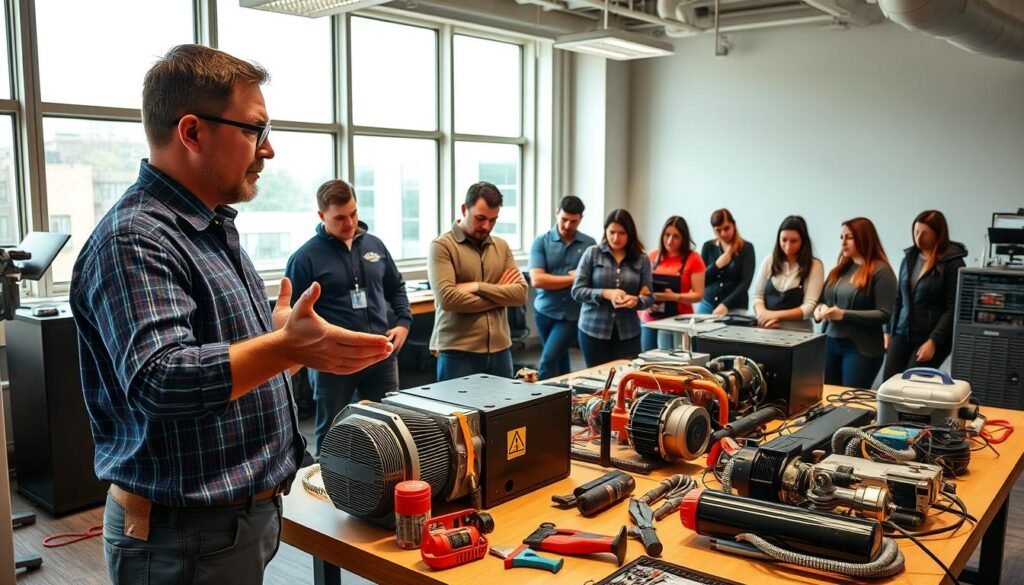
Union HVAC training is the top choice for those starting in the field. It turns you from a beginner into a skilled pro with deep technical knowledge.
The training covers key areas to get you ready for the job:
- Advanced installation techniques for homes and businesses
- Precision service and maintenance methods
- Advanced troubleshooting and diagnostic skills
- Detailed blueprint reading and system design
- Rigorous safety and compliance standards
But it’s not just classroom learning. You’ll get hands-on experience that makes you stand out. The program keeps up with new tech like smart homes and energy-saving systems.
You’ll also earn important certifications:
- EPA Section 608 Certification
- OSHA Safety Certifications
- Manufacturer-specific technical credentials
- Green technology specialized training
By the end, you’ll be more than just a technician. You’ll be a professional ready to shine in the HVAC world.
Working Toward Your Journeyman HVAC Certification
Getting your journeyman HVAC certification is a big step in your career. It changes you from an apprentice to a skilled HVAC technician. You’ll have more job chances and earn more money.
Getting certified as a journeyman takes hard work and knowledge. You need to be dedicated and know a lot about HVAC systems. It’s a journey that tests your skills and knowledge.
Preparing for the Certification Exam
To pass the journeyman HVAC exam, you must prepare well. The exam will cover important topics like:
- HVAC system theory and principles
- Mechanical and electrical codes
- Installation procedures
- Safety regulations
- Refrigerant handling protocols
Here are some ways to get ready:
- Study your apprenticeship materials
- Practice with sample questions
- Join study groups or sessions
- Work with other apprentices
Transitioning from Apprentice to Journeyman Status
Passing the exam brings big benefits. You’ll see changes like:
- Higher wage rates
- More independence at work
- Chances to lead others
- More career growth chances
Your journeyman HVAC certification shows your skills and hard work. It proves you’re a valuable part of the HVAC world.
Exploring Specialized Union Trades: Pipefitters and Sheet Metal Workers Union
The HVAC industry has many career paths for skilled workers. Pipefitters and sheet metal workers are two key trades. Each trade has its own set of skills and opportunities in construction and maintenance.
Pipefitters work on complex piping systems that move important fluids. They handle different environments:
- Hydronic heating systems
- Chilled water distribution
- Refrigerant piping installations
- Industrial steam system management
Sheet metal workers focus on making and installing ductwork. Their tasks include:
- Custom ductwork design
- Precision metal fabrication
- HVAC system airflow optimization
- Energy-efficient duct sealing
| Trade Specialization | Key Skills | Apprenticeship Duration |
|---|---|---|
| Pipefitters | Welding, Pipe Cutting, System Design | 5 Years |
| Sheet Metal Workers | Metal Fabrication, Ductwork Installation | 4-5 Years |
Choosing between these specializations depends on your interests. Do you enjoy precision metalwork or complex system design? Both paths offer rewarding careers with strong growth in the HVAC industry.
Being in a union offers structured training, good pay, and professional support. Your skills will be in high demand as building systems get more complex.
Explore Our HVAC Shop
Looking for top-rated HVAC tools, parts, and accessories? Visit our shop and find the perfect solution for your needs.
Visit the ShopUnderstanding the Costs and Financial Commitment of Union Membership
Joining HVAC union organizations comes with costs, but the benefits are worth it. Let’s explore the financial side of becoming a union HVAC professional.

Apprenticeship Program Fees and Dues
Union apprenticeships offer a unique financial benefit: you earn while you learn. Here are the typical costs you’ll face:
- Application fees: $25-$100
- Initial membership fees: $0-$500 (often waived for apprentices)
- Monthly union dues: $30-$75
- Textbooks and study materials: $300-$600
- Basic tool collection: $500-$1,500
- Safety equipment: $200-$400
Long-Term Financial Benefits of Union HVAC Work
The costs of joining an HVAC union are an investment in your future. Union HVAC professionals enjoy big financial benefits:
| Compensation Metric | Union HVAC | Non-Union HVAC |
|---|---|---|
| Hourly Wage | $35-$60+ | $18-$35 |
| Annual Earnings | $70,000-$125,000+ | $37,000-$73,000 |
| Additional Benefits | Comprehensive health insurance, pension, 401(k) | Limited or no benefits |
Over 30 years, union membership can add $500,000-$1,000,000 to your lifetime earnings and benefits. The initial costs are small compared to the long-term financial security and career opportunities.
Building Your Career After Joining the HVAC Union
After finishing your apprenticeship, your real journey starts. The union has many ways to grow your career. These paths can turn your basic training into a fulfilling job.
There’s more to your career than just fixing and installing HVAC systems. Here are some exciting paths to explore:
- Service Technician: Diagnose and repair complex HVAC systems
- Installation Specialist: Focus on new construction projects
- Commercial HVAC Technician: Work with advanced industrial systems
- Supervisory Roles: Lead crews and manage job sites
To move up in your career, you need a plan. Continuous learning is key. Keep up with new tech, get special certifications, and aim for excellence.
Networking in your union can open doors to new chances. Go to union meetings, join training sessions, and meet seasoned pros. They can guide and mentor you.
Your union card lets you work anywhere, taking on various projects. Your skills are always in demand, from small fixes to big installations.
“The union doesn’t just provide a job—it offers a lifelong career path with continuous growth and support.”
Stay active, keep your skills sharp, and take on new challenges. This way, you’ll build a thriving and rewarding HVAC career.
Common Challenges and How to Overcome Them When Joining
Starting a career in HVAC union work has its own set of challenges. Knowing these obstacles helps you get ready and find ways to succeed. The hvac union requirements ask for commitment, toughness, and careful planning.
Let’s look at the most common challenges you might face:
- Competitive Application Process
- Physical Job Demands
- Educational Requirements
- Financial Pressures
- Work-Life Balance
Union apprenticeship programs are very competitive. They get a lot of applications, with acceptance rates as low as 10-30%. To boost your chances, try these tips:
- Apply early when applications open
- Take relevant technical courses
- Gain practical work experience
- Prepare thoroughly for aptitude tests
- Research the union extensively
Being physically fit is key to meeting hvac union requirements. The job requires lifting heavy, working in small spaces, and handling extreme temperatures. Staying in shape with regular exercise and using safety gear is vital.
| Challenge | Recommended Solution |
|---|---|
| Educational Gaps | Obtain GED, take math courses, use online learning resources |
| Financial Constraints | Create budget, reduce expenses, leverage union support programs |
| Time Management | Use organizational tools, establish study routines, communicate with support network |
Remember, thousands of people successfully overcome these challenges every year. Your hard work, determination, and positive outlook will help you succeed in the HVAC union career path.
Conclusion
Starting your journey to join an HVAC union is a smart career choice. It takes hard work, learning new skills, and a drive to grow professionally. By learning how to join an HVAC union, you open the door to a stable and fulfilling career in the skilled trades.
Your journey to join an HVAC union starts with research and getting ready. You’ll need to meet certain requirements, go through the application process, and complete thorough apprenticeship training. It’s a tough path, but it’s worth it for the good pay, great benefits, and job security in a field that’s always in demand.
The skilled trades, like HVAC, offer amazing chances for those who are eager to work hard. The demand for skilled workers is rising, and HVAC is no exception. By joining a union, you put yourself at the top of a vital and changing industry.
Don’t wait any longer. Contact your local HVAC union chapter, check if you qualify, and start planning your career path. Taking this step towards union membership could change your career for the better and bring you lasting job satisfaction.
FAQ
What are the basic requirements to join an HVAC union?
How long does an HVAC union apprenticeship program take?
How much does it cost to join an HVAC union?
What are the basic requirements to join an HVAC union?
How long does an HVAC union apprenticeship program take?
How much does it cost to join an HVAC union?
FAQ
What are the basic requirements to join an HVAC union?
To join an HVAC union, you must be 18 or older. You also need a high school diploma or GED. A valid driver’s license is required, along with passing a background check and drug test.
Basic physical requirements are also needed. Having strong math and technical skills is helpful, but not always necessary to start.
How long does an HVAC union apprenticeship program take?
Most HVAC apprenticeships last 4-5 years. You’ll work about 8,000-10,000 hours on the job and study 900-1,000 hours in class. You’ll earn more as you learn the trade.
How much does it cost to join an HVAC union?
Costs vary but include an application fee (-0) and initiation fee (
FAQ
What are the basic requirements to join an HVAC union?
To join an HVAC union, you must be 18 or older. You also need a high school diploma or GED. A valid driver’s license is required, along with passing a background check and drug test.
Basic physical requirements are also needed. Having strong math and technical skills is helpful, but not always necessary to start.
How long does an HVAC union apprenticeship program take?
Most HVAC apprenticeships last 4-5 years. You’ll work about 8,000-10,000 hours on the job and study 900-1,000 hours in class. You’ll earn more as you learn the trade.
How much does it cost to join an HVAC union?
Costs vary but include an application fee ($25-$100) and initiation fee ($0-$500). Monthly dues are $30-$75, and tool costs are $500-$1,500. But, most training is free or low-cost, making it affordable.
What unions represent HVAC workers?
The United Association (UA) represents pipefitters. Sheet Metal, Air, Rail and Transportation Workers (SMART) covers sheet metal workers. The International Brotherhood of Electrical Workers (IBEW) handles electrical parts of HVAC systems.
Can I join an HVAC union with no prior experience?
Yes, most apprenticeships are for beginners. They start with basic skills and move to advanced techniques as you progress.
What are the typical wages for union HVAC workers?
Union HVAC journeymen make $35-$60 an hour, or $70,000-$125,000 a year. Apprentices start at 40-50% of that and get raises as they advance.
How competitive are HVAC union apprenticeship programs?
Apprenticeships are competitive, with acceptance rates of 10-30%. To stand out, take relevant courses, gain experience, prepare for tests, and show your commitment to the trade.
What benefits do HVAC union members receive?
Members get health insurance, pension plans, paid vacation, and retirement benefits. They also have access to education, job help, and legal support. These benefits add $10,000-$20,000 a year to your pay.
Do I need special tools to start an HVAC apprenticeship?
You’ll need a basic tool set, costing $500-$1,500. Employers often provide specialized tools. You can build your set over time. Some unions help with tool costs.
What career advancement opportunities exist in union HVAC?
Career paths include service technician and installation specialist. You can also become a commercial/industrial technician, foreman, or start your own business. Keep learning and get certifications for more chances.
FAQ
What are the basic requirements to join an HVAC union?
To join an HVAC union, you must be 18 or older. You also need a high school diploma or GED. A valid driver’s license is required, along with passing a background check and drug test.
Basic physical requirements are also needed. Having strong math and technical skills is helpful, but not always necessary to start.
How long does an HVAC union apprenticeship program take?
Most HVAC apprenticeships last 4-5 years. You’ll work about 8,000-10,000 hours on the job and study 900-1,000 hours in class. You’ll earn more as you learn the trade.
How much does it cost to join an HVAC union?
Costs vary but include an application fee (-0) and initiation fee (
FAQ
What are the basic requirements to join an HVAC union?
To join an HVAC union, you must be 18 or older. You also need a high school diploma or GED. A valid driver’s license is required, along with passing a background check and drug test.
Basic physical requirements are also needed. Having strong math and technical skills is helpful, but not always necessary to start.
How long does an HVAC union apprenticeship program take?
Most HVAC apprenticeships last 4-5 years. You’ll work about 8,000-10,000 hours on the job and study 900-1,000 hours in class. You’ll earn more as you learn the trade.
How much does it cost to join an HVAC union?
Costs vary but include an application fee ($25-$100) and initiation fee ($0-$500). Monthly dues are $30-$75, and tool costs are $500-$1,500. But, most training is free or low-cost, making it affordable.
What unions represent HVAC workers?
The United Association (UA) represents pipefitters. Sheet Metal, Air, Rail and Transportation Workers (SMART) covers sheet metal workers. The International Brotherhood of Electrical Workers (IBEW) handles electrical parts of HVAC systems.
Can I join an HVAC union with no prior experience?
Yes, most apprenticeships are for beginners. They start with basic skills and move to advanced techniques as you progress.
What are the typical wages for union HVAC workers?
Union HVAC journeymen make $35-$60 an hour, or $70,000-$125,000 a year. Apprentices start at 40-50% of that and get raises as they advance.
How competitive are HVAC union apprenticeship programs?
Apprenticeships are competitive, with acceptance rates of 10-30%. To stand out, take relevant courses, gain experience, prepare for tests, and show your commitment to the trade.
What benefits do HVAC union members receive?
Members get health insurance, pension plans, paid vacation, and retirement benefits. They also have access to education, job help, and legal support. These benefits add $10,000-$20,000 a year to your pay.
Do I need special tools to start an HVAC apprenticeship?
You’ll need a basic tool set, costing $500-$1,500. Employers often provide specialized tools. You can build your set over time. Some unions help with tool costs.
What career advancement opportunities exist in union HVAC?
Career paths include service technician and installation specialist. You can also become a commercial/industrial technician, foreman, or start your own business. Keep learning and get certifications for more chances.
What unions represent HVAC workers?
Can I join an HVAC union with no prior experience?
What are the typical wages for union HVAC workers?
How competitive are HVAC union apprenticeship programs?
What benefits do HVAC union members receive?
Do I need special tools to start an HVAC apprenticeship?
FAQ
What are the basic requirements to join an HVAC union?
To join an HVAC union, you must be 18 or older. You also need a high school diploma or GED. A valid driver’s license is required, along with passing a background check and drug test.
Basic physical requirements are also needed. Having strong math and technical skills is helpful, but not always necessary to start.
How long does an HVAC union apprenticeship program take?
Most HVAC apprenticeships last 4-5 years. You’ll work about 8,000-10,000 hours on the job and study 900-1,000 hours in class. You’ll earn more as you learn the trade.
How much does it cost to join an HVAC union?
Costs vary but include an application fee (-0) and initiation fee (
FAQ
What are the basic requirements to join an HVAC union?
To join an HVAC union, you must be 18 or older. You also need a high school diploma or GED. A valid driver’s license is required, along with passing a background check and drug test.
Basic physical requirements are also needed. Having strong math and technical skills is helpful, but not always necessary to start.
How long does an HVAC union apprenticeship program take?
Most HVAC apprenticeships last 4-5 years. You’ll work about 8,000-10,000 hours on the job and study 900-1,000 hours in class. You’ll earn more as you learn the trade.
How much does it cost to join an HVAC union?
Costs vary but include an application fee ($25-$100) and initiation fee ($0-$500). Monthly dues are $30-$75, and tool costs are $500-$1,500. But, most training is free or low-cost, making it affordable.
What unions represent HVAC workers?
The United Association (UA) represents pipefitters. Sheet Metal, Air, Rail and Transportation Workers (SMART) covers sheet metal workers. The International Brotherhood of Electrical Workers (IBEW) handles electrical parts of HVAC systems.
Can I join an HVAC union with no prior experience?
Yes, most apprenticeships are for beginners. They start with basic skills and move to advanced techniques as you progress.
What are the typical wages for union HVAC workers?
Union HVAC journeymen make $35-$60 an hour, or $70,000-$125,000 a year. Apprentices start at 40-50% of that and get raises as they advance.
How competitive are HVAC union apprenticeship programs?
Apprenticeships are competitive, with acceptance rates of 10-30%. To stand out, take relevant courses, gain experience, prepare for tests, and show your commitment to the trade.
What benefits do HVAC union members receive?
Members get health insurance, pension plans, paid vacation, and retirement benefits. They also have access to education, job help, and legal support. These benefits add $10,000-$20,000 a year to your pay.
Do I need special tools to start an HVAC apprenticeship?
You’ll need a basic tool set, costing $500-$1,500. Employers often provide specialized tools. You can build your set over time. Some unions help with tool costs.
What career advancement opportunities exist in union HVAC?
Career paths include service technician and installation specialist. You can also become a commercial/industrial technician, foreman, or start your own business. Keep learning and get certifications for more chances.
What career advancement opportunities exist in union HVAC?
-0). Monthly dues are -, and tool costs are 0-
FAQ
What are the basic requirements to join an HVAC union?
To join an HVAC union, you must be 18 or older. You also need a high school diploma or GED. A valid driver’s license is required, along with passing a background check and drug test.
Basic physical requirements are also needed. Having strong math and technical skills is helpful, but not always necessary to start.
How long does an HVAC union apprenticeship program take?
Most HVAC apprenticeships last 4-5 years. You’ll work about 8,000-10,000 hours on the job and study 900-1,000 hours in class. You’ll earn more as you learn the trade.
How much does it cost to join an HVAC union?
Costs vary but include an application fee ($25-$100) and initiation fee ($0-$500). Monthly dues are $30-$75, and tool costs are $500-$1,500. But, most training is free or low-cost, making it affordable.
What unions represent HVAC workers?
The United Association (UA) represents pipefitters. Sheet Metal, Air, Rail and Transportation Workers (SMART) covers sheet metal workers. The International Brotherhood of Electrical Workers (IBEW) handles electrical parts of HVAC systems.
Can I join an HVAC union with no prior experience?
Yes, most apprenticeships are for beginners. They start with basic skills and move to advanced techniques as you progress.
What are the typical wages for union HVAC workers?
Union HVAC journeymen make $35-$60 an hour, or $70,000-$125,000 a year. Apprentices start at 40-50% of that and get raises as they advance.
How competitive are HVAC union apprenticeship programs?
Apprenticeships are competitive, with acceptance rates of 10-30%. To stand out, take relevant courses, gain experience, prepare for tests, and show your commitment to the trade.
What benefits do HVAC union members receive?
Members get health insurance, pension plans, paid vacation, and retirement benefits. They also have access to education, job help, and legal support. These benefits add $10,000-$20,000 a year to your pay.
Do I need special tools to start an HVAC apprenticeship?
You’ll need a basic tool set, costing $500-$1,500. Employers often provide specialized tools. You can build your set over time. Some unions help with tool costs.
What career advancement opportunities exist in union HVAC?
Career paths include service technician and installation specialist. You can also become a commercial/industrial technician, foreman, or start your own business. Keep learning and get certifications for more chances.
,500. But, most training is free or low-cost, making it affordable.
What unions represent HVAC workers?
The United Association (UA) represents pipefitters. Sheet Metal, Air, Rail and Transportation Workers (SMART) covers sheet metal workers. The International Brotherhood of Electrical Workers (IBEW) handles electrical parts of HVAC systems.
Can I join an HVAC union with no prior experience?
Yes, most apprenticeships are for beginners. They start with basic skills and move to advanced techniques as you progress.
What are the typical wages for union HVAC workers?
Union HVAC journeymen make – an hour, or ,000-5,000 a year. Apprentices start at 40-50% of that and get raises as they advance.
How competitive are HVAC union apprenticeship programs?
Apprenticeships are competitive, with acceptance rates of 10-30%. To stand out, take relevant courses, gain experience, prepare for tests, and show your commitment to the trade.
What benefits do HVAC union members receive?
Members get health insurance, pension plans, paid vacation, and retirement benefits. They also have access to education, job help, and legal support. These benefits add ,000-,000 a year to your pay.
Do I need special tools to start an HVAC apprenticeship?
You’ll need a basic tool set, costing 0-
FAQ
What are the basic requirements to join an HVAC union?
To join an HVAC union, you must be 18 or older. You also need a high school diploma or GED. A valid driver’s license is required, along with passing a background check and drug test.
Basic physical requirements are also needed. Having strong math and technical skills is helpful, but not always necessary to start.
How long does an HVAC union apprenticeship program take?
Most HVAC apprenticeships last 4-5 years. You’ll work about 8,000-10,000 hours on the job and study 900-1,000 hours in class. You’ll earn more as you learn the trade.
How much does it cost to join an HVAC union?
Costs vary but include an application fee ($25-$100) and initiation fee ($0-$500). Monthly dues are $30-$75, and tool costs are $500-$1,500. But, most training is free or low-cost, making it affordable.
What unions represent HVAC workers?
The United Association (UA) represents pipefitters. Sheet Metal, Air, Rail and Transportation Workers (SMART) covers sheet metal workers. The International Brotherhood of Electrical Workers (IBEW) handles electrical parts of HVAC systems.
Can I join an HVAC union with no prior experience?
Yes, most apprenticeships are for beginners. They start with basic skills and move to advanced techniques as you progress.
What are the typical wages for union HVAC workers?
Union HVAC journeymen make $35-$60 an hour, or $70,000-$125,000 a year. Apprentices start at 40-50% of that and get raises as they advance.
How competitive are HVAC union apprenticeship programs?
Apprenticeships are competitive, with acceptance rates of 10-30%. To stand out, take relevant courses, gain experience, prepare for tests, and show your commitment to the trade.
What benefits do HVAC union members receive?
Members get health insurance, pension plans, paid vacation, and retirement benefits. They also have access to education, job help, and legal support. These benefits add $10,000-$20,000 a year to your pay.
Do I need special tools to start an HVAC apprenticeship?
You’ll need a basic tool set, costing $500-$1,500. Employers often provide specialized tools. You can build your set over time. Some unions help with tool costs.
What career advancement opportunities exist in union HVAC?
Career paths include service technician and installation specialist. You can also become a commercial/industrial technician, foreman, or start your own business. Keep learning and get certifications for more chances.
,500. Employers often provide specialized tools. You can build your set over time. Some unions help with tool costs.
What career advancement opportunities exist in union HVAC?
Career paths include service technician and installation specialist. You can also become a commercial/industrial technician, foreman, or start your own business. Keep learning and get certifications for more chances.