Affiliate Disclosure
HVAC Guide Guys is a participant in the Amazon Services LLC Associates Program, an affiliate advertising program designed to provide a means for sites to earn advertising fees by advertising and linking to Amazon.
Ever wondered why HVAC pros always vacuum before charging? It’s because vacuuming is key to a system’s long life and efficiency. It’s all about mastering the hvac evacuation procedure.
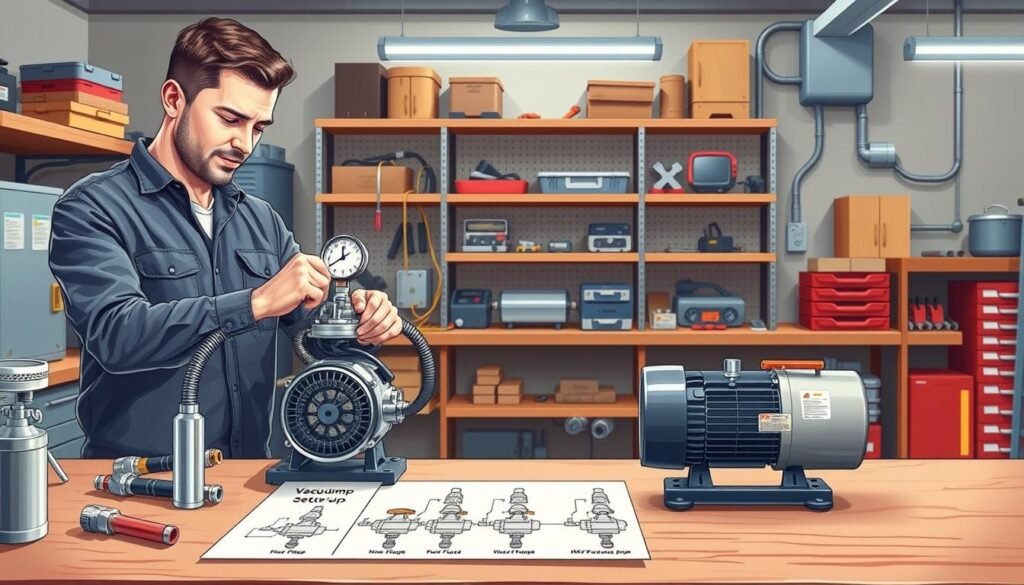
Hooking up an HVAC vacuum pump is more than a skill. It’s a must to protect your cooling gear from harm. Moisture and air in the circuits can lead to big issues like inefficiency, corrosion, and breakdowns.
This guide will show you how to set up and use a vacuum pump. It’s for both pros and DIY fans. You’ll learn the key steps for evacuating your HVAC system right.
Key Takeaways
- Understand the critical role of vacuum pumps in HVAC maintenance
- Learn step-by-step procedures for proper system evacuation
- Prevent system damage through correct moisture removal
- Identify essential tools for vacuum pump setup
- Improve overall HVAC system efficiency and longevity
Table of Contents
Understanding the Purpose of HVAC Vacuum Pumps
Setting up a vacuum pump for refrigeration is key to keeping your air conditioning system running well. It’s not just a tool; it’s a precise device that keeps your AC system at its best.
Professional HVAC technicians know that evacuating your AC system is vital. Moisture and gases can harm your refrigeration equipment if not removed.
Why Removing Moisture and Air Matters
Water in a refrigeration circuit can cause big problems:
- Potential for freezing at expansion devices
- Formation of corrosive acids that damage metal components
- Reduction of overall system efficiency
Even a little moisture can lead to big issues. One cubic centimeter of water can turn into up to one cubic meter of vapor. This vapor must be completely removed from the system.
The Science Behind Deep Vacuum Evacuation
The vacuum pump setup for refrigeration works by lowering atmospheric pressure. This makes water boil at room temperature. It effectively removes contaminants from your AC system.
By creating a vacuum, you turn liquid water into vapor. This vapor can then be safely removed. This process is not just suggested; it’s necessary to keep your system working well and prevent early failure.
Selecting the Right Vacuum Pump for Your Application
Choosing the right vacuum pump is key for your refrigeration or HVAC system. It’s important for good vacuum connections and system performance. The right pump depends on several factors that affect your setup’s success.
When picking a vacuum pump for refrigeration, look at these important traits:
- System size and application
- How often you’ll use it
- How fast you need to evacuate
- The vacuum level you aim for
- Your budget
Vacuum pump specs change a lot with system size. Small residential refrigerators and freezers need a 2-stage pump with 30-80 liters per minute. For residential and light commercial HVAC, a 150 liter/min (6 CFM) pump is best.
| System Type | Recommended Pump Capacity | Pump Stage |
|---|---|---|
| Residential Refrigerator | 30-80 liters/min | 2-stage |
| Residential HVAC | 150 liters/min (6 CFM) | 2-stage |
| Commercial Chillers | 300-500+ liters/min | 2-stage |
Don’t forget about hose and inlet sizes when setting up your vacuum pump. Hoses too small can slow down performance. Go for a minimum 3/8″ inlet, with 1/2″ or 3/4″ for the best speeds.
Pro Tip: Never connect multiple systems to a single pump, as the weakest system will compromise overall vacuum performance.
Choosing the right vacuum pump is vital for good HVAC vacuum connections. It also boosts your system’s efficiency and reliability over time.
Essential Tools and Equipment for Proper Setup
Getting ready for an HVAC vacuum pump installation means picking the right tools. You need a full set of professional-grade tools for good hvac vacuum connections and system performance.
- Vacuum pump
- Digital or analog vacuum gauge
- Refrigerant manifold gauge set
- Vacuum-rated hoses
- Valve core removal tool
- Protective eyewear and gloves
Vacuum Gauges and Manifold Sets
Choosing the right tools for hvac manifold gauge connection is key. Digital manifolds with vacuum gauges are handy, but standalone gauges give the most accurate readings. Look for gauges that are accurate and have high resolution.
“Precision is key in vacuum measurement. A quality gauge can make the difference between a successful and failed evacuation.”
Hoses, Fittings, and Valve Core Removal Tools
Your success in evacuation depends on the right hoses. Choose hoses with a minimum diameter of 3/8″, preferably 1/2″ to save time. A valve core removal tool also helps, cutting your work time in half.
When making hvac vacuum connections, always check:
- O-ring condition
- Fitting tightness
- Hose integrity
- Connection compatibility
Work in a well-ventilated area and wear safety gear during the process.
Explore Our HVAC Shop
Looking for top-rated HVAC tools, parts, and accessories? Visit our shop and find the perfect solution for your needs.
Visit the ShopHow to Hook Up HVAC Vacuum Pump
Connecting a vacuum pump to an HVAC system needs care and precision. Experts know that setting it up right is key for good system evacuation and performance.
Before starting, prepare your HVAC system for vacuum evacuation. This involves several important steps for a smooth process.
Preparing the Air Conditioning System
- Shut off power to the entire HVAC system
- Inspect service ports for any visible damage
- Verify all system valves are in the correct starting position
- Clean service ports to prevent contamination
Connecting the Vacuum Pump to the Manifold Gauge Set
Follow these steps to connect a vacuum pump to your HVAC system:
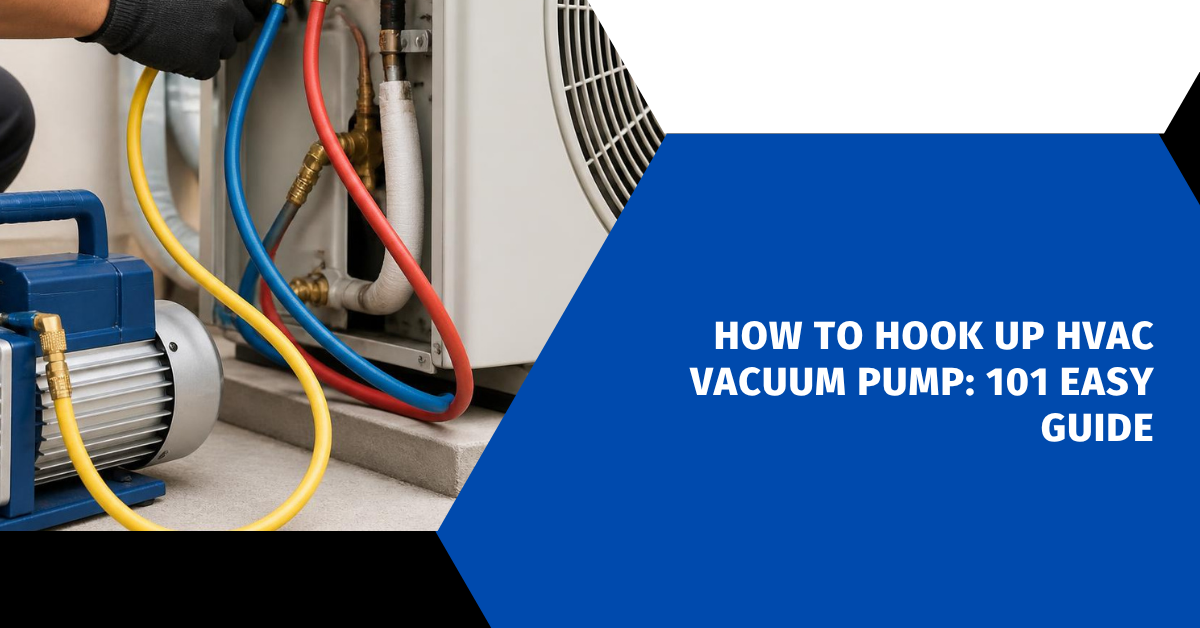
- Connect the vacuum pump to the center (yellow) port of the manifold gauge set
- Attach blue hose to the low-side service port
- Connect red hose to the high-side service port
- Ensure all manifold valves are initially closed
Proper Hose Configuration and Valve Core Removal
For the best vacuum pump connection, set up your hoses right. Removing valve cores can cut down evacuation time by up to 50%. Use a valve core removal tool with care to avoid damaging Schrader valves.
| Component | Connection Recommendation |
|---|---|
| Vacuum Pump | Connect to center manifold port |
| Low-Side Port | Use blue hose |
| High-Side Port | Use red hose |
Pro tip: Place your micron gauge far from the pump for accurate readings. Shorter hoses and larger diameters help pull vacuum faster when connecting a vacuum pump to an HVAC system.
Safety Precautions Before Starting the Evacuation Process
When you start evacuating your ac system, safety is key. HVAC pros know that keeping yourself and your tools safe needs careful planning and focus.
First, you must wear the right personal protective equipment (PPE). Your safety gear should include:
- Safety glasses with side shields
- Chemical-resistant gloves
- Long-sleeved protective clothing
- Steel-toed work boots
Setting up the right hvac vacuum connections is all about safety. Make sure your work area is safe:
- Work in a well-ventilated area
- Remove any things that could start a fire
- Have a fire extinguisher ready
- Check that your electrical system is safe
Handling refrigerants is very dangerous. Never try to evacuate the system without knowing the risks. Refrigerants can take up oxygen in small spaces, making it hard to breathe.
“Safety isn’t expensive, it’s priceless.” – Unknown HVAC Professional
Electrical safety is also very important during ac system evacuation. Always turn off power before starting work. Use extension cords that are safe for your vacuum pump.
Explore Our HVAC Shop
Looking for top-rated HVAC tools, parts, and accessories? Visit our shop and find the perfect solution for your needs.
Visit the ShopAchieving the Target Vacuum Level of 500 Microns
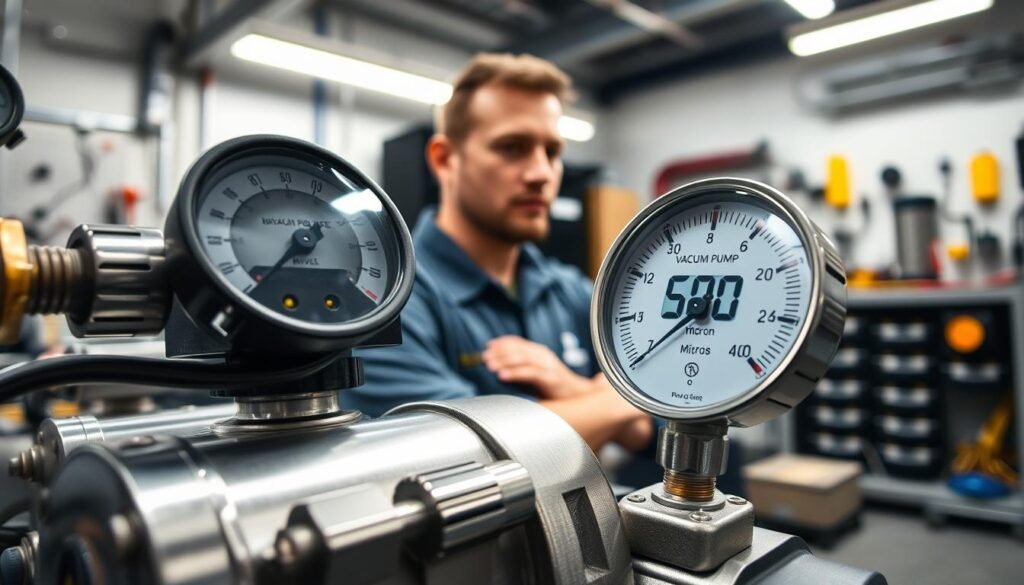
Knowing the exact vacuum pump micron level is key for a good HVAC evacuation. Experts say reaching the right vacuum depth is vital for your system’s best performance and life span.
Understanding Micron Measurements
A micron is a tiny unit, one-millionth of a meter. When you do an HVAC evacuation, you aim to remove almost all air from the system.
- Atmospheric pressure: 760,000 microns
- Target vacuum level: 500 microns or lower
- Moisture removal percentage: 99.93%
“At 500 microns, water boils at -12°F, ensuring complete moisture extraction”
Monitoring Vacuum Pressure During Evacuation
Keeping an eye on your vacuum pump micron level needs patience and care. The evacuation process goes through several stages:
- Initial rapid air removal
- Gradual moisture extraction
- Final vacuum stabilization
Experts suggest keeping the vacuum for 30-45 minutes. This depends on the system size and the room temperature. Your vacuum gauge will show how you’re doing and if there are leaks.
Pro tip: Colder temperatures can slow moisture evaporation, so adjust your evacuation time.
Performing a Standing Vacuum Test to Check for Leaks
The standing vacuum test is key in making sure your AC system is leak-free. It’s done before adding refrigerant. This step helps find any problems early on.
- Evacuate the system to 500 microns
- Close service port valves completely
- Shut off the vacuum pump
- Monitor the micron gauge for 10-15 minutes
When checking the results, watch for pressure changes. A steady vacuum means your system is leak-free. Here’s what different readings mean:
- Steady Pressure: System is ready for refrigerant charging
- Rapid Pressure Increase: Significant leak present
- Slow Pressure Rise: Possible moisture in the system
“Patience during the standing vacuum test can save you from costly repairs later.”
If you see pressure changes, don’t worry. Some changes are normal. For systems with too much moisture, try the triple evacuation method. This involves pulling to 1,000-2,000 microns, breaking vacuum with dry nitrogen, and repeating.
Pro tip: Always test at the system service ports for accurate readings. This avoids false positives from hose or connection leaks.
Explore Our HVAC Shop
Looking for top-rated HVAC tools, parts, and accessories? Visit our shop and find the perfect solution for your needs.
Visit the ShopMaintaining Your Vacuum Pump for Optimal Performance
Keeping your vacuum pump in top shape is key for good hvac vacuum connections and reliable refrigeration systems. Regular care makes sure your equipment works well and avoids expensive repairs.
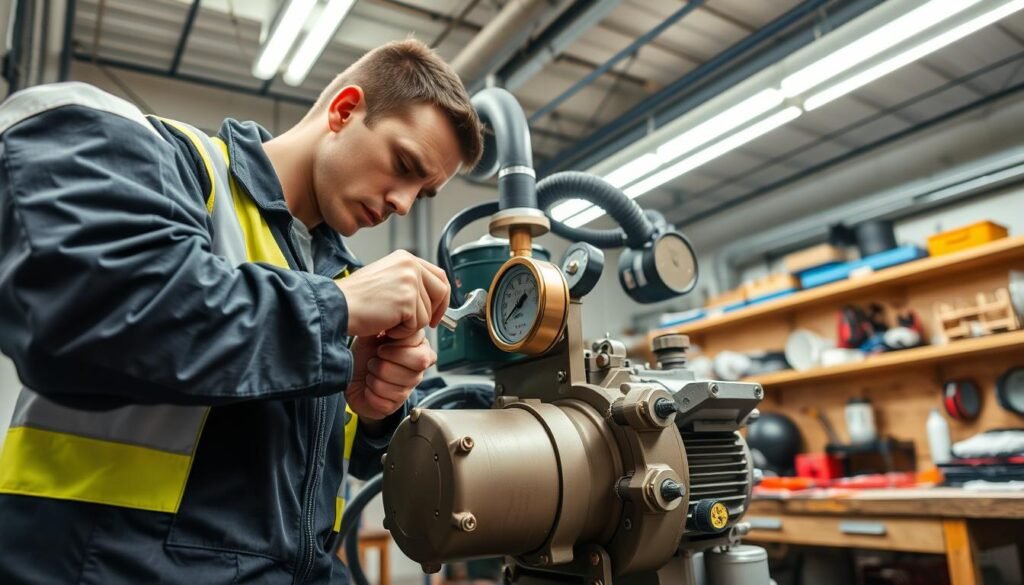
Good maintenance includes several important steps. These steps help keep your precision tool working well and last longer.
Selecting the Right Vacuum Pump Oil
Choosing the right vacuum pump oil is very important. These oils are made to work well with vacuum pumps, not like other lubricants.
- Use only the oil recommended by the manufacturer
- Don’t use refrigeration compressor oils
- Check the oil’s viscosity and quality often
Recognizing Oil Contamination Signs
Watching your vacuum pump’s oil helps avoid damage and keeps it running smoothly during refrigeration setup.
- Milky appearance: Means water got in
- Dark or black oil: Shows the system got too hot
- Thin, runny oil: Could mean refrigerant mixed in
Changing the oil regularly and checking it carefully can save you from big repair costs. It keeps your vacuum pump running at its best.
Troubleshooting Common Vacuum Pump Issues
Connecting a vacuum pump to an HVAC system can be tricky. You might face several challenges during the evacuation process. Spotting and fixing these problems quickly can save a lot of time and prevent damage to the system.
First, let’s look at the most common issues that can affect your vacuum pump’s performance:
- Incorrect oil level
- Loose hose connections
- Faulty vacuum gauges
- System contamination
To figure out if your vacuum pump is working right, follow these important steps:
- Make sure the gauges are accurate
- Check the oil levels while it’s running
- Look over all hose connections
- Test the pump by itself, away from the system
Here are some key signs that your vacuum pump might have problems:
| Symptom | Potential Cause | Recommended Action |
|---|---|---|
| High micron readings | Moisture or large leak | Check system for leaks, dry system thoroughly |
| Vacuum drops quickly | Small system leak | Use electronic leak detector |
| Inconsistent vacuum levels | Contaminated pump oil | Replace pump oil with manufacturer-recommended grade |
When you’re doing the hvac evacuation, watch out for normal changes versus bad signs. Sometimes, pressure spikes can happen because of gas pockets or temperature changes.
If simple fixes don’t work, you might need advanced tools or a pro HVAC technician. They can help with vacuum pump systems.
Conclusion
Learning to hook up an HVAC vacuum pump is key for techs. It needs precision, patience, and a good grasp of system dynamics. Your hard work in preparing the system well affects its life and performance.
Getting to an ultimate vacuum takes time and focus. Hurrying can cause moisture to stay, leading to early system failure. By taking the time to remove air and moisture well, you protect your client’s investment and show your skills.
Quality tools, the right technique, and regular practice make HVAC techs stand out. Every system is different, and your skill in using vacuum pumps will show your success. Keep learning and follow the best practices in the industry to improve your skills.
Your commitment to mastering these skills means better system efficiency, fewer service calls, and happier customers. Be thorough in your work, knowing your skills make complex tasks into reliable HVAC systems.