
Affiliate Disclosure
HVAC Guide Guys is a participant in the Amazon Services LLC Associates Program, an affiliate advertising program designed to provide a means for sites to earn advertising fees by advertising and linking to Amazon.
Are you ready to learn how to hook up recovery machine HVAC systems like a pro? Refrigerant recovery is more than just a technical task. It’s also a big environmental responsibility that shows who’s really skilled in HVAC.
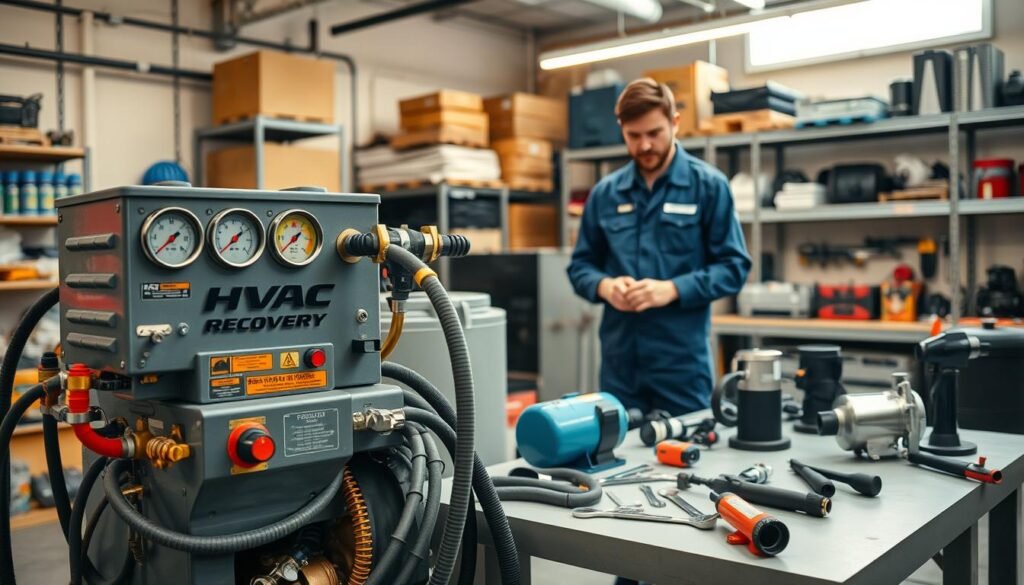
Every HVAC tech needs to know how to connect recovery machines safely and well. Whether it’s for home air conditioning or big commercial systems, knowing how to do this right is key. It can mean the difference between a job well done and a big environmental problem.
This guide will show you the important steps, techniques, and best practices for refrigerant recovery. You’ll learn about the two main recovery methods, EPA rules, and how to extract refrigerant confidently.
Key Takeaways
- Learn professional techniques for HVAC recovery machine connections
- Understand environmental regulations and EPA compliance
- Master both direct and push-pull recovery methods
- Develop skills to handle various refrigerant types safely
- Enhance your professional HVAC technician capabilities
Table of Contents
Understanding HVAC Refrigerant Recovery Machines and Their Importance
HVAC technicians use special tools to keep systems running well and protect the planet. Refrigerant recovery machines are key for handling cooling systems safely and following EPA rules.
What Are Refrigerant Recovery Machines?
A refrigerant recovery machine pulls refrigerants from HVAC systems during upkeep or fixes. It creates a pressure difference to move refrigerant into a safe tank. This stops harmful gases from getting into the air.
- Capture refrigerants from air conditioning systems
- Prevent atmospheric release of greenhouse gases
- Enable safe storage and possible recycling
- Support ePA compliant refrigerant recovery techniques
Why Recovery Machines Are Essential for HVAC Technicians
HVAC pros know how vital recovery machines are. These tools are not just extra gear—they’re a must for handling refrigerants right.
- Environmental Protection: Stops harmful greenhouse gases from being released
- Regulatory Compliance: Follows strict EPA rules
- Cost Efficiency: Allows for refrigerant recycling
- Professional Standards: Shows off technical skills
Environmental Protection and EPA Compliance Requirements
The Clean Air Act sets rules for how to handle refrigerants. Using the right recovery methods is not just a good idea—it’s the law. Technicians must stick to EPA-approved ways to avoid harming the environment and facing fines.
“Protecting our environment starts with responsible refrigerant management” – EPA Guidelines
Choosing top-notch recovery machines shows you care about doing things right and taking care of the planet. Look for machines with features like dual refrigerant support, oil-less compressors, and strong filters.
Explore Our HVAC Shop
Looking for top-rated HVAC tools, parts, and accessories? Visit our shop and find the perfect solution for your needs.
Visit the ShopEssential Equipment and Tools for HVAC Recovery Setup
Setting up your HVAC service equipment needs careful tool and machine selection. The right recovery machine setup is key for a smooth refrigerant recovery process.
- Recovery Machine: The main tool for safely removing refrigerant
- Recovery Cylinder: Must be clean and evacuated to 500 microns
- Specialized Hoses: Use ¼” standard or larger “heavy duty” options
- Inline Sight Glass: Important for watching liquid flow during recovery
- Inline Filter Drier: Needed when refrigerant might be dirty
Choosing the right hoses is vital for your recovery machine setup. Shorter hoses help improve recovery speed and efficiency. Stay away from anti-blowback or low-loss fittings, as they can slow things down.
When getting your recovery cylinder ready, keep these tips in mind:
- Clean the cylinder well
- Evacuate to 500 microns or less
- Don’t fill more than 80% to allow for refrigerant expansion
Professional HVAC technicians know that proper equipment setup is more than just having the right tools. It’s about using them right for safe, efficient refrigerant recovery.
Preparing Your HVAC System for Refrigerant Recovery
Starting refrigerant recovery needs careful preparation. HVAC experts know setting up right is key for safe and effective recovery. Your early steps can affect the whole process, avoiding damage.
- Check all equipment thoroughly
- Make sure safety rules are followed
- Get recovery cylinders ready
- Inspect system parts
Safety Protocols and Equipment Inspection
Safety is the top priority in refrigerant recovery. First, wear the right protective gear, like:
- Chemical-resistant gloves
- Safety glasses
- Protective clothing
Look over all equipment closely. Check hoses for damage, make sure gauges work, and verify service valves are good. Be careful with Schrader valve cores, as missing parts can be dangerous.
Checking Recovery Cylinder Cleanliness and Evacuation Standards
Your recovery cylinder must meet high standards. It should be:
- Evacuated to 500 microns or less
- Clean and free from dirt
- Never filled more than 80% full
“Proper cylinder preparation is the foundation of a successful refrigerant recovery process.” – HVAC Professional Best Practices
Using a bigger recovery cylinder helps speed up the process. It also lowers back-pressure during work.
How to Hook Up Recovery Machine HVAC
Connecting a recovery machine to an HVAC system needs care and attention. When you learn to hook up recovery machine HVAC, follow a step-by-step guide. This ensures safe and efficient refrigerant recovery.
Before you start, make sure you have these tools:
- Recovery machine
- Refrigerant hoses
- Service manifold gauges
- Protective safety gear
The main steps for connecting recovery machine parts are:
- Check all connection points for damage or wear
- Choose the right hose sizes for your HVAC system
- Make sure service valve positions are correct
- Securely attach low and high-side hoses
When connecting, focus on making tight, leak-free connections. Use the right torque for each fitting to avoid refrigerant loss during recovery.
“Precision in connecting recovery machine equipment ensures environmental protection and system efficiency.” – HVAC Professional Training Manual
Understanding pressure differences and refrigerant flow is key. Always check your recovery machine model’s specs for the best performance.
Direct Recovery Method for HVAC Systems
The direct recovery method is the main way to get refrigerant from HVAC systems. It’s key for HVAC techs to know this method for efficient and green refrigerant removal.
Your hvac recovery unit connection is vital in the direct recovery process. This method is best for smaller systems with less than 15 pounds of refrigerant.
Step-by-Step Connection Process
Connecting your recovery machine needs precision and careful detail. Here are the key steps for a good hvac recovery unit connection:
- Check all connections and hoses for damage
- Make sure the recovery cylinder is clean and the right size
- Connect manifold gauges to service ports
- Double-check valve positions on both the recovery machine and HVAC system
- Open valves in the right order to start refrigerant extraction
When to Use Direct Recovery Technique
Direct recovery is best for certain situations where simplicity and efficiency matter. Use this method when:
- Working with systems that have less than 15 pounds of refrigerant
- Doing routine maintenance
- Working without extra specialized equipment
- Wanting a simple recovery process
Pro tip: Keep an eye on pressure readings during the recovery process. This ensures safe and complete refrigerant extraction.
Explore Our HVAC Shop
Looking for top-rated HVAC tools, parts, and accessories? Visit our shop and find the perfect solution for your needs.
Visit the ShopPush-Pull Recovery Method for Faster Results
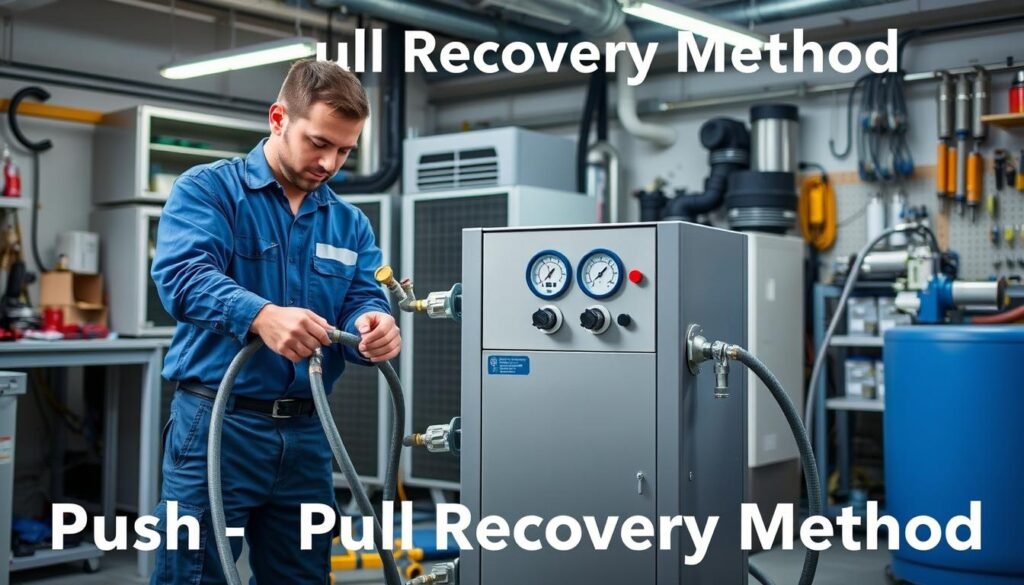
Working with big HVAC systems means you need the right refrigerant recovery methods. The push-pull recovery method is a big help for technicians with systems over 15 pounds of refrigerant.
This method is great because it handles both liquid and vapor refrigerant at the same time. It works by:
- Getting liquid refrigerant from the liquid line
- Using vapor pressure to push refrigerant to the recovery machine
- Pulling refrigerant into the recovery cylinder efficiently
Key benefits of push-pull recovery include:
- Way faster recovery time
- Better refrigerant extraction
- More efficient for big commercial systems
Pro Tip: Use an inline sight glass during push-pull recovery to visually monitor liquid flow and determine when liquid phase recovery is complete.
HVAC pros love this method for its quick system recovery and efficiency. It separates liquid from vapor refrigerants for a quicker and more thorough recovery than old methods.
Choose the push-pull recovery method for systems with lots of refrigerant. It’s all about saving time and doing the job right. Investing in the right tools and techniques means faster, better HVAC maintenance.
Optimizing Your HVAC Recovery Machine Performance
To get the most out of your recovery machine, choose the right equipment and follow best practices. HVAC experts know that small tweaks can make a big difference. They help speed up refrigerant recovery and boost system performance.
Setting up your recovery machine right is key. It can change how you work and improve your results.
Selecting the Right Hose Size and Type
The right hoses are essential for your recovery machine’s success. Here are some important tips:
- Avoid hoses with anti-blowback or low-loss style fittings
- Choose larger diameter hoses for faster recovery
- Use heavy-duty or vacuum-rated hoses
- Keep hose lengths as short as possible
Cooling Techniques for Recovery Cylinders
Good cooling methods can cut down recovery time a lot:
- Use your recovery machine’s built-in fan to lower cylinder pressure
- Implement water cooling for enhanced heat dissipation
- Deploy heat exchangers for large-volume refrigerant recovery
Using Inline Filters and Sight Glasses
Adding inline filters and sight glasses helps protect your machine and track progress:
| Component | Purpose | Recommended Usage |
|---|---|---|
| Inline Filter Drier | Remove contaminants | Install at recovery machine inlet |
| Sight Glass | Visual flow monitoring | Use during push-pull recovery |
By using these tips, you’ll make your recovery machine more efficient. This means faster and cleaner refrigerant recovery for your HVAC systems.
Explore Our HVAC Shop
Looking for top-rated HVAC tools, parts, and accessories? Visit our shop and find the perfect solution for your needs.
Visit the ShopCommon Refrigerants and Recovery Considerations
Knowing the different refrigerants is key for HVAC techs when doing a refrigerant recovery. Each one has its own traits that affect how you recover it and your environmental impact.
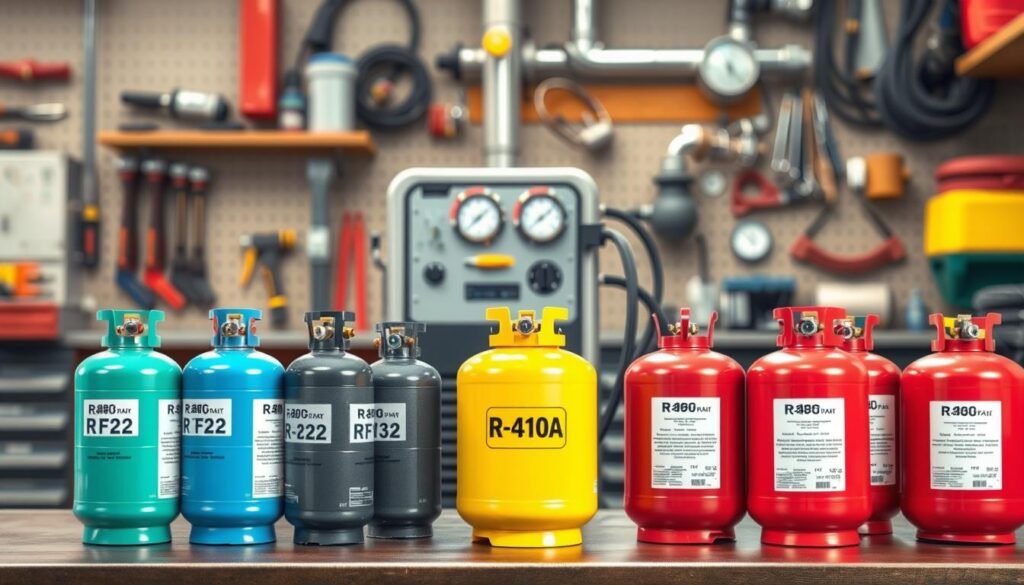
Today’s HVAC systems use several refrigerants, each needing its own recovery plan:
- R-134a: A hydrofluorocarbon (HFC) with a high global warming factor (GWP of 1,430)
- R-1234yf: An eco-friendly HFO with a very low GWP (about 1)
- R-410A: Often found in commercial air conditioning
When recovering refrigerants, you must consider their unique properties. Older systems might have older refrigerants like R-12 and R-22. These need special care because they harm the ozone layer.
| Refrigerant Type | GWP | Environmental Impact |
|---|---|---|
| R-134a | 1,430 | Moderate impact |
| R-1234yf | 1 | Minimal impact |
| R-410A | 2,088 | Significant impact |
“Proper refrigerant identification is the first step in a safe and effective recovery procedure.” – HVAC Industry Expert
Important steps for refrigerant recovery include:
- Never mix different refrigerants
- Choose recovery machines that work with more than one refrigerant
- Clean your equipment well after each recovery
- Check the refrigerant type before starting recovery
By grasping these refrigerant traits, you’ll make sure your recovery is safe, efficient, and good for the environment.
Troubleshooting HVAC Recovery Machine Issues
HVAC refrigerant evacuation can face unexpected challenges. These need careful diagnosis and fixing. Professional technicians must be ready to find and solve problems during the recovery process. This ensures safe and efficient operation.
Detecting and Resolving System Leaks
Leak detection is key during hvac refrigerant evacuation. Look out for these signs of possible system issues:
- Unexpected pressure drops
- Unusual hissing sounds
- Oil residue at connection points
- Prolonged recovery times
To find leaks well, use different detection methods:
- Soap bubble solution for visual leak identification
- Electronic leak detectors
- Pressure testing techniques
Monitoring Pressure Levels Strategically
Proper pressure monitoring is vital during hvac refrigerant evacuation. Use manifold gauges to track both high-side and low-side pressures. Understand how readings change during the recovery process.
Key pressure monitoring tips include:
- Check for pressure stabilization
- Recognize complete recovery indicators
- Identify possible system restrictions
- Diagnose recovery machine performance
By mastering these troubleshooting techniques, you’ll ensure safe and efficient refrigerant recovery. This protects both equipment and environmental standards.
Best Practices for Storing and Reusing Recovered Refrigerant
Proper storage and reuse of recovered refrigerant can cut down on costs. It also keeps you in line with EPA rules. HVAC techs can be more efficient and eco-friendly by following the right steps.
- Never fill recovery cylinders beyond 80% capacity
- Use dedicated, color-coded tanks for specific refrigerant types
- Evacuate cylinders to 500 microns or less before reuse
- Inspect refrigerant for contamination before recycling
Checking refrigerant quality is important. Look for signs of contamination and test its pressure. Clean refrigerants can be used again, but dirty ones need to go to a certified reclaimer.
| Refrigerant Condition | Recommended Action |
|---|---|
| Clean and Pure | Direct Reuse in HVAC Systems |
| Contaminated | Send to Certified Reclaimer |
Keeping records of refrigerant is key for EPA compliance. Note the type, amount, where it came from, and its purity. This ensures you follow the rules and keep your systems running well.
By following these best practices, you can turn recovered refrigerant into a valuable asset. This reduces waste and saves money, all while being good for the environment.
Conclusion
Your journey through refrigerant recovery techniques has given you key skills for HVAC work. Knowing how to connect HVAC recovery units is not just technical. It shows you care about the environment and want to do great work.
Refrigerant recovery is about making smart choices between direct and push-pull methods. The right choice depends on the system you’re working with. Whether it’s a small home unit or a big commercial system, you’re ready to handle it.
Learning these techniques is more than just knowing how to do something. It shows you’re dedicated to your work. It helps protect our planet, keeps you in line with rules, and proves you’re skilled in HVAC.
Keep in mind, technology and rules are always changing. Stay curious, keep practicing, and always be open to learning more. Your effort to learn about refrigerant recovery will make you stand out as a skilled and caring HVAC technician.