
Affiliate Disclosure
HVAC Guide Guys is a participant in the Amazon Services LLC Associates Program, an affiliate advertising program designed to provide a means for sites to earn advertising fees by advertising and linking to Amazon.
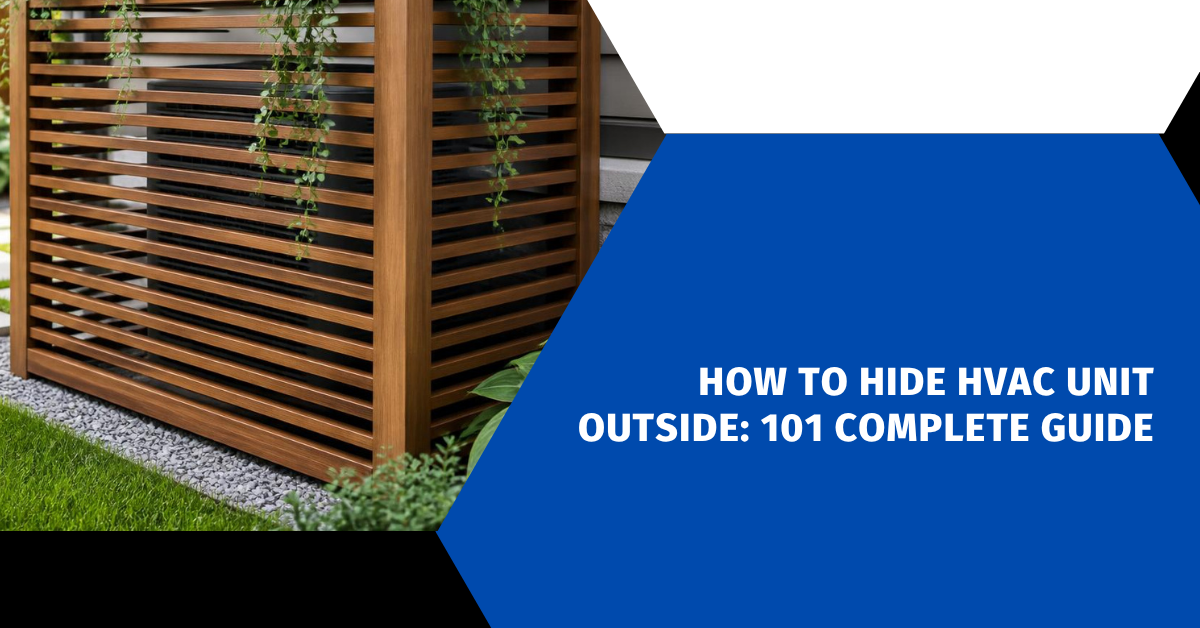
Are you tired of that bulky eyesore ruining your outdoor space? Learning how to hide your HVAC unit outside can change your yard’s look. It keeps your system working well.
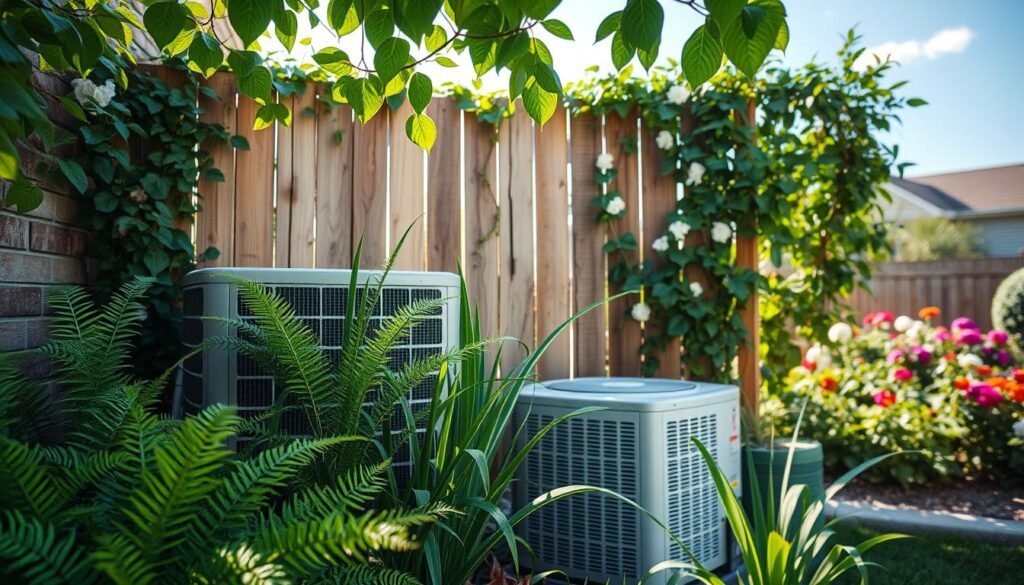
Outdoor HVAC units are key for home comfort. But they don’t have to ruin your home’s look. This guide will show you how to hide your unit in a way that looks good and works well.
If you want to make your home look better or have a nicer outdoor area, we’ve got you covered. Our expert tips will help you hide your air conditioning and heat pump units. You won’t lose any performance.
Key Takeaways
- Multiple techniques exist for hiding outdoor HVAC units
- Proper ventilation remains critical during camouflage
- Landscaping offers natural concealment options
- DIY solutions can be cost-effective and attractive
- Aesthetic improvements can increase property value
Table of Contents
Understanding Your Outdoor HVAC Unit and Why Aesthetics Matter
Your outdoor heat pump is more than a box in your yard. It’s a complex system that keeps your home comfy all year. Knowing how to hide your outdoor heat pump can help you design your home’s look better.
Modern HVAC systems are amazing feats of engineering. They handle tough weather conditions. These units are made from strong materials to protect important parts from the elements.
The Function of Outdoor Condensers and Heat Pumps
Outdoor HVAC units play key roles in your home’s climate control:
- They move heat between inside and outside
- They house important parts like compressors and coils
- They control your home’s temperature in all seasons
These units are built with weather-resistant materials like:
- Stainless steel to fight corrosion
- Aluminum for its strength and lightness
- Copper for better heat transfer
Why Homeowners Choose to Conceal Their HVAC Units
Many people hide their outdoor heat pump units for good reasons:
- It makes their yard look better
- It can increase their home’s value
- It protects the equipment from harm
- It makes less noise
- It makes the exterior look more unified
By carefully placing your outdoor HVAC unit in your yard, you can turn it into a nearly invisible part of your home’s look.
Explore Our HVAC Shop
Looking for top-rated HVAC tools, parts, and accessories? Visit our shop and find the perfect solution for your needs.
Visit the ShopEssential Considerations Before Hiding Your HVAC System
Before you start making a decorative air conditioner cover, take a moment to think about a few important things. These factors can affect how well your HVAC system works and how long it lasts. You want to make it look good while also keeping it safe.
Important things to think about when hiding your outdoor HVAC unit include:
- Manufacturer clearance requirements
- Proper air circulation needs
- Maintenance accessibility
- Climate and weather conditions
- Local building regulations
Keeping air flowing is key when making a cover for your air conditioner. Experts say you should have at least 2-3 feet of clear space around it. If you block this space, you could face big problems:
- Reduced cooling efficiency
- Potential system overheating
- Increased energy consumption
- Risk of mechanical failure
Your cover should let maintenance people get to your system easily. They need to be able to check, clean, and fix it without any trouble. A good cover should look nice but also be easy to take off and put back on.
Think about your local weather when choosing how to hide your unit. Places with a lot of humidity need different solutions than dry areas. Wooden covers might be okay in some places but could cause moisture problems in others.
Remember: Protection should never compromise performance.
How to Hide HVAC Unit Outside with Landscaping Solutions
Landscaping can make your outdoor HVAC unit look better. It can also make your yard look great. By landscaping around air conditioners, you can hide them and make your yard look beautiful.
When you plan landscaping around air conditioners, keep these tips in mind:
- Maintain minimum 2-3 feet clearance around the unit
- Choose plants with non-invasive root systems
- Ensure adequate airflow and access for maintenance
- Select climate-appropriate vegetation
Strategic Plant Placement Around Air Conditioners
Picking the right plants is key for good landscaping around air conditioners. Choose shrubs and perennials that block view but don’t hurt the system.
| Plant Type | Benefits | Recommended Varieties |
|---|---|---|
| Evergreen Shrubs | Year-round screening | Arborvitae, Boxwood |
| Ornamental Grasses | Texture and movement | Miscanthus, Fountain Grass |
| Flowering Perennials | Seasonal interest | Hydrangeas, Butterfly Bush |
Creating Natural Barriers with Shrubs and Ornamental Grasses
Use L-shaped or U-shaped beds to hide your HVAC unit. Pro tip: Make sure one side is open for easy access. Think about how big the plants will get when you plan your design.
With these landscaping tips, you can hide your outdoor HVAC unit. You’ll also make your property look better.
Explore Our HVAC Shop
Looking for top-rated HVAC tools, parts, and accessories? Visit our shop and find the perfect solution for your needs.
Visit the ShopBuilding a Decorative Air Conditioner Cover or Fence
Protecting your HVAC system and keeping your outdoor area looking good is key. A stylish ac unit fence can turn an ugly spot into a beautiful part of your yard. It’s all about picking materials and designs that look good and work well.
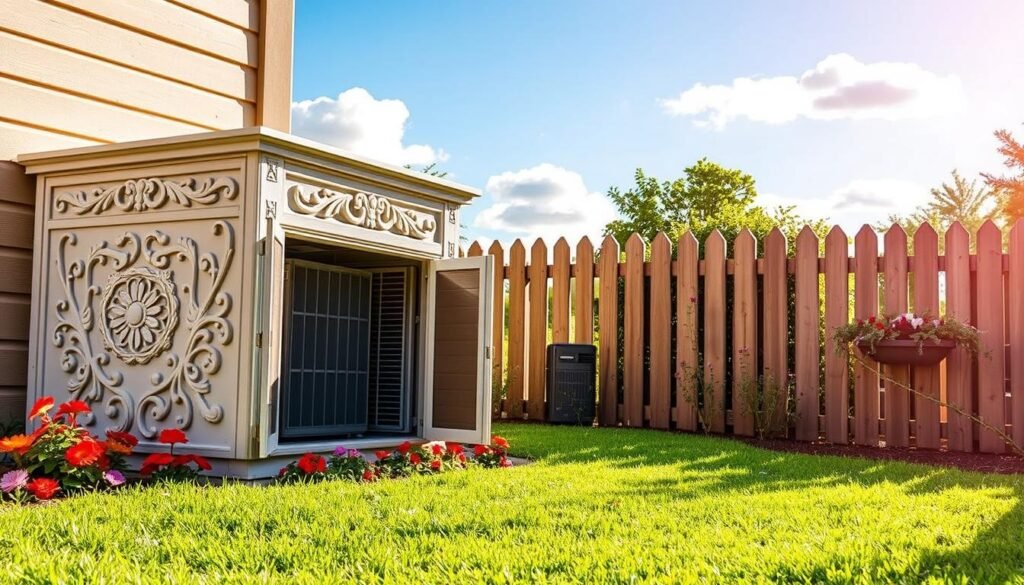
Materials That Allow Proper Airflow
Choosing the right materials for your decorative air conditioner cover is very important. Your cover must look good and let air flow properly. Good materials include:
- Lattice panels (wood, vinyl, or metal)
- Slatted wood fencing with strategic gaps
- Perforated metal screens
- Decorative wrought iron panels
- Bamboo screening
When picking materials, think about the open area percentage. You should aim for at least 50% open space. This lets air flow well and keeps your HVAC safe while looking nice.
Design Ideas for Stylish AC Unit Fences
Make a decorative air conditioner cover that fits well with your outdoor space. Here are some design ideas:
| Design Style | Key Features |
|---|---|
| Modern Horizontal Slat | Clean lines, minimalist appearance |
| Custom Lattice Enclosure | Painted to match home’s exterior trim |
| Geometric Metal Screen | Artistic patterns, contemporary look |
| Rustic Cedar Fence | Natural wood finish, blends with landscape |
Pro tip: Design your stylish ac unit fence with hinged access panels. This makes maintenance easy while keeping your HVAC system safe and looking good.
DIY HVAC Screening Projects for Budget-Conscious Homeowners
Keeping your outdoor HVAC unit safe doesn’t have to cost a lot. DIY HVAC screening is a smart and affordable way to hide unsightly equipment while keeping air flowing. With simple tools and a little creativity, you can make your outdoor area look better and improve your home’s look.
Before you start your DIY HVAC screening project, follow these important steps:
- Measure your HVAC unit carefully
- Check if the manufacturer has any clearance rules
- Pick materials that can stand up to the weather
- Make sure there’s enough air around the unit
Here are some affordable DIY screening ideas:
- Lattice Panel Screen: Use pre-made lattice panels from home stores to make a simple three-sided screen. This project only takes a few hours and doesn’t need much carpentry skill.
- Reclaimed Wood Fence: Use wooden pallets or old fence boards to make a custom screen that fits your home’s look.
- Decorative Metal Screen: Use outdoor metal panels or make a design with holes that lets air through while hiding the HVAC unit.
For a DIY HVAC screening project to work well, use screws made for the outdoors, paint or stain that won’t fade, and make sure it’s easy to take apart for upkeep. With good planning and doing, you can make a stylish way to protect your HVAC unit without hurting its performance.
Explore Our HVAC Shop
Looking for top-rated HVAC tools, parts, and accessories? Visit our shop and find the perfect solution for your needs.
Visit the ShopUsing Outdoor AC Unit Enclosures and Prefabricated Screens
Protecting your outdoor HVAC system is easy. Prefabricated outdoor ac unit enclosures are stylish and keep your system working right.
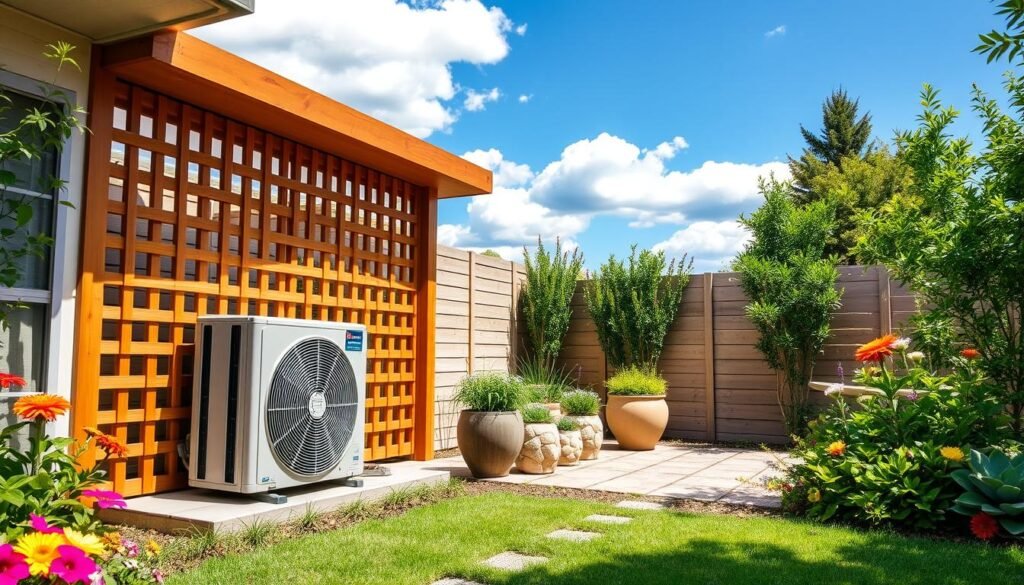
Today’s homeowners have many ways to hide their HVAC units. They can choose from various materials and designs that fit their homes and the weather.
Choosing the Right Enclosure for Your Climate
Choosing the right enclosure depends on your local weather. Different areas need different materials:
- Hot regions: UV-resistant materials
- Humid areas: Rust-resistant metals
- Snowy locations: Sturdy structural designs
- Windy environments: Securely anchored screens
Installation Tips for Heat Pump Privacy Screens
Installing your privacy screen right is key. It looks good and works well. Here’s how to do it:
- Measure your HVAC unit precisely
- Prepare a level ground surface
- Ensure adequate ventilation clearance
- Secure the enclosure with appropriate anchoring methods
| Material | Durability | Maintenance |
|---|---|---|
| Aluminum | High | Low |
| Powder-Coated Steel | Very High | Medium |
| Composite | High | Low |
Professional tip: Always prioritize airflow and manufacturer recommendations when installing any outdoor ac unit enclosure.
Remember, the right heat pump privacy screen not only enhances your home’s exterior but also protects your valuable HVAC investment.
Creative Camouflage Techniques for Disguising Condenser Units
Turning your outdoor HVAC unit into a design feature is possible with creativity. Homeowners now have many ways to hide their units in the landscape.
Here are some cool ways to hide your exterior HVAC equipment:
- Faux Rock Enclosures: Make a stone surround that looks like your landscape
- Multi-functional Storage Structures: Build a shed or feature that includes the unit
- Decorative Metal Screening: Use artistic panels to make the unit look good
- Living Wall Techniques: Create vertical gardens around the condenser
When hiding your HVAC unit, remember a few things. Make sure air can flow well. Keep the unit far enough from walls and other things. Your goal is to keep it working well, not just to look good.
Professional painters can pick the right paint for your unit. Custom trellises with plants are also a great way to hide it without hurting performance.
The key is transforming your HVAC unit from a functional necessity to a deliberate design choice.
Your creativity can make your condenser unit a standout feature. It can make your property look better while keeping everything running smoothly.
Maintaining Proper Ventilation and Clearance Requirements
Keeping your outdoor ac unit enclosure safe needs focus on ventilation and clearance. Good airflow is key for your HVAC system’s efficiency and life span.
Knowing how to handle your outdoor HVAC unit is vital. It helps avoid damage and keeps your system running well. Experts give specific tips to keep your system in top shape.
Manufacturer Guidelines for Air Circulation
Your HVAC system needs space to breathe well. Most makers suggest these clearances:
- 2-3 feet of clear space on all sides of the unit
- 5-6 feet of vertical clearance above the unit
- 12 inches of clearance beneath an elevated unit
These clearances let your system get air and release hot air freely. Blocked airflow makes your system work harder, raising energy use and wear on parts.
Common Mistakes Reducing HVAC Efficiency
Homeowners often make big mistakes with their outdoor ac unit:
- Creating solid enclosures that trap moisture
- Planting vegetation too close to the unit
- Using winter covers that prevent proper ventilation
- Blocking service access for maintenance
Always check your unit’s manual for exact clearance needs. Remember, good ventilation is not just a suggestion—it’s a must for your system’s performance and longevity.
Seasonal Considerations and Winter Protection Strategies
Keeping your outdoor HVAC unit safe in winter is key. Modern air conditioning systems are built to handle tough weather. You don’t need to cover the whole system to protect it.
Most top-brand HVAC units use weather-resistant materials. These include:
- Stainless steel
- Aluminum
- Copper
Many think you need to cover your whole unit in winter. But, this can actually cause more harm than good. Covering the whole system can:
- Attract pests like rodents
- Trap moisture that can cause corrosion
- Block important air flow
For basic winter protection, try these tips:
- Use a special shield to cover the top of the unit
- Clear away any debris that might fall on the system
- Keep the area around the unit clean
Pro tip: If you live in a mild winter area, your heat pump might keep working. Make sure there’s enough space and don’t block the unit.
Regular seasonal maintenance is vital. It keeps your HVAC system working well, even in harsh winter weather.
Conclusion
Concealing outdoor HVAC units is more than just making your yard look better. It’s about creating a space that looks good and works well. By using different ways to hide your HVAC system, you can make it look like part of your landscape.
When trying to hide your HVAC unit, think about your options carefully. You might use landscaping, decorative fencing, or creative hiding tricks. The important thing is to keep air flowing and follow the maker’s rules. Each method has its own benefits that can make your property look better and keep your HVAC system running smoothly.
Remember, hiding your HVAC unit well takes some planning. Measure your unit, check local building rules, and think about your DIY skills and budget. The best solution will make your home look better and keep your HVAC system working well for a long time.
With the tips from this guide, you can make your HVAC unit blend in with your outdoor design. It won’t be a distraction anymore. With a little creativity and careful planning, it can become almost invisible on your property’s outside.