Affiliate Disclosure
HVAC Guide Guys is a participant in the Amazon Services LLC Associates Program, an affiliate advertising program designed to provide a means for sites to earn advertising fees by advertising and linking to Amazon.
Ever wondered what keeps your air conditioning running well? Capacitors are the hidden heroes of HVAC systems. They give the energy boost your home’s heating and cooling need.
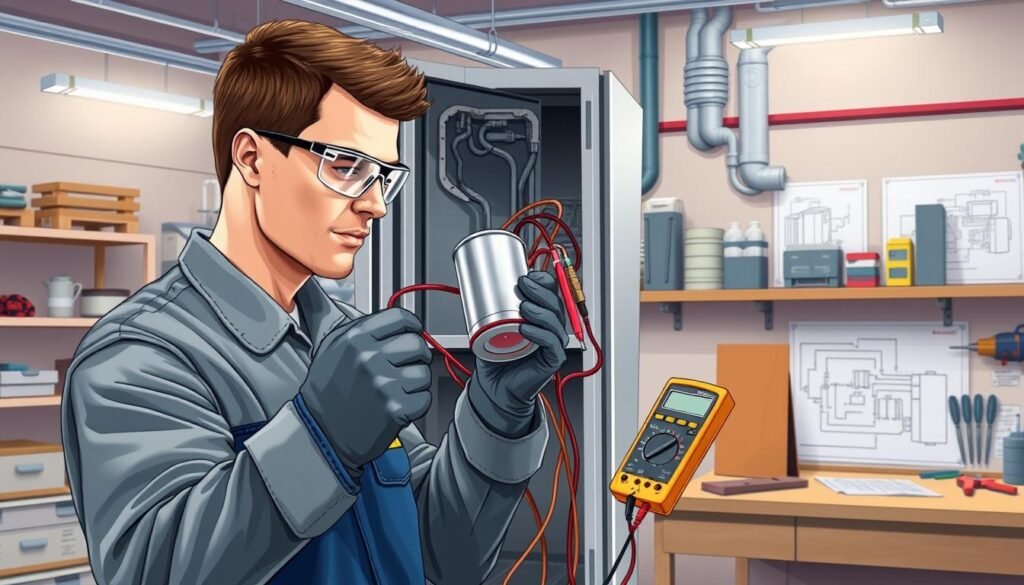
Learning how to install a capacitor can save you money and avoid equipment breakdowns. These small parts are key to starting and keeping your system’s motor running right.
Your HVAC system needs capacitors to get the right electrical energy. This energy helps overcome motor inertia and keeps your system running efficiently. Whether you’re into DIY projects or just want to know more about your home’s cooling, this guide has you covered.
Key Takeaways
- Capacitors are essential electrical components in HVAC systems
- Proper installation requires specific safety precautions
- Different types of capacitors serve unique functions
- Understanding capacitor roles can help prevent system failures
- Professional guidance is recommended for complex installations
Table of Contents
Understanding the Role of Capacitors in HVAC Systems
Capacitors are key parts of your air conditioning system. They manage electrical energy. Knowing how they work is important when you replace them.
Storing and releasing electrical energy is complex. Capacitors act as temporary energy tanks. They help motors work well.
Start Capacitors vs Run Capacitors: Key Differences
Your HVAC system uses two main types of capacitors:
- Start Capacitors: Give a strong electrical push to help motors start
- Run Capacitors: Keep electrical energy flowing smoothly while running
Energy Storage Mechanisms
Capacitors store and release electrical charge. Replacing run capacitors means swapping out these vital devices. They ensure motors run smoothly.
“Capacitors are the unsung heroes of electrical systems, storing and releasing energy with remarkable precision.” – HVAC Engineering Quarterly
Capacitors are designed to help motors start and keep electrical flow steady. They are essential in today’s air conditioning systems.
Explore Our HVAC Shop
Looking for top-rated HVAC tools, parts, and accessories? Visit our shop and find the perfect solution for your needs.
Visit the ShopTypes of HVAC Capacitors and Their Functions
Knowing how to size HVAC capacitors is key for good system performance. Different capacitors have unique roles in keeping your air conditioning working well.
The main types of capacitors in HVAC systems are:
- Start Capacitors: Give a strong electrical boost to start motors
- Run Capacitors: Keep motors running smoothly while in use
- Dual Run Capacitors: Handle more than one motor at a time
- Hard Start Capacitors: Help compressors start up when it’s hard
Choosing the right capacitor size for your HVAC system means knowing about microfarads (μF) and voltage needs. Each type of capacitor works differently, based on what the motor needs.
Dual run capacitors are special. They have three terminals for both compressor and fan motors. This setup cuts down on parts and boosts your AC system’s electrical support.
Choosing the right capacitor prevents damage and keeps your system running well.
When picking a capacitor, think about your HVAC system’s needs, motor specs, and electrical details. This ensures your system works reliably and efficiently.
Dual Run Capacitors: What Makes Them Different
Understanding dual run capacitors can greatly improve your HVAC system’s performance. These small electrical parts are key in air conditioning technology. They offer unique benefits for both home and business cooling needs.
Dual run capacitors are different from single capacitors. They power multiple motors at once. These devices combine two capacitor functions into one unit.
Common Applications in Air Conditioning Units
Dual run capacitors are often used in central air systems. They are essential for efficient motor support. Here are their main uses:
- Residential central air conditioning systems
- Commercial rooftop cooling units
- Heat pump installations
- Compact HVAC systems with limited space
Advantages Over Single Run Capacitors
Wiring dual capacitor HVAC systems offers several benefits:
| Advantage | Description |
|---|---|
| Space Efficiency | Combines two capacitors into one compact unit |
| Simplified Wiring | Reduces complex connection requirements |
| Cost-Effective | Lower component and installation expenses |
| Versatility | Supports multiple motors with three terminals |
A dual run capacitor transforms your HVAC system’s electrical efficiency, providing a smarter solution for motor support.
The wiring dual capacitor HVAC system involves three main terminals. These are common (C), hermetic compressor (HERM), and fan. Knowing these points is key for correct installation and best system performance.
Explore Our HVAC Shop
Looking for top-rated HVAC tools, parts, and accessories? Visit our shop and find the perfect solution for your needs.
Visit the ShopPre-Installation Safety Precautions and Requirements
Working with an ac unit capacitor connection needs careful preparation and strict safety rules. Electrical work is dangerous, so protecting yourself is key before starting any installation or repair.
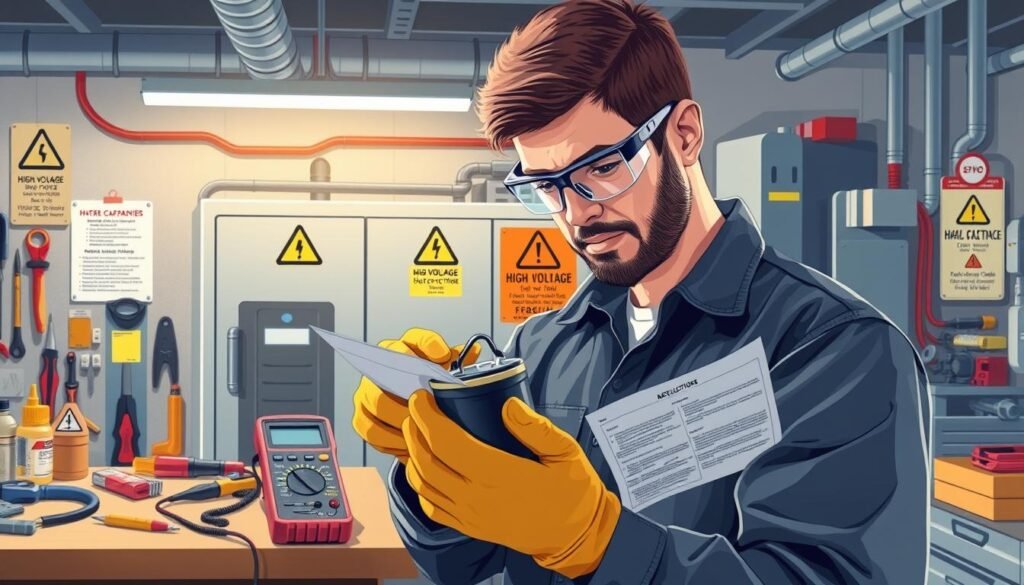
Before starting your ac unit capacitor connection project, you’ll need to take several critical safety steps:
- Shut off power at the circuit breaker
- Verify no electrical current is present
- Wear appropriate personal protective equipment
- Prepare your workspace
Disconnecting Power Sources Safely
Your safety starts with completely isolating electrical power. Follow these important steps:
- Switch off the HVAC system at the thermostat
- Locate and turn off the dedicated circuit breaker
- Use a voltage tester to confirm no electrical current
- Double-check power is completely disconnected
Essential Tools and Materials Needed
Gather the following tools before starting your ac unit capacitor connection:
- Insulated screwdrivers
- Needle-nose pliers
- Wire cutters
- Digital multimeter
- Electrical tape
- Wire nuts
- Capacitor discharge tool
Always wear insulated gloves rated for electrical work and safety glasses. Work in a well-ventilated area to minimize risks during your ac unit capacitor connection project.
Safety is not an option—it’s a requirement when working with electrical systems.
Identifying the Correct Replacement Capacitor for Your System
Finding the right capacitor for your HVAC system is key. It ensures your system works well and avoids damage. You need to pay close attention to certain details for your system to function right.
When looking for a new capacitor, focus on three important things:
- Microfarad (μF) Rating: This shows how much electrical power the capacitor can hold
- Voltage Rating: Usually 370V or 440V for homes
- Physical Size and Terminal Configuration
To find the right capacitor, follow these steps:
- Find the label on the current capacitor
- Check the microfarad and voltage ratings
- Make sure the terminal connections fit your system
- Ensure it works with your specific HVAC unit
Using the wrong capacitor can cause big problems. A capacitor that’s too small won’t give enough power to start the compressor. On the other hand, a capacitor that’s too big can stress the electrical system and even cause it to fail. If you’re unsure, check your HVAC system’s manual or talk to a professional. They can help you find the right capacitor size for your system.
Pro Tip: Always match the exact specifications of your original capacitor to guarantee optimal system performance.
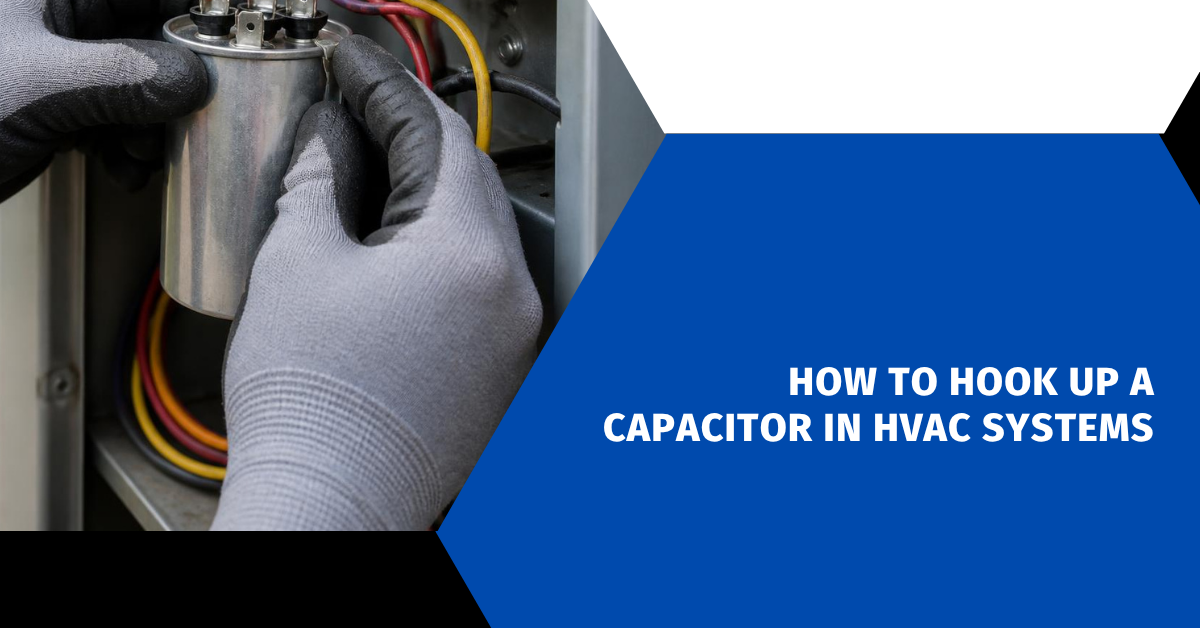
How to Hook Up a Capacitor In HVAC Systems: Step-by-Step Wiring Guide
Installing a new capacitor in your HVAC system needs care and safety. Knowing how to connect it right can save time and avoid electrical dangers.
Discharging the Old Capacitor Safely
When working with electrical parts, safety is key. Before starting your hvac start capacitor wiring diagram, you must safely remove the old capacitor’s charge:
- Use a capacitor discharge tool or a 20,000-ohm resistor
- Wear insulated gloves and safety glasses
- Touch the discharge tool across both capacitor terminals
- Hold for about 30 seconds to release the charge
- Check for zero voltage with a multimeter
Connecting Wires to Proper Terminals
Connecting wires correctly is vital for your HVAC system’s efficiency. Here’s how to wire accurately:
- Find the capacitor near the compressor
- Remove existing wires, noting their original spots
- Identify terminal labels:
- C – Common terminal
- HERM – Hermetic compressor
- FAN – Fan motor connection
- Match wire colors to the right terminals
- Make sure connections are tight
| Wire Color | Terminal | Function |
|---|---|---|
| Blue | C | Common Wire |
| Red | HERM | Compressor Connection |
| Yellow | FAN | Fan Motor |
Double-check all connections before turning on the power. This ensures a successful capacitor installation in your HVAC system.
Installing a Hard Start Capacitor in Your AC Unit
A hard start capacitor gives your air conditioning system a power boost when it starts up. This part helps ease the strain on your AC unit. It can make your AC last longer and work better.
Before you start, check if your AC needs a hard start capacitor. Look for these signs:
- Slow compressor startup
- Lights dimming when AC begins running
- Difficulty starting the compressor on hot days
Installing a hard start capacitor needs careful steps. Safety is key. First, turn off power to your AC at the circuit breaker. Then, find the compressor and open the access panel to see the wiring.
Here’s what you’ll do next:
- Find the capacitor terminals
- Disconnect the wiring carefully
- Put in the new hard start capacitor kit
- Connect wires to the right terminals
- Use mounting hardware to secure the capacitor
Experts say to check if your system can use a hard start capacitor. If your AC is old or the compressor is almost done, it might not be worth it.
Pro Tip: When in doubt, ask an HVAC pro for help. They can make sure it’s installed right and works best for your system.
Explore Our HVAC Shop
Looking for top-rated HVAC tools, parts, and accessories? Visit our shop and find the perfect solution for your needs.
Visit the ShopTesting Your Capacitor Installation and System Performance
After you’ve connected your ac unit capacitor, checking if it works right is key. This makes sure your air conditioning system works well. It also stops problems from happening later.
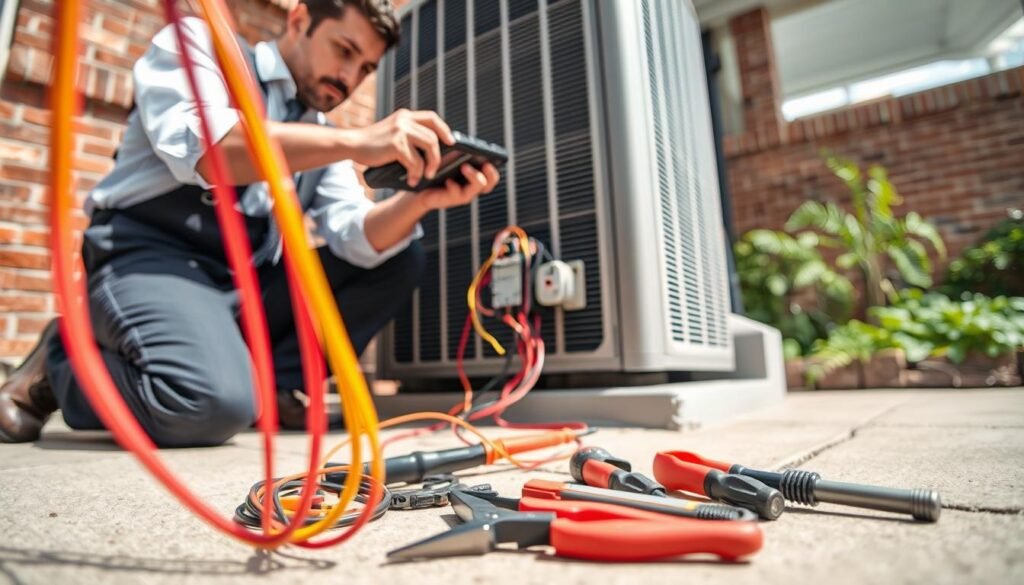
- Restore power at the electrical panel
- Activate the air conditioning system via thermostat
- Observe the startup sequence carefully
Initial Performance Evaluation
Watch these important signs in the first few cooling cycles:
- Compressor startup: Should occur within 1-3 seconds
- Fan motor engagement: Immediate and smooth
- Absence of unusual sounds like clicking or buzzing
Monitoring System Operation
Check how your ac unit capacitor connection is doing by looking at these points:
- Consistent cooling cycles (10-15 minutes)
- Supply air temperature 15-20 degrees cooler than return air
- Clean system shutdown without strange noises
Warning Signs to Watch
Watch out for these issues in the first 24 hours:
- Compressor struggling to start
- Circuit breaker tripping repeatedly
- Unusual burning odors
- Frequent system short-cycling
If you see these problems, call a professional HVAC technician. They can check your system. Testing and watching your system closely will help it work well after the capacitor is installed.
Troubleshooting Common Capacitor Connection Issues
Working with HVAC systems can be tricky, and capacitor connections are no exception. Knowing common problems helps avoid system failures and costly fixes. Several issues might pop up during installation or use.
Spotting connection problems needs a close look at your HVAC’s electrical parts. Here are the usual problems you might see:
- Incorrect wiring arrangements
- Mismatched microfarad ratings
- Loose electrical connections
- Damaged terminal connections
Fixing capacitor connections starts with a systematic check. Make sure each wire is connected right. Wrong or crossed wires can mess up your system big time.
Look out for these signs during your checks:
- Compressor starts but fan stays off
- System hums but doesn’t work fully
- Circuit breaker trips often
- Motor doesn’t run smoothly
To find connection problems, use a multimeter to check capacitance. Make sure your capacitor’s value is close to its rated value, usually ±6%. Clean contacts, replace bad connectors, and ensure connections are tight for best system performance.
Proper installation and careful checks can save you from expensive repairs. They also help your equipment last longer.
Maintenance Tips for Extended Capacitor Lifespan
Proper maintenance can greatly extend your air conditioning system’s capacitor life. Knowing how to care for this key part helps you avoid sudden breakdowns and expensive repairs. This is important when you need to replace parts of your air conditioner.
Regular maintenance includes several important steps to keep your capacitor in great shape:
- Inspect the capacitor visually every three months
- Check for physical damage or signs of wear
- Keep the surrounding area clean and free of debris
- Ensure proper ventilation around electrical components
Signs of a Failing Capacitor
Spotting early warning signs can help you fix issues before they get worse. Look out for these signs that you might need to replace parts:
- Unusual humming or buzzing sounds
- Difficulty starting the air conditioning unit
- Inconsistent cooling performance
- Visible bulging or leaking on the capacitor
When to Call a Professional Technician
Some maintenance tasks need a pro’s touch. Call an HVAC technician if you:
- Feel uncomfortable working with electrical components
- Notice persistent performance issues
- Observe burn marks or smell electrical burning
- Experience repeated capacitor failures
Professional technicians can do detailed checks with special tools. They make sure your air conditioning system works well and lasts long. Getting annual professional checks can find problems early and save you money on big repairs.
Conclusion
Installing an HVAC capacitor requires careful attention and safety. You now understand how capacitors work and how to install them. This knowledge lets you keep your air conditioning system running well.
Learning about dual run capacitors and hard start kits is a big step. It helps your system work better and saves energy. Installing a hard start capacitor can also make your compressor last longer.
Knowing how to install capacitors helps avoid mechanical stress and breakdowns. This means your equipment will last longer and save you money on bills.
While some homeowners can replace capacitors, safety always comes first. If you’re unsure or see complex wiring, get help from HVAC experts. Regular checks and maintenance keep your system in top shape.
Learning about capacitor installation gives you peace of mind. By following safety rules and keeping up with maintenance, your cooling system will work well for years. Remember, knowing how to care for your HVAC system is key to its efficiency.