
Affiliate Disclosure
HVAC Guide Guys is a participant in the Amazon Services LLC Associates Program, an affiliate advertising program designed to provide a means for sites to earn advertising fees by advertising and linking to Amazon.
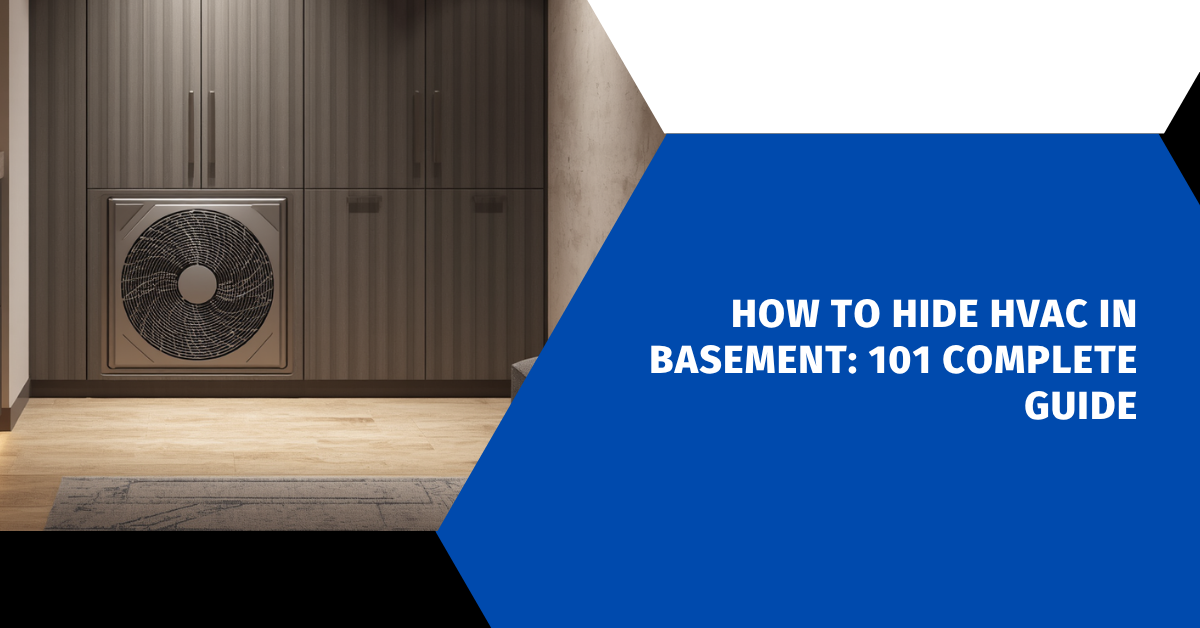
Are you tired of seeing exposed ductwork and mechanical equipment in your basement? Learning how to hide HVAC in basements can make your space look better. It can turn an industrial area into a cozy one.
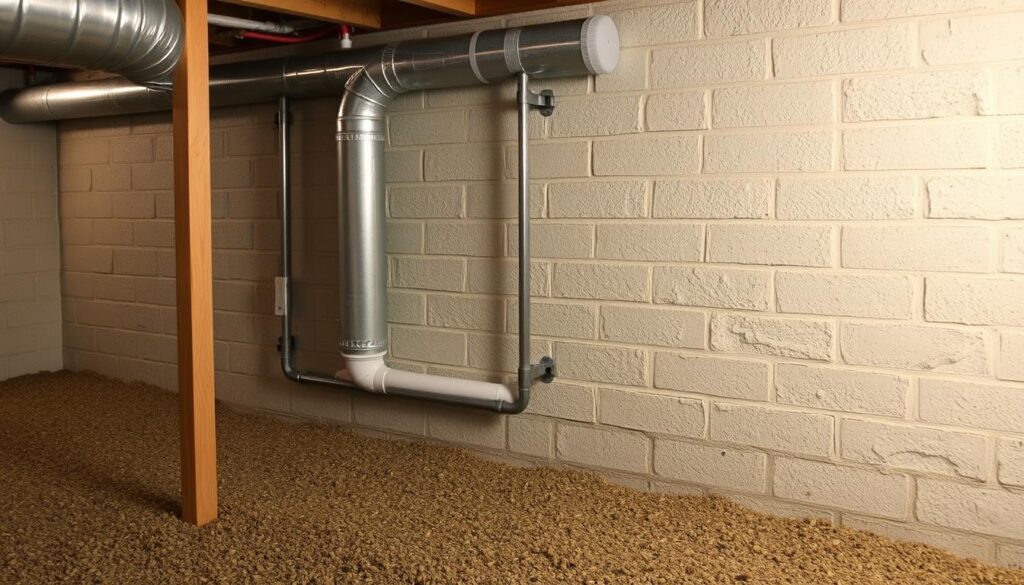
Many homeowners face the challenge of hiding mechanical systems without losing functionality. The good news is that there are smart ways to hide HVAC in basements. These methods keep your space looking good while working well.
This guide will show you how to hide your basement’s HVAC system. You’ll find out how to make your basement look finished without losing performance or ease of access.
Key Takeaways
- Multiple creative strategies exist for concealing basement HVAC systems
- Proper concealment requires balancing aesthetics with equipment functionality
- Building codes must be carefully considered during HVAC concealment
- DIY and professional approaches offer different levels of complexity
- Cost-effective solutions can dramatically improve basement appearance
Table of Contents
Understanding Your Basement HVAC System Components
It’s important to know about your basement’s HVAC system before you try to hide it. Your basement has key systems that make your home comfortable and work well.
Today’s basement HVAC systems have many parts that need careful planning to hide them well. Knowing what these parts are helps you come up with smart hiding plans.
Types of HVAC Equipment Found in Basements
Basement mechanical areas usually have a few main pieces:
- Variable-speed heat pumps
- Mini-split systems
- Electric heat pump water heaters
- Central air conditioning units
- Furnaces and air handlers
Ductwork Configuration and Layout
Ductwork is key in your basement’s HVAC system. There are different types of ducts that help hide your HVAC system:
- Flexible ducts: Lightweight and easy to fit in small spaces
- Sheet metal ducts: Strong and good against mold
- Fiberglass-lined ducts: Great for keeping sound down
- Fiberboard ducts: A budget-friendly choice
Mechanical Room Specifications
To hide your basement’s HVAC system right, you need to know the room size and how much space you need around the equipment. Experts say you should leave enough room for upkeep and air flow.
Tip: Always check local building codes when planning how to hide your HVAC system.
Planning Your Basement HVAC Concealment Project
Starting a basement HVAC project needs careful planning. You must assess your space and design with both function and beauty in mind.
Before starting, you’ll need to do some important steps:
- Measure your basement ceiling height (minimum 7.5 feet recommended)
- Document existing mechanical system locations
- Identify possible blockages
- Evaluate how much natural light you have
Setting a budget is key for your project. Make a detailed financial plan that includes:
| Expense Category | Estimated Cost Range |
|---|---|
| Materials | $500 – $2,000 |
| Labor | $1,000 – $3,500 |
| Permits | $100 – $500 |
| Contingency Fund | 10-15% of total budget |
Your prep work should take 1-2 weeks. This time is for planning, getting permits, and finding materials for your project.
Pro tip: Focus on a layout that works well with your HVAC system. Choose spots for storage around HVAC parts. This way, your enclosure will improve your basement’s use, not hinder it.
Explore Our HVAC Shop
Looking for top-rated HVAC tools, parts, and accessories? Visit our shop and find the perfect solution for your needs.
Visit the ShopCreative Ways to Hide HVAC in Basement
Turning your basement’s mechanical room into a beautiful space needs creative ideas and smart design. Homeowners can find ways to hide mechanical parts while keeping the room functional and looking good. The goal is to mix your basement HVAC design with the rest of your home’s look.
There are many ways to hide HVAC systems in your basement. These methods can make your space look much better. Here are some top ideas to hide mechanical parts:
- Drop ceiling installations that camouflage ductwork
- Custom built-in enclosures
- Architectural soffits
- Decorative screening panels
Drop Ceiling Solutions for Ductwork
Drop ceilings are a great way to hide mechanical parts. These ceilings look clean and even, and they make it easy to get to pipes and ducts. Pro tip: Pick lightweight tiles that match your basement’s colors for a unified look.
Building Custom Enclosures
Building custom enclosures lets you turn mechanical areas into useful design features. Think about making wooden frames or using materials that won’t get wet to cover HVAC units. Add shelves or decorative panels to make these enclosures look stylish and on purpose.
Soffit Construction Techniques
Soffits are another smart way to hide HVAC in your basement. By making sections in walls or ceilings, you can hide ducts and add interest to your space. Paint soffits to match your ceiling or use them to add recessed lighting for more beauty.
Designing Functional HVAC Enclosures
Creating an effective enclosure for your furnace in the basement needs careful planning and creative ideas. Your aim is to make a solution that hides the HVAC equipment well. It should also improve your basement’s look and use.
When designing an enclosure for your furnace, keep these important points in mind:
- Make sure the enclosure fits with your basement’s design
- Ensure it has good ventilation and lets you access the equipment
- Use it to add storage and make the most of the space
- Keep enough space around the equipment as the manufacturer suggests
Your enclosure design can do more than just hide the mechanical stuff. Built-in shelving, sliding panels, and smart placement can turn a simple cover into a useful part of your basement.
Here are some creative ideas for your HVAC enclosure:
- Make a closet-style enclosure with panels you can take off
- Design a decorative column that hides the ductwork
- Put a countertop over the furnace area
- Use materials and trim that match your basement’s finish
Don’t forget about airflow and easy access when hiding the furnace. Add louvered doors or ventilation grilles for air flow. This keeps the area looking clean and finished.
Good HVAC enclosure design turns a needed mechanical area into a thoughtful, attractive basement feature.
Materials for Concealing Basement HVAC Systems
Choosing the right materials is key when you’re turning an unfinished basement into a stylish space. The basement’s special conditions need materials that keep your HVAC safe and look good.
First, understand the moisture issues in basements. Basements have their own challenges that require careful material picks.
Moisture-Resistant Drywall Options
Regular drywall won’t cut it in basements. Look into these top-notch options:
- USG Sheetrock Mold Tough Gypsum Panels
- Georgia-Pacific DensArmor Plus High-Performance Panels
- Specialized moisture-resistant gypsum boards
Wood Framing Alternatives
Wood framing can rot in damp basements. Here are strong alternatives for your project:
- Pressure-treated wood studs
- Steel framing materials
- Composite moisture-resistant frames
Removable Access Panels
Your plan should mix looks with function. Removable access panels let you keep your HVAC in check without ruining your design.
Go for panels that match your walls, like magnetic or hinged ones. They offer easy access for upkeep while keeping your space looking neat.
Explore Our HVAC Shop
Looking for top-rated HVAC tools, parts, and accessories? Visit our shop and find the perfect solution for your needs.
Visit the ShopMaintaining Proper Ventilation and Airflow
Good ventilation is key for your basement HVAC system’s performance and your home’s air quality. When designing your basement HVAC, balance looks with airflow needs. Aim for a space that supports your system and looks good.
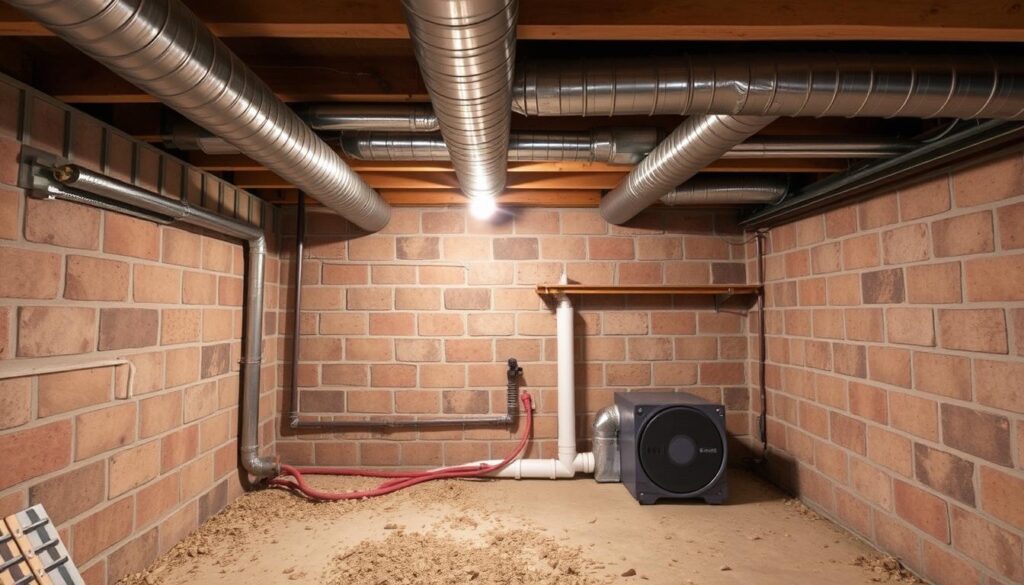
Your basement HVAC system needs smart ventilation to avoid problems. Here are important tips for keeping airflow right:
- Maintain 40-60% indoor humidity levels
- Ensure adequate clearance around equipment
- Install proper ventilation grilles
- Consider energy recovery ventilators (ERVs)
Modern basement HVAC installations use advanced tech for better air flow. Variable-speed heat pumps adjust temperatures with great accuracy. This helps control comfort and save energy.
| Ventilation Method | Benefits | Recommended For |
|---|---|---|
| Dehumidifier | Reduces moisture | High humidity areas |
| ERV/HRV | Fresh air circulation | Sealed basement spaces |
| Exhaust Fans | Removes stale air | Areas with limited airflow |
When designing your basement HVAC, remember ventilation is vital. Good design can balance airflow and looks.
Proper ventilation is the silent guardian of your basement’s health and your HVAC system’s longevity.
By using these ventilation tips, you’ll make your basement a healthy, efficient space. It will also keep your HVAC system running well.
Building Code Requirements for HVAC Concealment
When planning basement hvac enclosure ideas, understanding building codes is key. Your project must follow local rules for safety and legal reasons. This ensures your investment and family’s safety.
Local areas have their own rules for basement changes, like hiding HVAC systems. You usually need a permit for big changes. This makes sure your project is safe.
Clearance Requirements Around Equipment
It’s important to have the right space around HVAC gear. Codes and makers say how much room is needed. This is for safe use, good air flow, and easy upkeep.
- Safe equipment operation
- Adequate ventilation
- Accessibility for maintenance
Access Panel Regulations
Your basement hvac plans should have easy-to-get panels. Here’s what’s usually needed:
- Openings that match the gear size
- Can be taken off without special tools
- Paths to access are clear
Fire Safety Considerations
Fire safety is a top priority in basement work. Important steps include:
- Using fire-safe materials for walls
- Putting in smoke and carbon monoxide detectors
- Electrical work must follow current codes
Always talk to a licensed contractor to deal with building code rules for your basement HVAC project.
| Code Requirement | Typical Specification |
|---|---|
| Minimum Ceiling Height | 7.5 feet |
| Access Panel Size | 18 x 24 inches |
| Equipment Clearance | 24-36 inches |
Tip: Local codes can change, so check with your local building department before starting.
Aesthetic Solutions for Exposed Ductwork
Turning exposed ductwork into a design feature can change your basement. Instead of hiding it, you can make it part of your design.
There are creative ways to show off ductwork. It can become a stylish part of your basement makeover. Here are some ideas:
- Paint ductwork in colors that match your basement’s look
- Use metallic spray paints for a chic industrial look
- Make ductwork stand out by using different colors than the walls
- Add lighting to highlight the ductwork and other architectural features
Painting ductwork needs careful prep. Clean the surface well and use metal primers for lasting color. Black, gunmetal, or brushed silver are great for modern basements.
Lighting is key to making mechanical systems less noticeable. Use recessed lights, track lighting, and accent lights. They can make your basement feel warm and welcoming.
Pro tip: Embrace the industrial look by pairing ductwork with concrete floors, brick walls, and metal accents.
Your basement can show off its mechanical systems. With smart design, you can make utility spaces into beautiful areas. They celebrate the beauty of architectural elements.
Explore Our HVAC Shop
Looking for top-rated HVAC tools, parts, and accessories? Visit our shop and find the perfect solution for your needs.
Visit the ShopHow to Hide HVAC in Basement While Preserving Functionality
Creating a beautiful basement with a hidden HVAC system needs careful planning. You must balance looks with practical needs for maintenance.
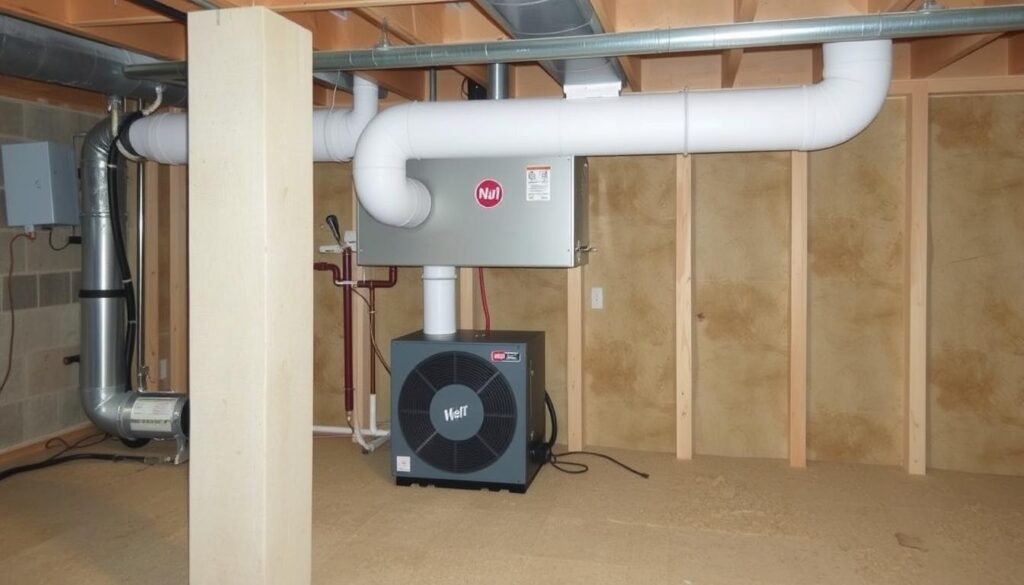
It’s important to place access points wisely. You want to hide the HVAC but keep it easy to maintain.
Strategic Access Point Positioning
Here are some tips for hiding HVAC access points:
- Put panels on sides that are less seen
- Make filter changes easy by placing them at convenient heights
- Design sections that can be removed with matching trim
- Use magnetic closures for a smooth look
Balancing Aesthetics with Maintenance Needs
Good design is key for hiding HVAC systems. Experts say to make access points that are easy to use but also look good.
| Maintenance Requirement | Design Considerations |
|---|---|
| Filter Changes | Monthly accessible panels |
| Ductwork Cleaning | Large removable sections every 3-5 years |
| Emergency Access | Unobstructed pathways |
Thermostats should be in central rooms and vents should not block furniture. With the right planning, your basement’s HVAC can be both useful and stylish.
Budget-Friendly HVAC Camouflage Ideas
Turning an unfinished basement’s HVAC system into something nice doesn’t have to cost a lot. With smart planning, you can hide mechanical parts without spending too much.
Here are some ways to hide your basement’s HVAC without spending a lot:
- Paint ductwork and pipes in uniform colors to minimize visual distraction
- Use removable fabric panels for flexible concealment
- Implement strategic furniture placement to screen mechanical areas
- Create DIY wooden frames with affordable materials
Look into ways to hide things that are both cheap and stylish:
| Technique | Estimated Cost | Difficulty Level |
|---|---|---|
| Painted Ductwork | $50-$150 | Easy |
| Fabric Screen Panels | $100-$300 | Moderate |
| Wooden Frame Enclosure | $200-$500 | Advanced |
For a cool, industrial look, think about showing some HVAC parts but hide others. Paint the floors and ceiling joists the same color. Use screens where needed. This way, you get a stylish look without spending a lot.
Don’t think creative HVAC hiding means you have to spend a lot. With some planning and smart ideas, you can make your mechanical area look good and work well.
Professional Installation Versus DIY Approaches
Choosing how to hide your basement HVAC system needs careful thought. You must consider your skills, budget, and how complex the project is. Knowing when to do it yourself or hire a pro can save you time, money, and stress.
When thinking about hiding your basement HVAC, look at a few important things. These will tell you if you need a pro’s help.
When to Call an HVAC Professional
- Complex system changes that need special skills
- Work on electrical systems that’s more than simple
- Moving or changing ductwork a lot
- Projects with gas lines or special equipment
- Jobs that need special permits
Skills Required for DIY HVAC Concealment
Some homeowners can handle parts of hiding their basement HVAC. You need:
- Some carpentry skills
- Basic construction knowledge
- Understanding of local building rules
- Good at following instructions
- The right tools and measuring gear
Pro tip: Always put safety and how well the system works first when hiding your basement HVAC. Keeping good airflow and easy access is key, no matter how you do it.
Selecting the Right Approach
Your choice should match the project’s technical needs, your skills, and future effects. Some tasks are great for DIY fans, but others need a pro’s touch for best results and to follow local rules.
Conclusion
Turning your basement into a better space means planning well and finding creative ways to hide HVAC parts. This guide shows you how to hide ductwork and equipment without losing performance. It’s all about finding the right balance.
Your basement makeover is about looks and function. You might use drop ceilings, custom boxes, or clever hiding spots. The goal is to keep air flowing and make repairs easy. Remember, each trick should keep your system running smoothly and last longer.
Keeping your system in top shape is key. Regular checks, controlling moisture, and quick fixes can stop big problems. With smart planning, your basement’s mechanical parts can blend in and look great.
A good HVAC hiding job makes your basement look better and adds value to your home. With this guide, you’re ready to make your basement both useful and beautiful.