

Affiliate Disclosure
HVAC Guide Guys is a participant in the Amazon Services LLC Associates Program, an affiliate advertising program designed to provide a means for sites to earn advertising fees by advertising and linking to Amazon.
Exposed ductwork can ruin your home’s look. But, you can hide HVAC ducts to make your space stylish and neat. Today, you don’t have to live with ugly mechanical systems.
There are many ways to hide ductwork now. Whether you’re updating your basement, living area, or attic, you can find a solution. These ideas help you blend or hide your HVAC system seamlessly.
This guide will show you seven smart ways to hide ductwork. You’ll learn about custom bulkheads and decorative panels. These methods can make your home look better while keeping it cool and warm.
Key Takeaways
- Exposed ductwork doesn’t have to compromise your interior design
- Multiple creative strategies exist for concealing HVAC systems
- Proper duct concealment requires careful planning and consideration
- Some methods can actually enhance your home’s architectural character
- Maintaining airflow and system efficiency is key during concealment
Table of Contents
Understanding HVAC Ductwork and Why You Might Want to Hide It
HVAC ductwork is like your home’s air highway. It carries warm or cool air to every room. It’s key to keeping your home comfy. Now, ductwork can even be seen as a design statement.
Your ductwork affects how your home looks and works. Designers say hiding ductwork isn’t always best. Sometimes, showing it off can make your space look better.
The Role of Exposed Ductwork in Your Home
Exposed ductwork has some cool benefits:
- It adds an industrial or modern touch
- It’s great for small spaces because it saves ceiling height
- It can save money by not needing fancy hiding tricks
- It makes it easier to check and fix your air system
Common Reasons Homeowners Choose to Conceal Air Vents
But, some folks like to hide their ducts for other reasons:
- They want a cleaner look
- They want their design to look consistent
- They want their home to look more finished
- They don’t want ducts to be a distraction
| Design Approach | Pros | Cons |
|---|---|---|
| Exposed Ductwork | Modern look, cost-effective | May not suit all design styles |
| Concealed Ductwork | Clean aesthetic, design flexibility | Higher installation costs |
Knowing your home’s style, ceiling height, and what you like will guide your choice. Do you want to hide or show off your ductwork?
Important Considerations Before Hiding Your HVAC Ducts
Exploring creative ways to hide your HVAC ducts is exciting. But, it’s key to know the challenges and needs first. Good planning keeps your design efficient and safe.
Before starting, you must think about several important things. These factors will affect your ductwork hiding project.
Maintaining Proper Airflow and System Efficiency
Your HVAC system needs the right airflow to work well. If you block or limit air flow, you could face big issues:
- Higher energy bills
- Less effective heating and cooling
- Damaged equipment
- Shorter system life
Make sure your hiding plan leaves enough space around the ducts. Most systems need at least six inches to one foot of open area to work best.
Ensuring Access for Maintenance and Repairs
When hiding your HVAC, remember to keep it easy to get to. Your design should include:
- Removable access panels
- Easy-to-open sections
- Clear paths for technician checks
- Unblocked connection points
Building Code Requirements and Safety Guidelines
Local rules can change, so getting expert advice is a must. Important safety points include:
- Using fire-safe materials
- Keeping safe distances from heat sources
- Keeping emergency exits clear
- Following local building codes
Talking to an HVAC expert and your local building department is wise. They can help make sure your creative HVAC solutions are safe and work well.
Explore Our HVAC Shop
Looking for top-rated HVAC tools, parts, and accessories? Visit our shop and find the perfect solution for your needs.
Visit the ShopCreating Custom Bulkheads and Soffits to Conceal Ductwork
Turning ugly ductwork into a part of your home’s design is possible. Custom bulkheads and soffits are a stylish way to hide HVAC systems. They keep your home looking good.
Building a bulkhead needs careful planning and exact work. How you hide ductwork can make a room look better. Here are important steps for making a good bulkhead:
- Measure existing ductwork accurately
- Select appropriate framing materials
- Ensure proper ventilation clearance
- Plan for possible maintenance access
Designing ductwork solutions often means building a frame with 2×2 or 2×4 lumber. Attach the frame to ceiling joists and wall studs for a strong cover. Drywall over the frame makes it look like part of your ceiling.
Think about these design ideas to make your bulkhead look better:
- Create stepped soffits for architectural interest
- Incorporate recessed lighting
- Design removable access panels
- Match ceiling color and texture
Bulkheads might cost more upfront, but they’re a lasting fix. They can even make your home more valuable. Getting a pro to install them ensures the best look, even for tricky designs.
Using Decorative Duct Covers and Ventilation Grilles
Changing how your HVAC system looks doesn’t need big changes. Decorative duct covers are a simple way to hide air vents and make your home look better. They turn something useful into something that looks good and fits with your space.
When picking decorative duct covers, you’ll find many styles to match your taste:
- Metal grilles in various finishes (brushed nickel, bronze, brass)
- Custom laser-cut designs with personalized patterns
- Vintage-inspired scrollwork registers
- Minimalist contemporary vent covers
- Rustic metal and wood alternatives
Selecting Materials That Complement Your Interior Design
Choosing the right decorative duct covers is important. Make sure to measure your vents right to fit well and keep air flowing. Think about your room’s look when picking materials and finishes.
Installing Custom-Painted or Metallic Vent Covers
Painting your vent covers can make them blend with your walls. Pick colors that match or make a statement. Metallic finishes can make air vents stand out and improve your room’s look.
Pro tip: Use good primer and paint made for metal to get a finish that lasts and doesn’t chip when you customize your vent covers.
How to Hide HVAC Ducts with Exposed Industrial Design Elements
Turning air conditioning ducts into a design highlight is achievable with the right strategy. The industrial design trend has changed how we see exposed ductwork. It turns these functional parts into architectural statements.
When thinking about hiding air conditioning ducts, you might find that the best option is to leave them exposed. Industrial-style homes celebrate exposed ductwork. It adds character and visual appeal to your space.
- Natural metal finishes create an authentic industrial look
- Painted ducts can dramatically transform your space
- Metallic coatings offer an upscale industrial vibe
Experts suggest several ways to make exposed ducts look intentional:
| Finish Technique | Visual Impact |
|---|---|
| Silver Metal Finish | Raw, authentic industrial aesthetic |
| Matte Black Paint | Dramatic contrast with white ceilings |
| Metallic Bronze Coating | Sophisticated, refined look |
Your creativity in hiding air conditioning ducts is limitless. Painting ducts the same color as your ceiling can make them less noticeable. This method is great for spaces with lower ceilings, keeping the room open.
Pro tip: Pair exposed ducts with complementary industrial elements like concrete floors, metal light fixtures, and minimalist furniture for a cohesive design.
Before going for an exposed duct design, think about your home’s style and architecture. This approach might not fit every home. But for modern lofts, contemporary homes, and open-concept areas, it can be a bold design choice.
Explore Our HVAC Shop
Looking for top-rated HVAC tools, parts, and accessories? Visit our shop and find the perfect solution for your needs.
Visit the ShopIncorporating Ductwork into Architectural Features
Turning your HVAC ducts into a design element can greatly improve your home’s look. Architectural integration is a smart way to make ducts look good. It turns something necessary into a beautiful feature.
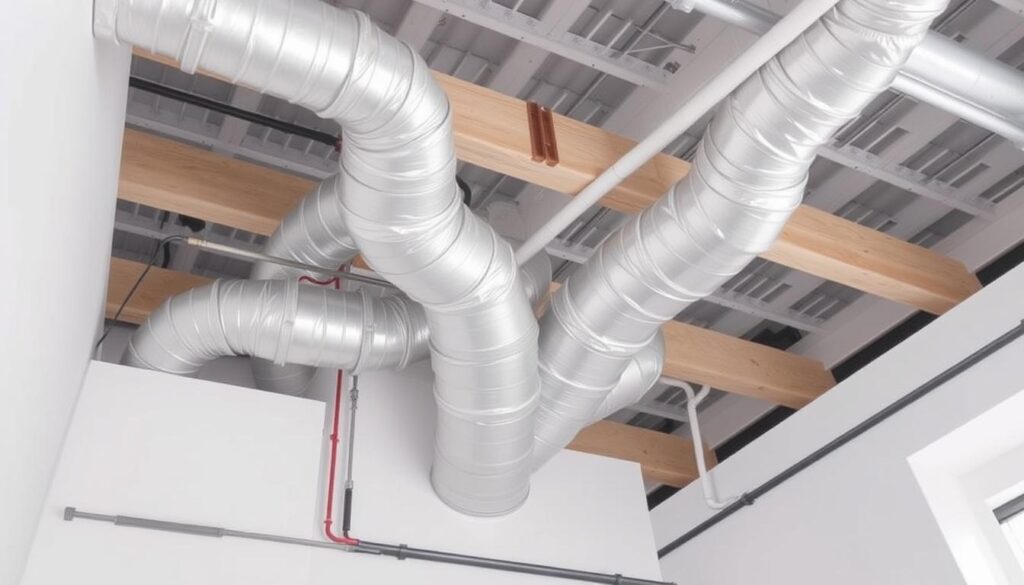
Designing smartly can make ductwork look intentional and beautiful. The trick is to see ducts as part of your home’s story, not something to hide.
Framing Around Ductwork with Wood Beams
Wood beams are great for hiding ducts and adding style. Here are some ideas:
- Use reclaimed barn wood for a rustic feel
- Install lightweight polyurethane faux beams for easy mounting
- Create channels that guide the eye along the duct path
Integrating Ducts with Ceiling Trusses
Vaulted and cathedral ceilings are perfect for hiding ducts. Exposed trusses can blend ductwork into your home’s design:
- Look into scissor truss designs
- Consider king post truss setups
- Use uplighting to highlight architectural details
Seeing ductwork as part of your home’s design makes it look custom and high-end. It turns a practical item into a statement piece.
Disguising Ductwork with Strategic Paint and Color Choices
Disguising ductwork doesn’t have to be hard or costly. Paint can change your exposed air ducts, making them blend with your home’s look or stand out as a design choice.
Color is your strongest ally when hiding ductwork. You have two main ways to go:
- Camouflage Technique: Paint ducts the same color as your ceiling to make them visually disappear
- Statement Design: Use bold colors to turn ductwork into a deliberate design feature
For the camouflage method, pick a paint made for metal. Light neutral colors are best for modern and simple spaces. Here’s how to prepare:
- Clean ducts well to remove dust and oils
- Lightly sand surfaces for better paint adhesion
- Apply a metal primer before finish coats
- Use spray paint for round ducts, brushes for flat surfaces
To add drama, paint ducts in contrasting colors like charcoal, black, or deep navy. Metallic paints in copper or bronze can make ductwork a work of art, great for industrial or eclectic styles.
The best part? It’s affordable. For under $100 in materials, you can change your space’s look and hide ductwork stylishly and creatively.
Installing Drop Ceilings and Alternative Ceiling Solutions
Transforming your space with duct concealment ideas means using smart ceiling solutions. These solutions hide unsightly ductwork while keeping your space stylish and functional. Whether you’re redoing your basement or updating your interior design, drop ceilings and other options can help.
Exploring different ceiling techniques is key when hiding ductwork. The best choice depends on your space, ceiling height, and design taste.
Wood Slat Ceilings for Basement Ductwork
Wood slat ceilings are a stylish way to hide ductwork. They offer several benefits:
- Create visual interest through horizontal wood planks
- Allow partial visibility and air circulation
- Adaptable to various design styles
- Available in multiple material options
You can pick from pine, hardwood, or wood-look alternatives to fit your design. The space between slats can be 1-4 inches, letting you control how much is seen.
Acoustic Tile and Suspended Ceiling Options
Suspended ceiling systems are a classic choice for hiding ductwork. They offer full coverage and extra benefits:
- Easy installation
- Sound-dampening properties
- Simple maintenance access
- Diverse tile design options
Today’s acoustic tiles go beyond the usual look. They come in wood-like planks, embossed patterns, and decorative designs that enhance your space’s look.
Explore Our HVAC Shop
Looking for top-rated HVAC tools, parts, and accessories? Visit our shop and find the perfect solution for your needs.
Visit the ShopUsing Fabric, Screens, and Decorative Panels to Hide Air Ducts
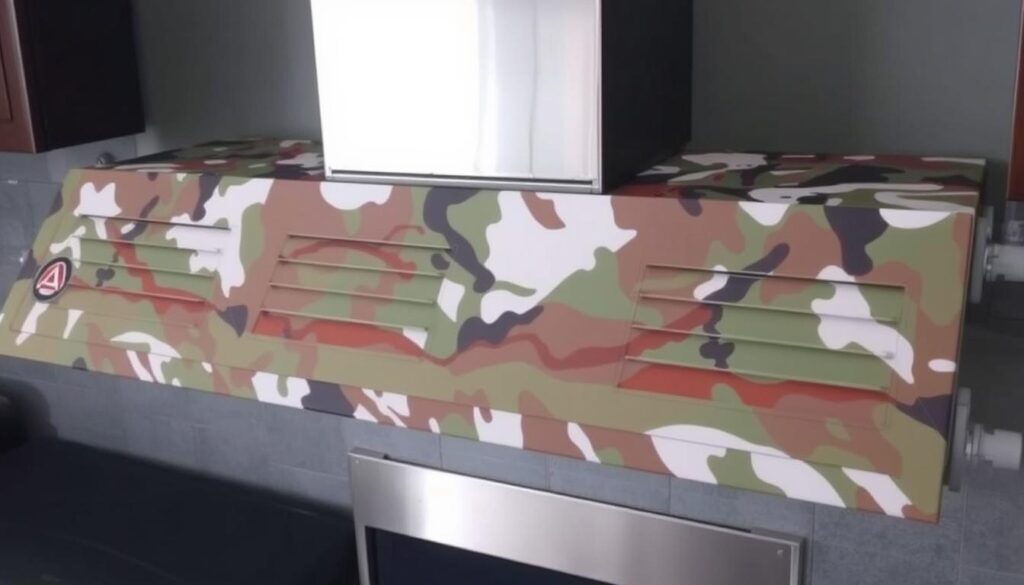
Camouflaging heating vents can be simple and affordable. You can use fabric, screens, and decorative panels. These options let you hide ductwork while making your space look better.
Fabric is a great choice for hiding vents. Pick materials that are light and let air pass through. Options include:
- Canvas
- Linen
- Open-weave textiles
These fabrics are soft and flexible. They make your vents look nice while keeping air flowing. You can make custom panels to fit over vents, turning them into stylish features.
Decorative screens are another smart way to hide vents. Here are some ideas:
| Screen Type | Design Aesthetic | Airflow Consideration |
|---|---|---|
| Bamboo Screens | Natural, Bohemian | Good Ventilation |
| Metal Laser-Cut Screens | Modern, Geometric | Excellent Airflow |
| Rattan Dividers | Tropical, Textured | Moderate Ventilation |
Perforated panels are another clever way to hide vents. Choose panels that match your decor and let air through. Look for materials like MDF or metal with cool designs.
Make sure your solution doesn’t block air or harm your HVAC system. You want something that looks good and works well.
Building Enclosures and Cabinets Around Ductwork
Turning ugly HVAC ductwork into cool design elements needs creativity and smart planning. With the right approach, you can make these parts of your home look great and work well.
Homeowners have many ways to hide ductwork. The aim is to make these structures blend in with your home and be easy to get to for upkeep.
Constructing Removable Access Panels
Good ductwork hiding needs smart ways to get to it. Here are some tips for making panels that are easy to remove:
- Design magnetic catch panels for smooth removal
- Create hinged doors with hidden hardware
- Ensure panels are large enough for complete system access
- Use matching finishes to blend with surrounding walls
Creating Built-In Storage Solutions
Enclosures that serve two purposes can turn HVAC problems into design wins. Look into creative solutions that are both useful and stylish:
- Build bookshelf units incorporating hidden ductwork
- Construct shallow display cabinets in front of wall-mounted ducts
- Design window seat enclosures with integrated storage
- Create bench seating that conceals wall-running ductwork
Choosing the right materials is key for ductwork enclosures. Plywood, MDF, and hardwoods vary in looks and cost. Make sure your enclosure lets air flow and keeps the ductwork clear for your HVAC system’s best performance.
Creative Duct Concealment Ideas for Different Rooms
Every room in your home has its own challenges when hiding air conditioning ducts. The solution depends on the room’s purpose, design, and architecture.
Living rooms and great rooms need elegant solutions. Here are some ideas:
- Create decorative bulkheads that blend with ceiling architecture
- Paint exposed ductwork to match contemporary design themes
- Integrate ducts with wooden beams or architectural elements
Kitchens are great for hiding air conditioning ducts. You can extend upper cabinets to the ceiling. This creates soffits that hide ductwork and add storage.
In basements with low ceilings, paint ducts a sleek color. This turns them into design features.
Bedrooms need a subtle approach. Use bulkheads around walls to hide ducts without disrupting the calm. You can also hide ducts in closets or behind headboards.
Pro tip: Always ensure proper ventilation and maintain system accessibility when concealing HVAC ductwork.
Home offices and bonus rooms are perfect for creative hiding. Build custom enclosures that are also media centers or desks. This hides ducts and boosts the room’s use.
Conclusion
Learning how to hide HVAC ducts is easier than you think. You’ve found many ways to make ductwork look good or blend in. Options like custom bulkheads and decorative covers can really enhance your home’s look.
It’s important to remember that hiding ductwork isn’t a one-size-fits-all deal. Your choice should match your budget, home style, and what you like. Some people like to show off ducts for an industrial look, while others want them hidden. The main thing is to pick a method that works well and follows the rules.
Before making big changes, it’s smart to talk to a pro. They can make sure your plan won’t mess up your system’s performance or cause problems later. With paint, custom panels, or smart design, you can turn ugly ductwork into a stylish feature.
Your home can be both comfortable and stylish. By getting creative with hiding ductwork, you’ll make your space look great and work perfectly. It’s all about finding the right way to make your home reflect your taste.