
Affiliate Disclosure
HVAC Guide Guys is a participant in the Amazon Services LLC Associates Program, an affiliate advertising program designed to provide a means for sites to earn advertising fees by advertising and linking to Amazon.
Ever wondered why your air conditioning stops working well? Learning about compression ratio in HVAC systems might help. It could unlock your system’s full performance.
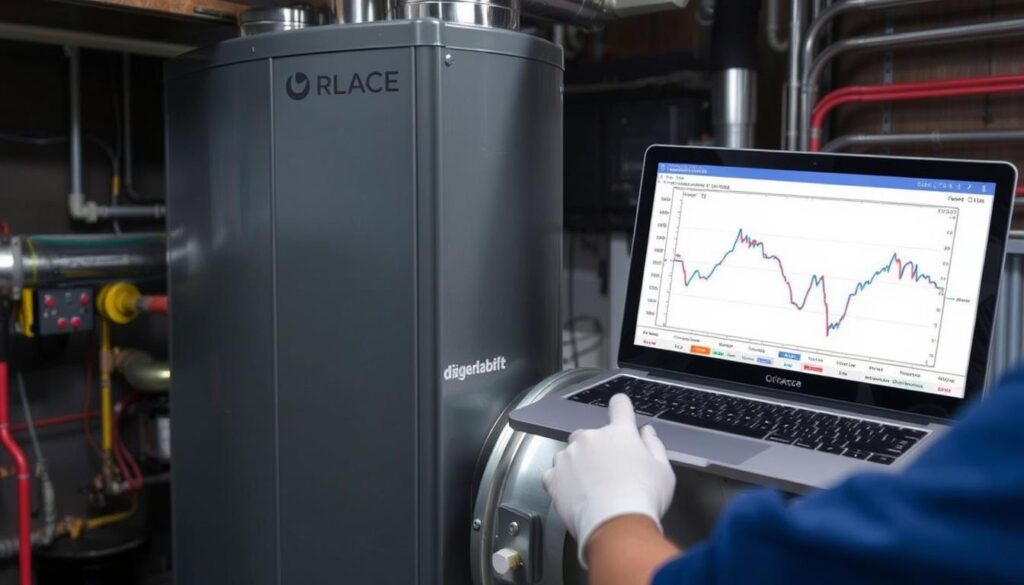
HVAC system checks show that compression ratio is key. It tells you if your air conditioning is healthy and working right. This guide will teach you how to find and understand compression ratio. You’ll learn to spot problems early and avoid costly fixes.
Both pros and DIYers can use these tips. Knowing how to find compression ratio in HVAC systems helps you see how well your system works. It also shows how much energy it uses and when it might need maintenance.
Key Takeaways
- Compression ratio is a vital metric for HVAC system performance
- Understanding this measurement can prevent costly equipment failures
- Anyone can learn basic HVAC system diagnostics with the right knowledge
- Regular compression ratio checks can improve system efficiency
- Early detection of problems saves money on repairs
Table of Contents
Understanding HVAC Compression Ratio Fundamentals
HVAC systems cool and heat your home efficiently. At their core is a key concept: compression ratio. It’s vital for how well the refrigeration compressor works.
What Is Compression Ratio in Air Conditioning Systems
Compression ratio shows how much pressure changes in your HVAC’s compressor. It’s like a gauge of how hard the compressor works. This is important for moving refrigerant through the system.
- Measures pressure transformation in the refrigeration cycle
- Indicates compressor workload and efficiency
- Critical for hvac compression measurement
Why Compression Ratio Matters for Your HVAC Performance
Knowing about compression ratio helps spot problems early. If the ratio is too high, your compressor works too hard. This can cause:
- Higher energy use
- Higher operating temperatures
- Potential early system failure
For your HVAC to work well, it needs the right compression ratio. The right ratio means your system runs efficiently and lasts longer.
| Compression Ratio Range | System Performance |
|---|---|
| 2.0 – 3.5 | Optimal Performance |
| Below 2.0 | Potential Refrigerant Undercharge |
| Above 4.0 | Excessive Compressor Stress |
Watching your system’s compression ratio helps avoid breakdowns. It keeps your HVAC running at its best.
Explore Our HVAC Shop
Looking for top-rated HVAC tools, parts, and accessories? Visit our shop and find the perfect solution for your needs.
Visit the ShopHow Air Conditioning Compressors Work
Your air conditioning system’s compressor is key to cooling. It changes refrigerant through a vital pressure change. The refrigerant pressure ratio is important for your AC to cool your home well.
Refrigerant gas enters the compressor at low pressure and cool temperature. The compressor then does a remarkable job:
- Mechanically squeezes the refrigerant gas
- Increases both pressure and temperature a lot
- Creates a lot of energy through compression
In this stage, the refrigerant gas changes a lot. It turns into a high-pressure, high-temperature gas. This change is key for the cooling cycle to work well.
| Compressor Type | Compression Method | Typical Application |
|---|---|---|
| Reciprocating | Piston-driven compression | Residential HVAC systems |
| Scroll | Orbiting scroll mechanism | Modern residential units |
| Rotary | Rotating vane compression | Small to medium spaces |
Knowing how your compressor works helps you see the importance of refrigerant pressure ratio. It changes refrigerant from low to high pressure. This lets your AC transfer heat and cool efficiently.
How to Find Compression Ratio HVAC
Understanding how to find the compression ratio in your HVAC system is key. It requires precise pressure measurements and special techniques. You’ll gather important data about your air conditioning system’s performance and efficiency.
Identifying the Required Pressure Measurements
To measure hvac compression, you need two main pressure readings:
- Suction Pressure (Low-Side Pressure): Measured at the compressor inlet
- Discharge Pressure (High-Side Pressure): Measured at the compressor outlet
These readings are vital for finding your system’s compression ratio. The pressures change due to several factors, including:
- Refrigerant type
- Outdoor temperature
- Indoor temperature
- Current system load
Using Gauges to Measure Refrigerant Pressure
To find the compression ratio in HVAC systems, you need a good manifold gauge set. Follow these steps for accurate measurements:
- Ensure gauges are properly calibrated
- Connect gauges to system service ports carefully
- Allow pressure readings to stabilize
- Record both suction and discharge pressures at the same time
| Measurement Type | Location | Importance |
|---|---|---|
| Suction Pressure | Compressor Inlet | Indicates system intake conditions |
| Discharge Pressure | Compressor Outlet | Reflects system compression performance |
Pro Tip: Always measure during steady-state system operation for the most accurate results.
Explore Our HVAC Shop
Looking for top-rated HVAC tools, parts, and accessories? Visit our shop and find the perfect solution for your needs.
Visit the ShopThe Refrigeration Cycle and Compression Basics
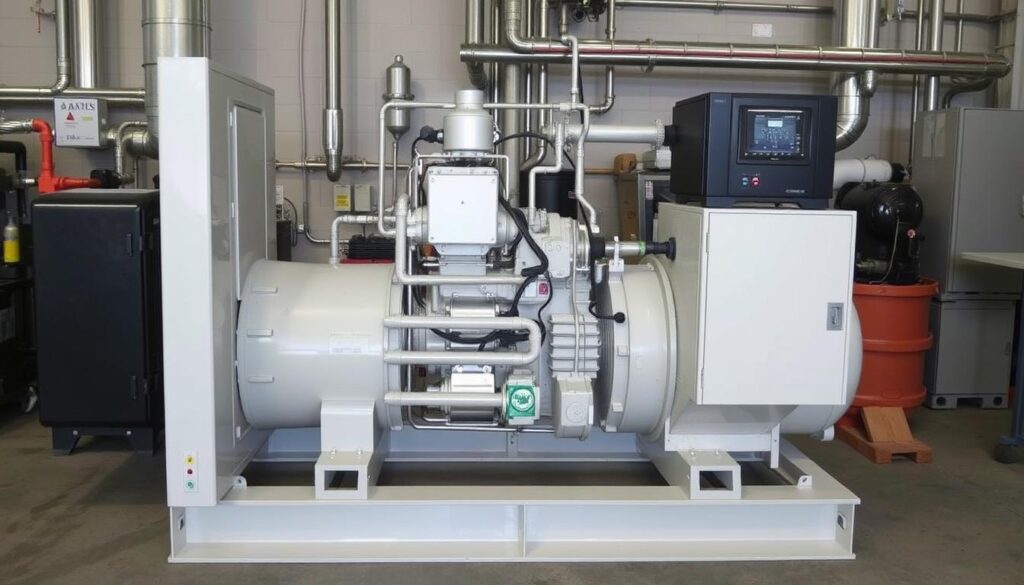
Knowing the refrigeration cycle is key to understanding how refrigeration compressors work. This complex process goes through four main stages. It moves heat around to keep your cooling systems working well.
The refrigeration cycle uses a basic idea: it absorbs and releases heat through changes in state. Your HVAC system uses this idea to move heat from inside to outside. This keeps your space at a comfortable temperature.
Key Stages of the Refrigeration Cycle
- Compression Stage: Low-pressure gas enters the compressor and gets compressed into a high-pressure, high-temperature gas
- Condensation Stage: Hot, high-pressure gas releases heat to the external environment and transforms into a liquid
- Expansion Stage: High-pressure liquid passes through an expansion valve, rapidly dropping in pressure and temperature
- Evaporation Stage: Low-pressure, cold refrigerant absorbs indoor heat and returns to a gaseous state
Your system’s refrigeration compressor performance depends on smooth transitions between these stages. The compression ratio affects how well heat is moved from your space.
| Cycle Stage | Refrigerant State | Pressure Condition |
|---|---|---|
| Compression | Low-pressure Gas | Increasing Pressure |
| Condensation | High-pressure Liquid | Constant High Pressure |
| Expansion | High to Low-pressure Liquid | Rapid Pressure Drop |
| Evaporation | Low-pressure Gas | Constant Low Pressure |
By understanding these refrigeration cycle dynamics, you can better appreciate how your HVAC system manages temperature. It ensures optimal refrigeration compressor performance.
Calculating Compressor Ratio for Your System
Knowing how to calculate the compression ratio is key for your air conditioning system’s efficiency. The formula gives insights into your HVAC’s performance and helps spot issues.
At first, calculating compressor ratio might seem hard. But, it’s easy once you know the basic steps. The main part is accurately measuring and converting pressure readings.
Step-by-Step Compression Ratio Formula
The basic formula for air conditioning compression ratio is simple: Compression Ratio = Absolute Discharge Pressure ÷ Absolute Suction Pressure. Let’s look at the main parts:
- Identify discharge pressure reading
- Identify suction pressure reading
- Convert both readings to absolute pressure
- Divide discharge pressure by suction pressure
For example, if your discharge pressure is 278 PSIA and suction pressure is 70 PSIA, your compression ratio would be 278 ÷ 70 = 3.97:1.
Converting PSI Readings to Absolute Pressure
To get accurate results, you need to convert gauge pressure to absolute pressure. Absolute pressure includes atmospheric pressure, which is 14.7 PSI at sea level. The conversion is simple: Absolute Pressure = Gauge Pressure + Atmospheric Pressure.
Remember, elevation can change atmospheric pressure. Always use precise measurements for the best results with your HVAC system.
Factors Affecting HVAC Compression Measurement
Understanding hvac compression measurement is complex. It involves many environmental and system-specific variables. Your HVAC system’s performance is not just about numbers. It’s about understanding the factors that affect compression ratio readings.
Several key elements impact your hvac compression measurement accuracy:
- Ambient Temperature: Outdoor temperatures directly influence condenser pressure, causing compression ratio fluctuations
- Indoor Conditions: Humidity and temperature levels affect evaporator pressure measurements
- Refrigerant type and charge levels
- System load conditions
- Airflow across coil systems
Temperature is key in compression ratio dynamics. As outdoor temperatures rise, condenser pressure increases. This affects compression measurements. Different refrigerants, like R-410A and R-22, have unique pressure ranges and compression characteristics.
Airflow restrictions can skew hvac compression measurements. Blocked or dirty coils disrupt heat transfer. This causes pressure imbalances that lower system efficiency. Refrigerant charge levels also affect measurements. Undercharged systems show higher compression ratios, while overcharged systems show lower readings.
Mechanical factors like compressor wear and system contamination also impact measurements. Knowing these variables helps you understand readings and spot system problems.
Interpreting Your Compression Ratio Results
Knowing your HVAC system’s compression ratio is key to keeping it running well. It shows how your air conditioning system is doing. It also helps spot problems early, before they get big.
Normal Compression Ratio Ranges for Different Systems
When you check your compressor’s efficiency, knowing the usual compression ratio ranges is important. Most home air conditioners fall into these ranges:
- Typical residential systems: 3:1 to 5:1 compression ratio
- R-410A systems: Slightly different optimal ranges
- Heat pumps: Varying ratios between cooling and heating modes
The seer rating is linked to these ranges. More efficient systems usually have lower compression ratios. This is thanks to better heat exchangers and refrigerant paths.
Signs of Compressor Efficiency Problems
Look out for these signs that might mean your compression ratio is off:
- High compression ratios (above 8:1 or 9:1):
- Potential condenser coil restrictions
- Inadequate condenser airflow
- Refrigerant undercharge
- Non-condensables in the system
- Low compression ratios (below 2:1):
- Possible refrigerant overcharge
- Compressor valve problems
- Incorrect refrigerant type
- Evaporator issues
Pro Tip: Always correlate compression ratio with other system parameters like superheat, subcooling, and temperature differentials for accurate diagnostics.
By watching your HVAC system’s compression ratio closely, you can spot problems early. This can save you from expensive fixes later on.
Explore Our HVAC Shop
Looking for top-rated HVAC tools, parts, and accessories? Visit our shop and find the perfect solution for your needs.
Visit the ShopTroubleshooting Common Compression Issues
Fixing HVAC system problems needs a careful plan. Knowing the signs helps catch issues early. This way, you avoid big system failures.
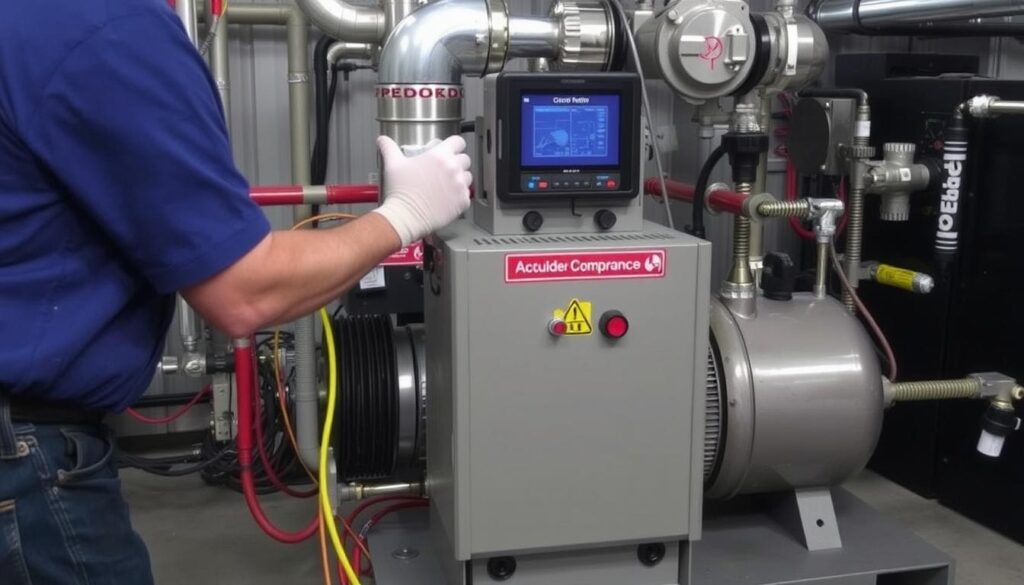
- High Compression Ratio Indicators
- Low Compression Ratio Warning Signs
- Essential Diagnostic Techniques
For high compression ratio problems, check these things:
- Inspect condenser coil cleanliness
- Verify condenser fan operation
- Check refrigerant charge levels
- Examine outdoor unit airflow
| Diagnostic Area | Potential Issue | Recommended Action |
|---|---|---|
| Condenser Coil | Dirt Accumulation | Professional Cleaning |
| Refrigerant | Incorrect Charge | Pressure Adjustment |
| Compressor | Valve Integrity | Performance Testing |
When you’re checking your HVAC, safety is key. Always get a pro for tough compression problems. Electrical and refrigerant systems need special care.
Regular upkeep stops most compression issues. Get yearly checks, clean filters, and watch your system’s health. These steps keep your HVAC running well and last longer.
Conclusion
Learning how to find the compression ratio of your HVAC system is key to keeping it running well. By understanding how to measure and calculate this important metric, you get deep insights into your AC’s health and efficiency. It’s all about figuring out the relationship between discharge and suction pressures using absolute pressure values.
Getting precise with compression ratio measurements is essential. While a range of 3:1 to 5:1 is common, your system might need something different. To get good at analyzing compression ratios, you need to practice and pay close attention. HVAC pros say it’s smart to track these numbers over time to know what’s normal for your system.
Being able to spot problems early can save you a lot of time and money. By using compression ratio measurements along with other checks like superheat and temperature split, you’ll really understand how your HVAC system is doing. Regular checks help you catch small issues before they turn into big, expensive problems.
As you keep working on your skills in finding the compression ratio of your HVAC system, remember that knowledge is your best tool. Each measurement gives you important info about how well your system is working. With regular practice and a focus on detail, you’ll get really good at keeping your AC system running smoothly.