
Affiliate Disclosure
HVAC Guide Guys is a participant in the Amazon Services LLC Associates Program, an affiliate advertising program designed to provide a means for sites to earn advertising fees by advertising and linking to Amazon.
Are you ready to start a rewarding career in the HVAC industry? Getting an HVAC license in Georgia could open doors to a successful career. The HVAC trade is booming in the southeastern United States.
Georgia’s construction and HVAC sectors are growing fast, with an 18% increase. This is much higher than the national average. By getting an HVAC contractor license in Georgia, you’ll lead in a vital and dynamic field.
Getting a Conditioned Air Contractor license might seem tough. But it’s made to ensure quality and professionalism. This guide will help you through the six easy steps to get your Georgia HVAC license, whether you’re new or experienced.
Key Takeaways
- Georgia offers exciting opportunities for HVAC professionals
- Licensing is mandatory for operating an HVAC business
- Minimum experience requirements range from 4-5 years
- Certification enables higher-paying project opportunities
- EPA Section 608 Certification is an additional requirement
Table of Contents
Understanding HVAC Licensing Requirements in Georgia
Getting into HVAC licensing in Georgia can be tricky. But knowing the rules is key for your career. The Georgia Secretary of State’s Office Licensing Division makes sure hvac license requirements are strict. This is to keep service quality high and protect consumers.
The state is serious about HVAC standards. It has specific rules for contractors. Not everyone needs a full license, but some must follow strict guidelines.
Why Licensing Matters in Georgia
HVAC licensing is important for several reasons:
- It makes sure contractors are technically skilled.
- It keeps consumers safe.
- It keeps industry standards high.
- It proves a contractor’s expertise.
Who Needs a Conditioned Air Contractor License
Not all HVAC workers need a license. Here’s who does:
| Worker Type | Licensing Requirement |
|---|---|
| Entry-level employees | No license required |
| Independent contractors | Full license mandatory |
| Duct system installers | License not required if working under supervision |
Licensed vs. Unlicensed HVAC Work
Licensed contractors have big benefits:
- They can run their own businesses.
- They can get building permits.
- They can get commercial insurance.
- They can bid on government projects.
“Licensing is not just a piece of paper—it’s your professional passport in the HVAC industry.” – Georgia HVAC Professional Association
Understanding these requirements is your first step toward a successful HVAC career in Georgia.
Explore Our HVAC Shop
Looking for top-rated HVAC tools, parts, and accessories? Visit our shop and find the perfect solution for your needs.
Visit the ShopTypes of HVAC Licenses Available in Georgia
When you aim for a non-restricted air conditioning license in Georgia, you’ll find two main types. These types shape your HVAC career path. It’s key to know them well to choose the right path in the heating, ventilation, and air conditioning field.
Georgia has two main Conditioned Air Contractor licenses:
- Class I (Restricted) License
- Limited to systems under 175,000 BTU heating
- Maximum 60,000 BTU cooling capacity
- Ideal for residential and small commercial applications
- Class II (Unrestricted) License
- No system size restrictions
- Covers commercial and industrial HVAC systems
- Allows work on larger, more complex installations
Choosing between a Class I and Class II license depends on your career goals and experience. The Class I license is best for those focusing on residential work. On the other hand, the Class II license is for more complex HVAC projects.
To get either license, you need specific experience, training, and a course in heat loss, gain, and duct design. Think about your career goals to pick the right license for your HVAC career.
How to Get HVAC License in Georgia
Getting an HVAC license in Georgia needs careful steps and requirements. You must show you’re ready to be a licensed HVAC pro. This means meeting important steps that show your skills and dedication.
Meeting Age and Education Prerequisites
To start your HVAC license journey in Georgia, you need to meet basic rules:
- Be at least 18 years old
- Have a high school diploma or GED
- Have a valid government ID
Your school history is key for your license. Some technical schools can help with experience, giving up to two years of it.
Documenting Work Experience Requirements
It’s important to document your work experience well for your HVAC license. You’ll need to show:
- What your job was
- When you worked there
- Any supervisory roles
- Proof from licensed pros
Completing Required Training Courses
To get licensed, you must finish certain training. Important courses include:
- Heat loss and gain courses
- Duct design training
- Professional development workshops
Keep detailed records and get three references from licensed pros. They can help with your application.
Explore Our HVAC Shop
Looking for top-rated HVAC tools, parts, and accessories? Visit our shop and find the perfect solution for your needs.
Visit the ShopGeorgia HVAC Training Programs and Educational Pathways
Getting started with hvac certification in georgia means picking the right program. The state has many paths to help you succeed in heating, ventilation, and air conditioning.

Georgia offers top-notch hvac certification through tech colleges and training centers. You’ll find programs all over the state that meet licensing needs.
- Coastal Pines Technical College (Multiple Campuses)
- Lanier Technical College
- North Georgia Technical College
- Southern Crescent Technical College
- Southern Regional Technical College
When choosing an HVAC program, think about these options:
| Program Type | Credit Hours | Duration | Estimated Cost |
|---|---|---|---|
| Certificate Program | 12-24 credits | 6-12 months | $1,200-$2,400 |
| Associate Degree | 60-70 credits | 2 years | $6,000-$7,000 |
There are also other ways to get hvac certification in georgia, like:
- Apprenticeship programs through PHCC of Georgia
- Online training options
- Vocational school programs
Pro tip: Make sure your program is accredited by groups like HVAC Excellence or PAHRA for quality education.
The right education is your first step toward a successful HVAC career in Georgia.
Preparing for and Passing the Georgia Conditioned Air Exam
Passing the Georgia conditioned air exam is key to becoming a licensed HVAC contractor. It tests your knowledge and skills in heating, ventilation, and air conditioning. Knowing the exam’s structure and preparing well can boost your success chances.
The georgia conditioned air exam checks your professional skills through a tough test. PSI Testing Services runs the exam. It has 120 questions, with 100 scored to decide your result.
Exam Format and Structure
Your exam will focus on four main areas:
- Regulations, Laws, and Administrative Functions (8 questions)
- System Design (55 questions)
- Installation (25 questions)
- Maintenance and Repair (12 questions)
Approved Reference Materials
Study approved materials to get ready for the georgia conditioned air exam. You can bring certain resources to the test. These include:
- Manufacturer installation manuals
- Technical reference guides
- Code books
- Calculation worksheets
Exam Scheduling and Location
| Testing Locations | State |
|---|---|
| Duluth | Georgia |
| Marietta | Georgia |
| Atlanta | Georgia |
| Jacksonville | Florida |
| Chattanooga | Tennessee |
To pass, you must score at least 70% on the 100 scored questions. The test is split into two 3.5-hour sessions with a break. This gives you enough time to show your technical skills.
Pro tip: Get familiar with your reference materials before the exam. Practice quick navigation to save time during the test.
Obtaining EPA Section 608 Certification for Refrigerant Handling
To get an hvac certification in georgia, you must pass the EPA Section 608 Certification. This is a federal rule for anyone working with refrigerants in HVAC. Knowing how to get an hvac license in georgia means you need this key certification.
The EPA Section 608 Certification has four types. Each is for different refrigeration and cooling systems:
- Type I: Small appliances (window AC units, refrigerators)
- Type II: High-pressure appliances (most residential and commercial systems)
- Type III: Low-pressure appliances (large commercial chillers)
- Type IV (Universal): Covers all types of refrigeration equipment
The cost for certification varies by type and testing center. Prices are usually between $20 and $150. Most HVAC pros in Georgia choose the Universal certification for better job chances.
| Certification Type | Typical Cost | Equipment Coverage |
|---|---|---|
| Type I | $20-$40 | Small appliances |
| Type II | $50-$100 | High-pressure systems |
| Type III | $75-$125 | Low-pressure systems |
| Type IV (Universal) | $100-$150 | All refrigeration equipment |
Pro Tip: Keep your EPA certification documentation safe, as you’ll need to provide proof when applying for your Georgia HVAC license.
To get your certification, you must pass an exam at an approved testing center. The exam tests your knowledge of refrigerant handling, environmental impact, recovery procedures, and safety. Good preparation is key to success in the HVAC field.
Costs and Fees Associated with Georgia HVAC Licensing
Getting an HVAC license in Georgia means you’ll face some costs. It’s important to plan your budget well. Here’s a look at the main expenses you’ll have during your licensing journey.
Initial Application Expenses
At the start, you’ll need to pay for a few things:
- Initial application fee: $30
- Examination fee: Approximately $267
- EPA Section 608 Certification: $20-$150
Insurance and Bonding Requirements
Protecting yourself is key in the HVAC field. Georgia has rules for insurance and bonds:
- Surety bond: $10,000 deposited with county probate court
- General liability insurance: $500-$2,000 annually
- Workers’ compensation insurance: Varies by payroll
License Renewal and Continuing Education
Keeping your license up to date costs money:
- License renewal fee: $75 every two years
- Continuing education: 8 hours per renewal period
- Continuing education course costs: $50-$200
“These costs represent an investment in your professional growth and earning capacity.” – Georgia HVAC Licensing Board
Though these costs might seem high, they’re worth it for your career. Licensed HVAC contractors in Georgia make more than unlicensed ones. This means you can pay off the costs of getting and keeping your license.
Explore Our HVAC Shop
Looking for top-rated HVAC tools, parts, and accessories? Visit our shop and find the perfect solution for your needs.
Visit the ShopCareer Benefits and Salary Expectations for Licensed HVAC Contractors in Georgia
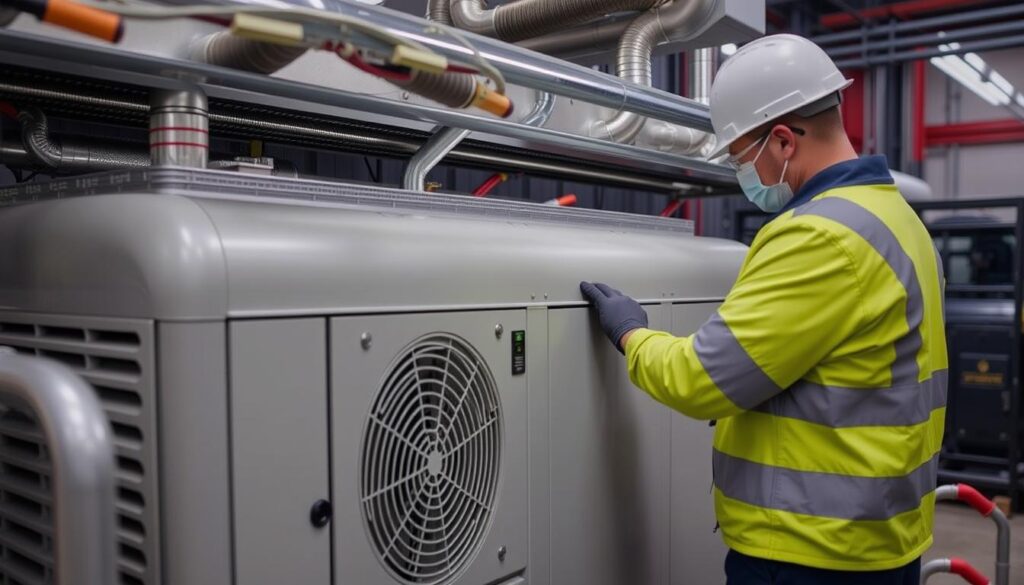
Getting an HVAC license in Georgia opens up many career doors and financial chances. The HVAC field in Georgia is booming, with good pay and lots of job openings.
Being a licensed HVAC contractor can be both rewarding and fulfilling. The U.S. Bureau of Labor Statistics says HVAC mechanics and installers in Georgia make about $53,500 a year. Your salary can grow as you get more experience.
| HVAC Career Level | Average Hourly Wage | Annual Salary |
|---|---|---|
| HVAC Installer | $23.32 | $48,506 |
| HVAC Technician | $27.32 | $56,826 |
| HVAC Mechanic | $28.36 | $58,989 |
| HVAC Supervisor | – | $86,937 |
Getting your HVAC license in Georgia brings more than just money. You’ll also get:
- A competitive edge in the job market
- The legal right to do all kinds of HVAC work
- The chance to start your own business
- Access to big projects from companies and the government
- More money as you get better at your job
Georgia’s HVAC job market is growing fast, with a 18% increase compared to the national average. The state has 11,520 HVAC workers, ranking ninth in the country. Your investment in licensing means a stable and growing career.
Whether you want to work for someone else or start your own business, a Georgia HVAC license is key. It gives you the skills and chance to make a good living in this important field.
Conclusion
Becoming a licensed HVAC contractor in Georgia is a smart career choice. The Georgia State Construction Industry Licensing Board guides you through it. This path requires hard work but offers great rewards.
Every step in the licensing process helps you grow. You’ll learn a lot and become more skilled. You need at least four to five years of experience to work on your own.
Getting an HVAC license in Georgia is a smart investment. It leads to a stable and growing career. You’ll have good job prospects and chances to move up. Stay focused and you’ll make your HVAC dreams come true.
There are resources to help you along the way. The licensing board in Macon offers support. You can apply online, making it easier. Plus, your Georgia license can open doors in Louisiana, South Carolina, and Texas too.