
Affiliate Disclosure
HVAC Guide Guys is a participant in the Amazon Services LLC Associates Program, an affiliate advertising program designed to provide a means for sites to earn advertising fees by advertising and linking to Amazon.
Ever wondered how to find tonnage of hvac unit? Knowing your HVAC tonnage is key for homeowners. You can easily find out your AC unit’s capacity with a few simple steps.
Finding the tonnage of your HVAC unit is simpler than you think. It helps when you’re fixing issues or need a new system. Knowing your AC unit’s size can save you time, money, and stress.
This guide will show you five easy ways to find your HVAC unit’s size. You’ll learn how to figure out your system’s size without needing to be a tech expert.
Key Takeaways
- HVAC tonnage reveals your system’s cooling capacity
- Multiple methods exist for identifying unit size
- Model numbers often contain critical sizing information
- Professional consultation can provide precise measurements
- Understanding tonnage helps optimize home comfort
Table of Contents
Understanding HVAC Tonnage and Why It Matters
Understanding HVAC tonnage can be tricky. Many think it’s about the weight of the air conditioner. But, it really shows how much cooling your AC can do.
The idea of cooling capacity comes from old days of refrigeration. Back then, cooling was done with ice blocks. One ton of cooling is the amount needed to melt one ton of ice in 24 hours.
What Does AC Tonnage Mean?
In today’s HVAC systems, one ton of cooling is 12,000 British Thermal Units (BTUs) per hour. This helps homeowners know how much cooling their system can handle. Here’s a simple guide on BTU to ton conversion:
- 1 ton = 12,000 BTUs per hour
- 2 tons = 24,000 BTUs per hour
- 3 tons = 36,000 BTUs per hour
The Relationship Between BTUs and Tons
| System Size | Cooling Capacity | Typical Home Size |
|---|---|---|
| 1.5 tons | 18,000 BTUs | 750-1000 sq ft |
| 2 tons | 24,000 BTUs | 1000-1250 sq ft |
| 3 tons | 36,000 BTUs | 1500-1800 sq ft |
Why Proper Tonnage Is Critical for Your System
Choosing the right HVAC system size is key. An oversized unit will short cycle, causing wear, higher energy bills, and bad humidity control. On the other hand, an undersized unit will struggle to cool, running all the time and needing more repairs.
Explore Our HVAC Shop
Looking for top-rated HVAC tools, parts, and accessories? Visit our shop and find the perfect solution for your needs.
Visit the ShopHow to Find Tonnage of HVAC Unit Using the Model Number
Finding AC tonnage from your unit’s model number is easy. Manufacturers put the capacity info right in the model number. This makes it simple for homeowners to figure out their HVAC unit size.
- Find the full model number on your outdoor unit
- Look for the two-digit number between 18 and 60
- Divide that number by 12 to find the tonnage
For instance, if your Carrier unit has the model number 24ABB336A, the 36 is your system’s capacity. When you divide 36 by 12, you get a 3-ton air conditioning unit.
“Understanding your model number is like decoding a secret message about your HVAC system’s performance.” – HVAC Expert
Keep in mind, different manufacturers might number things differently. Some brands put the tonnage indicator in different spots in the model number. If you’re unsure, check the manufacturer’s website or call their customer support for help.
| Model Number Range | Approximate Tonnage |
|---|---|
| 18-24 | 1.5 – 2 tons |
| 30-36 | 2.5 – 3 tons |
| 42-48 | 3.5 – 4 tons |
While model number calculations give a quick estimate, a pro’s assessment is best. They can ensure your home’s cooling needs are met accurately.
Locating the Data Plate on Your Outdoor Condenser
Knowing how to identify your outdoor unit is key to figuring out your central air conditioner’s size. The condenser data plate is where you find important details about your cooling system. It tells you about its capacity and specs.
Your outdoor condensing unit is usually a rectangular metal box. It sits on a concrete pad near your home’s outside. This part of your air conditioning system has vital info about its performance.
Finding Your Condensing Unit
To find your condensing unit, look for these signs:
- A metal cabinet on a concrete pad
- It’s on the side or back of your property
- It might be hidden by plants or screens
- It makes noise when the AC is on
Reading the Manufacturer’s Label
The condenser data plate has important info about your air conditioning system. Here’s what to look for:
| Label Location | Information Contained |
|---|---|
| Side panel or back of unit | Model number |
| Metal tag or sticker | Serial number |
| Exterior label | Electrical specs |
| Visible area | Refrigerant info |
Safety tip: Never remove panels or touch electrical parts. All the info you need is on the exterior label.
Explore Our HVAC Shop
Looking for top-rated HVAC tools, parts, and accessories? Visit our shop and find the perfect solution for your needs.
Visit the ShopCalculating Tonnage from the Two-Digit Number Method
Measuring cooling capacity is easy with the right method. The two-digit number method is simple. It lets you find your HVAC unit’s tonnage from its model number or data plate.
To calculate BTU capacity, look for an even number between 18 and 60 on your unit’s label. This number shows the system’s cooling capacity in thousands of BTUs. To find tonnage, just divide the two-digit number by 12.
- Find the two-digit number on your HVAC unit
- Divide the number by 12
- The result shows your system’s tonnage
Here’s a quick guide to help you understand the relationship:
| Two-Digit Number | Tonnage | BTU Capacity |
|---|---|---|
| 18 | 1.5 tons | 18,000 BTUs |
| 24 | 2 tons | 24,000 BTUs |
| 36 | 3 tons | 36,000 BTUs |
| 48 | 4 tons | 48,000 BTUs |
Pro tip: Remember, one ton of cooling is 12,000 BTUs per hour. This helps you quickly figure out your system’s capacity.
“Understanding your HVAC system’s tonnage helps you maintain optimal home comfort and energy efficiency.” – HVAC Expert
Residential units usually range from 1.5 to 5 tons. If you see a number outside this range, it might be a commercial or specialized system. If unsure, always check with an HVAC professional to confirm your unit’s exact specs.
Decoding Brand-Specific Model Numbers for Tonnage
Learning how HVAC makers encode tonnage in their models helps you find your system’s capacity fast. Each brand has its own way of hiding size and performance info in model numbers.
Finding tonnage codes from different brands takes some sleuthing. You must know the patterns each uses to hide capacity info in their model numbers.
Trane Model Number Interpretation
Trane uses certain digits in their model numbers to show BTU capacity. For example:
- Model YCD180F is a 15-ton unit (180,000 BTUs ÷ 12,000 = 15 tons)
- Model 4TTZ0048A1000AA is a 4-ton unit (48,000 BTUs)
Carrier and Bryant Tonnage Identification
Carrier and Bryant, with similar naming, include tonnage in specific spots in their model numbers. Here are some examples:
- Model 48TC16 is a 15-ton Carrier AC unit
- Model 574D030 is a 2.5-ton unit
York and Other Major Manufacturers
York and others have their own way of showing capacity. For example, York’s ZX04 model is a 3-ton unit. If you’re unsure, check the manufacturer’s website or call customer service for help.
Explore Our HVAC Shop
Looking for top-rated HVAC tools, parts, and accessories? Visit our shop and find the perfect solution for your needs.
Visit the ShopUsing BTU Ratings to Determine Your AC Capacity
Understanding British thermal units (BTUs) is key to knowing your air conditioning system’s cooling power. A BTU is the heat needed to raise one pound of water by one degree Fahrenheit. This helps figure out the cooling power your space needs.
When converting BTUs to tons for HVAC systems, remember this important fact. One ton of air conditioning equals 12,000 BTUs per hour. This means your AC unit’s capacity is how many BTUs it can remove in 60 minutes.
- 1 ton = 12,000 BTUs
- 2 tons = 24,000 BTUs
- 3 tons = 36,000 BTUs
- 4 tons = 48,000 BTUs
- 5 tons = 60,000 BTUs
To find your system’s cooling capacity, check the manufacturer’s label or documentation. Most AC units show their BTU rating. This lets you quickly see the unit’s cooling power. Professional HVAC technicians can help you understand these ratings and pick the right system for your needs.
Accurate BTU calculations prevent overworking or underperforming air conditioning systems, saving you money and ensuring optimal home comfort.
Factors Beyond Square Footage That Affect Tonnage Requirements
When figuring out the right HVAC size for your home, square footage isn’t enough. An air conditioning guide must look at many factors that affect cooling needs. Knowing these factors helps pick the best system for your house.
Your home’s special features are key in finding the right air conditioning size. Let’s look at the main things that affect how much cooling you need:
Climate and Regional Considerations
Different places have different temperatures and humidity. A home in Arizona needs more cooling than one in Michigan. Your local weather affects how much cooling you need.
- Southern regions typically need higher cooling capacity
- Altitude impacts heat transfer and cooling efficiency
- Humidity levels affect perceived temperature
Home Insulation and Window Efficiency
Your home’s insulation and windows play a big role in cooling needs. Homes that keep cool air better might need less cooling.
| Insulation Factor | Impact on Cooling Needs |
|---|---|
| Attic Insulation | Reduces heat transfer from roof |
| Wall Insulation | Minimizes external temperature impact |
| Window Quality | Decreases heat gain |
Occupancy and Heat-Generating Appliances
The people and appliances in your home make heat that affects cooling needs. A busy home with lots of electronics and cooking needs more cooling than an empty one.
Proper residential HVAC sizing isn’t just about measuring square footage—it’s about understanding your home’s unique thermal dynamics.
Talking to an HVAC expert can help you figure out these complex factors. They can make sure you get the right system for your home.
Explore Our HVAC Shop
Looking for top-rated HVAC tools, parts, and accessories? Visit our shop and find the perfect solution for your needs.
Visit the ShopWhen to Consult an HVAC Professional for Accurate Sizing
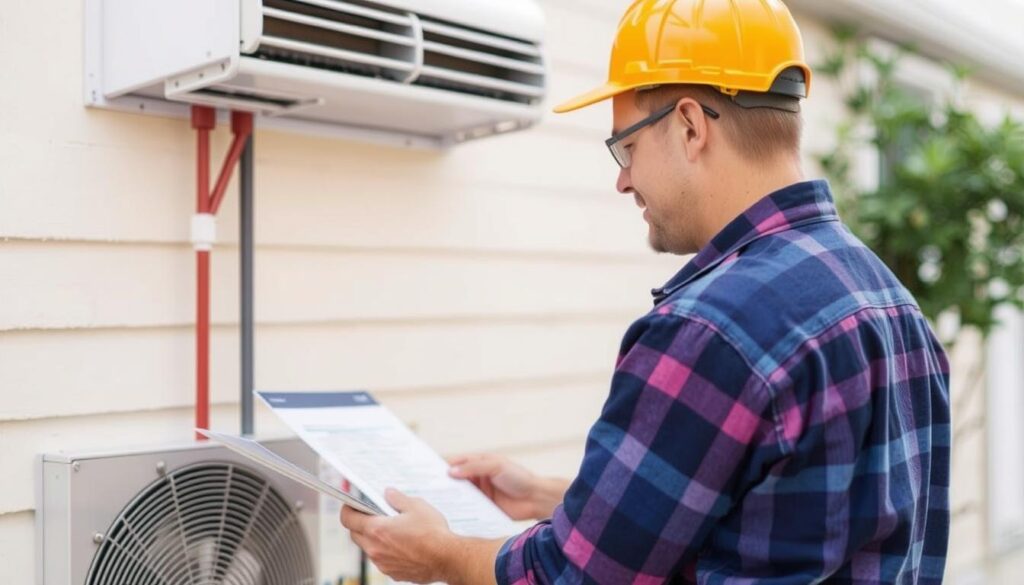
Finding the right HVAC system for your home can be tricky. While DIY methods give a starting point, a professional assessment is key in many cases. Getting the right HVAC size is more than just measuring your home’s square footage.
Professional HVAC contractors use a manual j load calculation to figure out your home’s cooling needs. They look at many important factors:
- Home insulation quality
- Window efficiency
- Local climate conditions
- Number of occupants
- Heat-generating appliances
You should get a professional’s help in these situations:
- Replacing an existing HVAC system
- Completing major home renovations
- Experiencing inconsistent indoor temperatures
- Dealing with unexpectedly high energy bills
- Purchasing a new construction home
“Investing in a professional HVAC assessment can save thousands in future repair and inefficiency costs.”
Most good HVAC contractors include manual j load calculations in their estimates. Spending a little on professional sizing can avoid costly errors. It ensures your HVAC system works best for your home.
Conclusion
Knowing how to find the tonnage of your HVAC unit is key to keeping your home comfy and energy-smart. You can figure it out by looking at model numbers, checking data plates, and using BTU ratings. This way, you can be sure of your system’s capacity.
Finding the right HVAC size is more than just measuring. It affects your home’s temperature, energy use, and costs over time. Whether you’re fixing a current unit or getting a new one, knowing its tonnage helps you make smart choices.
Choosing the right system size isn’t just about the square footage. Climate, insulation, and your home’s unique features also matter. While the tips here can guide you, getting a pro’s help is best for a full check-up and possible upgrade.
With this guide, you’re ready to tackle the technical side of your home’s heating and cooling. Remember, knowing your HVAC’s specs is the first step to a cozy, energy-efficient home.