Affiliate Disclosure
HVAC Guide Guys is a participant in the Amazon Services LLC Associates Program, an affiliate advertising program designed to provide a means for sites to earn advertising fees by advertising and linking to Amazon.
Are you fed up with uneven home temperatures and high energy costs? A new HVAC system might be just what you need. Learning about the HVAC installation process can save you a lot of money and make your home much more comfortable.
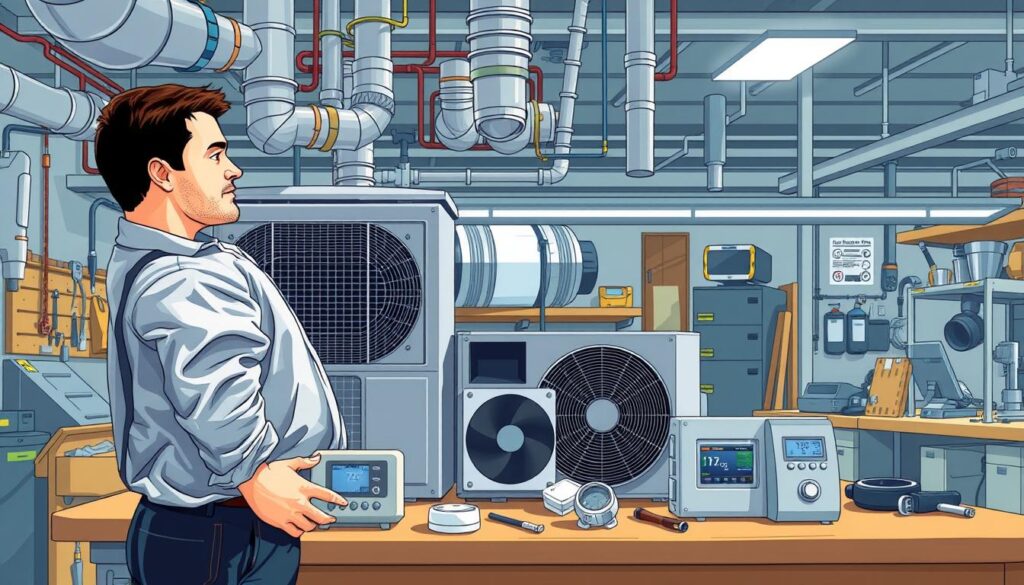
Jim Snyder, owner of Irish Air Now in Indianapolis, shares a key point: “The biggest issue with HVAC installations is getting the size wrong.” This guide will show you how to install a new HVAC system like a pro.
Getting a pro to install your HVAC system is safer, follows all codes, saves energy, and keeps your warranty valid. Whether you’re thinking of hiring experts or just want to know the steps, this detailed guide has got you covered.
Key Takeaways
- HVAC installation needs careful planning and expert help
- Getting the system size right is key for best performance
- Professional installation keeps your warranty safe
- The installation takes a few days
- Knowing the process helps you make better choices
Table of Contents
Understanding Different Types of HVAC Systems
Choosing the right heating and cooling system is key to your home’s comfort and energy use. Each system has its own benefits, suited for different homes, climates, and tastes.
Today, homeowners have many advanced options for cooling and heating. Knowing about these systems helps you pick the best one. It’s all about finding the right mix of performance, cost, and comfort.
Central Heating and Cooling Systems
Central HVAC systems are the top choice for controlling your home’s temperature. They use ducts to spread cooled or heated air everywhere in your home.
- Ideal for larger homes needing even temperatures
- Includes separate heating and cooling parts
- Ensures air is evenly distributed
Ductless Mini-Split Systems
Ductless mini-split systems are great for homes without ducts or special layouts. They offer flexible heating and cooling. Plus, you can control the temperature in each room.
- No need for big ductwork
- Allows for room-by-room temperature control
- Is a more energy-efficient choice
Heat Pumps and Hybrid Systems
Heat pumps are a new way to heat and cool your home. They move heat around, not make it, which saves a lot of energy.
- Works well in mild climates
- Does both heating and cooling
- Hybrid systems mix heat pump with a traditional furnace
When picking your HVAC system, think about your home’s size, local weather, and energy goals. Each system has its own benefits. They can greatly affect your home’s comfort and your energy bills.
Explore Our HVAC Shop
Looking for top-rated HVAC tools, parts, and accessories? Visit our shop and find the perfect solution for your needs.
Visit the ShopSigns You Need a New HVAC System
Knowing when to upgrade your home’s climate control can save you money and avoid sudden breakdowns. Your HVAC system shows signs of its health through various warning signs. These signs indicate it might be time for a new system.
Understanding these key indicators helps you make a smart choice about replacing your HVAC unit. This choice affects both your wallet and your home’s comfort. Here are the most important signs to look out for:
- System Age: Most HVAC units last 10-15 years. If your system is getting close to this age, it’s wise to consider a new one.
- Frequent Repairs: If repair costs are near 50% of a new system’s price, it’s time to think about replacing.
- Rising Energy Bills: Older systems work harder, leading to big increases in your monthly utility bills.
Other warning signs include:
- Inconsistent room temperatures
- Weak airflow from vents
- Unusual noises like grinding or squealing
- Persistent musty or burning odors
| Warning Sign | Potential Issue | Recommended Action |
|---|---|---|
| Age over 15 years | Decreased efficiency | Consider full system replacement |
| Frequent repairs | Mechanical degradation | Evaluate replacement cost vs. repair |
| High energy bills | Poor system performance | Upgrade to energy-efficient model |
Your home’s comfort and energy efficiency depend on a good HVAC system. By addressing these warning signs early, you can avoid sudden breakdowns. This proactive approach helps you budget for a strategic home climate control upgrade.
Safety Considerations Before Starting Your HVAC Installation
Installing an HVAC system needs careful safety steps to protect you and your home. It’s important to know about possible dangers before starting.
Gas and Electrical Hazards
Gas and electrical risks are the biggest safety worries when installing an HVAC system. These dangers can cause serious harm or damage if not handled right.
- Immediately evacuate if you detect natural gas odors
- Shut off main gas and electrical supply before work begins
- Use specialized leak detection equipment
- Verify proper circuit breaker ratings
Protective Equipment and Lifting Techniques
Wearing the right safety gear and lifting correctly are key to avoiding injuries during HVAC installation.
| Safety Equipment | Purpose |
|---|---|
| Safety Glasses | Protect eyes from debris |
| Steel-Toed Boots | Prevent foot injuries from heavy equipment |
| Heavy-Duty Gloves | Shield hands from sharp edges |
| Respiratory Mask | Filter dust and possible refrigerant particles |
When lifting heavy HVAC parts, always:
- Bend at the knees, not the waist
- Keep back straight
- Hold objects close to your body
- Avoid twisting while carrying weight
- Request assistance for items over 50 pounds
Remember: Your safety is more important than any deadline. If unsure, always ask a professional HVAC technician.
Explore Our HVAC Shop
Looking for top-rated HVAC tools, parts, and accessories? Visit our shop and find the perfect solution for your needs.
Visit the ShopSelecting the Right Size HVAC Unit for Your Home
Choosing the right size for your HVAC system is key for comfort and saving energy. A system that’s too big or too small can cause problems. It can affect your home’s temperature and your budget.
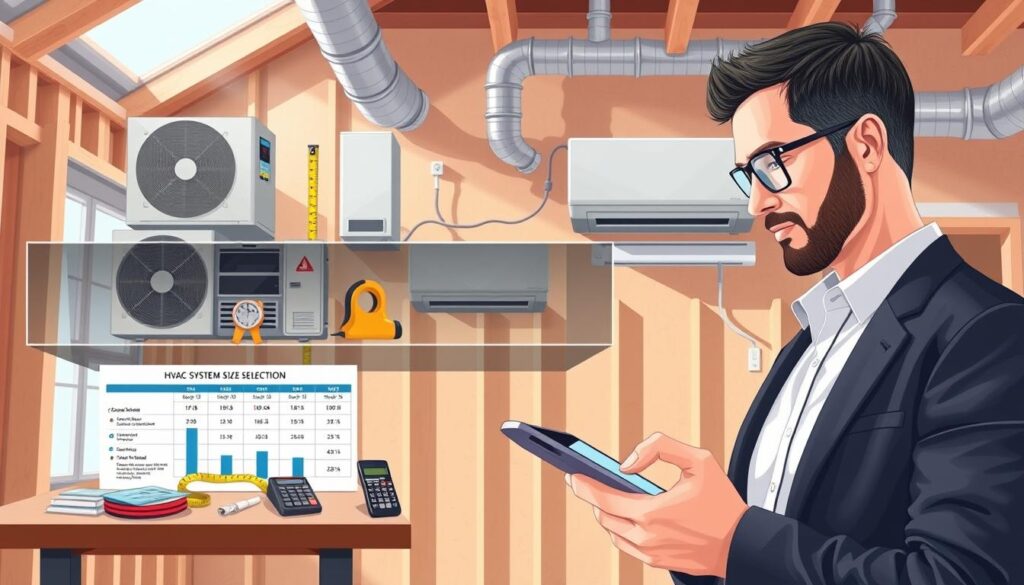
- Home square footage
- Ceiling height
- Insulation quality
- Window configuration
- Local climate conditions
Experts use Manual J load calculations to find the right size. These calculations look at more than just your home’s size. They consider your home’s unique features.
“An improperly sized system can increase energy costs and reduce equipment lifespan,” says Jim Snyder, HVAC installation expert.
Units that are too small can’t keep your home cool. Ones that are too big waste energy and cool unevenly. The goal is to find the perfect size for your home.
| Home Size | Recommended HVAC Capacity |
|---|---|
| 1,000 sq ft | 18,000 BTU |
| 1,500 sq ft | 24,000 BTU |
| 2,000 sq ft | 34,000 BTU |
Take the time to get a professional assessment. This ensures your HVAC system fits your home perfectly. A good fit means better performance, energy savings, and lasting comfort.
The Seven-Step Professional HVAC Installation Process
Upgrading your home’s heating and cooling system needs careful planning and professional help. Knowing the HVAC installation process helps you get ready for a smooth upgrade. This guide will show you the important steps HVAC contractors take for a successful system replacement.
The HVAC installation process has several key stages for the best performance and reliability. It’s not just about replacing equipment. It’s about creating a complete comfort solution for your home.
Site Evaluation and Assessment
A skilled technician will thoroughly check your home at the start. They look at:
- Where to put indoor and outdoor units
- The condition of your ductwork
- If your electrical system can handle it
- How air flows and the structure of your home
Permit Acquisition and Code Compliance
Getting the right permits is a big part of the HVAC installation. Your contractor will:
- Get mechanical permits for the equipment
- Get electrical permits for new circuits
- Get gas permits for line work
- Schedule inspections with the city
Old System Removal
Removing the old HVAC system needs special skills. Technicians make sure it’s done safely by:
- Turning off power and gas
- Recovering refrigerant safely
- Disconnecting electrical and gas lines
- Disposing of old equipment properly
By following these steps, professional HVAC installation ensures a reliable, efficient, and compliant home comfort solution.
Explore Our HVAC Shop
Looking for top-rated HVAC tools, parts, and accessories? Visit our shop and find the perfect solution for your needs.
Visit the ShopHow to Install a New HVAC System: Key Installation Steps
Installing a new HVAC system needs careful planning and precision. You’ll learn that where you place the equipment is key for the best performance and efficiency.
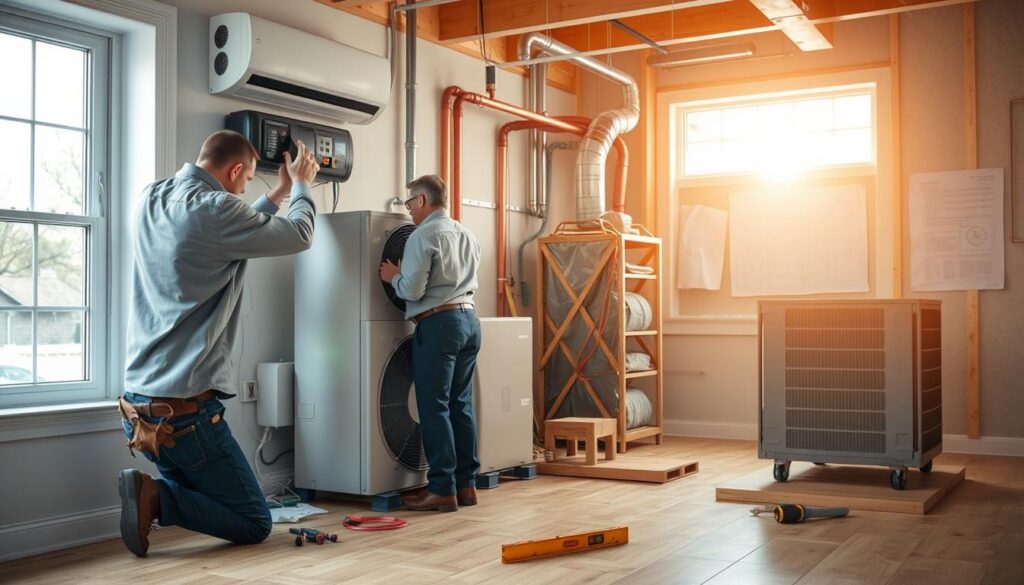
Your journey to replace your HVAC system starts with placing equipment wisely. Focus on these important areas:
- Outdoor Unit Placement
- Choose a level, stable concrete pad
- Maintain 24-inch clearance on service side
- Ensure proper elevation above ground
- Indoor Unit Positioning
- Select appropriate location (basement, attic, closet)
- Verify manufacturer clearance requirements
- Support equipment to prevent vibration
Getting the equipment installation right is key. Technicians use special tools to make sure:
| Installation Aspect | Key Considerations |
|---|---|
| Leveling | Prevents oil migration and compressor issues |
| Clearances | Maintains airflow and service access |
| Vibration Control | Reduces noise transmission |
Warning: While knowing how to install is helpful, you should always get a pro. Wrong installation can ruin warranties and be unsafe.
Professional technicians check the equipment’s details, like:
- Model numbers
- Efficiency ratings
- Electrical needs
- Capacity matching
Remember, a successful DIY HVAC replacement needs good planning, precise work, and following the manufacturer’s rules.
Ductwork Installation and Connection
Your central air conditioning setup needs a key network to cool your home. Ductwork acts as your home’s air circulatory system. It connects your HVAC equipment to every room efficiently.
Getting your ductwork right is key for your system’s performance, comfort, and energy use. Knowing the important parts and technical needs helps homeowners choose wisely when upgrading their HVAC.
Proper Duct Sizing and Airflow Considerations
Duct size is very important for your central air conditioning. The wrong size can hurt your system’s performance:
- Too small ducts limit airflow, raising energy costs
- Too big ducts slow air down and cool unevenly
- The right size ensures air flows well everywhere
Sealing and Insulation Requirements
Professional ductwork needs careful sealing and insulation to work best. Without it, up to 30% of cooled air can leak out.
| Sealing Method | Effectiveness | Recommended Use |
|---|---|---|
| Mastic Sealant | Highest | Permanent joints |
| Foil-Backed Tape | Good | Accessible connections |
| Standard Duct Tape | Poor | Not Recommended |
Insulation needs change with the climate. For unconditioned spaces, R-values should be between R-6 and R-8. Good insulation stops energy loss and keeps temperatures even.
Explore Our HVAC Shop
Looking for top-rated HVAC tools, parts, and accessories? Visit our shop and find the perfect solution for your needs.
Visit the ShopElectrical Wiring and Control Setup
Electrical wiring is a key part of furnace installation. It needs a pro’s touch to avoid safety risks and damage to your HVAC system. DIY electrical work is not safe and can harm your new system.
When you install your furnace, electrical connections are very important. They need careful attention to several key areas:
- Proper circuit sizing
- Correct breaker installation
- Secure grounding techniques
- Code-compliant electrical disconnects
Licensed technicians know how to handle high and low-voltage electrical connections. They have the skills for different HVAC systems:
- Gas furnaces need 110-120V dedicated circuits
- Electric furnaces need 220-240V circuits with 30-60 amp capacity
- Heat pumps have special electrical connections
Your furnace installation steps must include careful electrical setup. This ensures:
- Safe electrical connections
- Optimal system performance
- Compliance with local building codes
- Prevention of fire hazards
Professional technicians use special tools to check electrical connections. They make sure your HVAC system works safely and well. Trying these steps without training can void warranties and be dangerous.
Average HVAC Installation Costs and Pricing Factors
Understanding the cost of replacing your HVAC unit is key to planning your home upgrade. The cost of a new HVAC system changes a lot. This is because of several important factors that affect your total cost.
When looking at the cost of replacing your HVAC unit, consider these key elements:
- System type and efficiency rating
- Home size and existing infrastructure
- Regional labor rates
- Installation complexity
Cost Breakdown by System Type
Different HVAC systems have their own pricing. Here’s a look at typical installation costs:
| HVAC System Type | Cost Range |
|---|---|
| Gas Furnace | $3,800 – $12,000 |
| Central Air Conditioning | $3,000 – $15,000 |
| Heat Pump | $6,000 – $25,000 |
| Geothermal Heat Pump | $12,000 – $45,000 |
Rebates and Financial Strategies
There are ways to lower the cost of replacing your HVAC unit:
- Federal tax credits for energy-efficient systems
- Utility company rebate programs
- Seasonal manufacturer promotions
- Flexible financing options
By looking into available incentives and comparing prices, you can save a lot on your new HVAC system.
Testing, Startup, and System Calibration
The last step in the HVAC installation process is testing and calibration. Professional technicians do a detailed startup to make sure your new system works well and safely.
During testing, experts do several important checks:
- Verify electrical connections and voltage
- Check refrigerant line connections
- Confirm proper condensate drain routing
- Inspect ductwork seals and connections
The refrigerant charge verification is a key step. Technicians use special tools to measure:
- Suction and discharge pressures
- Superheat and subcooling levels
- Ambient temperature conditions
Precise calibration ensures optimal system performance and prevents future issues. Airflow measurements are taken to ensure proper circulation. This usually requires 400 cubic feet per minute (CFM) per ton of cooling capacity.
Safety is always a top priority during HVAC installation. Technicians do detailed safety control tests, including:
- Checking high and low-pressure switches
- Verifying flame sensors
- Testing limit switches to prevent overheating
The final step is documenting all measurements, registering warranties, and giving you maintenance instructions. This careful approach ensures your new HVAC system will provide comfort and efficiency right from the start.
Conclusion
Your journey to better home comfort is a big step. It needs careful planning and expert help. This guide helps you understand the process better.
Choosing the right HVAC system is more than buying equipment. You must think about your home’s needs and energy goals. A pro installation makes sure your system works well, saving energy and money.
Carrier HVAC experts say to do your homework and choose licensed contractors. Your new HVAC system can make your home more comfortable and energy-efficient. Take your time to compare quotes and check the contractor’s credentials.
Don’t forget to keep your system in good shape. Regular checks, filter changes, and watching for issues are important. This guide prepares you for a successful HVAC installation.