
Affiliate Disclosure
HVAC Guide Guys is a participant in the Amazon Services LLC Associates Program, an affiliate advertising program designed to provide a means for sites to earn advertising fees by advertising and linking to Amazon.
Ever noticed how some rooms in your home are freezing, while others are sweltering? It’s all about your HVAC system’s airflow. This key aspect of home comfort is often overlooked.
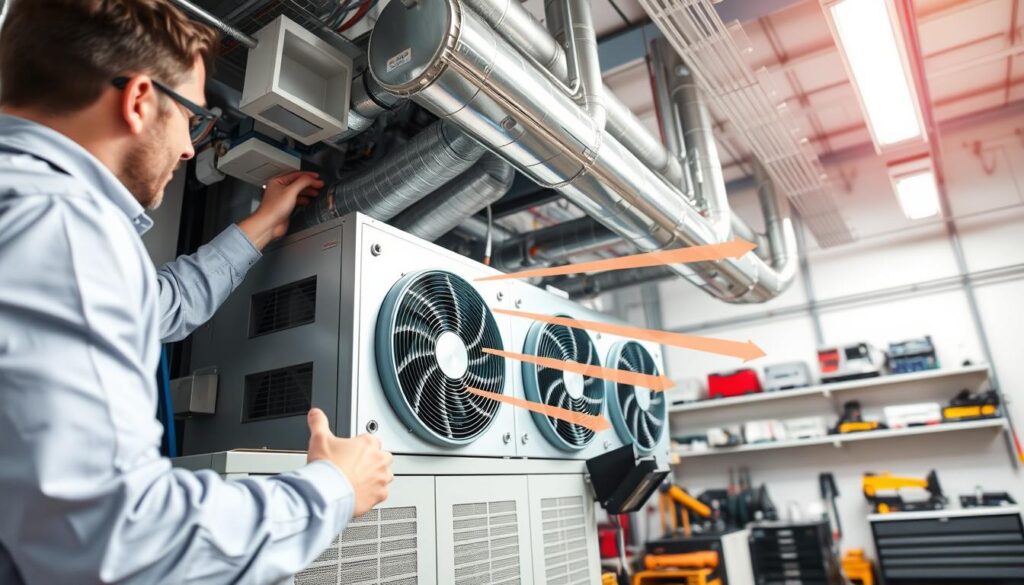
Airflow is vital for your HVAC system. It ensures air is evenly distributed throughout your home. Better airflow means lower energy use, less wear on parts, and even temperatures everywhere.
Improving air circulation in your home can greatly enhance comfort. It also helps save on energy costs and extends your HVAC system’s life.
Key Takeaways
- Proper airflow is essential for consistent home temperature
- Regular maintenance can significantly improve HVAC performance
- Clean filters and vents are key for good air flow
- Energy efficiency is linked to balanced airflow
- Professional checks can stop long-term HVAC problems
Table of Contents
Why Proper Airflow Matters in Your HVAC System
Your home’s comfort depends on how well your HVAC system distributes air. Airflow sends warm or cool air from the furnace to rooms. This creates a balanced indoor environment.
Understanding the Role of Airflow in Home Comfort
Proper airflow makes sure each room gets the right amount of air. Ducts and dampers help keep temperatures even. This way, you avoid hot and cold spots that ruin comfort.
How Poor Airflow Affects Energy Efficiency and Indoor Air Quality
Poor airflow hurts your HVAC system a lot. It makes fans and compressors work too hard. This leads to:
- Higher energy bills
- More system wear and tear
- Poorer indoor air quality
Signs Your HVAC System Has Restricted Airflow
Spotting airflow issues early can save you money. Look out for these signs:
| Sign | Potential Airflow Problem |
|---|---|
| Uneven room temperatures | Blocked or undersized ducts |
| Rising energy costs | Inefficient air distribution |
| Excessive dust accumulation | Poor air circulation |
By keeping airflow right, you boost your HVAC’s performance. You’ll use less energy and enjoy a more comfy home.
Explore Our HVAC Shop
Looking for top-rated HVAC tools, parts, and accessories? Visit our shop and find the perfect solution for your needs.
Visit the ShopCommon Causes of Poor Airflow in HVAC Systems
Your HVAC system needs good airflow to work right. Several key factors can block air flow. This can make your home less comfortable and less energy-efficient.
It’s important to find and fix restriction points. These are areas that can stop your HVAC from working well. They include:
- Closed or blocked vents preventing air circulation
- Dirty air filters increasing static pressure
- Undersized return air paths
- Crushed flexible ductwork in crawlspaces
- Long, narrow duct runs with poor connections
Dirty filters are a big problem. They block air flow, making your system work harder. Dust and debris buildup can lower indoor air quality and decrease system efficiency.
Duct problems also cause air flow issues. Leaky ducts can lose up to 30% of conditioned air, says Energy Star. Even small gaps can let cooled or heated air escape. This raises your energy bills and lowers comfort.
Knowing about these common airflow problems helps you keep your HVAC system running well. It also helps prevent damage over time.
How to Increase Airflow in HVAC
To boost your home’s HVAC airflow, focus on maintenance and smart changes. A few key steps can make your system work better, cut energy costs, and make your home more comfy.
Replace or Clean Your Air Filters Regularly
Dirty air filters cut down your system’s efficiency. Change or clean filters every month. Use the size and MERV rating the maker suggests. For regular filters, swap them out every 30-90 days. If you have pets or allergies, you might need to do it more often.
- Check filters monthly
- Use manufacturer-recommended MERV ratings
- Replace every 30-90 days
- Consider more frequent changes for pet owners
Clear and Unblock Supply and Return Vents
Boost airflow by clearing supply and return vents from furniture, rugs, and dust. Pro tip: Switch to bar-type registers for up to 20 percent more airflow.
Inspect and Clean HVAC Coils
Clean your evaporator and condenser coils every year or when needed. This stops debris from blocking airflow and lowers system efficiency.
Check and Seal Duct Leaks
Look over duct joints and seal them with mastic or aluminum tape. Fix any broken ducts and check airflow at main vents. Aim for 350-500 CFM per ton for best results.
Adjust Blower Fan Settings
Adjust the blower speed and keep the fan on for constant air flow. Make sure ducts are the right size and check flex hose lengths for better airflow.
Diagnosing Airflow Problems in Your Home
Knowing your HVAC system’s health begins with spotting airflow issues. Poor airflow can mess up your home’s comfort, energy use, and air quality. Catching these problems early can prevent expensive fixes and keep your system working well.
Simple Tests to Identify Weak Airflow
There are easy tests to find airflow problems:
- Hold a tissue near supply vents to check air movement
- Feel for temperature differences between rooms
- Listen for unusual sounds from ductwork
- Check for weak air streams from vents
Measuring CFM and Vent Pressure
For a detailed check, you need special tools. A handheld anemometer measures air speed in metres per second. To fully check your system, measure cubic feet per minute (CFM) at supply and return grilles.
| Measurement Tool | Purpose | Recommended Action |
|---|---|---|
| Anemometer | Measure air velocity | Compare to manufacturer specifications |
| CFM Meter | Measure air volume | Check for system blockages |
Room-by-Room Airflow Assessment
Do a room-by-room check to find airflow issues. Look at each room’s temperature, vent performance, and air flow. Low supply CFM might mean duct blockages, while low return CFM could point to filter problems or grille issues.
- Inspect all vents for obstructions
- Measure individual room temperatures
- Check for consistent air distribution
- Identify possible blockage points
Advanced Solutions for Improving HVAC Air Circulation
Professional HVAC system balancing is more than just routine maintenance. Experts use special tools and advanced methods to improve your home’s air flow. They tackle inefficient airflow at its source.
These advanced solutions rely on precise measurements and strategic changes. Professionals use tools like:
- Flow hoods for accurate airflow measurement
- Anemometers to track cubic feet per minute (CFM)
- Predictive Air Balancing techniques
- Proportional Air Balancing methods
Duct optimization is key for better air distribution. Technicians examine your ductwork to find ways to improve it. They look at:
- Rerouting undersized ducts
- Resizing trunk lines to eliminate air starvation
- Introducing new branches for better air delivery
- Implementing zoning systems with strategic dampers
“Precision is key in HVAC system balancing. Every adjustment matters.” – HVAC Professional
Manual and motorized dampers let you adjust air flow room by room. This way, you can customize comfort levels. Also, insulating ducts in unconditioned spaces helps keep air temperature steady.
Professional HVAC system balancing services offer custom solutions. They improve your home’s air circulation, making it more comfortable and energy-efficient.
Explore Our HVAC Shop
Looking for top-rated HVAC tools, parts, and accessories? Visit our shop and find the perfect solution for your needs.
Visit the ShopThe Impact of Seasonal and Environmental Factors on Airflow
Your HVAC system works hard in changing weather. Knowing how outdoor and indoor factors affect air flow helps keep your system running well. It also keeps the air inside clean and fresh.
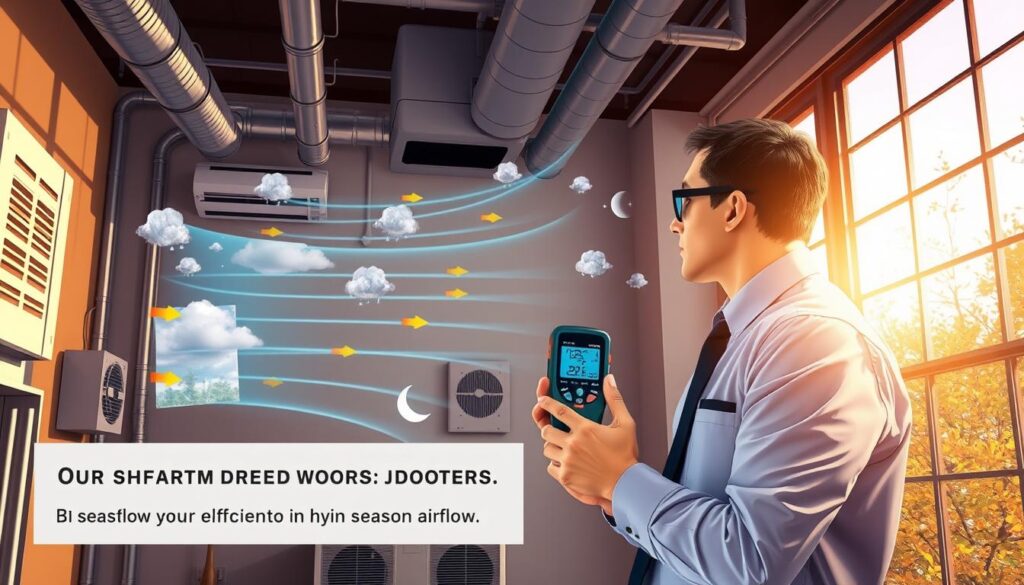
Many things outside and inside can change how well your HVAC system works. Things like temperature, humidity, wind, and pollution can really affect it. They can make your system work harder or less efficiently.
Preparing Your HVAC System for Peak Seasons
Getting your HVAC ready for the seasons is important. Here are some steps to follow:
- Inspect filters, vents, and ductwork before summer and winter
- Replace filters every three months or when pressure drop is indicated
- Check exposed duct joints for possible leaks
- Test fan performance at low, medium, and high settings
In summer, set your temperature a bit higher and let the fan run longer. This helps mix the air and keeps it from getting too stratified. In winter, use a lower fan setting to keep warm air moving.
Managing Outdoor Pollution and Indoor Air Quality
Keeping your indoor air clean is a big job. Here are some tips to help:
- Install high-efficiency filters (MERV 8-13)
- Use HEPA-grade filtration during wildfire smoke or heavy traffic periods
- Clean outdoor condensers regularly
- Monitor local air quality indexes
- Adjust system modes during high pollution events
By understanding and dealing with environmental challenges, you can keep your indoor space healthy and comfortable all year.
When to Call a Professional for HVAC Airflow Issues
Your HVAC system is complex and sometimes needs expert help. While you can do some maintenance yourself, some issues need a pro’s touch. Knowing when to call a professional can prevent expensive fixes and make your system last longer.
Expert Air Balancing and System Assessments
Professional HVAC technicians are skilled in air balancing. They use advanced methods to ensure good air flow in your home. They check:
- Comprehensive duct system evaluations
- Precise airflow measurements
- Identifying possible performance issues
- Calibrating system parts for best performance
Professional Duct Resizing and Load Calculations
Wrong duct size can hurt your HVAC’s performance. Experts do room-by-room load calculations to find the right airflow. They can:
- Resize duct sections that need it
- Add new duct runs if needed
- Make sure air flows right
- Boost system efficiency
Annual Inspections and Maintenance Plans
Regular professional maintenance stops sudden breakdowns and keeps efficiency high. Annual checks include blower service, filter advice, and detailed airflow reports. Experts suggest regular tune-ups to spot issues early and keep your HVAC in top shape.
Professional help can cut energy costs by up to 30% by balancing and maintaining your system properly.
Explore Our HVAC Shop
Looking for top-rated HVAC tools, parts, and accessories? Visit our shop and find the perfect solution for your needs.
Visit the ShopUpgrading Your HVAC System for Better Airflow
When simple fixes don’t work, it’s time to think about upgrading your HVAC system. Modern upgrades can greatly improve your home’s air flow and energy use. Consider adding upsized ducts, more return vents, and powered fans to boost your home’s performance.
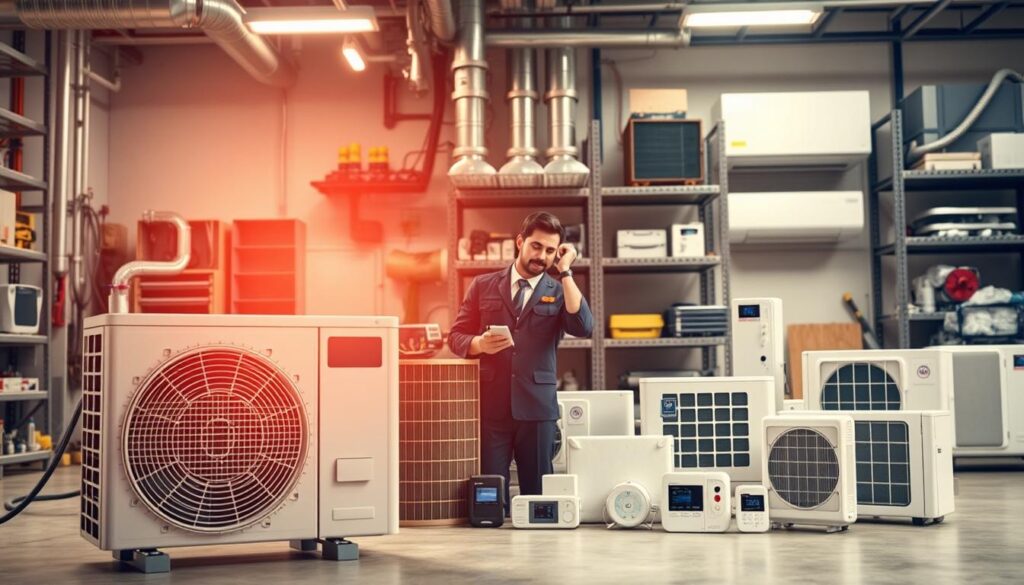
- Smart thermostats that learn your temperature preferences
- Zoned control systems for targeted heating and cooling
- Powered ventilation fans to enhance air movement
- Enhanced ductwork with improved sizing and sealing
The US Department of Energy says a smart thermostat can cut heating and cooling costs by up to 10%. These smart systems adjust to your schedule, save energy, and control temperatures precisely.
| Upgrade Option | Estimated Cost | Potential Energy Savings |
|---|---|---|
| Smart Thermostat | $200-$500 | 10-15% |
| Zoned Control System | $1,500-$3,000 | 20-30% |
| Upgraded Ductwork | $1,000-$5,000 | 15-25% |
Upgrading your HVAC system is a smart move for better comfort, energy savings, and long-term performance. Talk to a professional HVAC technician to find the best upgrades for your home.
Energy-Saving Tips to Maximize HVAC Performance
Improving your home’s heating and cooling system is more than just maintenance. Using smart technology and smart strategies can make your HVAC more efficient. This also cuts down on energy use.
Getting smart climate control devices can change how your home feels and uses energy. Use a smart thermostat for automated fan control, scheduling, and to watch HVAC airflow in real-time. These smart units can run the fan at times to mix air and cut down on stratification on upper floors.
Smart Thermostat Integration for Optimal Airflow Control
Modern smart thermostats bring big benefits for those who want to control their climate well:
- Integrate motion sensors to adjust settings based on occupancy
- Monitor humidity and temperature fluctuations automatically
- Embed sensors to detect possible airflow blockages
- Track energy consumption in real-time
The US Department of Energy says using a smart thermostat can save up to 10% on heating and cooling costs. Set your thermostat wisely—78°F in summer and 68°F in winter are good starting points.
Zoning Systems and Automated Damper
Zoning systems are another advanced way to manage your home’s climate. By splitting your home into different temperature zones, you can enjoy personalized comfort and save energy.
| Zoning Feature | Energy Savings |
|---|---|
| Individual Room Control | 15-20% reduction |
| Automated Damper Regulation | 10-25% efficiency improvement |
| Sensor-Driven Adjustments | Up to 30% energy savings |
Combine heating, cooling, and ventilation to get balanced air distribution in your home. Use ceiling fans to circulate air. This lets you raise the thermostat a bit and use less energy.
Conclusion
Improving your home’s HVAC airflow is more than a technical challenge—it’s about creating a comfortable living environment. Well-circulated air keeps your HVAC system uncluttered, reduces energy consumption, and maintains indoor air freshness. By implementing the strategies discussed, you can transform your home’s comfort and efficiency.
Start with simple, cost-effective solutions like regular filter maintenance and vent cleaning. These basic steps can dramatically improve your system’s performance. For more significant improvements, consider professional assessments or targeted upgrades like variable-speed blowers or proper duct sealing.
The benefits extend beyond immediate comfort. You’ll likely see lower energy bills, potentially saving 20-30% on heating and cooling costs. Your indoor air quality will improve, reducing allergens and creating a healthier living space. With proper maintenance, you can even extend your HVAC equipment’s lifespan by up to five years.
Remember, every step you take toward better airflow is an investment in your home’s comfort and efficiency. Whether you’re making minor adjustments or planning more extensive upgrades, you’re creating a more comfortable, healthier living environment for you and your family.