
Affiliate Disclosure
HVAC Guide Guys is a participant in the Amazon Services LLC Associates Program, an affiliate advertising program designed to provide a means for sites to earn advertising fees by advertising and linking to Amazon.
Are you tired of unsightly ductwork ruining your home’s look? What if you could turn those industrial eyesores into design features or make them disappear?
Learning to hide HVAC ducts is not just about looks. It’s about making your living space look seamless and polished. Homeowners often face the challenge of exposed ductwork that messes with their interior design. The good news is that there are many ways to hide ductwork.
This guide will show you seven innovative ways to tackle visible ducts. You’ll learn from simple painting tricks to creative architectural solutions. You’ll find practical ways to hide or blend your HVAC system with your home’s design.
Key Takeaways
- Multiple creative solutions exist for hiding ductwork
- Concealment can improve both aesthetics and home value
- DIY methods are available for different skill levels
- Ductwork doesn’t have to compromise your interior design
- Some solutions can actually enhance your home’s visual appeal
Table of Contents
Why Exposed Ductwork Needs a Design Solution
Your home’s HVAC system doesn’t have to be ugly. Hiding exposed ductwork is key for homeowners who want their homes to look good and work well. Today, designers know that mechanical systems can either ruin or improve a room’s look.
Big, metal ducts can really change how a room looks. They can make ceilings seem smaller and rooms less elegant. While some designs show ductwork as a feature, most homes look better with it hidden.
The Visual Impact of Exposed HVAC Systems
When hiding ductwork, think about these visual issues:
- Bulky metal pipes disrupt clean ceiling lines
- Raw mechanical elements clash with interior decor
- Unfinished ductwork can make rooms feel unpolished
Energy Efficiency Considerations When Concealing Ducts
It’s not just about looks when hiding ductwork. It’s also about saving energy. Well-placed and insulated ducts can make your home more energy-efficient. In warm places, ductwork inside your home keeps it cooler and saves on cooling costs.
“You put the ducts in the envelope of the house, and it helps it keep cool. It’s more efficient.” – Cavin Costello, Designer
When planning to hide your ductwork, choose solutions that keep air flowing well and systems easy to access. You want a room that looks great without hurting your HVAC system’s performance.
Explore Our HVAC Shop
Looking for top-rated HVAC tools, parts, and accessories? Visit our shop and find the perfect solution for your needs.
Visit the ShopPlanning Your Ductwork Concealment Project
Before you start to hide ductwork in your home, planning is key. Your HVAC system needs careful thought for both looks and function.
Good ductwork hiding starts with solid prep. You must look at a few important things to make a good plan:
- Measure ductwork sizes accurately
- Find out where the ducts are in your home
- Check how much space is needed for air flow
- Keep important spots open for upkeep
Think about your skills honestly. Some hiding ways need a pro, while others you can do yourself.
| Concealment Method | Skill Level Required | Estimated Cost |
|---|---|---|
| Paint Covering | Beginner | Low |
| Custom Soffits | Advanced | High |
| Architectural Integration | Professional | Very High |
Before you hide ductwork, talk to an HVAC expert. They can check if you’ll mess up the system or air flow. Also, check local rules for any permits you might need for changes.
Good planning stops expensive errors and makes sure your ductwork hiding is both pretty and works well.
Remember, your aim is to blend the ductwork into your home. This should make your home look better and keep your HVAC running smoothly.
Paint Your Ductwork to Blend with Your Ceiling
Changing your exposed ductwork doesn’t need a big renovation. Painting is a simple and affordable way to hide heating vents. It makes your space look seamless. You can make those ducts almost invisible or use them as a design feature.
Painting ductwork has many benefits for homeowners. Professional HVAC guides suggest specific methods for a perfect finish. This improves your room’s look.
Choosing the Right Paint Colors for Duct Camouflage
When picking paint colors for ducts, you have a few options:
- Match the ceiling color (usually white or off-white) to make ducts less noticeable
- Use neutral colors that match your room’s colors
- Make a bold statement with contrasting colors
Application Techniques for Metal Surfaces
To get a professional paint job, follow these steps:
- Clean the ductwork well with a degreaser
- Sand the surface lightly to help paint stick
- Apply a primer made for metal
- Use paint that can handle high heat on metal
- Apply thin, even coats with a spray or good brush
Pro tip: Pick paints made for HVAC systems for lasting results and to avoid flaking. The right method hides vents well and keeps the metal safe from rust.
Build Custom Soffits Around Basement Ductwork
Turning your basement into a stylish space begins with smart solutions for the ceiling. Custom soffits are a great way to hide ductwork and make your basement look finished. They turn ugly ducts into beautiful design features, perfect for small ceilings.
When you’re planning your basement’s ceiling, think about these tips for custom soffits:
- Measure your ductwork carefully to figure out soffit size
- Use light materials like metal or wood for framing
- Make sure there’s good ventilation and easy access for upkeep
- Pick finishes that match your basement’s style
Your soffit design can be simple or complex. Pro tip: For basements with 8-foot ceilings, choose slim soffits to avoid a cramped feel. Use materials like drywall, wood, or textured panels to blend the soffit with your ceiling.
Building your soffit requires careful framing, precise cuts, and finishing touches. If you’re handy with a hammer, you can do it yourself. But, if you’re not sure, a pro can help you get it right.
How to Hide HVAC Ducts with Decorative Covers and Grilles
Transforming unsightly HVAC ductwork doesn’t need big renovations. Creative air duct covers and decorative air vent options can quickly improve your home’s look. They keep your home functional while making it look better.
Your home’s heating and cooling systems don’t have to be a distraction. Modern design solutions offer many ways to hide and make exposed ductwork look good.
Creative Air Vent Cover Options
When looking at decorative air vent options, you’ll find many stylish choices:
- Ornate metal grilles with detailed patterns
- Sleek designs in brushed nickel
- Rustic wooden covers for a farmhouse look
- Minimalist powder-coated finishes
These creative air duct covers come in different materials and styles. They match any interior design. Think about your home’s decor when picking vent covers that fit well.
Installing Custom Ductwork Enclosures
For big duct sections, custom enclosures offer elegant hiding. Some cool options include:
- Decorative perforated metal panels
- Wood slat covers that let air flow
- Fabric-wrapped frames for a soft feel
- Removable panels for easy upkeep
When putting in decorative air vent options, make sure ventilation and access are good. Measure well and pick materials that match your interior. This ensures your HVAC works well.
Explore Our HVAC Shop
Looking for top-rated HVAC tools, parts, and accessories? Visit our shop and find the perfect solution for your needs.
Visit the ShopEmbrace Industrial Style with Exposed Metal Ducts
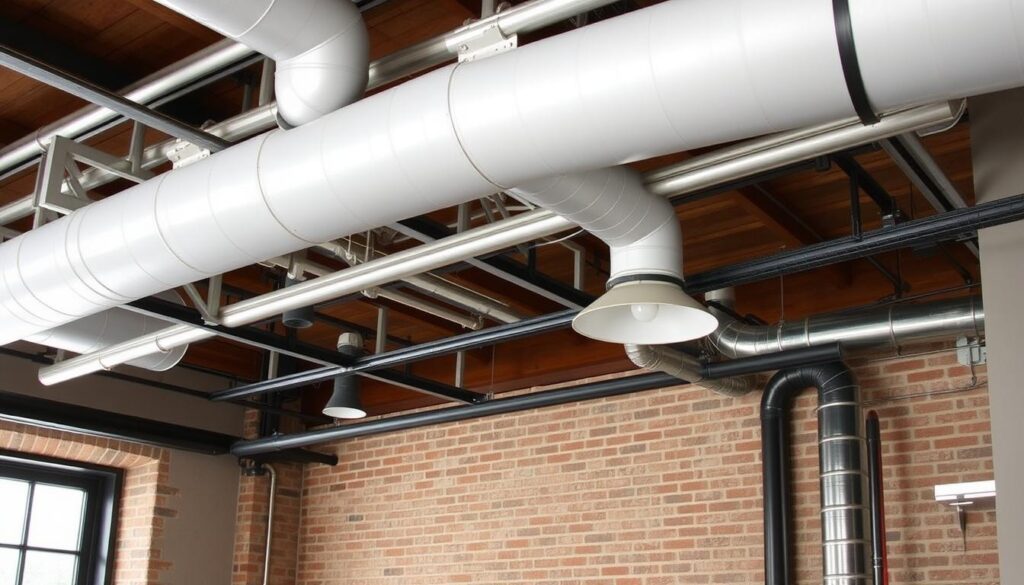
Turning air conditioning ducts into design elements is exciting. The industrial look has changed how we see ductwork. Now, it’s a key feature in homes.
Designers suggest showing off ductwork’s raw beauty. This works best in certain home styles:
- Loft apartments
- Modern open-concept living areas
- Contemporary home offices
- Minimalist kitchen designs
Showing off ductwork can change your space a lot. Clean, metal ducts make a strong statement when placed right.
“Slick exposed metal causes a fashionable stir in this masculine scheme.”
To make this design work, follow these tips:
- Use consistent metallic finishes
- Create symmetrical duct layouts
- Paint ducts in bold, complementary colors
- Arrange ductwork to follow architectural lines
| Design Approach | Visual Impact |
|---|---|
| Jet-black painted ducts | Dramatic, sophisticated look |
| Rectangular duct shapes | More architectural appearance |
| Split duct systems | Enhanced visual complexity |
By seeing ducts as design elements, you can make spaces that celebrate the industrial look. And they stay functional too.
Use Fabric and Curtains to Disguise Heating Vents
Fabric curtains are a great way to hide pipes and ductwork. They are light and can make HVAC systems look good. This makes them fit well with your home’s look.
Fabric is good for hiding heating vents and ductwork. It’s perfect for places you can’t change much. The right curtains can make metal ducts look better and keep air flowing.
Selecting the Perfect Fabric for Duct Concealment
Choosing the right fabric is key. Look for materials that are:
- Lightweight and breathable
- Flame-retardant
- Sheer or mesh for air flow
- Easy to clean
Your fabric should be safe and work well. Don’t use heavy materials that block air or are fire hazards. Good choices include:
- Light cotton
- Sheer linen
- Mesh fabrics
- Flame-resistant synthetic blends
How you install is important for hiding ductwork. Make sure fabric has space from ducts. Use tracks or rods that are easy to use and look good.
Fabric solutions can be changed with the seasons. You can take them down when you need more air.
Explore Our HVAC Shop
Looking for top-rated HVAC tools, parts, and accessories? Visit our shop and find the perfect solution for your needs.
Visit the ShopIntegrate Ductwork into Architectural Features

Turning your HVAC system into a design element needs creativity and planning. It’s not just about hiding pipes. It’s about making them a key part of your home’s look.
Here are some ways to make ductwork a design feature:
- Align ducts with exposed ceiling beams for a seamless look
- Create custom millwork that includes ductwork as a design element
- Design architectural bulkheads that elegantly hide and show ductwork
- Use duct placement to define areas in open-concept layouts
Designers and HVAC contractors work together to plan duct routes. Strategic placement can turn mechanical systems into visual assets. For example, ductwork alongside a staircase or following ceiling patterns adds interest.
Materials and finishes are key in duct integration. Wood-clad enclosures fit rustic interiors, while metallic finishes suit industrial styles. By seeing ductwork as a design chance, you can create a unique, cohesive space that celebrates innovation.
Conclusion
Your journey to improve your home’s look doesn’t stop with exposed ductwork. We’ve looked at many ways to hide or highlight these metal paths. From simple painting to creative designs, you can turn a problem into a feature.
Choosing the best method depends on your home, budget, and taste. You might decide to frame around HVAC ducts or go for an industrial vibe. The important thing is to know your space well. Your HVAC system can be a chance to show off your creativity.
Remember, keeping your HVAC system efficient and working well is key. Plan carefully to make your home look better and work better. Start with small steps, be patient, and see how even small changes can make a big difference.
Your home shows off your creativity and care for details. With the tips from this guide, you can turn ductwork issues into design chances. These can highlight your style and problem-solving skills.