Affiliate Disclosure
HVAC Guide Guys is a participant in the Amazon Services LLC Associates Program, an affiliate advertising program designed to provide a means for sites to earn advertising fees by advertising and linking to Amazon.
Are you confused by the complex heating and cooling system in your home? It’s not just for experts—it’s key for homeowners wanting better comfort and energy use.
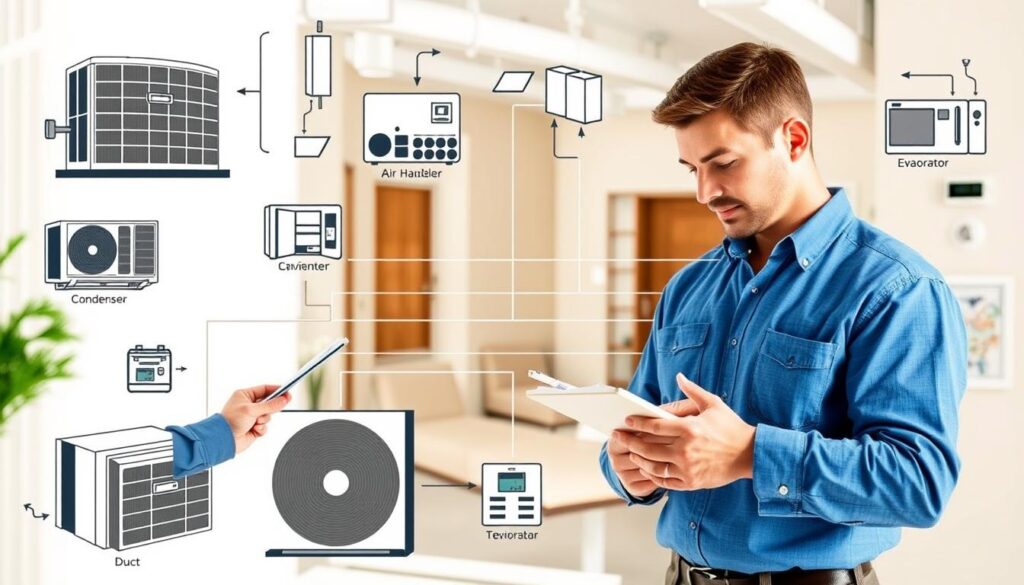
HVAC means heating, ventilation, and air conditioning. It keeps your indoor air just right. In the US, homes use over 50% of their energy for heating and cooling. Knowing your HVAC system can save you a lot of money and avoid sudden failures.
This guide will teach you the basics of finding your HVAC system. You’ll learn how to make smart choices about your home’s heating and cooling. It’s great for new homeowners or those who want to know more about their systems. You’ll get tips on what parts make up your system, how they work together, and how to keep them running well.
Key Takeaways
- Learn the fundamental components of HVAC systems
- Understand the importance of proper system identification
- Discover how to locate and recognize different HVAC configurations
- Save money through informed maintenance decisions
- Improve home comfort and energy efficiency
Table of Contents
What Is an HVAC System and Why Does It Matter
Your home’s comfort depends on a critical system: the HVAC system. It’s key to keeping your living space at the right temperature and air quality.
An HVAC system does more than just control temperature. It’s a system that manages your indoor environment. It ensures your home is comfortable and healthy.
Understanding Core Functions of HVAC
The HVAC system has three main parts:
- Heating: Keeps you warm in the cold months with furnaces or heat pumps
- Ventilation: Moves and cleans the air inside
- Air Conditioning: Cools and dries out your living area
“A well-designed HVAC system is the lungs of your home, breathing life into your living space.” – HVAC Expert
The Role in Indoor Air Quality and Comfort
It’s not just about temperature. Your HVAC system also improves indoor air quality by:
- Removing dust, allergens, and pollutants
- Keeping humidity levels right
- Bringing in fresh air and getting rid of stale air
- Stopping mold and moisture from building up
Knowing about your HVAC system helps make your home healthier and more comfortable. It’s not just about temperature. It’s about making your home a better place for your health and happiness.
Explore Our HVAC Shop
Looking for top-rated HVAC tools, parts, and accessories? Visit our shop and find the perfect solution for your needs.
Visit the ShopEssential Components That Make Up Your HVAC System
Knowing the parts of your HVAC system is key for keeping it running well. This guide will help you understand the different parts of your HVAC system.
The heart of your HVAC system has several important parts. They work together to make your home comfortable:
- Refrigerant: This special substance helps cool your home. It’s usually R410A, a newer type that’s safer for the environment.
- Compressor: This part is outside and makes the refrigerant change from gas to liquid.
- Evaporator Coils: Inside, these copper tubes help cool the air by absorbing heat.
There are more parts that help your HVAC system work:
- Condenser: This is outside and gets rid of the heat the system absorbs.
- Ductwork: A system of passages that spreads cooled air all over your home.
- Blower Motor: A strong fan that moves air through your ducts.
- Air Filters: They catch dust, allergens, and other small particles in the air.
Understanding these parts helps you see how your system works. It also lets you spot problems early.
Pro Tip: Regular checks of these parts can make your HVAC system last longer and work better.
How to Identify HVAC Systems in Your Home
Understanding your home’s heating and cooling systems might seem hard. But, with some guidance, you can learn to recognize them easily. Knowing how your HVAC system is set up helps keep your home comfortable and energy-efficient.
Every home has a unique HVAC system. The way it’s set up affects how well it works. To figure out your HVAC unit type, you need to look closely at its parts.
Locating Indoor and Outdoor Units
To find your HVAC equipment, start by looking in common places:
- Indoor units: Basements, utility closets, attics, or garages
- Outdoor units: Concrete pads near house exterior walls
- Utility rooms: Often housing central system components
Understanding System Configuration and Layout
Different HVAC systems need different ways to identify them. Here’s a quick guide to help you understand:
| System Type | Key Characteristics |
|---|---|
| Split System | Separate indoor and outdoor units connected by refrigerant lines |
| Packaged System | All components contained in single outdoor cabinet |
| Ductless Mini-Split | Wall-mounted indoor units with small outdoor compressor |
Pro tip: Follow refrigerant lines and ductwork to learn your system’s layout. This helps you talk better with HVAC experts.
Knowing your home’s HVAC system is the first step to maintaining optimal comfort and energy efficiency.
Different Types of HVAC Systems Explained
Knowing about the different HVAC systems helps you choose the right one for your home. You’ll find many types, each suited for specific needs.
The HVAC world is full of options. Each system has its own benefits for comfort and saving energy.
Split Systems vs Packaged Units
Split systems are the most common in homes. They have two main parts:
- An indoor air handler with an evaporator coil
- An outdoor condensing unit with a compressor
Packaged units, on the other hand, have everything in one outdoor box. They’re great for small homes or those built on concrete slabs.
Ductless Mini-Splits and Their Unique Features
Ductless mini-splits are popular for their flexibility and efficiency. They stand out with:
- Wall-mounted indoor units
- No ductwork needed
- Control over each room’s temperature
These systems save energy, which can cut cooling costs by up to 30%.
| System Type | Average Installation Cost | Energy Efficiency |
|---|---|---|
| Central Split System | $3,811 – $7,476 | High SEER Rating |
| Ductless Mini-Split | $2,000 – $14,500 | Very High Efficiency |
Your home’s layout, budget, and energy goals will guide your choice of HVAC system.
Explore Our HVAC Shop
Looking for top-rated HVAC tools, parts, and accessories? Visit our shop and find the perfect solution for your needs.
Visit the ShopIdentifying Your HVAC System by Model Numbers and Labels
Understanding your HVAC system’s model numbers and labels is key. These small labels hold a lot of information. They help you know how to take care of your heating and cooling system.
To find your HVAC system’s model numbers, look at different parts. Here are the main places to check:
- Outdoor condensing units: Side panel or near electrical disconnect box
- Indoor air handlers: Inside access panel door
- Furnaces: Side of the unit or interior panel
- Ductless mini-split units: Behind front cover or on side panel
The model number is very important. It tells you about your system’s details. Here’s what you might see on these labels:
| Label Information | What It Tells You |
|---|---|
| Manufacturer Name | Brand of the HVAC system |
| Model Number | System capacity and features |
| Serial Number | Manufacturing date and production details |
| Refrigerant Type | Specific refrigerant used in the system |
| Electrical Specifications | Voltage, amperage, and power requirements |
Pro tip: Photograph these labels and store the digital copy for easy reference when scheduling maintenance or ordering replacement parts. Each manufacturer uses a unique coding system, so understanding your specific label can save you time and money in the long run.
Understanding HVAC System Capacity and Specifications
Figuring out your air conditioning system can be tricky. It’s all about the key specs that affect how well it works, how comfortable it makes your space, and how much energy it uses.
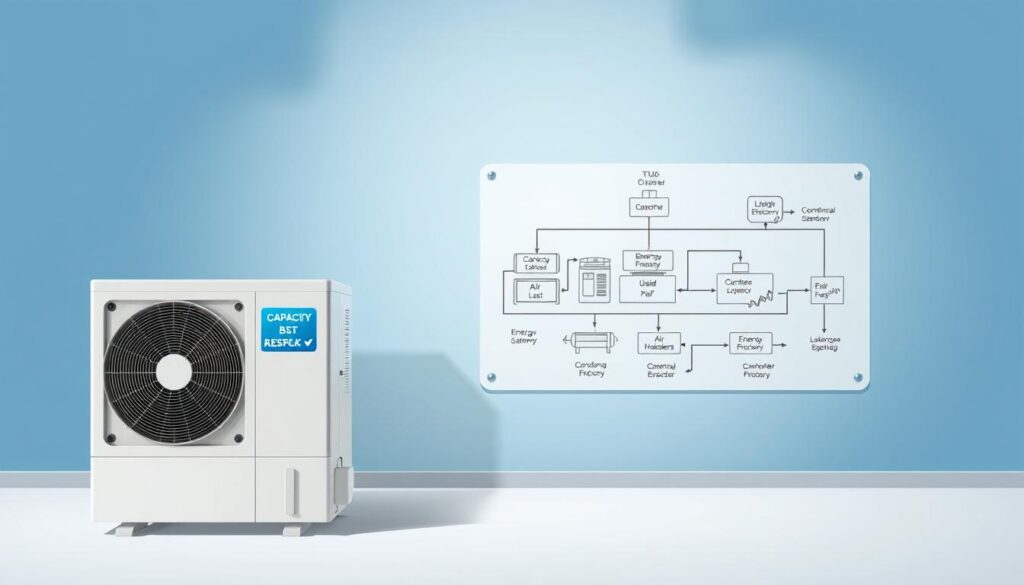
Knowing your system’s capacity is key to choosing the right heating and cooling for your home. Tonnage and BTU ratings are the main factors to consider. They really matter for your system’s performance.
Decoding Tonnage and BTU Ratings
Tonnage in HVAC talk doesn’t mean weight. It’s about cooling power. Here’s what you need to know:
- One ton equals 12,000 BTUs per hour
- BTU (British Thermal Unit) measures heat removal capacity
- Typical residential units range from 1.5 to 5 tons
Getting the size right is essential. A system that’s too big or too small can cause problems. These include:
- Inefficient cooling
- Higher energy consumption
- Increased system wear
SEER Ratings and Energy Efficiency
SEER (Seasonal Energy Efficiency Ratio) ratings show how energy-efficient your system is. A higher SEER means lower costs and less harm to the environment.
| SEER Rating | Efficiency Level | Energy Savings |
|---|---|---|
| 13-14 | Standard Efficiency | Baseline |
| 15-17 | High Efficiency | 20-30% savings |
| 18-25 | Premium Efficiency | 30-50% savings |
When picking an HVAC system, think about both the initial cost and long-term savings. A system with a higher SEER rating might cost more upfront. But it can save you a lot of money over time.
Signs Your HVAC System Needs Professional Inspection
Spotting HVAC maintenance signs early can save you from costly problems and system failure. Your home’s comfort depends on catching these signs before they turn into big issues.
Look out for these critical signs that mean you need a professional check:
- Strange Noises: Banging, rattling, or whistling sounds mean there might be mechanical issues
- Uneven room temperatures suggest airflow problems
- Sudden increases in energy bills show your system is not working well
- Weak airflow could mean duct or blower motor problems
- Unusual odors like musty or burning smells
“Early detection of HVAC issues can prevent costly repairs and extend your system’s lifespan.”
Your HVAC system sends signals through its performance. If it cycles too often, you see leaks, or it’s over 10-15 years old, get it checked right away. Experts can spot problems that you might miss.
Don’t ignore these signs. Getting a professional to check your system can save you from a big repair bill or even a new system.
Explore Our HVAC Shop
Looking for top-rated HVAC tools, parts, and accessories? Visit our shop and find the perfect solution for your needs.
Visit the ShopMaintaining Your HVAC System for Optimal Performance
Keeping your home comfortable and efficient is key. Your HVAC system is a big investment. Taking good care of it can make it last longer and save you money on repairs.
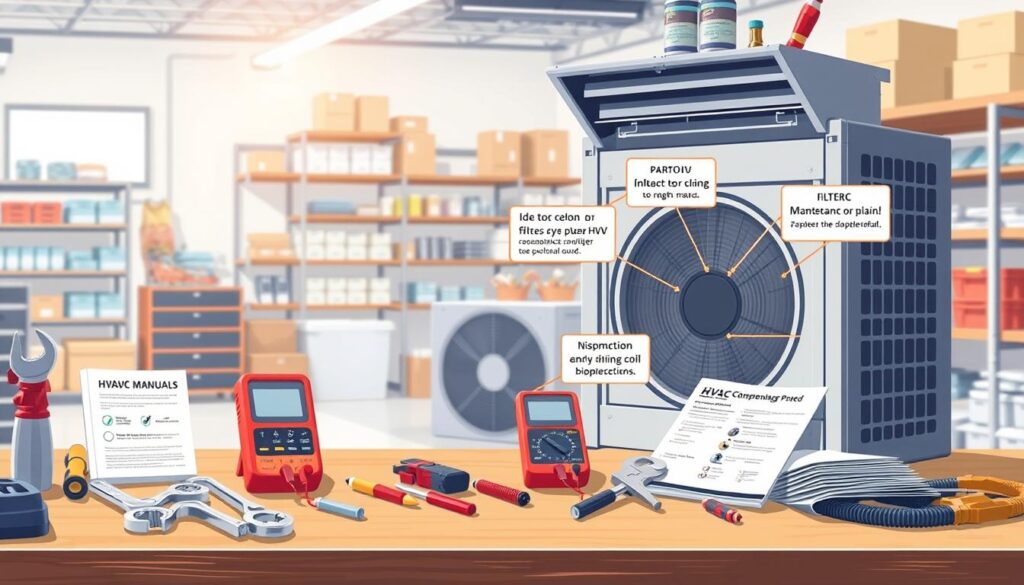
Regular maintenance keeps your HVAC system in top shape. Professional tune-ups and routine care ensure it works well and uses less energy.
Regular Filter Changes and Cleaning Schedules
Changing filters is essential for HVAC care. Here’s a simple plan:
- Check filters monthly
- Replace standard 1-inch filters every 1-3 months
- Use higher-quality pleated filters for better air filtration
- Clean or replace filters more frequently with pets or allergies
Dirty filters hurt airflow, efficiency, and air quality. They can raise energy costs by 5-15% and harm your HVAC system.
Professional Maintenance Timing
Get professional HVAC maintenance twice a year – before each season. A full tune-up includes:
- Comprehensive system inspection
- Cleaning of evaporator and condenser coils
- Refrigerant level checks
- Electrical connection testing
- Thermostat calibration
Professional cleaning and maintenance can cut energy costs by 15-20%. It also prevents sudden breakdowns and can add 5-10 years to your system’s life.
Maintenance is an investment, not an expense. The cost of annual tune-ups is far less than emergency repairs or premature system replacement.
Conclusion
Learning to identify HVAC systems is more than just knowing technical stuff. It’s about being in control as a homeowner. By understanding your heating and cooling equipment, you can make smart choices. These choices can save you a lot of money on repairs and replacements.
Knowing about your HVAC system makes your home more comfortable and efficient. You can read system labels, spot different setups, and know how to keep things running smoothly. The comprehensive homeowner HVAC guide you’ve looked at gives you the skills to handle your system’s challenges.
Identifying your HVAC system is about keeping your home cozy and saving money. Regular upkeep, catching problems early, and knowing your equipment can make your system last longer. With what you’ve learned, you can talk better with techs, avoid extra repairs, and use energy more wisely.
Your HVAC system is the core of your home’s comfort. Keep learning and using what you’ve learned from this guide. This way, you’ll keep your home comfy, efficient, and reliable for many years.