
Affiliate Disclosure
HVAC Guide Guys is a participant in the Amazon Services LLC Associates Program, an affiliate advertising program designed to provide a means for sites to earn advertising fees by advertising and linking to Amazon.
Ever noticed how some rooms feel stuffy while others are comfy? It might be your HVAC diffuser. Learning to install one can make your home’s air flow better. This means every room will have the same temperature and air quality.
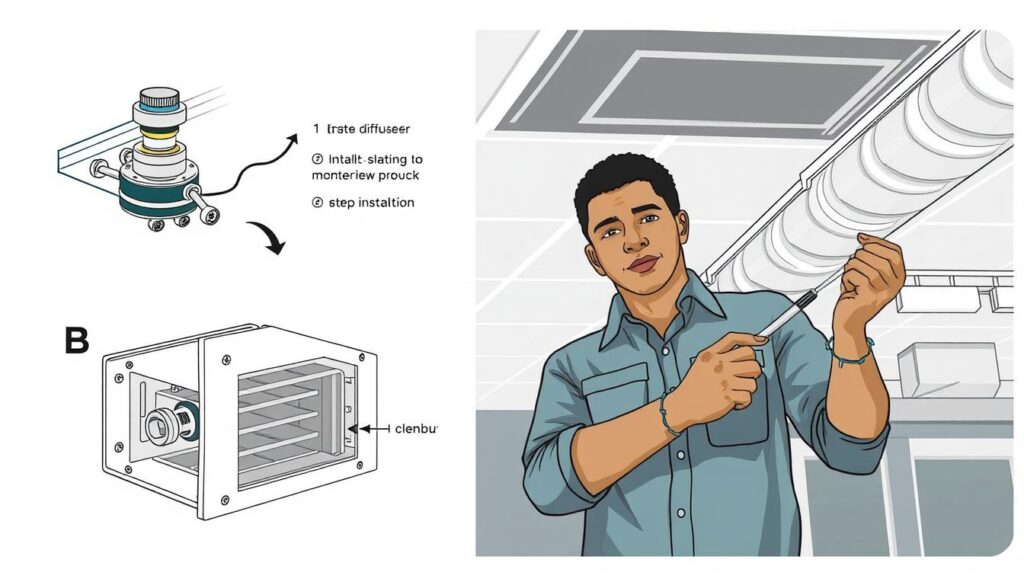
Installing an HVAC diffuser does more than just make your home cozy. It also makes your heating and cooling system work better. This guide is for anyone who wants to improve their home. It will show you how to install an HVAC diffuser step by step.
Knowing how to install an HVAC diffuser can save you money and make your system more efficient. It also makes your home more comfortable. By following our expert tips, you’ll be able to do this project like a pro.
Key Takeaways
- Learn the essential steps for HVAC diffuser installation
- Understand the importance of proper air distribution
- Discover tools and techniques for successful installation
- Improve home comfort and energy efficiency
- Save money by performing a DIY diffuser installation
Table of Contents
Understanding HVAC Diffusers and Their Role in Air Distribution
Your HVAC system does more than just heat and cool your home. It’s about how these parts help spread air well in your space. An HVAC diffuser is key for delivering air evenly, making your home comfortable and efficient.
What Is an HVAC Diffuser and How Does It Work
An HVAC diffuser is a special device in your ceiling or wall. It changes direct air from ducts into a softer, wider spread. When you set up your air conditioning diffuser, you’ll see it:
- Reduces air speed
- Spreads air evenly in a room
- Lessens drafts and temperature changes
- Boosts air flow
Types of Ceiling Diffusers for Your HVAC System
Different rooms need different diffuser designs. Your guide will show you the most common types:
- Round Diffusers: Great for square rooms with even air
- Square Diffusers: Best for modern, geometric spaces
- Linear Slot Diffusers: Ideal for long, narrow areas like hallways
- Perforated Diffusers: Offer subtle, even air movement
Benefits of Proper Diffuser Installation
Setting up your diffuser right has many benefits. It ensures your HVAC works well, saves energy, and keeps your home comfortable. You’ll see lower energy bills, even temperatures, and better air quality.
Tools and Materials Needed for HVAC Diffuser Installation
Getting ready for an HVAC duct diffuser mounting project needs careful planning and the right tools. Before starting, make sure you have all the tools and materials you need. This will make the installation process smooth and efficient.
Essential Tools for Diffuser Installation
- Measuring tape for precise duct measurements
- Pencil for marking installation points
- Utility knife or tin snips for cutting
- Screwdriver set (Phillips and flathead)
- Drill with appropriate bits
- Level for proper alignment
- Ladder or step stool
- Safety glasses and work gloves
Critical Materials for HVAC Duct Diffuser Mounting
- New HVAC diffuser (matching duct size)
- Mounting hardware
- Duct tape or mastic sealant
- Flexible duct connector (if needed)
When picking a diffuser, make sure it fits your duct size and CFM rating. Diffusers come in sizes from 6 to 12 inches for round ones, and there are rectangular options too. It’s important to choose a diffuser that matches your HVAC system for the best air flow.
Pro Tip: Measure twice, install once! Accurate measurements prevent costly mistakes during HVAC duct diffuser mounting.
Tools like a flashlight for inspecting ductwork and a vacuum for cleaning are optional but helpful. Being well-prepared will make your installation go smoothly and avoid any delays.
| Tool Category | Recommended Items | Purpose |
|---|---|---|
| Measuring Tools | Tape measure, level | Ensure precise fitting and alignment |
| Cutting Tools | Utility knife, tin snips | Modify ductwork or trim diffuser |
| Safety Equipment | Gloves, safety glasses | Protect during installation |
Remember, proper preparation is key to a successful HVAC diffuser installation. Take your time to gather all the tools and materials you need before starting your project.
Preparing Your Workspace for Ceiling Diffuser Installation
Before starting your air conditioning diffuser setup, it’s important to prepare well. This ensures a safe and smooth hvac ceiling vent installation. The right steps will protect your home, equipment, and you.
Safety First: Protecting Yourself and Your Space
Safety is the most important thing in any HVAC project. Here are some key steps to follow:
- Turn off power to your HVAC system at both the thermostat and circuit breaker
- Wait 15 minutes for system components to fully settle
- Wear protective gear:
- Safety glasses
- Work gloves
- Dust mask
- Check for asbestos in homes built before 1980
Preparing Your Work Area
Make your workspace ready for your air conditioning diffuser setup. Follow these steps:
- Clear furniture from the immediate work zone
- Lay down drop cloths to protect flooring
- Ensure bright, adequate lighting
- Gather all necessary tools and materials
“Proper preparation prevents poor performance” – HVAC Installation Professionals
Measuring and Marking for Precision
Accurate measurements are essential for a successful hvac ceiling vent installation. Use a tape measure and stud finder to:
- Measure existing duct or diffuser opening
- Locate ceiling joists for possible additional support
- Mark reference points for centered installation
- Verify mounting frame dimensions
Pro tip: Double-check your measurements before cutting or drilling to avoid costly mistakes!
Explore Our HVAC Shop
Looking for top-rated HVAC tools, parts, and accessories? Visit our shop and find the perfect solution for your needs.
Visit the ShopRemoving Your Old Air Vent Diffuser
Replacing an air vent diffuser needs careful preparation and the right steps. First, understand how your old unit is mounted.
Different diffusers need different removal methods. Here are the main types you might find:
- Spring-loaded clips
- Mounting screws
- Twist-lock mechanism
For a smooth diffuser replacement, follow these steps:
- Turn off your HVAC system completely
- Examine how the current diffuser is mounted
- Get the tools you need, like screwdrivers and a utility knife
Safety is key when replacing an air vent diffuser. Always support the diffuser to avoid falls or ceiling damage.
| Mounting Type | Removal Technique | Tools Required |
|---|---|---|
| Spring-loaded | Squeeze mounting springs, gently pull down | None special |
| Screw-mounted | Remove visible or hidden screws | Screwdriver |
| Twist-lock | Rotate in specific direction to release | Gloves recommended |
“Careful removal prevents ceiling damage and ensures a smooth new diffuser installation.” – HVAC Professional
Before installing your new diffuser, check the duct opening. Look for dust, air leaks, or insulation issues. Fixing these problems can make your HVAC system work better.
How to Install HVAC Diffuser: Step-by-Step Process
Installing a supply air diffuser needs careful attention and precision. The steps might look hard, but with the right steps, you can do it. Let’s go through the key steps of installing a supply air diffuser.
Connecting the Diffuser to Your HVAC Ductwork
First, get your ductwork ready for the diffuser. Clean the duct opening well to remove dust or debris. Make sure the connection point is smooth.
- Clean the duct opening completely
- Check for any damage or irregularities
- Prepare mastic sealant or specialized duct tape
Securing the Mounting Frame and Diffuser Assembly
Mounting the diffuser needs to be precise. You’ll use different methods for different ceilings:
- Drop ceiling installations: Place the diffuser in the grid system carefully
- Drywall ceilings: Use spring clips or screws
- Make sure the diffuser is flush with the ceiling
Pro tip: Gently tug on the diffuser to test its stability and secure mounting.
Final Adjustments and Airflow Direction Settings
The final step is to set up your diffuser’s airflow. Use adjustable louvers to direct air:
- Direct air away from walls and toward the room center
- Adjust the throw pattern for better room circulation
- Change settings for heating and cooling seasons
Remember to angle airflow slightly to avoid direct drafts on seating areas. This ensures comfort and efficient air distribution.
Explore Our HVAC Shop
Looking for top-rated HVAC tools, parts, and accessories? Visit our shop and find the perfect solution for your needs.
Visit the ShopTesting Your Newly Installed Supply Air Diffuser
After you’ve installed your hvac ceiling vent, it’s important to test it well. This ensures it works as it should. It also checks if your installation was done right.
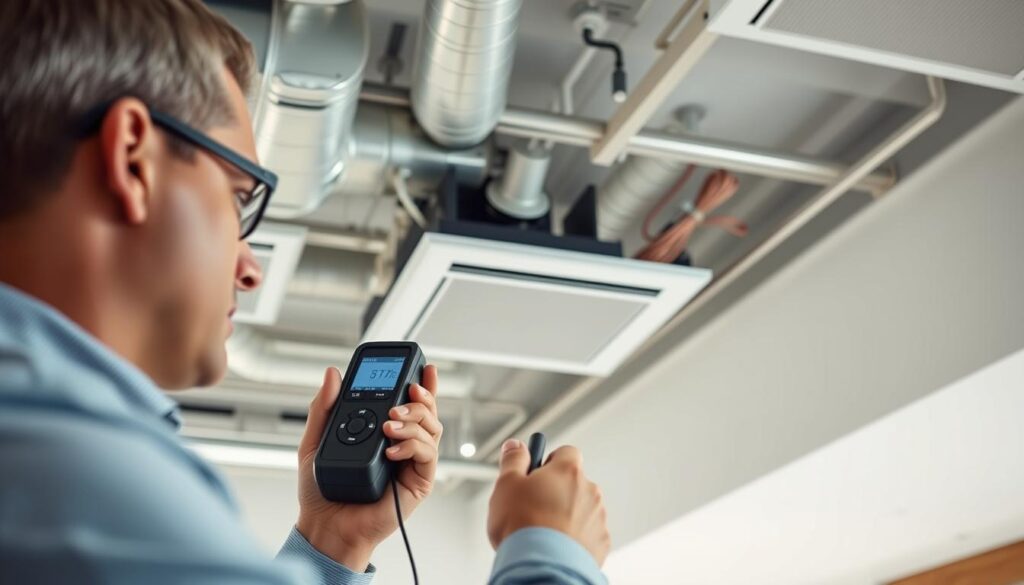
First, turn the power back on at the circuit breaker. Set your thermostat to heat or cool, depending on the season. Listen closely as the system starts up.
- Airflow Strength: Hold your hand near the diffuser to check air flow
- Sound Check: Look for a soft airflow without odd sounds
- Visual Inspection: Make sure the diffuser is well attached
- Leak Detection: Check for air leaks around the diffuser
Testing your supply air diffuser is key. Use these steps to make sure it’s working right:
- Tissue Test: Hold a light tissue near the diffuser to see air movement
- Directional Check: Make sure airflow matches room needs
- Temperature Consistency: Check that air is evenly distributed
| Issue Detected | Potential Cause | Recommended Action |
|---|---|---|
| Weak Airflow | Blocked Duct | Inspect and Clear Ductwork |
| Unusual Noises | Loose Components | Tighten Mounting Hardware |
| Uneven Cooling | Incorrect Louver Settings | Adjust Diffuser Angles |
Pro Tip: If you find problems during testing, call a pro HVAC tech. They can fix complex issues with your ceiling diffuser.
Common HVAC Duct Diffuser Mounting Mistakes to Avoid
Installing an HVAC duct diffuser might seem easy, but many mistakes can hurt your system’s performance. Knowing these common errors helps you get a top-notch installation. This ensures your home’s air flows well.
Homeowners often face challenges when mounting HVAC duct diffusers. These issues can affect your cooling and heating. It’s key to spot these problems to keep your home comfortable.
Critical Installation Mistakes to Prevent
- Selecting an incorrect diffuser size that doesn’t match duct opening dimensions
- Failing to properly seal connections between diffuser and ductwork
- Over-tightening or under-tightening mounting screws
- Incorrectly setting airflow direction
- Skipping duct opening cleaning before installation
Troubleshooting Practical Solutions
For effective diffuser replacement tips, consider these practical strategies:
- Check spring clip tension if diffuser won’t stay in place
- Investigate air turbulence causing whistling sounds
- Verify damper positions for weak airflow
- Ensure complete duct opening seal
Ensuring Proper Seal and Performance
Sealing is key for energy savings. Use foil-backed tape or mastic sealant instead of duct tape. Apply a consistent sealant bead around connections. This stops air leaks that raise energy costs.
Professional tip: Always verify your seal’s effectiveness before completing installation.
Explore Our HVAC Shop
Looking for top-rated HVAC tools, parts, and accessories? Visit our shop and find the perfect solution for your needs.
Visit the ShopMaintenance Tips for Your Air Conditioning Diffuser Setup
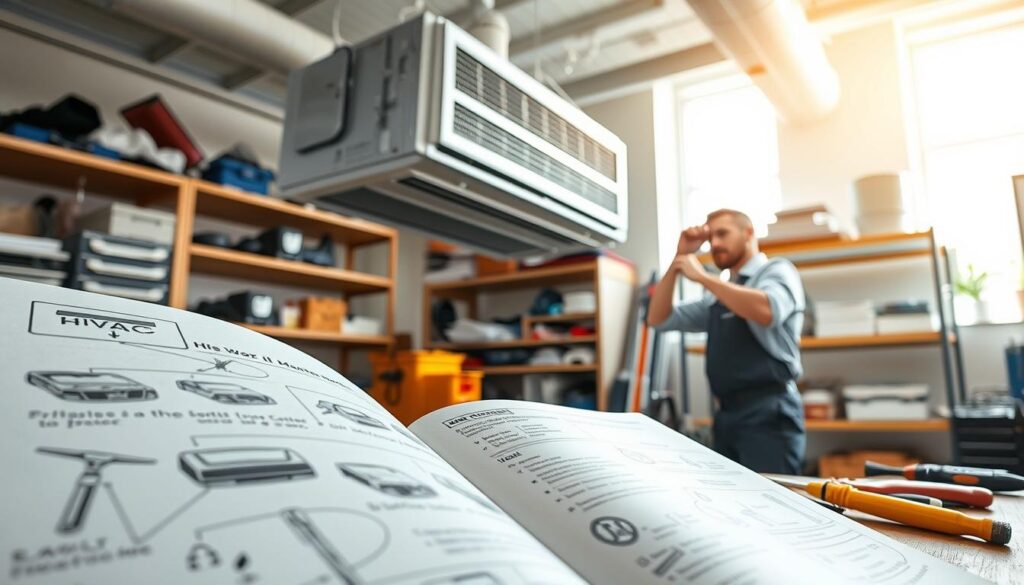
Regular maintenance is key to keeping your ceiling diffuser in top shape. Your air conditioning diffuser needs care to work well and keep the air clean.
Regular upkeep stops problems before they start and makes your HVAC last longer. Here are the must-do maintenance steps:
- Monthly visual inspection of diffuser surfaces
- Quarterly deep cleaning of diffuser components
- Annual complete system check
For monthly upkeep, gently wipe your diffuser with a soft, damp cloth. This removes dust and keeps airflow free. In the quarterlies, take off the diffuser face and vacuum the ductwork opening.
Your yearly maintenance should include:
- Deep cleaning with mild soap and water
- Inspecting mounting hardware
- Checking seal integrity around the diffuser
Watch for signs that your diffuser needs help:
- Visible dust accumulation
- Reduced airflow
- Unusual system noises
- Discoloration around diffuser edges
Pro tip: Set reminders for maintenance and keep a cleaning log. This helps you stay on top of your HVAC’s health and catch issues early.
Conclusion
You’ve learned how to install HVAC diffuser systems in your home. This guide has shown you the steps to install a register diffuser. You now have skills that can save you money and improve your home’s air flow.
Installing an HVAC diffuser is more than a home project. It’s a way to make your living space more comfortable and clean. You can now handle future ventilation upgrades with confidence. Each time you install one, you get better at taking care of your home and HVAC system.
While DIY installation is rewarding, sometimes you need a pro. This is true if you face tricky ductwork or are unsure about any steps. Your home’s comfort and safety are key when working with HVAC systems.
Learning how to install diffusers properly makes your home more comfortable and energy-efficient. These skills will help you keep your home’s air flowing well. They’re important for your heating and cooling systems to work their best.