Affiliate Disclosure
HVAC Guide Guys is a participant in the Amazon Services LLC Associates Program, an affiliate advertising program designed to provide a means for sites to earn advertising fees by advertising and linking to Amazon.
Are you tired of uneven room temperatures and high energy bills? The secret to comfort might be in your ceiling’s HVAC system. Learning to install an HVAC boot in your ceiling can change your home’s air flow and energy use.
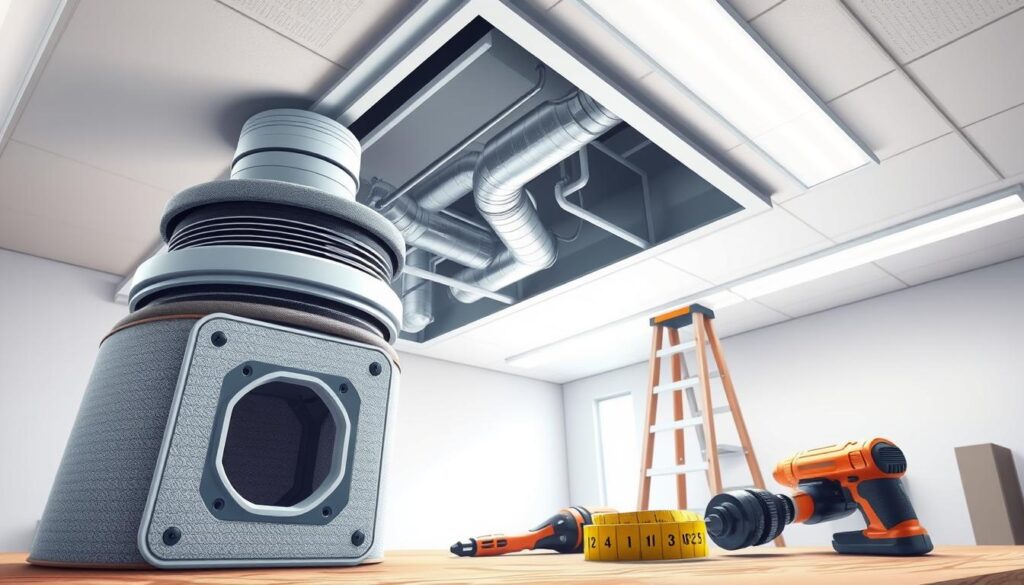
Installing a ceiling vent needs precision, knowledge, and the right steps. This guide will show you how to install an HVAC boot, so you can manage your home’s air system with confidence.
Professional HVAC technicians know that installing boots right is key. It’s not just about ductwork. It’s about making a smooth air flow system that boosts comfort and cuts energy waste.
Key Takeaways
- HVAC boots are key parts that connect ductwork to ceiling registers
- Right installation stops air leaks and boosts energy efficiency
- Using safety gear is vital when working with sheet metal
- Knowing your home’s HVAC layout is key for a good install
- Accurate measurement and alignment are vital for the boot’s success
Table of Contents
Understanding HVAC Ceiling Boots and Their Role in Your System
Your home’s heating and cooling system has key parts that are often overlooked. HVAC ceiling boots are a vital part that helps keep your home at a comfortable temperature and air flows well.
These special fittings are important for your home’s air system. When you install ceiling air duct boots, you link your ductwork to ceiling registers smoothly.
What is an HVAC Boot and Why It Matters
An HVAC boot is a key spot in your ventilation system. It connects ductwork to ceiling registers, making sure air flows well in your home. Replacing HVAC duct boots the right way can really help your system work better.
- Prevents air leakage
- Ensures balanced air distribution
- Maintains system performance
Types of Ceiling Boots for Different Applications
Not all ceiling boots are the same. You might need different ones based on your HVAC setup:
- Adjustable boots for flexible duct sizing
- Angled boots for non-standard ceiling setups
- Insulated boots for unconditioned areas
How Ceiling Boots Connect to Your Ductwork System
Ceiling boots are part of your home’s HVAC system. They connect to branch ducts, main trunk lines, and ceiling framing. The right installation means better airflow and energy use.
A well-installed HVAC boot is like a perfect-fitting shoe for your home’s ventilation system.
Explore Our HVAC Shop
Looking for top-rated HVAC tools, parts, and accessories? Visit our shop and find the perfect solution for your needs.
Visit the ShopEssential Tools and Materials for HVAC Boot Installation
Getting ready for HVAC boot installation means you need the right tools and materials. Having a full set of tools is key to a successful project. It helps avoid delays and makes the installation smooth and professional.
Your toolkit should cover several important categories:
- Cutting Tools:
- Tape measure
- Metal snips (straight, left, and right-cut)
- Drywall saw
- Utility knife
- Fastening Tools:
- Drill with ¼” hex driver
- Screwdriver set
- Aviation snips
- Sealing Tools:
- Mastic sealant brush
- HVAC foil tape
- Caulking gun
Remember, safety is a top priority. Wear leather gloves, safety glasses, and a dust mask. Knee pads and a headlamp can also help.
Here are the materials you’ll need:
- Correctly sized ceiling boot
- Self-tapping sheet metal screws
- UL-181 rated foil tape
- Insulation that meets local codes
- Ceiling register or grille
Pro Tip: Double-check your measurements and have all tools ready before beginning your HVAC boot installation to ensure a smooth, efficient process.
Pre-Installation Planning and Preparation Steps
Starting a ceiling register boot installation needs careful planning. Rushing can cause mistakes and harm your home. This guide will help you prepare for a smooth HVAC boot installation.
Locating the Optimal Ceiling Register Position
Finding the best spot for your ceiling register is key. It affects airflow and comfort. Think about these points when picking a spot:
- Avoid placing registers directly above furniture or seating areas
- Position near windows or exterior walls to counteract heat loss or gain
- Ensure even air distribution throughout the room
- Check local building codes for specific placement requirements
Measuring and Marking Your Installation Area
Accuracy is vital in ceiling register boot installation. Here’s how to mark your area correctly:
- Use a reliable measuring tape for exact measurements
- Transfer measurements from the room below to the attic
- Account for ceiling thickness and framing
- Mark both ceiling surface and attic floor for alignment
“Measure twice, cut once” – A key rule for any HVAC installation project.
Identifying Joists and Avoiding Obstacles
Before cutting, find joists and obstacles. Use these methods to navigate:
- Use a stud finder to locate ceiling joists
- Tap the ceiling to distinguish between solid and hollow areas
- Look for visual clues like nail patterns in older homes
- Check for obstacles like:
- Electrical wiring
- Plumbing pipes
- Existing HVAC ducts
- Recessed lighting fixtures
Pro Tip: Always place your ceiling register boot between joists, not through them. This keeps your home safe and prevents damage.
Explore Our HVAC Shop
Looking for top-rated HVAC tools, parts, and accessories? Visit our shop and find the perfect solution for your needs.
Visit the ShopHow to Install HVAC Boot in Ceiling
Installing an HVAC boot in your ceiling needs precision and planning. This guide will show you how to do it right. You’ll learn the key steps for a professional and efficient setup for your home’s ventilation.
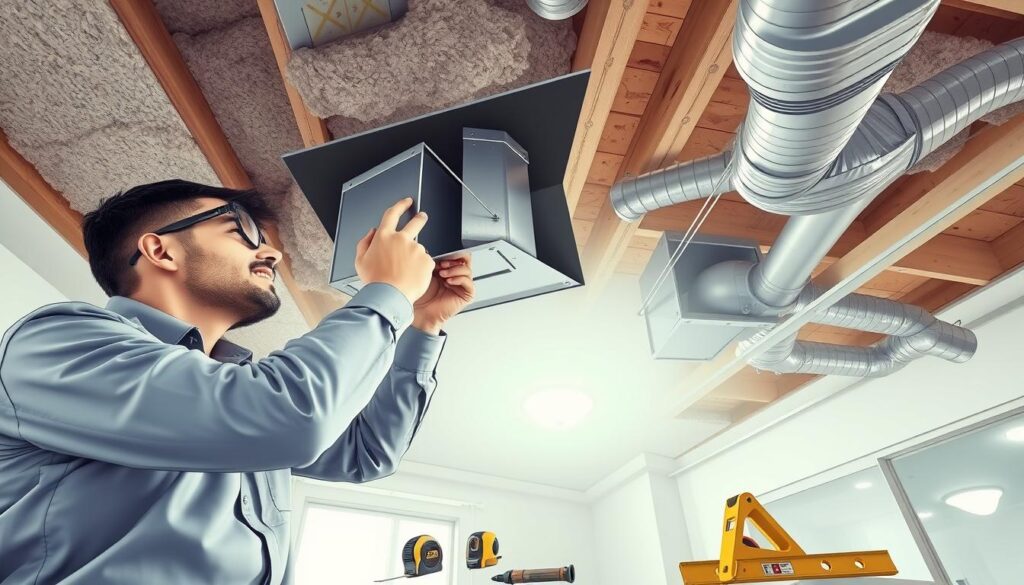
Before starting, get your tools ready and read the manufacturer’s instructions. Broan duct boot installation can differ slightly by model. So, pay close attention to the details.
Cutting the Ceiling Opening
Preparing the ceiling opening is a key first step:
- Find the best spot between ceiling joists
- Measure the boot’s size carefully
- Mark the area to cut, leaving a ¼-inch margin for easier fit
- Use a drywall saw to cut it precisely
Connecting to Branch Ductwork
Connecting your HVAC boot to the ductwork is vital for good air flow:
- For flexible ducts:
- Stretch the duct to full length
- Cut it to the right size
- Secure with zip ties
- Seal the connections well
- For metal ducts:
- Use S-cleats for long edges
- Apply drive cleats for side locks
- Support every 4-6 feet with hangers
Securing the Boot to Ceiling Framing
The last step is to make sure it’s stable and secure:
- Place the boot flat against the ceiling
- Use self-tapping sheet metal screws
- Secure the boot flange to joists every 6-8 inches
- Check that the boot stays level
By following these steps, you’ll make a reliable and efficient ventilation connection. This will improve your home’s air circulation and comfort.
Proper Sealing Techniques for Maximum Efficiency
Learning how to seal your HVAC boots right is key to keeping your home comfy and saving energy. Leaks in your ducts can let up to 30% of cooled air escape. This can make your bills go up and your system work less efficiently.
- Use only UL-181 rated sealing materials
- Clean all surfaces before sealing
- Mechanically fasten connections with at least three screws per joint
- Apply sealant generously to cover entire connection points
There are two main ways to seal ductwork connections:
- Mastic Sealant: A thick, flexible paste brushed onto joints
- Provides long-term performance
- Remains flexible after curing
- Works best for permanent connections
- Metal-Backed Foil Tape: UL-181 rated adhesive tape
- Ideal for accessible connections
- Must be applied with firm pressure
- Overlaps should extend at least 1 inch
Important warning: Never use regular duct tape from the hardware store. These tapes break down fast and don’t seal well for your HVAC system.
Proper sealing isn’t just about efficiency—it’s about protecting your home’s air quality and HVAC system performance.
Explore Our HVAC Shop
Looking for top-rated HVAC tools, parts, and accessories? Visit our shop and find the perfect solution for your needs.
Visit the ShopInsulating Around Your Ceiling Boot Installation
Insulating your ceiling boot is key for saving energy and avoiding moisture issues. The right insulation helps keep your home warm and protects your HVAC system from damage.
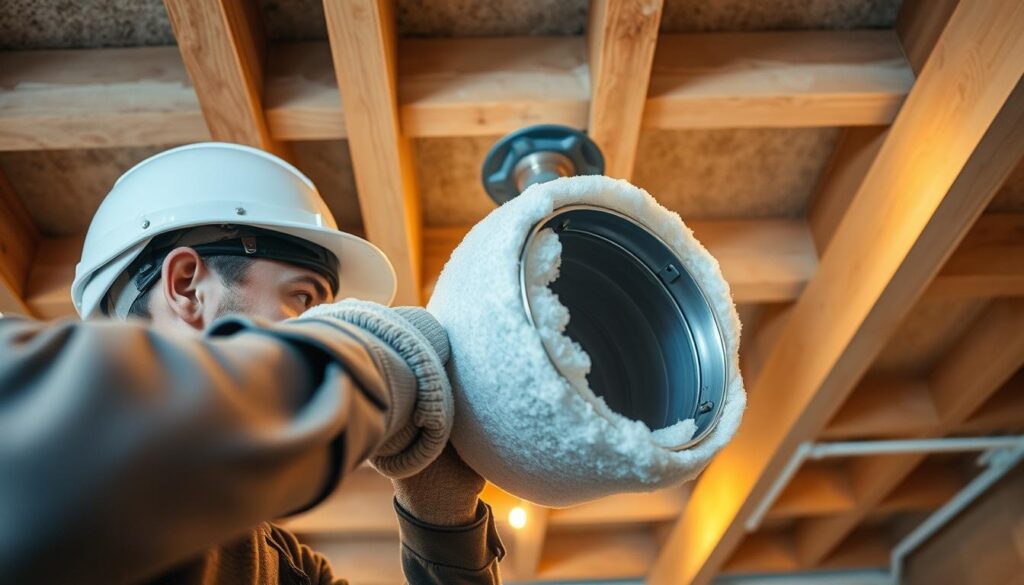
To meet ceiling boot insulation needs, consider a few important points:
- Choose the right insulation for your area
- Know the R-value needed for each space
- Block air leaks and heat transfer
Selecting the Right Insulation Materials
Focus on materials that offer top thermal protection for your attic boot. The best choices are:
- Fiberglass Batt Insulation: It’s flexible and simple to install around boots
- Rigid Foam Board: It has a high R-value and fits well in tight spaces
- Spray Foam Insulation: It seals airtight for odd-shaped areas
Preventing Air Leaks and Heat Loss
To properly insulate your ceiling boot, follow these steps:
- Wrap the boot fully, with insulation 12 inches beyond connections
- Seal insulation seams with the right tape
- Ensure no gaps in the thermal barrier
- Keep at least 1-inch space near the roof deck for air flow
Professional tip: In humid areas, bad insulation can cause ceiling damage and mold. Make sure to seal your HVAC ceiling boots well.
Common Installation Mistakes and How to Avoid Them
HVAC boot installation errors can ruin a project. Knowing the common mistakes helps make your home’s heating and cooling better.
Installing HVAC systems needs care and detail. Even small errors can hurt how well your system works.
Poor Boot Alignment Challenges
Misaligned HVAC boots cause many issues:
- Visible gaps around ceiling registers
- Reduced airflow efficiency
- Potential air leakage into attic spaces
- Unexpected noise from improper fitting
Sealing and Connection Complications
Sealing mistakes are a big problem. Experts say to check all connections well to save energy.
“Proper sealing isn’t just about performance—it’s about protecting your home’s comfort and efficiency.”
Here are sealing mistakes to avoid:
- Using the wrong tape materials
- Skipping mechanical fastening
- Neglecting less visible connection points
- Applying sealant on dirty surfaces
Knowing these mistakes can make your HVAC system work better and last longer.
Testing Your Installation and Final Adjustments
After you’ve installed your HVAC boot, it’s important to test it thoroughly. This ensures your system works well and efficiently. You’ll need to follow a few key steps to check your system’s performance and make any needed tweaks.
- Remove any debris from ductwork
- Verify all connections are sealed completely
- Confirm insulation is properly installed
- Check register mounting
When you start your system, watch out for warning signs:
- Whistling sounds might indicate air leaks
- Rattling could suggest loose components
- Banging noises may point to unsupported ductwork
To test airflow, try this simple trick: Hold a lightweight tissue near the register. This will show you if air is moving well. Make sure air flows evenly across the whole opening without any weak spots or turbulence.
It’s also key to check the temperature difference and make sure rooms heat up as they should. If you run into problems or need help, don’t hesitate to call an HVAC expert.
Conclusion
Starting your journey to a successful hvac boot installation is a big step. It’s a move towards making your home more comfortable and energy-efficient. By following the guide, you’ve learned how to install ceiling boots with confidence and care.
Understanding each step is key to success. From choosing the right tools to sealing, your focus matters. A good installation can save energy and keep your home’s air flowing well.
While you can do this project yourself, some parts might need a pro. If you’re unsure or hit a snag, getting help from an HVAC expert is wise. Keeping up with maintenance, like yearly checks and fixing issues fast, will make your new boot last longer and work better.
Your effort to learn and do the installation right shows you care about your home. By focusing on this important part of your HVAC system, you’re making your home more comfortable now and saving energy for the future.