
Affiliate Disclosure
HVAC Guide Guys is a participant in the Amazon Services LLC Associates Program, an affiliate advertising program designed to provide a means for sites to earn advertising fees by advertising and linking to Amazon.
How to Determine HVAC Air Flow? Are you tired of uneven temperatures and high energy bills? You might be surprised to learn that perfect home comfort is within reach. It all starts with understanding how to determine HVAC air flow.
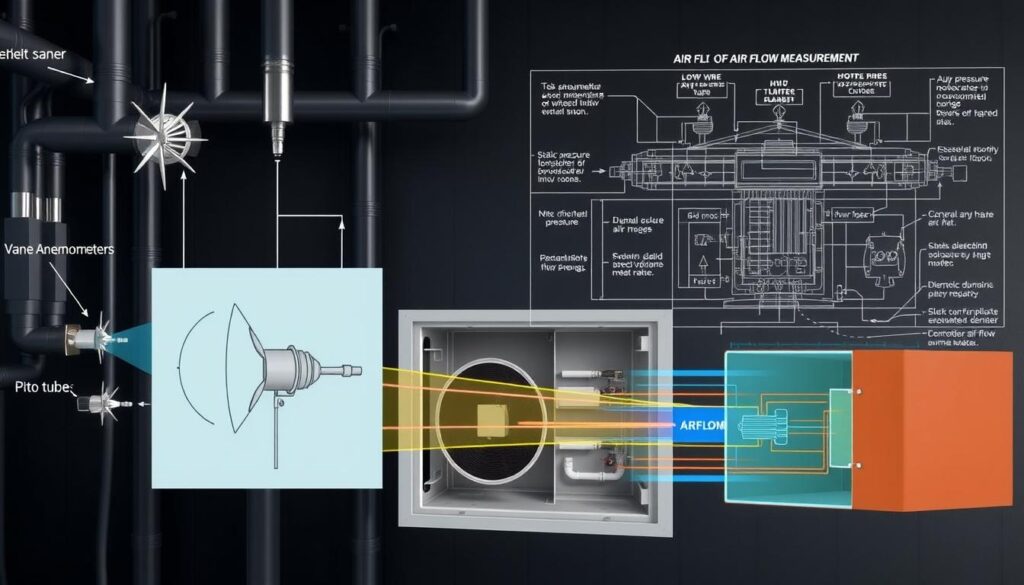
Measuring air flow in HVAC systems is key to keeping your home comfortable all year. This guide will walk you through the complex world of HVAC air flow. You’ll get practical tips and expert techniques to boost your system’s efficiency.
Whether you’re a homeowner or a maintenance pro, knowing how to measure HVAC air flow is vital. It can save you money, make your home more comfortable, and even extend your HVAC equipment’s life.
Key Takeaways
- Learn essential techniques for measuring HVAC air flow
- Understand the impact of proper air circulation on system efficiency
- Discover tools and methods for accurate air flow testing
- Identify common air flow problems before they become costly issues
- Improve indoor comfort through precise air flow management
Table of Contents
Understanding HVAC Systems and Airflow Basics
HVAC systems are complex networks of components working together to create comfortable indoor environments. When you want to calculate HVAC CFM (cubic feet per minute), understanding the fundamental elements becomes key. These systems manage temperature, humidity, and air quality in homes and businesses.
Modern HVAC systems have several key components that work together to keep indoor conditions optimal. Let’s look at the important parts that make air flow testing methods vital for system performance:
- Air Conditioner: Removes heat and humidity from indoor spaces
- Furnace: Generates warm air during cold seasons
- Air Handler: Circulates conditioned air throughout the building
- Thermostat: Controls temperature and system operations
- Heat Pump: Transfers heat between indoor and outdoor environments
Role of Air Movement in HVAC Performance
Air movement is the heart of any HVAC system. Proper air circulation determines the efficiency and effectiveness of heating and cooling processes. When air flows smoothly through ducts and vents, your system can maintain consistent temperatures while minimizing energy consumption.
“Efficient air movement is the key to optimal HVAC performance and energy savings.” – HVAC Engineering Professionals
Impact of Proper Air Flow on System Efficiency
Effective air flow directly influences your HVAC system’s overall performance. Inadequate circulation can lead to uneven temperatures, increased energy costs, and equipment strain. By understanding and implementing precise air flow testing methods, you can ensure your system operates at peak efficiency.
Regular maintenance and professional air flow assessments help identify issues before they become costly. Investing time in understanding your HVAC system’s air movement can save you money and enhance indoor comfort.
Essential Tools for Measuring HVAC Air Flow
Measuring HVAC air flow needs special tools. These tools help HVAC pros get accurate air movement data. Knowing the right tools can change how you check hvac air balance and system performance.
- Anemometer: A handheld device measuring air velocity and direction
- Digital Manometer: Measures air pressure differences across systems
- Flow Hood: Calculates precise air volume at registers and grilles
- Thermal Anemometer: Detects air speed using temperature variations
“Accurate measurement tools are the foundation of effective HVAC system diagnostics and optimization.” – HVAC Engineering Professionals
When picking tools, look at accuracy, portability, and system compatibility. Each tool has special features for a full ductwork airflow check.
Today’s digital tools give real-time data. This makes quick and accurate hvac air balance possible. Good tools help spot issues early, avoiding expensive fixes.
Explore Our HVAC Shop
Looking for top-rated HVAC tools, parts, and accessories? Visit our shop and find the perfect solution for your needs.
Visit the ShopHow to Determine HVAC Air Flow
Knowing how to measure air flow is key for a good HVAC system at home. Testing the airflow of your residential HVAC system can spot problems. It also helps make your heating and cooling work better. Getting the air handler flow rate right means your system runs smoothly.
There are important methods for checking air flow. Both pros and homeowners can use these to see how well their systems are doing.
Static Pressure Testing Methods
Static pressure tests show how hard it is for air to move through your HVAC’s ducts. This test is vital for finding out if there are any blockages.
- Use a digital manometer to measure pressure
- Check pressure at supply and return registers
- Compare readings with manufacturer specifications
Velocity Measurements Techniques
Velocity tests tell you how fast air moves through your system. They help figure out the real air flow rates in each part of your system.
| Measurement Tool | Accuracy | Best Used For |
|---|---|---|
| Anemometer | High | Measuring air speed at vents |
| Pitot Tube | Very High | Precise ductwork measurements |
| Thermal Anemometer | Medium | Quick air velocity checks |
Air Flow Calculator Usage
Today’s air flow calculators make it easier to check your HVAC system’s performance. These digital tools can quickly turn raw data into useful information.
“Knowing your system’s true air flow is the first step to optimal HVAC efficiency.” – HVAC Professional
To use an air flow calculator, just plug in the exact numbers from your static pressure and velocity tests. This will give you the exact CFM readings you need.
Common Air Flow Problems and Their Signs
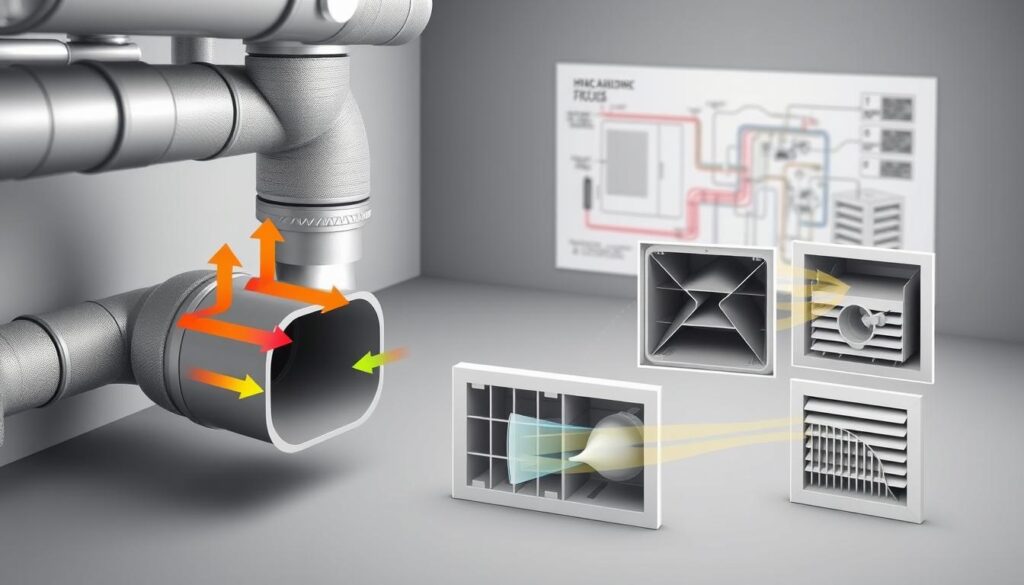
Spotting air flow issues in your HVAC system early can prevent expensive fixes and keep it running smoothly. Static pressure testing helps find problems before they get worse.
Fixing air distribution problems starts with knowing the signs. These signs can be small temperature changes or big performance issues.
- Uneven room temperatures
- Weak air output from vents
- Increased energy bills
- Unusual noises from ductwork
- Persistent dust accumulation
Your HVAC system needs good air flow to work right. Blocked vents, leaky ductwork, and systems that are too small can make your home uncomfortable and waste energy.
“A well-maintained HVAC system is the key to consistent home comfort and lower energy costs.” – HVAC Professional
| Problem Indicator | Potential Cause | Recommended Action |
|---|---|---|
| Hot/Cold Spots | Ductwork Leaks | Professional Duct Inspection |
| Weak Airflow | Clogged Filters | Regular Filter Replacement |
| High Energy Bills | System Inefficiency | System Performance Evaluation |
Regular upkeep and professional static pressure testing can catch and fix air flow issues early. Keep an eye on your system’s performance and get expert help when you need it.
Explore Our HVAC Shop
Looking for top-rated HVAC tools, parts, and accessories? Visit our shop and find the perfect solution for your needs.
Visit the ShopProfessional Air Flow Testing Methods
Professional testing methods are the best way to figure out HVAC air flow. They offer detailed insights that go beyond what homeowners can do. These methods ensure your HVAC system works at its best.
Testing air flow needs special skills and tools. HVAC experts use these to find and fix small problems. They can spot issues that are hard to see.
Balometer Testing: Measuring Grille Air Flow
Balometer testing is key for checking air flow at grilles. It involves:
- Using a calibrated hood over vents
- Measuring air volume in cubic feet per minute (CFM)
- Finding blockages or imbalances in air flow
Traverse Testing for Duct Assessment
Traverse testing looks at air movement in ducts. HVAC pros use probes to check velocity and volume at different spots. This gives a full view of how the system is doing.
Digital Manometer Applications
Digital manometers are the latest in HVAC air flow testing. They measure:
- Static pressure
- Air velocity
- Pressure differences in system parts
“Precision is the key to understanding your HVAC system’s true performance.” – HVAC Engineering Professionals
These methods might seem complicated. But they are vital for keeping your HVAC system running well and your home comfortable.
Calculating CFM in HVAC Systems
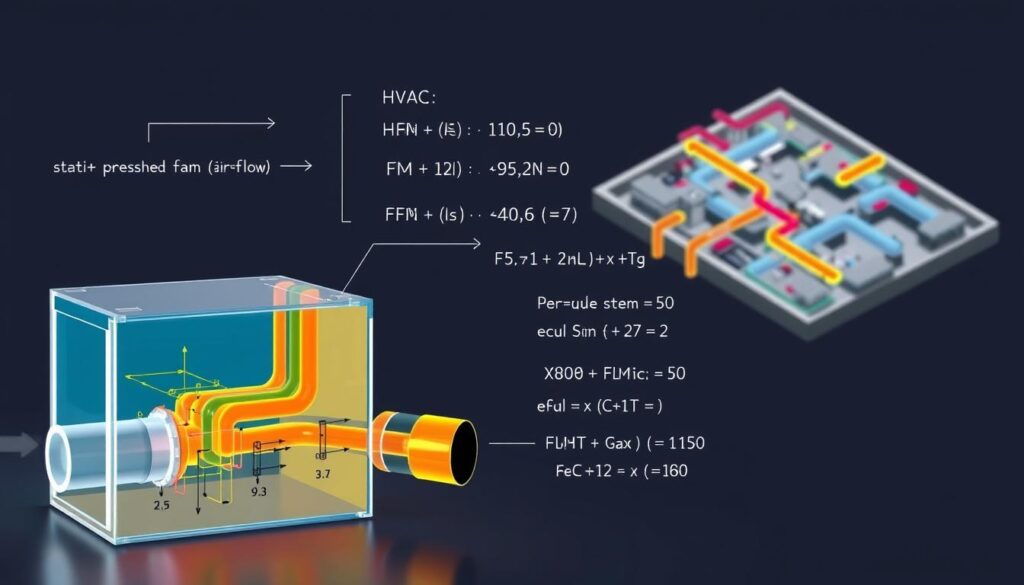
Knowing how to calculate hvac cfm is key for keeping your home comfortable. Cubic Feet per Minute (CFM) shows how much air your HVAC system moves. This affects your comfort and how much energy you use.
Measuring air flow in hvac systems involves several important factors. The main way to figure out CFM is by using a simple method. It looks at a few things:
- Duct cross-sectional area
- Air velocity
- System design specifications
The basic CFM formula is: CFM = Duct Area × Air Velocity. HVAC experts use special tools for exact measurements. These include:
- Digital anemometers
- Airflow hoods
- Manometers
Different rooms and systems need different CFM calculations. A typical home might need 1 CFM per square foot. But, this can change with ceiling height, insulation, and local weather.
Getting CFM right helps avoid hot and cold spots, saves energy, and keeps air quality good.
To get the best results, talk to a professional HVAC technician. They can do detailed air flow tests and give advice for your home’s needs.
Explore Our HVAC Shop
Looking for top-rated HVAC tools, parts, and accessories? Visit our shop and find the perfect solution for your needs.
Visit the ShopAir Balance Techniques for Optimal Flow
To get the best air flow in your HVAC system, you need the right air balance techniques. It’s key to check your ductwork for airflow. This ensures your home stays comfy and your system works well.
Duct System Evaluation
Start by checking your HVAC system from top to bottom. Look for:
- Leaks and seal integrity
- Obstructions in ductwork
- Proper insulation
- Consistent duct sizing
Register and Grille Adjustment
Adjusting your system’s air balance is all about tweaking the registers and grilles. By making smart changes, you can make your home’s different areas more comfortable. Here’s how:
- Measure airflow at each register
- Find spots where the temperature is off
- Adjust the dampers
- Check if the air flow is better
Zone Balancing Procedures
For top-notch HVAC air balance, you need to manage each zone carefully. Here’s a good plan:
| Zone | Recommended Action | Expected Outcome |
|---|---|---|
| Upper Floors | Increase Airflow | Balanced Temperature |
| Basement | Reduce Airflow | Prevent Overcooling |
| Living Areas | Optimize Damper Settings | Consistent Comfort |
Proper air balancing is not just about comfort—it’s about creating an efficient, responsive HVAC system that saves energy and reduces wear on your equipment.
Troubleshooting Air Distribution Issues
Fixing air distribution problems is key to keeping your HVAC system running well. You need a step-by-step plan to find and fix issues that affect your home’s comfort and energy use.
Some signs show you might have air distribution problems:
- Rooms with uneven temperatures
- Strange sounds from air vents
- Less air flow in certain spots
- Higher energy bills without reason
Static pressure testing hvac systems can find the main causes of these problems. Experts use special tools to check air pressure in your ducts. This shows if there are blockages or design issues that limit airflow.
Here are important steps for fixing these issues:
- Check air filters for dirt
- Look for leaks or blockages in ductwork
- Make sure register and return air openings are right
- Measure air speed at different spots
If you can’t fix it yourself, getting help from an HVAC expert is a good idea. They can do detailed static pressure testing and suggest fixes to get your system working right again.
Remember: Regular maintenance stops expensive repairs and keeps your home comfortable.
Explore Our HVAC Shop
Looking for top-rated HVAC tools, parts, and accessories? Visit our shop and find the perfect solution for your needs.
Visit the ShopMaintaining Proper Air Flow in Residential Systems
Keeping your home’s HVAC system in top shape is key. Regular checks and maintenance are vital. Testing your HVAC airflow helps your system work better. This way, you avoid problems and make your equipment last longer.
It’s important to keep an eye on your air handler’s flow rate. If you don’t, your system might not work as well. This can cause higher energy bills and even system failures.
Establishing a Regular Maintenance Schedule
Make a detailed plan for keeping your HVAC system in good shape. This should include:
- Quarterly visual inspections of HVAC components
- Bi-annual professional system check-ups
- Monthly air filter assessments
- Annual ductwork cleaning and evaluation
Filter Management Best Practices
Good filter management is key for healthy air flow. Here are some tips:
- Check filters monthly
- Replace standard filters every 90 days
- Use high-quality filters rated for your specific system
- Consider upgrading to HEPA filters for improved air quality
Focus on HVAC airflow testing and a solid maintenance plan. This ensures your system works well, saves energy, and keeps your home comfortable.
Pro Tip: Regular maintenance can improve your HVAC system’s efficiency by up to 15% and extend its operational life by several years.
Advanced Air Flow Measurement Technologies
The world of air flow testing has changed a lot. New technologies now help us understand HVAC air flow better. These systems use smart sensors and monitoring tools to give us deep insights into air flow.
Wireless sensors are changing the game in air flow measurement. They track air movement in real-time. This means we can spot problems right away.
- Smart vents with integrated sensors
- Automated air balancing systems
- Digital monitoring platforms
- AI-powered predictive maintenance tools
Artificial intelligence is taking air flow testing to new heights. Machine learning can predict air flow problems before they happen. This lets us manage our systems better.
| Technology | Key Benefits | Performance Impact |
|---|---|---|
| Wireless Airflow Sensors | Real-time monitoring | Immediate issue detection |
| AI Predictive Systems | Proactive maintenance | Reduced system downtime |
| Smart Vent Technology | Dynamic airflow adjustment | Enhanced energy efficiency |
As HVAC tech keeps getting better, these new methods are the future. They help us make our systems work better, save energy, and keep our homes comfy.
Conclusion
Knowing how to check HVAC air flow is key for a comfy and efficient home. This guide shows you how to make your HVAC system work better. You can improve its performance and function.
Using HVAC air balance techniques is vital for top system performance. Regular checks and upkeep can cut energy costs and boost air quality. It also makes your heating and cooling last longer. Your efforts will make your home more comfortable and reliable.
This guide gives you the tools and knowledge to spot problems and fix them. You can do simple tasks or get help from pros. Either way, you’ll make your home more comfy and save energy.
Managing air flow well is a continuous job. Keep an eye on your HVAC system and use what you’ve learned. This way, you’ll keep your home comfortable, efficient, and well-maintained for years.