
Affiliate Disclosure
HVAC Guide Guys is a participant in the Amazon Services LLC Associates Program, an affiliate advertising program designed to provide a means for sites to earn advertising fees by advertising and linking to Amazon.
Have you ever looked up at your ceiling and wondered why those bulky metal tubes have to disrupt your beautiful interior design?
Exposed ductwork presents a common challenge for many homeowners. These visible systems can clash with your carefully planned decor and detract from your space’s aesthetic appeal. Finding effective solutions matters for both visual harmony and functional performance.
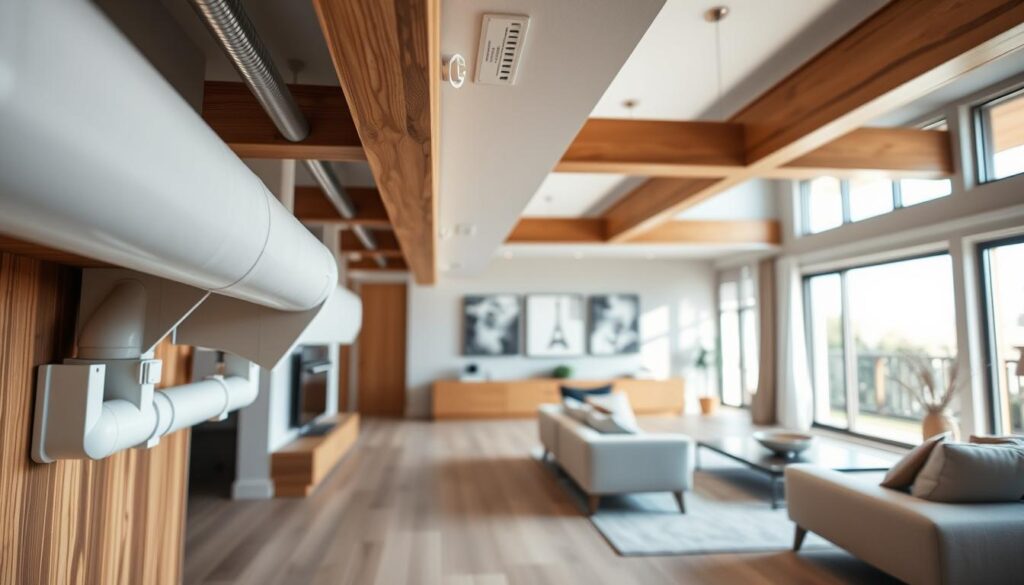
This comprehensive guide walks you through proven methods for concealing ductwork throughout your residence. Whether you’re remodeling a bedroom or finishing a basement, understanding proper concealment techniques can transform your living environment.
The article covers everything from simple painting approaches to more complex soffit installations. You’ll discover multiple options based on your budget, skill level, and specific situation. Proper concealment isn’t just about appearance—it also involves maintaining energy efficiency and ensuring adequate airflow.
By the end of this guide, you’ll have a clear understanding of which method works best for your unique space. You’ll learn how to achieve a seamless, professional finish that enhances your home’s overall look.
Key Takeaways
- Exposed ductwork disrupts interior design and affects room aesthetics
- Multiple concealment methods exist for different budgets and skill levels
- Proper concealment maintains HVAC system efficiency and airflow
- Solutions range from simple painting to professional soffit installations
- Consider both visual appeal and functional requirements when planning
- Coordination with contractors ensures successful project outcomes
- The right approach transforms your space with a seamless finish
Table of Contents
Understanding the Importance of Concealing Ductwork
Concealing your home’s mechanical systems offers benefits that extend far beyond visual appeal. Proper integration creates a cohesive environment while optimizing performance.
Enhancing Home Aesthetics
Visible mechanical components create an industrial appearance that disrupts your interior harmony. Even well-designed spaces feel incomplete when these elements remain exposed.
Covering these systems transforms utilitarian areas into welcoming environments. Basements particularly benefit from this approach, gaining a finished, organized look.
Protection from dust accumulation and potential pest intrusion becomes another advantage. Enclosed systems maintain better air quality throughout your living space.
Improving Energy Efficiency
Research reveals significant energy implications for exposed mechanical components. Systems in unconditioned areas waste approximately 20% of heating and cooling output.
Proper concealment within conditioned spaces dramatically reduces this loss. Combined with adequate insulation, this approach can lower your utility bills substantially.
Maintaining proper airflow ensures consistent temperatures throughout your home. This consistency improves comfort while reducing energy consumption.
| Feature | Concealed Systems | Exposed Systems |
|---|---|---|
| Visual Appeal | Seamless integration | Industrial appearance |
| Energy Efficiency | Reduced heat loss/gain | 20% energy waste |
| Air Quality | Protected from contaminants | Vulnerable to dust |
| System Protection | Barrier against damage | Exposed to elements |
Explore Our HVAC Shop
Looking for top-rated HVAC tools, parts, and accessories? Visit our shop and find the perfect solution for your needs.
Visit the ShopHow to Hide HVAC Ducts: Techniques and Best Practices
Your home’s architectural blueprint holds the key to choosing the right duct concealment strategy. Consider ceiling height, floor plan, and budget when evaluating your options.
Ideal locations keep mechanical systems within your home’s conditioned envelope. Insulated basements, sealed crawlspaces, and conditioned attics offer maximum energy efficiency.
Selecting the Right Method for Your Home
Two-story homes benefit from open-web floor trusses. This approach allows ductwork to run between floors while maintaining proper airflow.
Multi-story layouts require careful planning. Central mechanical rooms need coordination between trades during installation.
“Proper air-sealing before installation prevents energy loss and maintains system performance.”
Using Air-Sealing and Insulation Effectively
Duct chases demand airtight barriers before system installation. Materials like drywall, plywood, or OSB with sealed seams create effective enclosures.
Professional contractors emphasize sealing all duct seams with mastic. This practice ensures adequate airflow to remote registers.
Proper insulation around concealed systems maintains temperature control. It prevents condensation and boosts overall efficiency.
| Consideration | Single-Story Home | Multi-Story Home |
|---|---|---|
| Best Location | Conditioned attic | Floor trusses |
| Installation Complexity | Moderate | High |
| Contractor Coordination | Minimal | Essential |
| Future Access | Easy | Challenging |
Successful concealment balances aesthetics with functionality. Your chosen method must allow future access while complying with building codes. Learn more about proper installation techniques in our guide on how to frame around HVAC ducts.
Explore Our HVAC Shop
Looking for top-rated HVAC tools, parts, and accessories? Visit our shop and find the perfect solution for your needs.
Visit the ShopDesign Options for Duct Concealment in Various Spaces
Modern homes offer numerous architectural solutions for seamlessly integrating ductwork into your ceiling plan. Different room configurations demand specific approaches that balance aesthetics with functionality.
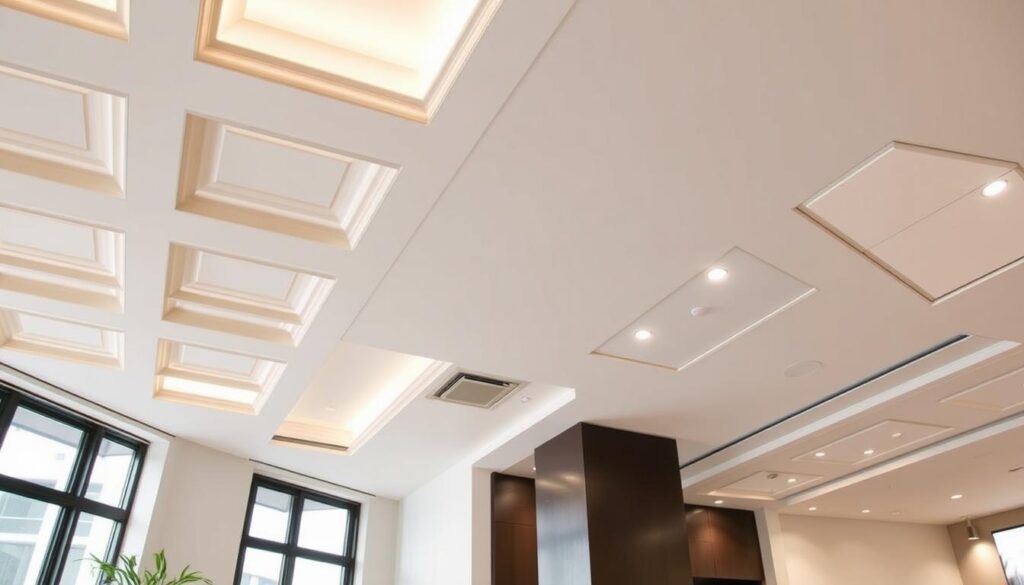
The right concealment method transforms your space while maintaining proper airflow. Consider your ceiling height and room layout when selecting the best approach.
Ceiling, Soffits, and Suspended Ceiling Solutions
Soffits represent one of the most popular ways to conceal mechanical systems. They work particularly well in single-story homes with central hallways.
Homes with 9-foot ceilings provide ample space for dropped sections. This maintains comfortable proportions while hiding the necessary components.
Suspended ceilings using lightweight metal grid systems create neat, finished looks. Acoustic tiles offer both visual appeal and sound control benefits.
“Custom plenum trusses with integral chases eliminate the need for site-built soffits.”
Creative Approaches for Basements and Open Spaces
Basements benefit greatly from creative concealment strategies. Suspended ceilings provide easy access to systems above while creating polished finishes.
Faux beams create the illusion of structural rafters while strategically concealing components. Coffered ceiling designs add architectural interest through grid patterns.
Drop ceilings offer material versatility including wood, metal, or fabric tiles. This allows matching your existing décor while maintaining functionality.
Always consider how joists and existing framing interact with your layout. Proper planning ensures structural integrity while achieving your design vision.
DIY Approaches to Covering Exposed Ducts
Many homeowners discover that exposed ductwork presents an excellent opportunity for creative DIY projects. These hands-on methods provide cost-effective solutions while allowing personal customization.

Basic carpentry skills and common materials can transform unsightly mechanical systems into integrated design elements. Both permanent enclosures and simple finishing techniques offer practical alternatives.
Building Custom Boxes and Enclosures
Constructing framed enclosures around your ductwork creates a clean, finished appearance. Start by measuring the dimensions of your metal components carefully.
Cut studs to create a sturdy frame that attaches securely to adjacent surfaces. This framework provides the structure for your finishing materials.
Drywall or wood paneling completes the enclosure with a professional look. Consider incorporating access panels for future maintenance needs.
These custom boxes can double as functional storage solutions. Built-in shelving maximizes your room’s utility while concealing mechanical elements.
Simple Painting and Finishing Tricks
Painting exposed metal components offers a straightforward approach to integration. Begin with thorough cleaning to remove dust and debris.
Protect vents and openings with plastic sheeting before starting. Oil-based primer ensures proper adhesion to the metal surface.
Allow adequate drying time between primer and topcoat applications. Choose oil-based paint in colors that match your existing decor.
Apply paint using even strokes with brushes, rollers, or sprayers. This technique creates uniform coverage that blends components into your space.
Paneling represents another effective option for basement areas. Materials like wood, PVC, or vinyl install quickly and accept paint or stain easily.
Explore Our HVAC Shop
Looking for top-rated HVAC tools, parts, and accessories? Visit our shop and find the perfect solution for your needs.
Visit the ShopCreative Solutions for Unique Duct Challenges
When mechanical components disrupt your closet organization, creative solutions become essential for maintaining both function and style. These specialized situations demand approaches beyond standard concealment methods.
Tackling Closet HVAC Eyesores
Closet installations often feature bulky metal boxes and large pipes occupying significant space. Professional designers create custom panel enclosures that frame around these elements.
Companies like California Closets integrate shelving and hanging sections that work around the mechanical components. This approach maintains accessibility while creating a cohesive appearance.
Integrating Panels, Molding, and Custom Soffits
Decorative panels combined with crown molding offer an elegant concealment method. Construct these elements from wood, drywall, or PVC materials.
Custom soffits frame out exposed components with various styles and finishes. Wall chases provide flush-mounted options for complete integration.
Acoustic panels serve dual purposes by improving room sound quality. Slat walls offer customizable basement solutions that can be painted to match your decor.
Coordinating with Contractors and Designers
Professional guidance ensures your concealment method maintains proper airflow and access. Early coordination prevents conflicts between trades during installation.
Proper planning addresses timing considerations for air-sealing and insulation work. This coordination results in cohesive solutions rather than afterthought fixes. Explore innovative design approaches for challenging spaces.
Explore Our HVAC Shop
Looking for top-rated HVAC tools, parts, and accessories? Visit our shop and find the perfect solution for your needs.
Visit the ShopConclusion
Your journey toward a more beautiful and efficient home concludes with a clear understanding of ductwork concealment. The best solutions always balance visual appeal with practical performance.
You have multiple options to achieve this balance. Simple painting projects and complex soffit installations both offer effective ways to integrate these systems. Your choice depends on budget, skill level, and the specific room layout.
Placing ducts within your home’s conditioned space delivers significant benefits. You may downsize your HVAC equipment, enjoy more consistent temperatures, and see lower energy bills. These long-term savings often justify the initial investment and coordination work.
For the best results, plan your concealment project early. Coordinate with contractors to ensure proper airflow, insulation, and future access. This is especially important for basement areas, where strategic concealment techniques can transform the entire space.
Ultimately, a well-executed plan creates a seamless finish that enhances your living environment. Your home will feel more comfortable, look more polished, and operate more efficiently.