
Affiliate Disclosure
HVAC Guide Guys is a participant in the Amazon Services LLC Associates Program, an affiliate advertising program designed to provide a means for sites to earn advertising fees by advertising and linking to Amazon.
Do HVAC Register Boosters Work? As the warm summer sun shines through your windows, you might notice uneven temperatures in your home. Bedrooms stay cool, but living areas feel stuffy. This is a common problem many face.
HVAC register boosters aim to fix this by improving airflow. They promise to make your home’s climate control more efficient. But do they live up to the hype? This guide will dive into the world of HVAC register boosters to help you decide if they’re right for you.

Key Takeaways
- HVAC register boosters are designed to improve airflow and alleviate hot/cold spots in your home.
- Proper installation and addressing underlying HVAC issues are key for optimal booster performance.
- Register boosters can be a cost-effective solution, but may not solve severe air distribution problems.
- Professional HVAC consultation may be necessary for complex airflow issues.
- Regular maintenance of the HVAC system and register boosters is important for sustained performance.
Table of Contents
Understanding HVAC Airflow Basics and Common Issues
Having the right hvac airflow is key to a cozy and energy-saving home. Yet, many face uneven heating or cooling, causing temperature differences in rooms. These hvac airflow problems can come from poor insulation, home layout, blocked vents, or old HVAC systems.
Types of Airflow Problems in Homes
Common hvac airflow issues include:
- Hot or cold spots in certain rooms
- Rooms that feel stuffy or lack proper air circulation
- Inconsistent temperatures between different areas of the home
- Difficulty maintaining a comfortable and consistent temperature
Impact of Poor Air Distribution
Poor hvac airflow can cause several problems, such as:
- Higher energy use as the HVAC system works harder
- Less comfort and satisfaction for home occupants
- More wear and tear on the HVAC system
Signs of Inadequate HVAC Performance
Signs that your HVAC system isn’t working well include:
- Often adjusting the thermostat to stay comfortable
- Rooms that are always too hot or too cold, no matter the setting
- Higher energy bills without better comfort
Fixing these hvac airflow optimization issues is vital for better home comfort and efficiency. Knowing the causes and signs of poor air distribution helps homeowners improve their HVAC system’s performance.
Explore Our HVAC Shop
Looking for top-rated HVAC tools, parts, and accessories? Visit our shop and find the perfect solution for your needs.
Visit the ShopWhat Are HVAC Register Boosters?
HVAC register boosters are small devices that help improve airflow from vents. They work with your HVAC system to spread air evenly in your home. This helps fix temperature problems and makes your home more comfortable.
These fans, also known as vent boosters, fit right over or inside your vents. They give your HVAC system a boost without the high cost of new systems. By placing them in rooms with bad air flow, you can make sure air is distributed well.
| Key Features of HVAC Register Boosters | Benefits |
|---|---|
|
|
Understanding HVAC register boosters can solve common air flow problems. They make your home more comfortable. These devices are a simple and effective way to improve your home’s heating and cooling without big renovations.
Explore Our HVAC Shop
Looking for top-rated HVAC tools, parts, and accessories? Visit our shop and find the perfect solution for your needs.
Visit the ShopDo HVAC Register Boosters Work?
HVAC register boosters are popular for fixing uneven airflow and temperature in homes. But do they really work? Let’s look at real-world data, efficiency, and what users say to find out.
Real-World Performance Data
Studies show that HVAC register boosters can improve airflow in certain rooms. They push more air through vents, helping rooms with poor circulation. But, how well they work depends on your home and the installation.
Efficiency Measurements
Used right, HVAC register boosters can save energy. They make your heating and cooling system work better, which can lower your bills. They can cut energy use by 5-10% in some homes.
User Experience Reports
People who got HVAC register boosters say their homes feel better. Rooms that were too hot or cold now stay comfortable. But, remember, they might not fix all HVAC problems.
In summary, HVAC register boosters can help with airflow and energy use. But, how well they work depends on your home and how they’re installed. Always think about your needs and options before making a choice.
Types of Register Booster Fans Available
Hvac register deflectors and ac register boosters are great for better air flow and temperature in your home. They are called register booster fans and come in two main types: inline fans and register fans.
Inline fans fit inside the ductwork, perfect for big, complex duct systems. They boost airflow all over the HVAC system. Register fans, however, go right on vents on floors or walls. They’re great for fixing specific air flow issues.
Both types help solve common HVAC problems like uneven temperatures and poor air flow. Many fans have cool features like built-in thermostats, different speed settings, and remote controls for easy use.
Register booster fans are a smart, affordable way to make your HVAC system work better. By placing them right, you can make sure every room gets the air it needs.
“Investing in a quality register booster fan can make a significant difference in the comfort and efficiency of your home’s HVAC system.”
When picking a register booster fan, think about noise, power use, and how easy it is to install. The right fan can improve air flow, control temperature better, and boost your HVAC system’s performance.
Explore Our HVAC Shop
Looking for top-rated HVAC tools, parts, and accessories? Visit our shop and find the perfect solution for your needs.
Visit the ShopBenefits and Limitations of Register Boosters
Register boosters, also known as duct booster fans, can make your home more comfortable. They improve air flow and reduce temperature differences. This can increase HVAC output and HVAC airflow in your home. They might also help your HVAC system work better, saving energy and money on bills.
Advantages for Home Comfort
Register boosters are great for fixing uneven air flow and temperature issues. They direct more air to certain rooms, making your home more comfortable everywhere.
Potential Drawbacks
- Register boosters might not fix deep HVAC problems and are just a quick fix.
- The extra noise from the fan could be a problem for some homeowners.
- Installing or sizing the booster fan wrong can make your system less efficient and unsafe.
Cost-Benefit Analysis
Thinking about register boosters? Weigh the cost against the benefits. They’re cheaper and easier to install than big HVAC changes, costing under $80 each. But, think about long-term savings and comfort. Sometimes, bigger HVAC changes are needed.
| Feature | Benefit | Potential Drawback |
|---|---|---|
| Improved Air Distribution | Enhances comfort and temperature consistency | May not address underlying HVAC issues |
| Energy Efficiency | Potential reduction in energy consumption and utility bills | Noise from booster fan |
| Affordability | Relatively inexpensive compared to other HVAC upgrades | Improper installation or sizing can decrease efficiency |
In summary, register boosters can be a smart choice for better home comfort. They improve air flow and HVAC output. But, think about the pros and cons to get the best for your home.
Installation and Placement Guidelines
Proper installation and placement of HVAC register boosters are key for best performance. Inline fans need a pro for ductwork, but homeowners can handle register fans.
The right spot for a booster fan depends on your ductwork’s layout and airflow needs. Make sure the fan fits your duct size. Also, think about noise and power source when picking a fan.
- Ensure the booster fan is the right size for your ductwork. The fan should fit snugly and securely into the register or ductwork opening.
- Consider the noise level of the booster fan, especially if it’s installed in a living space. Some fans may be louder than others, so pay attention to the decibel rating.
- Decide whether you need a fan that runs on electricity or one that’s powered by a battery. Electrical fans may be more convenient, but battery-powered options can be easier to install in some cases.
- Follow the manufacturer’s instructions carefully during the installation process to ensure proper airflow and prevent any potential issues.
By taking the time to properly install and place your HVAC register booster, you can maximize its effectiveness in improving airflow and enhancing your home’s overall comfort.
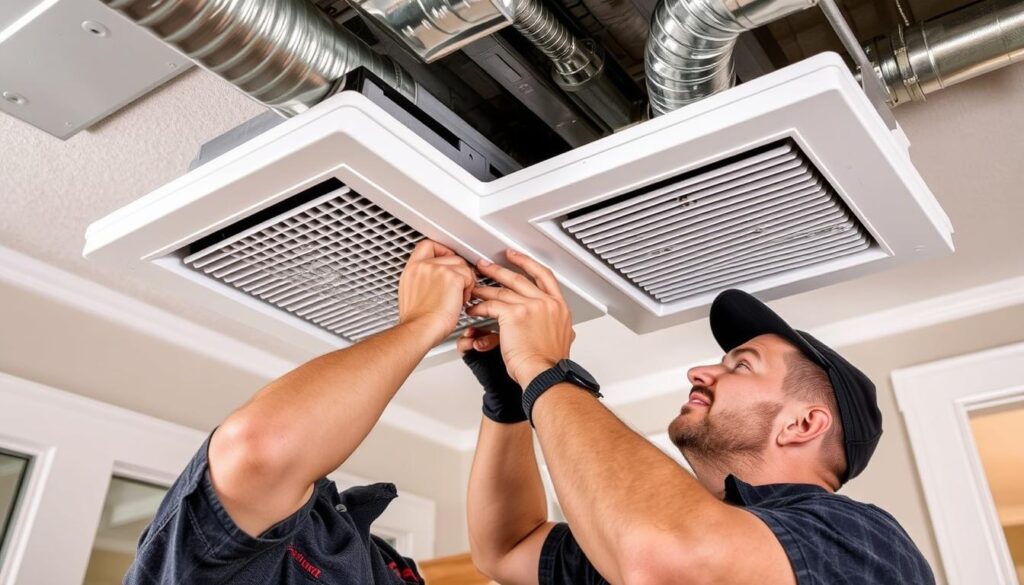
“Installing a register booster fan correctly is crucial for its success. Following the manufacturer’s guidelines and considering factors like ductwork size and noise level will ensure you get the most out of your investment.”
Explore Our HVAC Shop
Looking for top-rated HVAC tools, parts, and accessories? Visit our shop and find the perfect solution for your needs.
Visit the ShopRegister Boosters vs Alternative Solutions
Homeowners often face a choice between HVAC register boosters and other solutions for uneven airflow and temperature. Register boosters are a quick and affordable fix. But, other options like sealing air leaks or adding return air vents might be better for some issues.
Comparing Cost-Effectiveness
Register boosters are cheaper than big HVAC upgrades or ductwork changes. A single register booster fan can cost under $80. This makes them a good choice for improving airflow in certain rooms. Mid-duct fans, another option, cost between $30 and $150, depending on size and features.
Long-term Performance Considerations
Thinking about the long-term, register boosters might not solve the problem as well as other solutions. Sealing air leaks or installing dampers can last longer and improve comfort and energy use. These options can fix the root cause of airflow issues.
Choosing between register boosters and other solutions depends on your home’s needs and your budget. It’s wise to talk to an HVAC expert to find the best solution for you.
Maintenance and Care Requirements
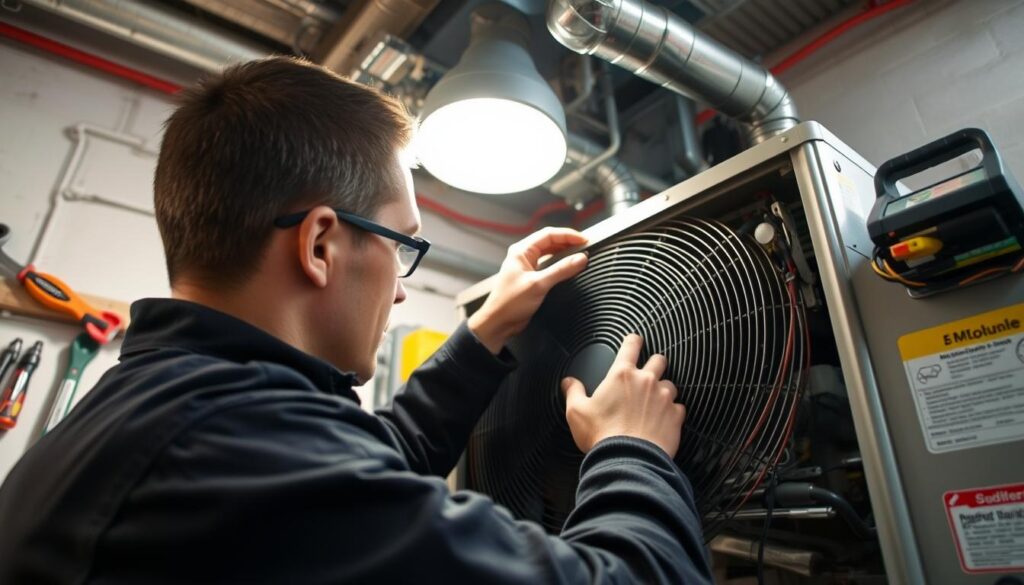
To keep your HVAC register boosters working well, regular maintenance is key. Clean the fan blades and vents often to stop dust and debris from building up. This helps keep the air flowing smoothly and boosts efficiency.
For inline fans, check the ductwork connections regularly. Make sure they are sealed tightly to avoid air leaks. This step is crucial for maintaining good airflow.
Register booster fans might need new filters sometimes. These filters catch airborne particles, keeping the air clean. Replacing them as the manufacturer suggests helps your register booster last longer and work better.
Looking after your register boosters well is vital for comfort and energy savings. A little time each day for upkeep keeps them running efficiently. This way, you get the most out of your HVAC system.
“Regular maintenance is the key to getting the most out of your register boosters and ensuring they continue to deliver the improved airflow and temperature control you’ve come to rely on.”
Keep in mind, the care your register booster needs can vary. Always check the product’s instructions for the best way to care for it.
Explore Our HVAC Shop
Looking for top-rated HVAC tools, parts, and accessories? Visit our shop and find the perfect solution for your needs.
Visit the ShopCost Considerations and ROI
Improving your home’s energy efficiency with HVAC register boosters is a smart move. They cost between $30 and $200 each. Yet, the long-term savings make them a worthwhile investment.
The main reason for the savings is better HVAC system efficiency. Register boosters improve airflow and fix imbalances. This leads to lower energy use and bills. The energy efficiency ROI depends on your home’s issues, local energy prices, and how well the booster works.
Initial Investment Analysis
The cost of register boosters includes the units and any installation fees for inline fans. The initial cost might seem small, but think about the long-term savings. This helps decide if the hvac cost savings are worth it.
Long-term Savings Potential
Register boosters’ real value is in making your HVAC system more efficient. This means using less energy and paying less for utilities over time. By fixing airflow problems, they help your system work better, saving you money each year.
Choosing register boosters should be a careful decision. Consider your home’s needs, energy use, and potential savings. By comparing the initial cost to the expected energy efficiency roi, you can see if they’re right for you.
When to Consider Professional HVAC Solutions Instead
HVAC register boosters can help with air circulation and temperature in some homes. But, when they don’t solve airflow problems, it’s time for professional hvac services. This is especially true for system upgrades when boosters aren’t enough.
Severe ductwork issues, old HVAC systems, or uneven temperatures in rooms suggest a need for a pro. Problems like bad insulation, wrong-sized HVAC units, or ductwork problems are beyond what boosters can fix.
Inadequate insulation causes uneven heating or cooling. This lets heat out in winter and in during summer. Rooms on higher floors or far from the HVAC system often have more temperature issues.
Blocked or leaking vents, old or small HVAC systems, house layout, window types, and sun exposure also play a role. These factors can make heating and cooling harder.
“Duct booster fans do not improve energy efficiency and can potentially harm it by requiring electricity to run and making the HVAC system work harder.”
A professional HVAC technician can find the real problems and suggest the best fixes. They might recommend new ductwork, insulation, or even a new HVAC system. This ensures your home heats and cools well and saves energy.
Register boosters might help a bit, but for serious heating and cooling problems, you need professional hvac services and comprehensive system upgrades.
Conclusion
HVAC register boosters can greatly improve your home’s airflow and comfort. They are a cost-effective way to fix minor airflow issues. This helps balance temperatures and gets rid of hot or cold spots.
These fans can also make your home more energy-efficient. This could lead to lower utility bills. But, their effectiveness depends on your home’s specific conditions and HVAC challenges.
Register boosters are a good addition to your hvac airflow solutions. Yet, they should be part of a bigger plan to improve your home’s home comfort optimization. Sometimes, you might need a professional assessment or more upgrades to fix bigger problems.
In summary, HVAC register boosters can be a great help for better indoor comfort and energy use. But, they need to fit your specific needs and your home’s HVAC system. Working with skilled HVAC pros can help you find the best way to make your home more comfortable and efficient.