
Affiliate Disclosure
HVAC Guide Guys is a participant in the Amazon Services LLC Associates Program, an affiliate advertising program designed to provide a means for sites to earn advertising fees by advertising and linking to Amazon.
Ever wondered why your AC isn’t cooling like it should? The answer might be in superheat HVAC measurement. It’s a key technique that can save you a lot of money on repairs.
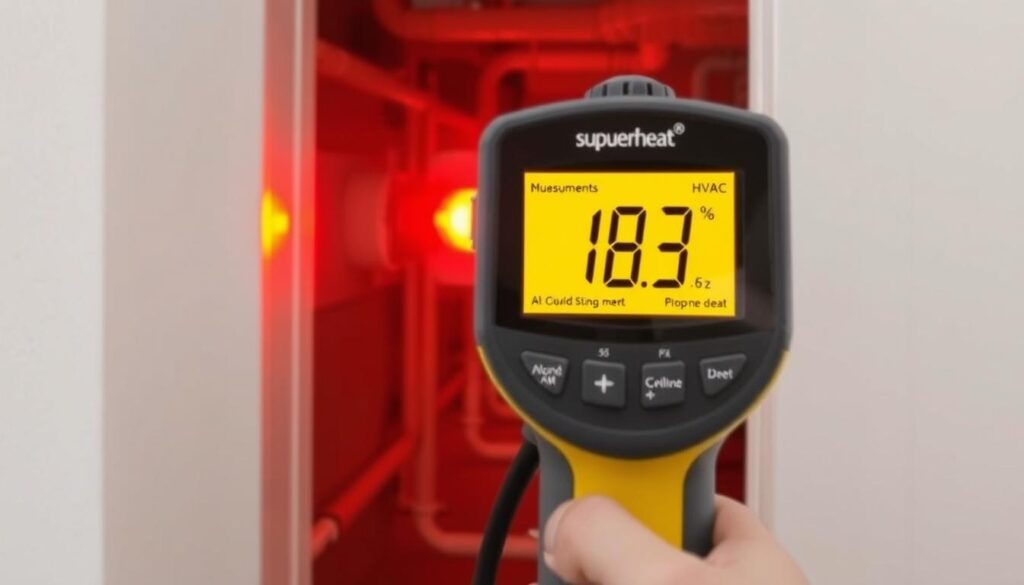
HVAC superheat measurement is more than just a technical task. It’s a precise way to check your cooling system’s health. Both technicians and homeowners can learn to get superheat readings with the right tools and knowledge.
This guide will show you six easy steps to measure superheat accurately. This ensures your AC works well and saves you from expensive repairs. Whether you’re a pro or just curious, knowing about superheat is key to keeping your cooling system in top shape.
Key Takeaways
- Superheat measurement is key for checking HVAC system health
- Getting accurate readings can stop costly compressor damage
- Mastering superheat measurement in six simple steps is possible
- Understanding superheat is important for both fixed and expansion valve systems
- Proper measurement needs specific tools and techniques
Table of Contents
Understanding Superheat in HVAC Systems
Knowing about superheat in HVAC systems is key to keeping your system running well. Superheat affects how your cooling system works and lasts. It’s important for its performance and life.
What is Superheat and Why It Matters
Superheat is when refrigerant vapor is hotter than its boiling point. It’s like water turning to steam. Any extra heat is superheat. This tells you how your refrigerant is doing in your HVAC system.
- Proper superheat levels protect your compressor from damage
- Ensures only vapor (not liquid) returns to the compressor
- Helps maintain optimal system efficiency
The Relationship Between Saturation Temperature and Superheat
Saturation temperature changes with system pressure. To figure out superheat, you need both pressure and temperature. The magic happens where refrigerant transitions from liquid to vapor.
| Superheat Level | System Impact |
|---|---|
| Below 5°F | Risk of liquid refrigerant returning to compressor |
| 5-10°F | Optimal performance range |
| Above 20°F | Reduced cooling capacity and efficiency |
How Superheat Affects System Performance
Your HVAC system’s performance depends on the right superheat levels. Wrong measurements can cause more energy use, less cooling, and compressor problems. Understanding superheat helps keep your system efficient and avoids expensive fixes.
Explore Our HVAC Shop
Looking for top-rated HVAC tools, parts, and accessories? Visit our shop and find the perfect solution for your needs.
Visit the ShopEssential Tools for Measuring Superheat in Air Conditioning
To check superheat values, you need specific tools. These tools help you diagnose and maintain your air conditioning system well.
Here are the key tools for checking superheat values:
- Manifold Gauges: Choose between mechanical or digital versions
- Digital gauges can automatically calculate superheat
- Mechanical gauges provide basic pressure readings
- Temperature Measuring Devices
- K-type thermocouples
- Clamp-type temperature probes (recommended for precision)
- Accuracy within +/- 1°F is key
- Psychrometers: For measuring wet and dry bulb temperatures
- Pressure-Temperature Charts: To convert pressure readings for different refrigerants
Professional technicians know that quality equipment is vital. Digital tools like modern psychrometers make diagnosing easier by giving instant readings.
Pro Tip: Clamp-type temperature probes offer superior accuracy by directly attaching to copper piping and eliminating ambient air interference.
Choosing the right tools helps you diagnose HVAC system performance fast and accurately. This prevents costly mistakes and ensures your system works at its best.
Identifying Your HVAC Metering Device Type
It’s important to know the type of metering device in your HVAC system. This knowledge helps with accurate superheat charging and ensures your system works well. Different devices need different ways to manage refrigerant.
Your HVAC system uses two main types of metering devices: fixed orifice devices and thermostatic expansion valves (TXVs). Each type is key to controlling refrigerant flow. They also affect your txv superheat setting.
Fixed Orifice Metering Devices: Understanding the Basics
Fixed orifice devices, also known as pistons, have a constant refrigerant flow rate. They have important features:
- Predetermined refrigerant flow based on orifice size
- Less expensive than TXVs
- Require precise superheat charging method
Thermostatic Expansion Valves: Dynamic Refrigerant Control
TXVs offer a more advanced way to manage refrigerant. They adjust refrigerant flow based on system conditions:
- Sensing bulb monitors suction line temperature
- Automatically adjusts valve pin position
- Maintains optimal superheat range between 8-12°F
| Device Type | Flow Regulation | Charging Method |
|---|---|---|
| Fixed Orifice | Constant | Superheat |
| TXV | Dynamic | Subcooling |
Understanding your system’s metering device is key. It helps you use the right charging method. This ensures your HVAC system performs at its best.
Explore Our HVAC Shop
Looking for top-rated HVAC tools, parts, and accessories? Visit our shop and find the perfect solution for your needs.
Visit the ShopHow to Get Superheat HVAC
Measuring superheat in your HVAC system needs precision and careful preparation. This guide will show you how to accurately check your system’s performance. It ensures your cooling system works at its best.
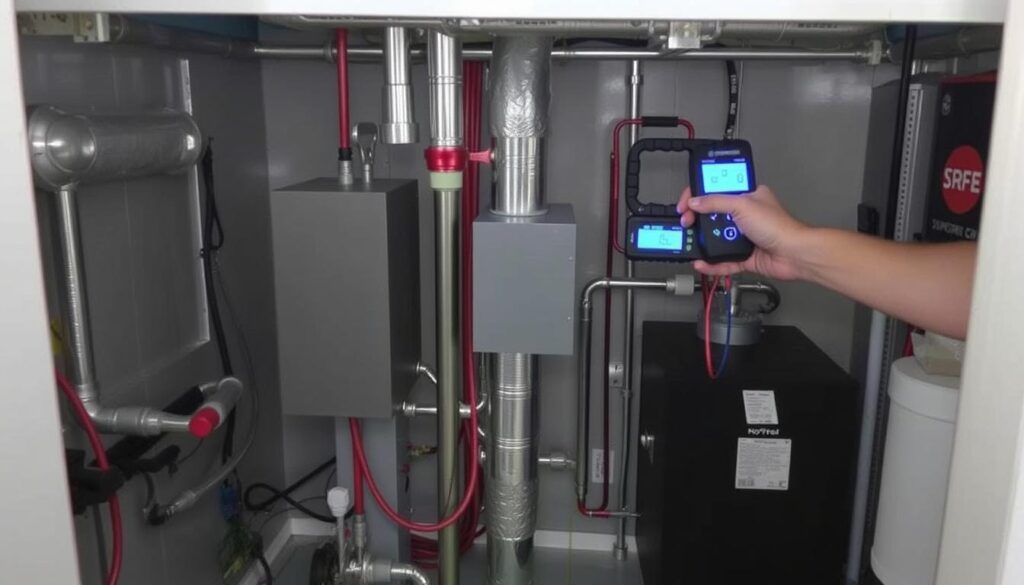
Preparing Your System for Accurate Measurement
To get superheat HVAC readings, start by setting your thermostat to cooling mode. Make sure the target temperature is at least 10°F below the current indoor temperature. This setup helps the system run continuously during measurement.
- Set thermostat to cool mode
- Create a temperature difference of 10°F or more
- Allow system to run for 10-15 minutes
Connecting Manifold Gauges to the Suction Line
Proper gauge connection is key when learning how to get superheat HVAC measurements. Find the suction service valve on your outdoor unit. It’s usually the larger of two valves.
- Remove the valve cap
- Use refrigerant-specific manifold gauges
- Attach low-side (blue) gauge hose
Recording Pressure and Temperature Readings
Accurate superheat measurement needs precise temperature and pressure documentation. Attach a pipe clamp thermocouple to the suction line, about six inches from the service valve.
| Measurement Type | Tool Required | Location |
|---|---|---|
| Suction Line Pressure | Manifold Gauge | Service Valve |
| Suction Line Temperature | Pipe Clamp Thermocouple | 6 inches from Valve |
Pro Tip: Make sure the temperature probe has tight contact with a clean copper pipe section. Wait 2-3 minutes for the probe to stabilize before recording final measurements.
Calculating Superheat Values Using Pressure Temperature Charts
Learning to calculate superheat in HVAC systems is key. It involves converting pressure readings into exact temperatures. This might seem hard, but with the right steps, you can figure out your air conditioning’s superheat quickly.
- Suction line temperature
- Evaporator saturation temperature
First, you’ll convert the system’s suction line pressure to a saturation temperature. You can use two main ways:
- Manifold gauge built-in temperature scale
- Separate pressure-temperature (PT) chart
For instance, with R-22 refrigerant at 76 psi, the saturation temperature is about 45°F. The superheat formula is simple:
Superheat = Suction Line Temperature – Evaporator Saturation Temperature
Here’s a real example: If your suction line temperature is 59°F and the saturation temperature is 45°F, your superheat is 14°F (59°F – 45°F = 14°F).
Pro tip: Modern digital manifold gauges can automatically calculate superheat. This makes the job easier for HVAC pros.
Determining Target Superheat for Your System
Knowing the right superheat levels is key for your HVAC system to work its best. The target superheat varies based on your system’s specific needs and the maker’s guidelines.
Getting accurate superheat readings involves looking at two important temperatures. These are the indoor wet bulb and outdoor dry bulb temperatures. They help figure out the exact superheat target for your air conditioning system.
Using Manufacturer Charging Charts
Manufacturer charts are your best guide for finding the right superheat levels. You can usually find these charts in two main places:
- Inside the condenser’s electrical panel
- In the system’s installation manual
Measuring Critical Temperatures
To find your target superheat, you need to measure temperatures carefully:
- Measure the outdoor dry bulb temperature at the condenser inlet
- Use a psychrometer to find the indoor wet bulb temperature
| Temperature Type | Measurement Location | Measurement Tool |
|---|---|---|
| Outdoor Dry Bulb | Condenser air inlet | Thermometer |
| Indoor Wet Bulb | Return air grille | Psychrometer |
Pro tip: Don’t assume a standard 50% relative humidity. It can make your superheat calculations wrong.
By matching your temperature readings with the manufacturer’s chart, you’ll find the superheat target for your HVAC system. It’s tailored to your system’s unique needs.
Adjusting Refrigerant Charge Based on Superheat Readings
Learning how to adjust the refrigerant in your air conditioning system is key. It helps keep your AC running smoothly. You need to pay close attention and take precise measurements.
To adjust the refrigerant, you must understand its impact on your system. Here’s a simple guide to help you manage the refrigerant levels:
- Check current superheat readings against target values
- Identify whether the system is over or undercharged
- Make gradual adjustments to refrigerant levels
- Monitor system performance during adjustment
If your superheat readings show an overcharged system, you’ll need to remove some refrigerant. On the other hand, if it’s undercharged, you’ll need to add it. Always make small changes:
| Superheat Reading | System Condition | Recommended Action |
|---|---|---|
| Below Target | Overcharged | Remove refrigerant slowly |
| Above Target | Undercharged | Add refrigerant carefully |
Experts suggest using digital manifold gauges for monitoring. These tools let you track superheat values in real-time. This way, you don’t have to keep disconnecting and reconnecting.
Remember: Patience is critical when adjusting refrigerant charge. Rushed modifications can lead to system inefficiency and damage.
By following these steps for adjusting refrigerant, you’ll keep your AC running at its best. This ensures efficient cooling and extends your equipment’s life.
Explore Our HVAC Shop
Looking for top-rated HVAC tools, parts, and accessories? Visit our shop and find the perfect solution for your needs.
Visit the ShopCommon Mistakes When Measuring Superheat and How to Avoid Them
HVAC superheat measurement needs precision and focus. Even skilled technicians can make mistakes that affect system performance. Knowing these common errors can help you get better at measuring superheat and keep your system running well.
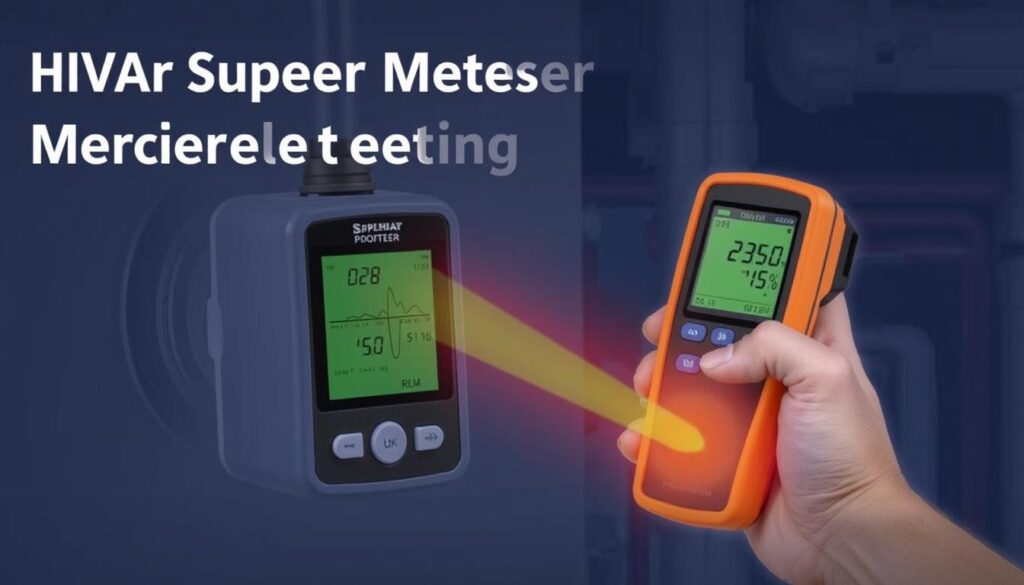
Many mistakes happen when measuring superheat. Spotting and avoiding these errors can make your work more accurate and effective.
Avoiding Inaccurate Temperature Probe Placement
Where you place the temperature probe is key to getting accurate readings. Wrong placement can give you wrong info and even harm your system.
- Don’t rely on the “beer can syndrome” – feeling the pipe temperature
- Use clamp-type temperature probes for consistent readings
- Measure 6 inches from the service valve on a clean pipe section
- Make sure it’s insulated from the air around it
Ensuring Proper System Stabilization Time
Don’t rush when measuring superheat. It’s important to let the system settle before taking readings.
- Wait 10-15 minutes of steady operation before measuring
- Wait 20-30 minutes after adding refrigerant
- Check that pressure and temperature are steady
- Look for consistent airflow
Using Calibrated Equipment for Precise Results
Getting accurate superheat measurements depends on using the right tools. Good equipment helps avoid expensive mistakes.
- Calibrate your tools every year
- Make sure pressure gauges are accurate
- Test temperature probes in ice and boiling water
- Follow the maker’s guidelines for use
By avoiding these mistakes, you’ll make your HVAC system work better, last longer, and be more efficient.
Troubleshooting HVAC Problems with Superheat Measurement
Fixing superheat issues in your HVAC system needs a careful plan. Superheat tests can show you what’s wrong with your cooling system.
When you’re checking for superheat problems, look for a few important signs:
- Low Refrigerant Charge: Shows high superheat and low suction pressure
- Overcharged System: Means low superheat and high suction pressure
- Airflow Restrictions: Causes superheat and system performance to change
- Metering Device Malfunctions: Shows unique superheat readings
Here’s how to tackle superheat problems step by step:
- Make sure you’re using the right way to measure superheat
- Look for any blockages in filters and coils
- Check if the refrigerant levels are right
- See if the metering device is working right
Watch out for sudden changes in superheat, unexpected pressure changes, or if your system isn’t cooling right. Knowing these signs helps you fix problems fast and avoid big repairs.
Superheat measurement is your diagnostic window into the hidden health of your cooling system.
Conclusion
Learning about superheat measurement is key for HVAC pros and homeowners. This guide showed you how to check your air conditioning’s performance. It’s all about precision, the right tools, and knowing refrigeration well.
Superheat measurement is more than just a test. It helps find problems like leaks, blocked airflow, and faulty parts. At first, it might seem hard, but with practice, you’ll get better at it.
Working with refrigerant systems needs special skills. Homeowners should know what HVAC techs do but not try to measure themselves. HVAC techs should keep learning and practicing to get good at superheat measurement.
Your learning on superheat doesn’t stop here. Whether you’re a homeowner or a future HVAC tech, you now have a good start. Always be safe, use quality tools, and ask for help when you need it.