Affiliate Disclosure
HVAC Guide Guys is a participant in the Amazon Services LLC Associates Program, an affiliate advertising program designed to provide a means for sites to earn advertising fees by advertising and linking to Amazon.
Are you looking for a career that’s stable, growing, and makes a difference? Becoming an HVAC professional could be your next big step. The HVAC industry is booming, with a huge demand for skilled technicians in the US.

Working in HVAC is exciting for those who enjoy hands-on tasks. It’s a chance to make a real difference in people’s lives. The US Bureau of Labor Statistics says there will be a 9% job growth by 2033, making it a great time to start.
HVAC technicians keep homes and businesses comfortable. They install and fix complex systems. It’s a rewarding job that’s more than just sitting at a desk.
Key Takeaways
- HVAC offers a recession-resistant career with strong job growth
- Hands-on technical skills are essential for success
- Multiple educational pathways exist for aspiring technicians
- Certification and ongoing training are key
- Competitive salaries and job security are big pluses
Table of Contents
Understanding the Role and Responsibilities of an HVAC Technician
Thinking about a career in heating, ventilation, and air conditioning? It’s key to know what an HVAC technician does every day. Your training will get you ready for a job that keeps places comfy and running smoothly.
HVAC technicians are vital in making sure places are comfortable. They work in homes, offices, and factories. Their job is filled with technical tasks and solving problems.
Daily Responsibilities of an HVAC Professional
What does an HVAC technician do daily? Here’s a peek:
- Installing new heating and cooling systems
- Performing routine maintenance on existing equipment
- Diagnosing system malfunctions
- Repairing or replacing faulty components
- Conducting detailed equipment inspections
Essential Skills and Physical Requirements
To succeed, you need more than just tech skills. Your training will stress the need for a wide range of abilities.
- Mechanical aptitude for understanding complex systems
- Strong problem-solving capabilities
- Excellent customer service skills
- Physical stamina for working in challenging environments
- Ability to work in confined spaces and varying temperatures
HVAC technicians are the unsung heroes who keep our indoor environments comfortable and functional.
Your job will ask for flexibility, technical know-how, and a drive to keep learning. Every day will be different, making your career exciting and varied.
Explore Our HVAC Shop
Looking for top-rated HVAC tools, parts, and accessories? Visit our shop and find the perfect solution for your needs.
Visit the ShopHow to Get Started in the HVAC Field
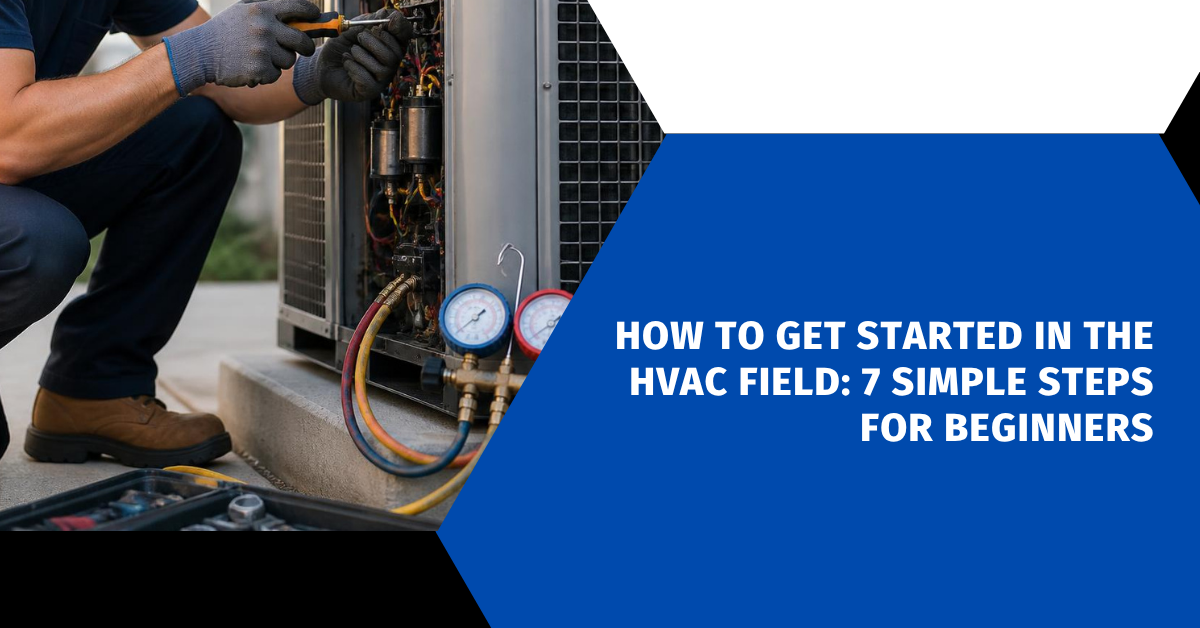
Becoming an HVAC professional is a great career choice for those who love technical and hands-on work. To start, you need to plan carefully and take the right steps.
The HVAC industry has many career paths to explore. As you become an HVAC professional, you’ll find several roles to choose from:
- HVAC Technician
- Equipment Installation Specialist
- Service Technician
- Sales Representative
- Technical Consultant
Starting your HVAC career involves a structured path with important milestones. These steps include:
- Completing technical education
- Obtaining necessary certifications
- Gaining practical experience
- Developing specialized skills
Most experts suggest starting as an entry-level technician. This role gives you the basics and practical skills needed for growth in the HVAC field.
| Career Stage | Typical Duration | Key Requirements |
|---|---|---|
| Education | 6-24 months | Trade school or diploma program |
| Certification | 3-6 months | State-specific licensing |
| Entry-Level Position | 1-2 years | Apprenticeship or junior technician role |
Your dedication and passion are key to success in the HVAC field. Always be ready to learn and adapt to stay ahead in this changing industry.
Pursuing the Right Education and Training Programs
Starting a career in HVAC needs careful planning. Your first step is choosing the right education that fits your goals and how you learn.
It’s important to know your options if you want to be an HVAC pro. There are two main ways to learn the technical skills needed:
HVAC Trade Schools and Diploma Programs
HVAC trade schools offer detailed training for a technical career. These programs cover:
- Heating systems
- Air conditioning and refrigeration
- Electrical systems and ventilation
- System design and troubleshooting
When looking at hvac trade schools, keep these points in mind:
| Program Consideration | What to Look For |
|---|---|
| Accreditation | Recognized industry credentials |
| Duration | 12-24 months typical completion time |
| Hands-on Training | Laboratory facilities with real equipment |
Apprenticeship Programs for Hands-On Learning
HVAC apprenticeships are another way to learn by doing. They mix classroom learning with real-world experience, letting you earn while you learn.
- Typical duration: 3-5 years
- Offered through local HVAC companies, unions, and associations
- Direct mentorship from experienced technicians
- Potential for immediate employment
Many people add formal education to their apprenticeships. This boosts their knowledge and job chances in this fast-changing field.
Obtaining Essential HVAC Certifications and Licenses
Getting the right HVAC certifications is key to your career. These show you’re skilled and follow the law. Knowing how to get licensed is the first step to a strong career.
Here are the main certifications you’ll need:
- EPA 608 Technician Certification: A federal mandate for refrigerant handling
- NATE (North American Technician Excellence) Certification
- State-specific professional licenses
The EPA 608 Certification has four levels:
- Type I: For small appliances
- Type II: For high-pressure appliances
- Type III: For low-pressure appliances
- Universal: Covers all refrigerant systems
NATE certification is not always required but boosts your credibility. Employers often look for technicians with special certifications. These can raise your starting salary and job chances.
Licensing rules differ by state. Some need exams and licenses, while others have fewer rules. Check your state’s licensing board to know what’s needed to work as an HVAC tech.
Professional tip: Always keep your certifications up to date with continuing education and timely renewals.
Gaining Practical Experience Through Entry-Level HVAC Jobs
Starting your HVAC career means finding your first job. Entry-level HVAC jobs are key for learning skills and getting real experience. Moving from training to being a pro technician needs careful planning and action.
Finding Your First Position as an HVAC Technician
Looking for entry-level HVAC jobs needs different strategies:
- Leverage your training program’s job placement services
- Network with instructors and classmates
- Search specialized online job boards
- Contact local HVAC companies directly
- Attend skilled trades job fairs
When you apply, show your education, certifications, and training. Employers want:
- Strong foundational knowledge
- EPA 608 certification
- Willingness to learn
- Reliability and professionalism
- Physical capability
Building Skills in Residential vs Commercial Settings
Your HVAC career can go in different directions. Residential HVAC deals with smaller systems in homes, with more customer contact. Commercial HVAC has bigger challenges with systems in offices, hospitals, and factories.
“The HVAC field offers diverse opportunities for those willing to learn and adapt.” – HVAC Industry Professional
Many start in residential HVAC to learn the basics before moving to commercial. Experience in both areas makes you more skilled and valuable.
Explore Our HVAC Shop
Looking for top-rated HVAC tools, parts, and accessories? Visit our shop and find the perfect solution for your needs.
Visit the ShopSpecializing in Your Area of HVAC Expertise
Choosing a specialized career in the HVAC industry can really boost your job prospects and pay. As an HVAC technician, you can pick from many areas to focus your training and skills.
- Residential HVAC Systems
- Commercial HVAC Solutions
- Industrial Climate Control
- Refrigeration Technologies
- Building Automation Systems
Each area needs different skills and might require extra certifications. Your choice should consider several important factors:
| Specialization | Potential Industries | Average Skill Complexity |
|---|---|---|
| Residential HVAC | Home Services | Moderate |
| Commercial HVAC | Office Buildings, Hospitals | High |
| Refrigeration | Food Service, Cold Storage | Advanced |
Begin as a generalist to get a wide range of experience. Then, narrow your focus based on your interests and what’s in demand. Continuous learning is key to advancing in the HVAC industry.
Training programs from manufacturers can give you extra credentials. This makes you more appealing to employers. By picking the right specialization, you can build a strong career path, even to starting your own business.
Building Your Professional Network in the HVAC Industry
Networking is key for HVAC professionals. It opens doors to new opportunities and insights. It also helps your career grow in HVAC trade schools and the industry.
Building a strong network takes strategy and effort. Success in HVAC isn’t just about skills. It’s also about the relationships you make.
Professional HVAC Associations and Organizations
Joining HVAC associations can boost your career. These groups offer many benefits for HVAC technicians:
- Access to the latest industry resources
- Networking with experienced pros
- Training and education programs
- Certification opportunities
- Discounts on tools and equipment
Some top associations to look into are:
- ASHRAE (American Society of Heating, Refrigerating, and Air-Conditioning Engineers)
- AMCA (Air Movement and Control Association)
- AHRI (Air-Conditioning, Heating, and Refrigeration Institute)
Leveraging Social Media and Industry Events
Digital platforms and events are great for networking. LinkedIn is a top choice for HVAC pros to connect and grow.
Good networking means more than just collecting contacts. It’s about building real relationships that help you grow in HVAC.
Explore Our HVAC Shop
Looking for top-rated HVAC tools, parts, and accessories? Visit our shop and find the perfect solution for your needs.
Visit the ShopStaying Current With HVAC Technology and Industry Trends
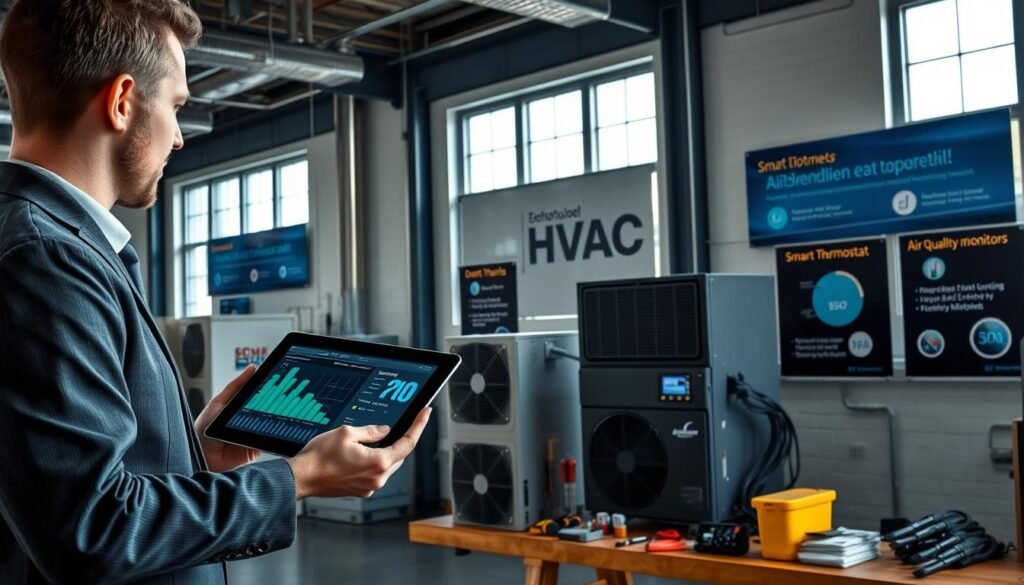
Your career in HVAC needs constant learning and keeping up. The HVAC field is always changing, with new tech coming out all the time. It’s key to stay updated on new trends to stay ahead.
To keep your skills sharp, consider these strategies for staying current:
- Subscribe to industry publications like ACHR News and HVACR Business Magazine
- Attend manufacturer training sessions on new equipment
- Participate in online webinars and technical workshops
- Join professional HVAC online communities
Key emerging technologies you should track include:
| Technology | Impact on HVAC Industry |
|---|---|
| Smart Thermostats | Increased energy efficiency |
| IoT-Connected Systems | Enhanced remote monitoring |
| Solar-Powered HVAC | Sustainable cooling solutions |
Remember, continuing education is not just for learning. It’s often needed to keep your certifications and licenses current. Most state boards require a certain number of continuing education hours for renewal.
By making learning a lifelong habit, you’ll become a top expert in HVAC. This could make you more marketable and increase your earning power.
Understanding the HVAC Licensing Process in Your State
The HVAC licensing process can be tricky. It changes a lot from state to state. To become a licensed HVAC pro, you need to know and follow your state’s rules.
States control the HVAC licensing process. So, each state has its own rules and rules. Some states have strict rules, while others are more relaxed.
State-Specific Requirements and Regulations
When looking into HVAC certification, you’ll find three main types of state rules:
- Comprehensive Licensing States: Need formal exams and detailed licensing steps
- Moderate Requirement States: Only need licenses for certain jobs or owning a business
- Minimal Requirement States: Focus more on federal certifications like EPA 608
To find out what your state needs, follow these steps:
- Check your state’s contractor licensing board website
- Get in touch with your state’s labor department
- Talk to your training program’s career services
- Ask local HVAC pros about their licensing journey
Renewal and Continuing Education Requirements
Most states make you renew your license every 1-3 years. This usually means:
- Pay a renewal fee
- Finish continuing education hours (usually 4-16 hours a year)
- Keep the right insurance
- Maybe pass a renewal test
Continuing education keeps you up-to-date with industry codes and safety. Keep records of your certifications and set reminders to renew on time.
Creating Your Professional Portfolio and Building References
As you move forward in your HVAC career, having a detailed portfolio is key. It shows off your skills and sets you apart in the job market. Your portfolio is a powerful tool to showcase your achievements.
Begin building your portfolio during your training. Collect important documents like:
- Copies of certifications and licenses
- Training program completion certificates
- Project documentation with before-and-after photos
- Technical skills demonstration records
When making your portfolio, focus on showing high-quality evidence of your skills. Include:
- Complex project descriptions
- Customer testimonials
- Letters of recommendation
- Innovative problem-solving examples
“Your portfolio is your professional story – make it compelling and authentic.”
Professional references are also vital. Build relationships with people who can talk about your skills and work ethic. Always ask permission before listing someone as a reference. Keep them updated on your career.
Think about having both a physical and digital portfolio. A professional website can be a great way to showcase your work. It can attract employers in the HVAC field.
Conclusion
Starting a career in the HVAC field is exciting for those who love hands-on work and solving technical problems. You’ve learned the steps to become an HVAC pro, from knowing the job’s basics to getting special skills. These skills make you stand out in the industry.
Success in HVAC depends on always learning and being ready to change. The field is growing fast, with a 9% increase by 2033. By getting educated, getting certifications, and getting hands-on experience, you’ll have a fulfilling career with chances to grow and specialize.
Being an HVAC pro is more than a job—it’s a big responsibility. It’s about solving tough problems and helping communities. You need to keep learning, build a strong network, and stay up-to-date with new technologies to succeed long-term.
Don’t wait to start. Look for local training, talk to industry experts, and find apprenticeships. The HVAC field is open to those who are eager to learn, grow, and make a difference in a vital industry.