Affiliate Disclosure
HVAC Guide Guys is a participant in the Amazon Services LLC Associates Program, an affiliate advertising program designed to provide a means for sites to earn advertising fees by advertising and linking to Amazon.
How to Dispose of Old HVAC Unit? Ever wondered what happens to your old HVAC system when it’s time to say goodbye? It’s not as easy as throwing it away. Knowing how to dispose of an old HVAC unit can save you money and help the environment. It might even put some cash back in your pocket.
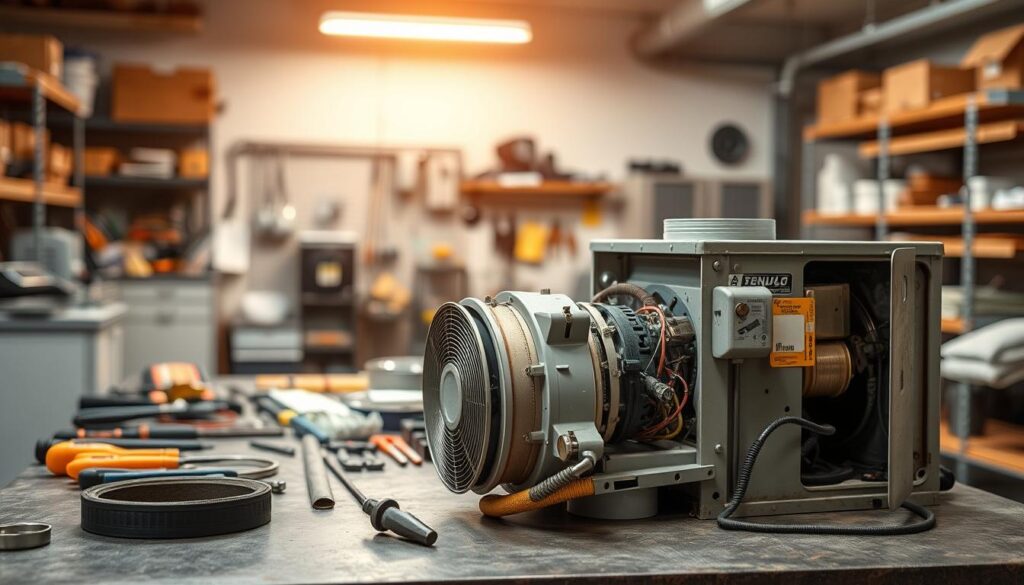
As technology gets better, homeowners need to get rid of old heating and cooling systems. But, finding the right way to dispose of it locally is tricky. If you don’t do it right, it can harm the environment and even get you in trouble with the law.
This guide will show you how to get rid of your old HVAC unit. We’ll cover everything from knowing the rules to finding recycling centers near you. We’ll make it easy to follow, so anyone can do it.
Key Takeaways
- Learn the proper steps for safe HVAC unit disposal
- Understand environmental regulations surrounding HVAC removal
- Discover possible recycling and scrap metal value
- Identify local HVAC disposal resources
- Protect the environment while responsibly removing your old system
Table of Contents
Understanding HVAC Disposal Regulations and Environmental Impact
Getting rid of your old HVAC unit needs you to know the rules and how it affects the planet. The EPA has clear guidelines for disposing of HVAC systems in a way that’s good for the environment.
It’s not just about taking out the old unit. You must think about the risks to the environment and follow the law.
Critical EPA Guidelines for HVAC Disposal
- Refrigerant must be professionally recovered using specialized equipment
- Comply with Clean Air Act regulations regarding refrigerant handling
- Ensure complete documentation of refrigerant removal
- Work with certified disposal professionals
Environmental Risks of Improper Disposal
Throwing away HVAC systems the wrong way can harm the environment a lot. Refrigerants like chlorofluorocarbons (CFCs) and hydrochlorofluorocarbons (HCFCs) can damage the ozone layer and lead to global warming.
Legal Requirements for Professional Removal
You need to hire EPA-certified technicians who know the rules for HVAC disposal. They make sure your system is taken apart safely, with little harm to the environment.
Environmentally friendly HVAC disposal is not just a recommendation—it’s a responsibility.
By following the right disposal steps, you help the planet and avoid legal trouble from not doing it right.
Professional HVAC Removal Services: Benefits and Considerations
Choosing a professional hvac removal service can save you a lot of time and avoid risks. These services have the knowledge to handle your old HVAC system safely and responsibly.
When picking an hvac removal service, look at a few important things:
- Certification and licensing credentials
- Years of industry experience
- Specialized equipment for safe removal
- Compliance with environmental regulations
Professional teams offer big advantages in HVAC system removal. They know how to handle refrigerants safely. Without their training, you could face fines or personal safety risks.
Professional hvac removal services give you several benefits:
- Comprehensive system assessment
- Safe refrigerant extraction
- Proper component recycling
- Compliance with EPA guidelines
Investing in a professional service protects the environment and your property. Trained technicians can dismantle systems without causing damage. They also make sure to recycle as much as possible.
“Expertise matters when disposing of complex HVAC systems” – Environmental Protection Agency
Explore Our HVAC Shop
Looking for top-rated HVAC tools, parts, and accessories? Visit our shop and find the perfect solution for your needs.
Visit the ShopHow to Dispose of Old HVAC Unit: Step-by-Step Process
Getting rid of an old HVAC unit needs careful planning. Knowing how to do it right helps the environment and follows local rules.
First, get the right safety gear and tools. It’s key to safely remove refrigerants to avoid harming the environment.
Disconnecting the System Safely
When taking out an old HVAC unit, safety comes first. Here’s what to do:
- Turn off the power at the circuit breaker
- Put on gloves and safety glasses
- Disconnect electrical connections with care
- Remove any external connections to the unit
Removing Refrigerant and Components
Removing refrigerants needs a pro. Certified HVAC techs use special tools to keep the environment safe.
- Call a certified technician for refrigerant removal
- Keep a record of the refrigerant removal
- Take out internal parts carefully
- Sort recyclable materials
Preparing for Transportation
Getting ready for transport is important for safe disposal:
- Drain all fluids completely
- Secure loose parts
- Wrap sharp edges
- Choose the right transport method
Pro tip: Always check local regulations for HVAC disposal to follow all rules.
Scrap Metal Value in HVAC Systems
Your old AC unit isn’t just waste – it’s a treasure trove of valuable scrap metal. Learning about the scrap ac unit value can turn an outdated system into a small financial gain. HVAC systems contain recyclable metals that can be turned into cash when processed right.
Most HVAC systems have recyclable metals with different values. Copper and aluminum are usually the most valuable. The scrap ac unit value depends on several things:
- Current market metal prices
- Total weight of recoverable metals
- Condition of the unit
- Age of the HVAC system
Here’s a breakdown of typical metal values you might find in a standard HVAC unit:
| Metal Type | Average Value per Pound | Typical Quantity in HVAC Unit |
|---|---|---|
| Copper | $3.50 – $4.50 | 5-10 pounds |
| Aluminum | $0.50 – $1.00 | 10-15 pounds |
| Steel | $0.10 – $0.20 | 20-30 pounds |
Before scrapping your unit, contact local recycling centers to get current pricing. Some facilities offer fair rates for well-separated metals. Remember that professional recycling ensures environmental safety while potentially putting some money back in your pocket.
Explore Our HVAC Shop
Looking for top-rated HVAC tools, parts, and accessories? Visit our shop and find the perfect solution for your needs.
Visit the ShopRecycling Components of Your HVAC System
Recycling an air conditioner unit is more than just getting rid of it. It’s about managing resources wisely. Your old HVAC system has valuable materials that can be reused. This helps reduce waste and supports green practices.
Choosing to recycle your air conditioner’s parts opens up chances to lessen harm to the environment. You might even get some value back from your old system.
Metal Components Worth Recycling
Many parts of HVAC systems are made of metal and can be recycled:
- Copper wiring
- Aluminum fins
- Steel and iron frames
- Brass fittings
Handling Electronic Parts
Electronic parts need careful handling when recycling. Professional recycling centers can safely process these delicate materials. This way, harmful substances won’t harm the environment.
Separating Recyclable Materials
It’s important to sort materials correctly before recycling. Here’s how:
- Metals
- Plastics
- Electronic circuit boards
- Compressor units
Recycling one air conditioning unit can prevent significant environmental waste and support circular economy principles.
Environmentally Friendly Disposal Options
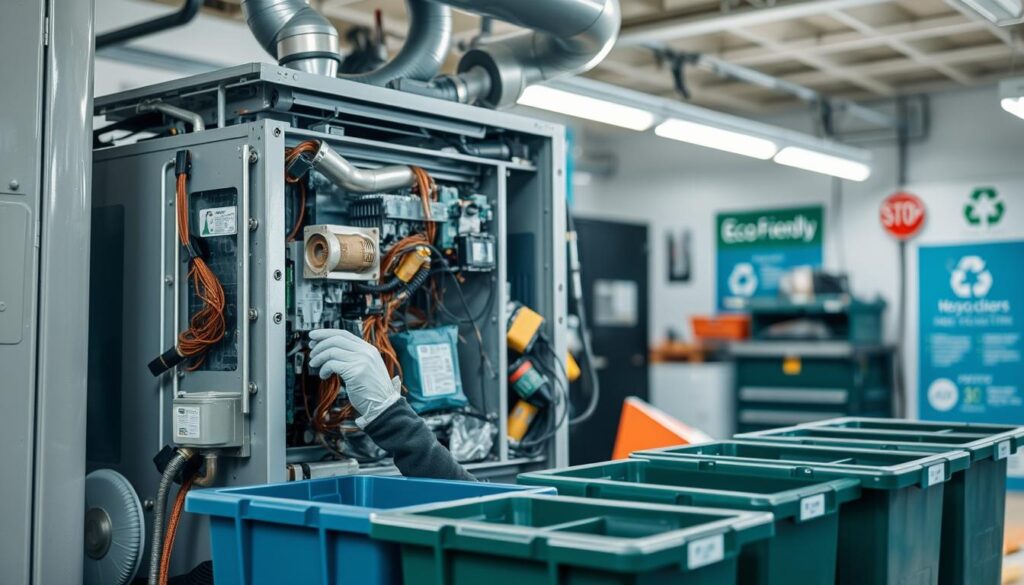
Getting rid of your old HVAC unit the right way is key for our planet. It’s not just about getting rid of it. It’s about cutting down on waste and lowering our carbon footprint.
There are many good ways to dispose of your old HVAC system:
- Certified recycling programs
- Specialized HVAC disposal facilities
- Municipal waste management centers
- Manufacturer take-back programs
The best way is to sort out your HVAC system’s parts. Metals, electronics, and refrigerants need special care to avoid harming the environment.
| Component | Recycling Method | Environmental Impact |
|---|---|---|
| Copper Coils | Metal Recycling | Reduces mining demand |
| Aluminum Parts | Metal Scrap Facilities | Lowers energy consumption |
| Refrigerants | Specialized Recovery | Prevents atmospheric damage |
Choosing eco-friendly disposal for your HVAC unit does more than just get rid of it. It helps make our future greener. Look for local recycling centers and services that know how to handle HVAC equipment safely and greenly.
Responsible disposal is an investment in our planet’s health.
Explore Our HVAC Shop
Looking for top-rated HVAC tools, parts, and accessories? Visit our shop and find the perfect solution for your needs.
Visit the ShopFinding Local HVAC Recycling Centers and Programs
Getting rid of your old HVAC system the right way means knowing where to recycle. Learning about local recycling programs helps you choose eco-friendly options. It might also save you money on disposal fees.
Start your search for hvac disposal near me by looking at local resources. Communities have different ways to recycle old heating and cooling systems safely.
Certified Recycling Facilities
Look for certified recycling facilities for professional HVAC disposal. These places handle refrigerants and complex parts the right way.
- Check local waste management websites
- Contact HVAC manufacturer recycling partners
- Verify facility certifications
- Request detailed recycling documentation
Municipal Disposal Programs
Many cities offer free or cheap ways to get rid of residential HVAC systems. These programs help people deal with electronic waste the right way.
| Program Type | Cost | Typical Services |
|---|---|---|
| City Waste Management | Free/Low Cost | Basic HVAC Unit Pickup |
| County Recycling Center | Nominal Fee | Component Separation |
| State Electronic Waste Program | Free | Comprehensive Recycling |
To find the best hvac disposal near me, reach out to local waste management, environmental departments, and recycling centers. They can tell you about the latest disposal options in your area.
Safety Precautions During HVAC Disposal
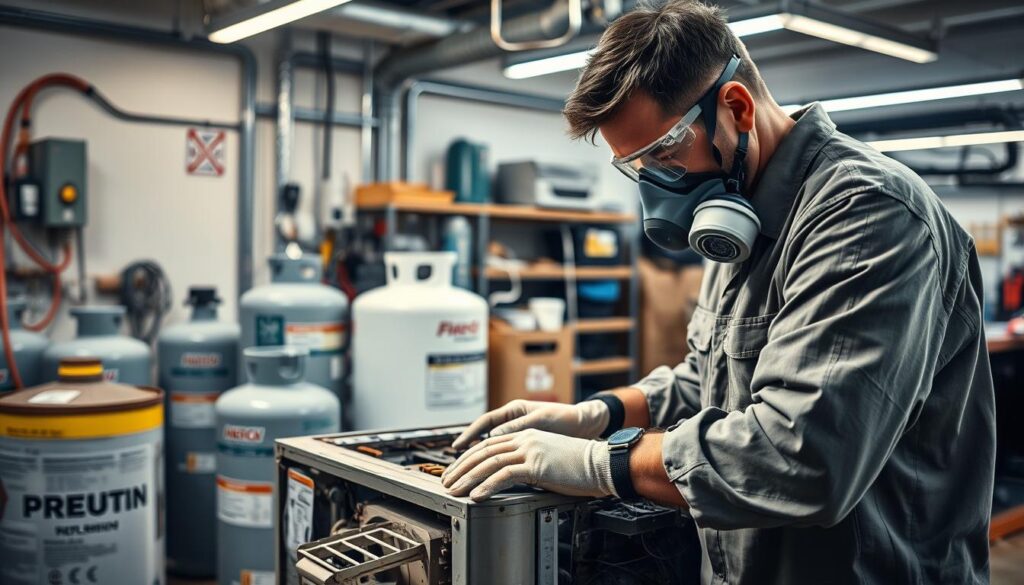
When getting rid of old heating systems, safety is key. You’ll face dangers that need careful handling. It’s important to keep yourself and others safe to avoid injuries and health issues.
Before you start, make sure you have the right safety gear:
- Heavy-duty work gloves to protect hands from sharp metal edges
- Safety glasses to shield eyes from debris
- Steel-toed boots for foot protection
- Respirator mask to avoid inhaling harmful particles
Warning: HVAC systems contain potentially dangerous components that require specialized handling. Refrigerant chemicals and electrical parts are risky if not handled right. Never try to take apart the system without the right training or safety gear.
Important steps for safe HVAC disposal are:
- Completely disconnect electrical power
- Drain all refrigerant through certified professional services
- Use appropriate lifting techniques for heavy components
- Work with a partner to prevent strain or accidents
Professional HVAC technicians recommend always prioritizing personal safety during system disposal.
For safe disposal of heating systems, think about hiring experts. They know how to handle dangerous materials safely and well.
Conclusion
Getting rid of an old HVAC unit needs careful planning and a focus on the environment. Knowing how to dispose of it right helps protect our planet and follows important laws. Every step is important, from finding local recycling centers to working with experts.
Recycling your HVAC system has big benefits, like saving the environment. Choosing the right way to get rid of it means you might get some metal back and cut down on waste. Experts can guide you through the safe and efficient disposal process.
Your efforts to dispose of HVAC units responsibly show you care about the environment. Whether you use professional services or local recycling, your actions help manage waste better. This helps protect our natural resources and supports local green efforts.
Deciding wisely about what to do with your HVAC unit’s end-of-life journey helps the environment and might even save you money. Always choose certified recycling places and follow safety tips during disposal.