Affiliate Disclosure
HVAC Guide Guys is a participant in the Amazon Services LLC Associates Program, an affiliate advertising program designed to provide a means for sites to earn advertising fees by advertising and linking to Amazon.
Are you ready for a rewarding career that keeps America comfortable? Learning the HVAC trade could be your ticket to a stable, high-demand job. It offers financial security and personal satisfaction.
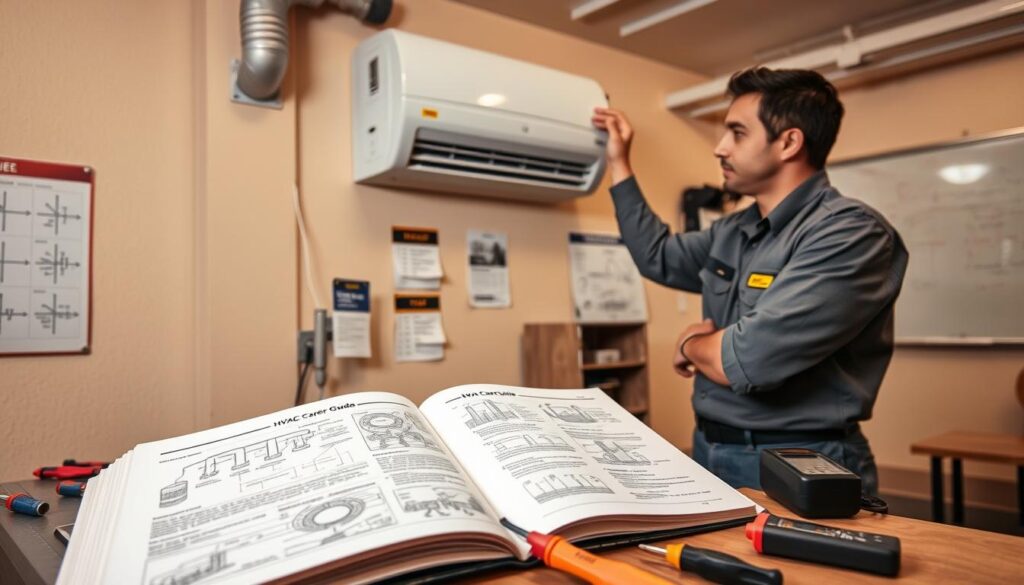
The HVAC industry is an exciting path for those interested in becoming HVAC technicians. Modern buildings need complex climate control systems. Skilled HVAC technicians are in high demand across the United States.
This guide will take you through every important step to enter the HVAC profession. You’ll learn about industry requirements and technical skills. Discover how to transform your career and join a dynamic field that impacts our built environment.
Key Takeaways
- HVAC offers stable career opportunities with strong growth.
- Multiple training paths exist for becoming an HVAC technician.
- Technical skills and hands-on experience are critical for success.
- Certification and continuous learning are essential in this evolving industry.
- Financial investment in training can lead to significant long-term rewards.
Table of Contents
Understanding the HVAC Industry and Career Opportunities
The HVAC industry is full of exciting and stable jobs for those interested in technical trades. Your journey in the HVAC field can open doors to many rewarding roles across different sectors. These experts are key in keeping indoor spaces comfortable and safe for homes, businesses, and factories.
It’s important to know what HVAC technicians do. They install, maintain, and fix complex systems for heating, cooling, and air. This ensures the environment inside is just right.
What HVAC Technicians Actually Do
As an HVAC technician, your day might include:
- Installing new heating and cooling systems
- Performing routine maintenance inspections
- Troubleshooting equipment failures
- Cleaning and replacing air ducts and filters
- Managing refrigerant levels
- Making electrical connections
- Calibrating complex thermostat systems
Career Paths and Salary Expectations
The HVAC field offers many specializations. You could work on homes, businesses, refrigeration, or industrial systems. Salaries vary a lot, depending on where you work, how long you’ve been doing it, and what you specialize in.
Starting HVAC technicians usually make $24-30 an hour. With experience, you can earn more. In places like Washington D.C., Hawaii, and Massachusetts, you could make over $79,630 a year.
Your commitment to skill development and continuous learning will directly impact your career advancement in this dynamic industry.
Explore Our HVAC Shop
Looking for top-rated HVAC tools, parts, and accessories? Visit our shop and find the perfect solution for your needs.
Visit the ShopEducational Requirements to Become an HVAC Technician
To start your HVAC career, you need to meet certain educational requirements. First, you must have a high school diploma or GED. This is your first step into HVAC technician training programs.
There are several ways to learn HVAC. Many people choose to go through:
- Community colleges
- Technical schools
- Vocational training programs
These programs last from six months to two years. They offer in-depth training in important HVAC areas. You’ll learn about:
- Electrical components
- Refrigeration principles
- Safety protocols
- Mechanical system operations
The U.S. Department of Labor says formal education is key. While some start with apprenticeships, formal training boosts your career chances. Your education is the foundation for your future in HVAC.
Investing in quality hvac technician training is investing in your future career.
You’ll learn to read schematics, understand electrical circuits, and solve problems. These skills turn classroom learning into real-world skills that employers want.
How to Learn HVAC Trade Through Formal Training Programs
Choosing the right path to become an HVAC professional requires careful consideration of your educational options. Trade schools for HVAC and certification programs offer structured approaches to entering this dynamic career field.
When exploring trade school for HVAC training, you’ll encounter two primary educational paths: specialized trade schools and community college programs. Each option provides unique benefits for aspiring HVAC technicians.
Comparing Training Program Options
Your journey into HVAC certification programs can take different forms. Let’s break down the key differences:
- Trade School Programs
- Focused 6-12 month curriculum
- Specific technical skills training
- Direct path to entry-level positions
- Community College Programs
- Two-year associate degree options
- Broader educational background
- Additional general education courses
HVAC Certification Program Structure
Typical HVAC certification programs cover essential technical knowledge and practical skills. Your training will likely include:
| Course Category | Key Learning Objectives |
|---|---|
| Thermodynamics | Understanding heat transfer principles |
| System Components | Identifying and analyzing HVAC equipment |
| Safety Procedures | Learning industry-standard safety protocols |
| Electrical Fundamentals | Mastering electrical system interactions |
Invest in your future by selecting an HVAC training program that matches your career goals. Prices range from $1,200 to $15,000, depending on the program’s depth and duration. Research carefully to find the best fit for your budget and professional aspirations.
Explore Our HVAC Shop
Looking for top-rated HVAC tools, parts, and accessories? Visit our shop and find the perfect solution for your needs.
Visit the ShopHVAC Apprenticeship Requirements and On-the-Job Training

Starting your HVAC career through an apprenticeship is a great way to learn by doing. These programs mix classroom learning with real-world experience. This helps you build the skills you need for the job.
Most HVAC technician apprenticeships have a clear path to follow. To get into these programs, you’ll need to meet a few requirements:
- Be at least 18 years old
- Hold a high school diploma or GED
- Possess a valid driver’s license
- Pass a drug screening
- Demonstrate basic math and reading comprehension
The apprenticeship usually lasts two to five years. You’ll work with experienced pros, learning important skills. The training includes:
- 80-90% on-the-job training
- 10-20% classroom instruction
You can find apprenticeships in different ways, such as:
- Union programs
- Non-union contractor programs
- State apprenticeship agencies
- Workforce development programs
As you move up in the apprenticeship, you’ll take on more responsibilities. Many states require 2-6 years of experience or apprenticeship before you can take licensing exams.
Pro Tip: Apprenticeships give you a chance to work with different HVAC systems and in various settings while earning a salary.
Essential HVAC Skills Development and Technical Knowledge
To be a top HVAC technician, you need more than just technical skills. Your journey involves learning a mix of technical knowledge, practical skills, and critical thinking.
Learning HVAC basics is more than just knowing about mechanical systems. You must develop a wide range of skills. These include technical skills and the ability to solve problems practically.
Core Technical Competencies
Your technical knowledge will cover several key areas:
- Electrical circuit understanding
- Mechanical system diagnostics
- Refrigeration principle comprehension
- Advanced troubleshooting techniques
Essential Practical Skills
Mastering HVAC skills means being good at many practical things:
- Reading technical schematics
- Interpreting blueprint designs
- Operating specialized diagnostic equipment
- Implementing safety protocols
Critical Professional Abilities
Success in HVAC requires more than just technical skills. You’ll need:
- Strong communication skills
- Physical stamina
- Analytical problem-solving
- Adaptability to changing technologies
By learning HVAC basics thoroughly, you’ll lay a strong foundation for a fulfilling career in this fast-paced field.
Explore Our HVAC Shop
Looking for top-rated HVAC tools, parts, and accessories? Visit our shop and find the perfect solution for your needs.
Visit the ShopBest HVAC Trade Schools and Training Options in the United States

Choosing the right HVAC trade school is key to your career success. The best hvac trade schools give you the training you need for a career in heating, ventilation, and air conditioning.
When picking the best hvac trade schools, look at these important factors:
- Accreditation status
- Job placement rates
- Hands-on training opportunities
- Instructor qualifications
- Financial aid availability
Here are some top schools for HVAC training:
| School Name | Location | Program Duration |
|---|---|---|
| Penn Foster Career School | Online/National | 12-24 months |
| HVAC Technical Institute | Phoenix, AZ | 6-8 months |
| Lincoln Tech | Multiple Locations | 10-12 months |
Pro tip: Visit campuses, speak with graduates, and review curriculum details before making your final decision.
“The right HVAC training can open doors to a stable, rewarding career.” – Industry Expert
Your ideal school will give you practical skills, industry connections, and prep for certification exams. Do your research to find the best school for your career goals.
Licensing, Certification, and EPA 608 Requirements
Understanding HVAC certification programs is key to your career. Each state has its own rules for HVAC technicians. It’s important to know what your state requires.
To work legally and grow in your career, HVAC technicians need specific credentials. These include education, experience, and passing tests.
State Licensing Requirements for HVAC Technicians
How you become a licensed HVAC technician depends on your state. Most places need:
- Completing HVAC certification programs
- 2-6 years of work experience
- Passing a state test
- Pay licensing fees
- Keep your license current with ongoing education
Industry-Standard Certifications
There are important certifications for HVAC professionals:
- EPA 608 Certification: Needed for working with refrigerants
- Type I: Small appliances
- Type II: High-pressure refrigerants
- Type III: Low-pressure refrigerants
- Universal: All refrigerant types
- NATE (North American Technician Excellence) Certification
- Shows you’re skilled in HVAC areas
- Industry-wide recognition
- More certifications to consider:
- HVAC Excellence
- Manufacturer-specific
- Green technology
Getting certified in HVAC can open more doors and increase your pay. While some certifications are required, others show your dedication to your field.
Cost and Time Investment for Becoming an HVAC Technician
Becoming an HVAC technician needs careful planning and time. Your education journey has several key areas to invest in. These can shape your future career.
The cost to become an HVAC technician varies. It depends on your educational choice. Here’s a look at possible costs:
- Certificate Programs: $1,200 – $5,000
- Associate Degree Programs: $5,000 – $15,000
- Tools and Equipment: $500 – $1,500
- Certification Exams: $70 – $150 per exam
- Licensing Fees: $50 – $300
The time it takes to become an HVAC technician also varies. Training times differ based on your education:
| Educational Path | Duration | Estimated Cost |
|---|---|---|
| Certificate Program | 9-10 months | $1,200 – $5,000 |
| Associate Degree | 2 years | $5,000 – $15,000 |
| Apprenticeship | 2-5 years | Paid training |
Financial aid can help lower your costs. Federal financial assistance, employer tuition reimbursement, and veterans’ benefits can make it more affordable.
Though the initial investment is big, the earnings are worth it. Starting salaries are $24 to $30 per hour. Experienced technicians earn even more.
Steps to Maintain Your HVAC Career and Continue Professional Development
To stay ahead in the HVAC field, you must keep learning and improving your skills. Your HVAC career is not just about starting out. It’s a lifelong journey of growth and keeping up with new tech.
- Go to industry conferences and trade shows
- Join manufacturer training programs
- Get advanced certifications
- Keep up with new technologies
Continuing Education Opportunities
HVAC education is more than just the basics. Look for specialized training to stand out in the job market. Here are some educational paths to consider:
- Manufacturer-specific certifications for advanced equipment knowledge
- Green technology training
- Building automation system courses
- Energy efficiency specializations
Many states require you to get continuing education credits to keep your license. You’ll need 4-16 hours a year. This covers tech updates, safety, and industry rules.
Specialization and Career Advancement
Your HVAC career can open doors to exciting areas like commercial refrigeration or energy consulting. Those who keep learning often see:
- Higher pay
- More job satisfaction
- Stable career paths
- Leadership opportunities
The HVAC industry values those who stay curious, adaptable, and committed to learning.
Conclusion
Learning the HVAC trade is a smart move for a stable and rewarding career. The HVAC field has many ways to start, like trade schools and apprenticeships. Your hard work in learning will help you succeed in this technical world.
Success in HVAC comes from education, hands-on training, and always improving your skills. You can specialize in many areas, like home systems or commercial setups. Your commitment to learning will boost your career.
The HVAC job market is promising, with good pay and steady demand. Investing in your education and keeping up with new tech will help you grow. Those who keep learning can build amazing careers in this vital field.
Your journey starts with looking into training options, talking to professionals, and getting the right certifications. It takes effort, but the benefits of a fulfilling technical career are worth it.
FAQ
How long does it take to become an HVAC technician?
What educational background do I need to start an HVAC career?
How much does HVAC training cost?
How long does it take to become an HVAC technician?
What educational background do I need to start an HVAC career?
How much does HVAC training cost?
FAQ
How long does it take to become an HVAC technician?
The time it takes to become an HVAC technician varies. Certificate programs last 6-10 months. Associate degree programs take 18-24 months. Apprenticeships can last 2-5 years.
Most people finish their training and get certified in 2-4 years. This includes both education and practical experience.
What educational background do I need to start an HVAC career?
You need a high school diploma or GED to start. Most training programs require this basic education. Formal education improves your career chances and gives you technical knowledge.
How much does HVAC training cost?
HVAC training costs vary. Basic certificate programs cost
FAQ
How long does it take to become an HVAC technician?
The time it takes to become an HVAC technician varies. Certificate programs last 6-10 months. Associate degree programs take 18-24 months. Apprenticeships can last 2-5 years.
Most people finish their training and get certified in 2-4 years. This includes both education and practical experience.
What educational background do I need to start an HVAC career?
You need a high school diploma or GED to start. Most training programs require this basic education. Formal education improves your career chances and gives you technical knowledge.
How much does HVAC training cost?
HVAC training costs vary. Basic certificate programs cost $1,200. Associate degree programs cost $15,000.
Additional costs include tools ($500-$1,500), certification exam fees ($100-$300), and licensing costs. Financial aid, scholarships, and employer programs can help cover these costs.
Do I need certification to work as an HVAC technician?
Yes, you need specific certifications. EPA 608 Certification is required for refrigerant handling. Many states require licensing. Industry certifications like NATE improve job prospects and earnings.
What are the physical requirements for HVAC technicians?
HVAC technicians need physical stamina, strength, and flexibility. The job involves lifting heavy equipment and working in tight spaces. You must be comfortable in various weather conditions and have good manual dexterity.
Can I learn HVAC through an apprenticeship?
Absolutely! Apprenticeships are a great way to learn HVAC. They last 2-5 years, combining on-the-job training with classroom instruction. You’ll work with experienced professionals and earn a wage while gaining skills.
What is the average starting salary for HVAC technicians?
Entry-level HVAC technicians start at $24-30 per hour. Salary varies by location, experience, and specialization. Experienced technicians in demand areas can earn more, with opportunities for advancement.
Are online HVAC training programs legitimate?
Online programs exist, but the best training combines online learning with hands-on training. Look for accredited programs with laboratory components or in-person sessions. Some schools offer hybrid models that mix online and physical training.
What are the career advancement opportunities in HVAC?
HVAC offers many advancement paths. You can specialize in residential or commercial systems, become a senior technician, or move into system design. You can also pursue management roles or start your own business. Continuous learning and certifications help you progress.
Do I need special tools to start HVAC training?
Many programs provide initial tools or have packages available. Essential tools include wrenches, screwdrivers, multimeters, and diagnostic equipment. Your program will give you a list of recommended tools.
,200. Associate degree programs cost ,000.
Additional costs include tools (0-
FAQ
How long does it take to become an HVAC technician?
The time it takes to become an HVAC technician varies. Certificate programs last 6-10 months. Associate degree programs take 18-24 months. Apprenticeships can last 2-5 years.
Most people finish their training and get certified in 2-4 years. This includes both education and practical experience.
What educational background do I need to start an HVAC career?
You need a high school diploma or GED to start. Most training programs require this basic education. Formal education improves your career chances and gives you technical knowledge.
How much does HVAC training cost?
HVAC training costs vary. Basic certificate programs cost $1,200. Associate degree programs cost $15,000.
Additional costs include tools ($500-$1,500), certification exam fees ($100-$300), and licensing costs. Financial aid, scholarships, and employer programs can help cover these costs.
Do I need certification to work as an HVAC technician?
Yes, you need specific certifications. EPA 608 Certification is required for refrigerant handling. Many states require licensing. Industry certifications like NATE improve job prospects and earnings.
What are the physical requirements for HVAC technicians?
HVAC technicians need physical stamina, strength, and flexibility. The job involves lifting heavy equipment and working in tight spaces. You must be comfortable in various weather conditions and have good manual dexterity.
Can I learn HVAC through an apprenticeship?
Absolutely! Apprenticeships are a great way to learn HVAC. They last 2-5 years, combining on-the-job training with classroom instruction. You’ll work with experienced professionals and earn a wage while gaining skills.
What is the average starting salary for HVAC technicians?
Entry-level HVAC technicians start at $24-30 per hour. Salary varies by location, experience, and specialization. Experienced technicians in demand areas can earn more, with opportunities for advancement.
Are online HVAC training programs legitimate?
Online programs exist, but the best training combines online learning with hands-on training. Look for accredited programs with laboratory components or in-person sessions. Some schools offer hybrid models that mix online and physical training.
What are the career advancement opportunities in HVAC?
HVAC offers many advancement paths. You can specialize in residential or commercial systems, become a senior technician, or move into system design. You can also pursue management roles or start your own business. Continuous learning and certifications help you progress.
Do I need special tools to start HVAC training?
Many programs provide initial tools or have packages available. Essential tools include wrenches, screwdrivers, multimeters, and diagnostic equipment. Your program will give you a list of recommended tools.
,500), certification exam fees (0-0), and licensing costs. Financial aid, scholarships, and employer programs can help cover these costs.
Do I need certification to work as an HVAC technician?
Yes, you need specific certifications. EPA 608 Certification is required for refrigerant handling. Many states require licensing. Industry certifications like NATE improve job prospects and earnings.
What are the physical requirements for HVAC technicians?
HVAC technicians need physical stamina, strength, and flexibility. The job involves lifting heavy equipment and working in tight spaces. You must be comfortable in various weather conditions and have good manual dexterity.
Can I learn HVAC through an apprenticeship?
Absolutely! Apprenticeships are a great way to learn HVAC. They last 2-5 years, combining on-the-job training with classroom instruction. You’ll work with experienced professionals and earn a wage while gaining skills.
What is the average starting salary for HVAC technicians?
Entry-level HVAC technicians start at -30 per hour. Salary varies by location, experience, and specialization. Experienced technicians in demand areas can earn more, with opportunities for advancement.
Are online HVAC training programs legitimate?
Online programs exist, but the best training combines online learning with hands-on training. Look for accredited programs with laboratory components or in-person sessions. Some schools offer hybrid models that mix online and physical training.
What are the career advancement opportunities in HVAC?
HVAC offers many advancement paths. You can specialize in residential or commercial systems, become a senior technician, or move into system design. You can also pursue management roles or start your own business. Continuous learning and certifications help you progress.
Do I need special tools to start HVAC training?
Many programs provide initial tools or have packages available. Essential tools include wrenches, screwdrivers, multimeters, and diagnostic equipment. Your program will give you a list of recommended tools.
FAQ
How long does it take to become an HVAC technician?
The time it takes to become an HVAC technician varies. Certificate programs last 6-10 months. Associate degree programs take 18-24 months. Apprenticeships can last 2-5 years.
Most people finish their training and get certified in 2-4 years. This includes both education and practical experience.
What educational background do I need to start an HVAC career?
You need a high school diploma or GED to start. Most training programs require this basic education. Formal education improves your career chances and gives you technical knowledge.
How much does HVAC training cost?
HVAC training costs vary. Basic certificate programs cost
FAQ
How long does it take to become an HVAC technician?
The time it takes to become an HVAC technician varies. Certificate programs last 6-10 months. Associate degree programs take 18-24 months. Apprenticeships can last 2-5 years.
Most people finish their training and get certified in 2-4 years. This includes both education and practical experience.
What educational background do I need to start an HVAC career?
You need a high school diploma or GED to start. Most training programs require this basic education. Formal education improves your career chances and gives you technical knowledge.
How much does HVAC training cost?
HVAC training costs vary. Basic certificate programs cost $1,200. Associate degree programs cost $15,000.
Additional costs include tools ($500-$1,500), certification exam fees ($100-$300), and licensing costs. Financial aid, scholarships, and employer programs can help cover these costs.
Do I need certification to work as an HVAC technician?
Yes, you need specific certifications. EPA 608 Certification is required for refrigerant handling. Many states require licensing. Industry certifications like NATE improve job prospects and earnings.
What are the physical requirements for HVAC technicians?
HVAC technicians need physical stamina, strength, and flexibility. The job involves lifting heavy equipment and working in tight spaces. You must be comfortable in various weather conditions and have good manual dexterity.
Can I learn HVAC through an apprenticeship?
Absolutely! Apprenticeships are a great way to learn HVAC. They last 2-5 years, combining on-the-job training with classroom instruction. You’ll work with experienced professionals and earn a wage while gaining skills.
What is the average starting salary for HVAC technicians?
Entry-level HVAC technicians start at $24-30 per hour. Salary varies by location, experience, and specialization. Experienced technicians in demand areas can earn more, with opportunities for advancement.
Are online HVAC training programs legitimate?
Online programs exist, but the best training combines online learning with hands-on training. Look for accredited programs with laboratory components or in-person sessions. Some schools offer hybrid models that mix online and physical training.
What are the career advancement opportunities in HVAC?
HVAC offers many advancement paths. You can specialize in residential or commercial systems, become a senior technician, or move into system design. You can also pursue management roles or start your own business. Continuous learning and certifications help you progress.
Do I need special tools to start HVAC training?
Many programs provide initial tools or have packages available. Essential tools include wrenches, screwdrivers, multimeters, and diagnostic equipment. Your program will give you a list of recommended tools.
,200. Associate degree programs cost ,000.
Additional costs include tools (0-
FAQ
How long does it take to become an HVAC technician?
The time it takes to become an HVAC technician varies. Certificate programs last 6-10 months. Associate degree programs take 18-24 months. Apprenticeships can last 2-5 years.
Most people finish their training and get certified in 2-4 years. This includes both education and practical experience.
What educational background do I need to start an HVAC career?
You need a high school diploma or GED to start. Most training programs require this basic education. Formal education improves your career chances and gives you technical knowledge.
How much does HVAC training cost?
HVAC training costs vary. Basic certificate programs cost $1,200. Associate degree programs cost $15,000.
Additional costs include tools ($500-$1,500), certification exam fees ($100-$300), and licensing costs. Financial aid, scholarships, and employer programs can help cover these costs.
Do I need certification to work as an HVAC technician?
Yes, you need specific certifications. EPA 608 Certification is required for refrigerant handling. Many states require licensing. Industry certifications like NATE improve job prospects and earnings.
What are the physical requirements for HVAC technicians?
HVAC technicians need physical stamina, strength, and flexibility. The job involves lifting heavy equipment and working in tight spaces. You must be comfortable in various weather conditions and have good manual dexterity.
Can I learn HVAC through an apprenticeship?
Absolutely! Apprenticeships are a great way to learn HVAC. They last 2-5 years, combining on-the-job training with classroom instruction. You’ll work with experienced professionals and earn a wage while gaining skills.
What is the average starting salary for HVAC technicians?
Entry-level HVAC technicians start at $24-30 per hour. Salary varies by location, experience, and specialization. Experienced technicians in demand areas can earn more, with opportunities for advancement.
Are online HVAC training programs legitimate?
Online programs exist, but the best training combines online learning with hands-on training. Look for accredited programs with laboratory components or in-person sessions. Some schools offer hybrid models that mix online and physical training.
What are the career advancement opportunities in HVAC?
HVAC offers many advancement paths. You can specialize in residential or commercial systems, become a senior technician, or move into system design. You can also pursue management roles or start your own business. Continuous learning and certifications help you progress.
Do I need special tools to start HVAC training?
Many programs provide initial tools or have packages available. Essential tools include wrenches, screwdrivers, multimeters, and diagnostic equipment. Your program will give you a list of recommended tools.
,500), certification exam fees (0-0), and licensing costs. Financial aid, scholarships, and employer programs can help cover these costs.
Do I need certification to work as an HVAC technician?
Yes, you need specific certifications. EPA 608 Certification is required for refrigerant handling. Many states require licensing. Industry certifications like NATE improve job prospects and earnings.
What are the physical requirements for HVAC technicians?
HVAC technicians need physical stamina, strength, and flexibility. The job involves lifting heavy equipment and working in tight spaces. You must be comfortable in various weather conditions and have good manual dexterity.
Can I learn HVAC through an apprenticeship?
Absolutely! Apprenticeships are a great way to learn HVAC. They last 2-5 years, combining on-the-job training with classroom instruction. You’ll work with experienced professionals and earn a wage while gaining skills.
What is the average starting salary for HVAC technicians?
Entry-level HVAC technicians start at -30 per hour. Salary varies by location, experience, and specialization. Experienced technicians in demand areas can earn more, with opportunities for advancement.
Are online HVAC training programs legitimate?
Online programs exist, but the best training combines online learning with hands-on training. Look for accredited programs with laboratory components or in-person sessions. Some schools offer hybrid models that mix online and physical training.
What are the career advancement opportunities in HVAC?
HVAC offers many advancement paths. You can specialize in residential or commercial systems, become a senior technician, or move into system design. You can also pursue management roles or start your own business. Continuous learning and certifications help you progress.
Do I need special tools to start HVAC training?
Many programs provide initial tools or have packages available. Essential tools include wrenches, screwdrivers, multimeters, and diagnostic equipment. Your program will give you a list of recommended tools.
Do I need certification to work as an HVAC technician?
What are the physical requirements for HVAC technicians?
Can I learn HVAC through an apprenticeship?
What is the average starting salary for HVAC technicians?
Are online HVAC training programs legitimate?
What are the career advancement opportunities in HVAC?
Do I need special tools to start HVAC training?
How long does it take to become an HVAC technician?
What educational background do I need to start an HVAC career?
How much does HVAC training cost?
FAQ
How long does it take to become an HVAC technician?
The time it takes to become an HVAC technician varies. Certificate programs last 6-10 months. Associate degree programs take 18-24 months. Apprenticeships can last 2-5 years.
Most people finish their training and get certified in 2-4 years. This includes both education and practical experience.
What educational background do I need to start an HVAC career?
You need a high school diploma or GED to start. Most training programs require this basic education. Formal education improves your career chances and gives you technical knowledge.
How much does HVAC training cost?
HVAC training costs vary. Basic certificate programs cost
FAQ
How long does it take to become an HVAC technician?
The time it takes to become an HVAC technician varies. Certificate programs last 6-10 months. Associate degree programs take 18-24 months. Apprenticeships can last 2-5 years.
Most people finish their training and get certified in 2-4 years. This includes both education and practical experience.
What educational background do I need to start an HVAC career?
You need a high school diploma or GED to start. Most training programs require this basic education. Formal education improves your career chances and gives you technical knowledge.
How much does HVAC training cost?
HVAC training costs vary. Basic certificate programs cost $1,200. Associate degree programs cost $15,000.
Additional costs include tools ($500-$1,500), certification exam fees ($100-$300), and licensing costs. Financial aid, scholarships, and employer programs can help cover these costs.
Do I need certification to work as an HVAC technician?
Yes, you need specific certifications. EPA 608 Certification is required for refrigerant handling. Many states require licensing. Industry certifications like NATE improve job prospects and earnings.
What are the physical requirements for HVAC technicians?
HVAC technicians need physical stamina, strength, and flexibility. The job involves lifting heavy equipment and working in tight spaces. You must be comfortable in various weather conditions and have good manual dexterity.
Can I learn HVAC through an apprenticeship?
Absolutely! Apprenticeships are a great way to learn HVAC. They last 2-5 years, combining on-the-job training with classroom instruction. You’ll work with experienced professionals and earn a wage while gaining skills.
What is the average starting salary for HVAC technicians?
Entry-level HVAC technicians start at $24-30 per hour. Salary varies by location, experience, and specialization. Experienced technicians in demand areas can earn more, with opportunities for advancement.
Are online HVAC training programs legitimate?
Online programs exist, but the best training combines online learning with hands-on training. Look for accredited programs with laboratory components or in-person sessions. Some schools offer hybrid models that mix online and physical training.
What are the career advancement opportunities in HVAC?
HVAC offers many advancement paths. You can specialize in residential or commercial systems, become a senior technician, or move into system design. You can also pursue management roles or start your own business. Continuous learning and certifications help you progress.
Do I need special tools to start HVAC training?
Many programs provide initial tools or have packages available. Essential tools include wrenches, screwdrivers, multimeters, and diagnostic equipment. Your program will give you a list of recommended tools.
,200. Associate degree programs cost ,000.
Additional costs include tools (0-
FAQ
How long does it take to become an HVAC technician?
The time it takes to become an HVAC technician varies. Certificate programs last 6-10 months. Associate degree programs take 18-24 months. Apprenticeships can last 2-5 years.
Most people finish their training and get certified in 2-4 years. This includes both education and practical experience.
What educational background do I need to start an HVAC career?
You need a high school diploma or GED to start. Most training programs require this basic education. Formal education improves your career chances and gives you technical knowledge.
How much does HVAC training cost?
HVAC training costs vary. Basic certificate programs cost $1,200. Associate degree programs cost $15,000.
Additional costs include tools ($500-$1,500), certification exam fees ($100-$300), and licensing costs. Financial aid, scholarships, and employer programs can help cover these costs.
Do I need certification to work as an HVAC technician?
Yes, you need specific certifications. EPA 608 Certification is required for refrigerant handling. Many states require licensing. Industry certifications like NATE improve job prospects and earnings.
What are the physical requirements for HVAC technicians?
HVAC technicians need physical stamina, strength, and flexibility. The job involves lifting heavy equipment and working in tight spaces. You must be comfortable in various weather conditions and have good manual dexterity.
Can I learn HVAC through an apprenticeship?
Absolutely! Apprenticeships are a great way to learn HVAC. They last 2-5 years, combining on-the-job training with classroom instruction. You’ll work with experienced professionals and earn a wage while gaining skills.
What is the average starting salary for HVAC technicians?
Entry-level HVAC technicians start at $24-30 per hour. Salary varies by location, experience, and specialization. Experienced technicians in demand areas can earn more, with opportunities for advancement.
Are online HVAC training programs legitimate?
Online programs exist, but the best training combines online learning with hands-on training. Look for accredited programs with laboratory components or in-person sessions. Some schools offer hybrid models that mix online and physical training.
What are the career advancement opportunities in HVAC?
HVAC offers many advancement paths. You can specialize in residential or commercial systems, become a senior technician, or move into system design. You can also pursue management roles or start your own business. Continuous learning and certifications help you progress.
Do I need special tools to start HVAC training?
Many programs provide initial tools or have packages available. Essential tools include wrenches, screwdrivers, multimeters, and diagnostic equipment. Your program will give you a list of recommended tools.
,500), certification exam fees (0-0), and licensing costs. Financial aid, scholarships, and employer programs can help cover these costs.
Do I need certification to work as an HVAC technician?
Yes, you need specific certifications. EPA 608 Certification is required for refrigerant handling. Many states require licensing. Industry certifications like NATE improve job prospects and earnings.
What are the physical requirements for HVAC technicians?
HVAC technicians need physical stamina, strength, and flexibility. The job involves lifting heavy equipment and working in tight spaces. You must be comfortable in various weather conditions and have good manual dexterity.
Can I learn HVAC through an apprenticeship?
Absolutely! Apprenticeships are a great way to learn HVAC. They last 2-5 years, combining on-the-job training with classroom instruction. You’ll work with experienced professionals and earn a wage while gaining skills.
What is the average starting salary for HVAC technicians?
Entry-level HVAC technicians start at -30 per hour. Salary varies by location, experience, and specialization. Experienced technicians in demand areas can earn more, with opportunities for advancement.
Are online HVAC training programs legitimate?
Online programs exist, but the best training combines online learning with hands-on training. Look for accredited programs with laboratory components or in-person sessions. Some schools offer hybrid models that mix online and physical training.
What are the career advancement opportunities in HVAC?
HVAC offers many advancement paths. You can specialize in residential or commercial systems, become a senior technician, or move into system design. You can also pursue management roles or start your own business. Continuous learning and certifications help you progress.
Do I need special tools to start HVAC training?
Many programs provide initial tools or have packages available. Essential tools include wrenches, screwdrivers, multimeters, and diagnostic equipment. Your program will give you a list of recommended tools.
FAQ
How long does it take to become an HVAC technician?
The time it takes to become an HVAC technician varies. Certificate programs last 6-10 months. Associate degree programs take 18-24 months. Apprenticeships can last 2-5 years.
Most people finish their training and get certified in 2-4 years. This includes both education and practical experience.
What educational background do I need to start an HVAC career?
You need a high school diploma or GED to start. Most training programs require this basic education. Formal education improves your career chances and gives you technical knowledge.
How much does HVAC training cost?
HVAC training costs vary. Basic certificate programs cost
FAQ
How long does it take to become an HVAC technician?
The time it takes to become an HVAC technician varies. Certificate programs last 6-10 months. Associate degree programs take 18-24 months. Apprenticeships can last 2-5 years.
Most people finish their training and get certified in 2-4 years. This includes both education and practical experience.
What educational background do I need to start an HVAC career?
You need a high school diploma or GED to start. Most training programs require this basic education. Formal education improves your career chances and gives you technical knowledge.
How much does HVAC training cost?
HVAC training costs vary. Basic certificate programs cost $1,200. Associate degree programs cost $15,000.
Additional costs include tools ($500-$1,500), certification exam fees ($100-$300), and licensing costs. Financial aid, scholarships, and employer programs can help cover these costs.
Do I need certification to work as an HVAC technician?
Yes, you need specific certifications. EPA 608 Certification is required for refrigerant handling. Many states require licensing. Industry certifications like NATE improve job prospects and earnings.
What are the physical requirements for HVAC technicians?
HVAC technicians need physical stamina, strength, and flexibility. The job involves lifting heavy equipment and working in tight spaces. You must be comfortable in various weather conditions and have good manual dexterity.
Can I learn HVAC through an apprenticeship?
Absolutely! Apprenticeships are a great way to learn HVAC. They last 2-5 years, combining on-the-job training with classroom instruction. You’ll work with experienced professionals and earn a wage while gaining skills.
What is the average starting salary for HVAC technicians?
Entry-level HVAC technicians start at $24-30 per hour. Salary varies by location, experience, and specialization. Experienced technicians in demand areas can earn more, with opportunities for advancement.
Are online HVAC training programs legitimate?
Online programs exist, but the best training combines online learning with hands-on training. Look for accredited programs with laboratory components or in-person sessions. Some schools offer hybrid models that mix online and physical training.
What are the career advancement opportunities in HVAC?
HVAC offers many advancement paths. You can specialize in residential or commercial systems, become a senior technician, or move into system design. You can also pursue management roles or start your own business. Continuous learning and certifications help you progress.
Do I need special tools to start HVAC training?
Many programs provide initial tools or have packages available. Essential tools include wrenches, screwdrivers, multimeters, and diagnostic equipment. Your program will give you a list of recommended tools.
,200. Associate degree programs cost ,000.
Additional costs include tools (0-
FAQ
How long does it take to become an HVAC technician?
The time it takes to become an HVAC technician varies. Certificate programs last 6-10 months. Associate degree programs take 18-24 months. Apprenticeships can last 2-5 years.
Most people finish their training and get certified in 2-4 years. This includes both education and practical experience.
What educational background do I need to start an HVAC career?
You need a high school diploma or GED to start. Most training programs require this basic education. Formal education improves your career chances and gives you technical knowledge.
How much does HVAC training cost?
HVAC training costs vary. Basic certificate programs cost $1,200. Associate degree programs cost $15,000.
Additional costs include tools ($500-$1,500), certification exam fees ($100-$300), and licensing costs. Financial aid, scholarships, and employer programs can help cover these costs.
Do I need certification to work as an HVAC technician?
Yes, you need specific certifications. EPA 608 Certification is required for refrigerant handling. Many states require licensing. Industry certifications like NATE improve job prospects and earnings.
What are the physical requirements for HVAC technicians?
HVAC technicians need physical stamina, strength, and flexibility. The job involves lifting heavy equipment and working in tight spaces. You must be comfortable in various weather conditions and have good manual dexterity.
Can I learn HVAC through an apprenticeship?
Absolutely! Apprenticeships are a great way to learn HVAC. They last 2-5 years, combining on-the-job training with classroom instruction. You’ll work with experienced professionals and earn a wage while gaining skills.
What is the average starting salary for HVAC technicians?
Entry-level HVAC technicians start at $24-30 per hour. Salary varies by location, experience, and specialization. Experienced technicians in demand areas can earn more, with opportunities for advancement.
Are online HVAC training programs legitimate?
Online programs exist, but the best training combines online learning with hands-on training. Look for accredited programs with laboratory components or in-person sessions. Some schools offer hybrid models that mix online and physical training.
What are the career advancement opportunities in HVAC?
HVAC offers many advancement paths. You can specialize in residential or commercial systems, become a senior technician, or move into system design. You can also pursue management roles or start your own business. Continuous learning and certifications help you progress.
Do I need special tools to start HVAC training?
Many programs provide initial tools or have packages available. Essential tools include wrenches, screwdrivers, multimeters, and diagnostic equipment. Your program will give you a list of recommended tools.
,500), certification exam fees (0-0), and licensing costs. Financial aid, scholarships, and employer programs can help cover these costs.
Do I need certification to work as an HVAC technician?
Yes, you need specific certifications. EPA 608 Certification is required for refrigerant handling. Many states require licensing. Industry certifications like NATE improve job prospects and earnings.
What are the physical requirements for HVAC technicians?
HVAC technicians need physical stamina, strength, and flexibility. The job involves lifting heavy equipment and working in tight spaces. You must be comfortable in various weather conditions and have good manual dexterity.
Can I learn HVAC through an apprenticeship?
Absolutely! Apprenticeships are a great way to learn HVAC. They last 2-5 years, combining on-the-job training with classroom instruction. You’ll work with experienced professionals and earn a wage while gaining skills.
What is the average starting salary for HVAC technicians?
Entry-level HVAC technicians start at -30 per hour. Salary varies by location, experience, and specialization. Experienced technicians in demand areas can earn more, with opportunities for advancement.
Are online HVAC training programs legitimate?
Online programs exist, but the best training combines online learning with hands-on training. Look for accredited programs with laboratory components or in-person sessions. Some schools offer hybrid models that mix online and physical training.
What are the career advancement opportunities in HVAC?
HVAC offers many advancement paths. You can specialize in residential or commercial systems, become a senior technician, or move into system design. You can also pursue management roles or start your own business. Continuous learning and certifications help you progress.
Do I need special tools to start HVAC training?
Many programs provide initial tools or have packages available. Essential tools include wrenches, screwdrivers, multimeters, and diagnostic equipment. Your program will give you a list of recommended tools.