
Affiliate Disclosure
HVAC Guide Guys is a participant in the Amazon Services LLC Associates Program, an affiliate advertising program designed to provide a means for sites to earn advertising fees by advertising and linking to Amazon.
Have you ever thought about the hidden guardian of your home’s air quality? Your HVAC filter works hard to keep your air clean. But how to know when to change hvac filter?
Every homeowner wonders how to keep their HVAC system in top shape. If you ignore your filter, your system might not work as well. This can lead to higher energy bills and even damage to your equipment. Choosing the right filter at the right time can greatly improve your home’s comfort and air quality.
Knowing when to replace your filter is key to a healthier home. It’s not just about keeping things running smoothly. It’s about making sure your family breathes clean air.
Key Takeaways
- Regular filter changes improve air quality
- Filters protect HVAC system from dust and debris
- Replacement frequency depends on multiple factors
- Clean filters reduce energy consumption
- Different home environments require different filter change schedules
Table of Contents
Why Your HVAC Filter Matters for System Performance
Your HVAC system is key to home comfort. Its air filter is vital for top performance. Think of it as a protector for your heating and cooling system.
Filters do more than catch dust and dirt. They are a vital defense for your HVAC system. They stop harmful particles from causing damage.
The Role of Air Filters in Your HVAC System
Air filters have many important jobs. They keep your system running well:
- They catch tiny particles like dust, pollen, and pet dander.
- They stop debris from getting into sensitive parts.
- They make indoor air cleaner.
- They reduce strain on your HVAC system’s core.
How Filters Protect Your Equipment from Damage
Without a clean filter, your HVAC system is at risk. Unfiltered air can damage internal parts. This can lead to expensive repairs and a shorter system life.
Regular filter care keeps your system running smoothly. It saves your motors, fans, and other important parts from stress. Replacing filters can save you hundreds of dollars in repairs.
Understanding MERV Ratings and Filter Types
Choosing the right HVAC filter is key to keeping your home’s air clean and your system running well. MERV stands for Minimum Efficiency Reporting Value. It shows how well a filter catches different-sized particles.
MERV ratings go from 1 to 16. The higher the number, the better the filter works. Here’s what each range means:
- MERV 1-4: Basic filters capturing large particles
- MERV 5-8: Medium efficiency for household dust
- MERV 9-12: Superior filtration for fine particles
- MERV 13-16: High-performance filters for allergens and microscopic contaminants
What you need depends on your home. If you have pets, allergies, or breathing issues, you might want a higher MERV rating.
There are various filters, each with its own benefits:
- Fiberglass filters: Cheap but don’t filter much
- Pleated filters: Catch more particles and let air flow better
- Electrostatic filters: Use static to trap particles
- HEPA filters: Best for cleaning the air to a medical standard
Picking the right filter is important. It keeps your HVAC system working well and your air clean.
General Guidelines for Filter Replacement Frequency
Keeping your HVAC filter clean is key for your system’s health and air quality. Knowing when to replace it can save you money and avoid damage.
Most people should stick to a standard replacement schedule. This depends on your home’s conditions and system needs.
Standard Replacement Timeline for Residential Systems
The usual advice for filter changes is based on a few important factors:
- 1-inch filters: Replace every 30-60 days
- 2-inch filters: Replace every 60-90 days
- 3-inch filters: Replace every 90-120 days
- 4-inch filters: Replace every 120-180 days
Situations Requiring More Frequent Filter Changes
Some homes might need filters changed more often because of certain situations:
| Condition | Recommended Replacement Frequency |
|---|---|
| Homes with multiple pets | Every 20-45 days |
| Homes with allergy sufferers | Every 30-60 days |
| Homes in dusty environments | Every 30-45 days |
Pro tip: Always check your filter monthly and replace it if it appears visibly dirty or clogged, regardless of the recommended timeline.
Explore Our HVAC Shop
Looking for top-rated HVAC tools, parts, and accessories? Visit our shop and find the perfect solution for your needs.
Visit the ShopHow to Know When to Change HVAC Filter
Checking your HVAC filter is key to keeping your air clean and your system running well. Your filter shows what’s happening inside your home. Learning to read its signs can save you money and keep you healthy.
Looking at your filter can tell you a lot. Here are the main signs it’s time for a new one:
- Gray or dark coloration
- Visible dust and debris accumulation
- Clumps of hair and particulate matter
- Obvious discoloration and dirt buildup
There are more signs your filter needs to be changed:
- Respiratory Symptoms: More allergies or asthma at home
- Dust Accumulation: Dust around air vents
- Energy Efficiency: Higher energy bills
- Cooling Performance: Uneven temperatures or system always running
| Filter Condition | Action Required |
|---|---|
| Visibly Dirty | Replace Immediately |
| Moderate Dust | Consider Replacement Soon |
| Clean Appearance | Monitor Regularly |
Don’t just follow a schedule for changing your filter. Watch how it looks and how your home feels. This way, you’ll know exactly when it’s time for a new one.
Factors That Affect How Often You Should Change Your Filter
Your HVAC filter’s life depends on several important factors. These factors affect its performance and efficiency. Knowing them helps keep your air clean and protects your heating and cooling system.
Many things in your home environment affect how often you need to change your air filter. Let’s look at the main things that matter for filter replacement.
Pet Ownership and Dander Management
Pets put a lot of strain on your HVAC filter. Pet dander, fur, and odors quickly build up in your air system. Here are tips for pet owners:
- One pet: Replace filter every 60-90 days
- Multiple pets: Change filter every 20-45 days
- Regular pet grooming can help reduce filter contamination
Allergies and Respiratory Health
Households with allergy or asthma sufferers need to change filters more often. High-efficiency filters with MERV ratings of 13 or higher catch tiny allergens better.
- During peak allergy seasons, replace filters every 30-45 days
- Choose filters designed to capture pollen, dust mites, and pet dander
- Monitor family members’ respiratory symptoms
Home Size and System Usage
Your home’s size and how much you use your HVAC system affect filter life. The quality of the filter and how much air circulates also play big roles in how often you need to change it.
- Larger homes circulate more air, requiring more frequent changes
- Extreme climate regions need more frequent filter replacements
- Inexpensive fiberglass filters get dirty faster than high-end options
Keep track of your home’s specific conditions. This will help you find the best schedule for changing your filter. It keeps your air quality and system efficiency up.
Explore Our HVAC Shop
Looking for top-rated HVAC tools, parts, and accessories? Visit our shop and find the perfect solution for your needs.
Visit the ShopWarning Signs Your Filter Needs Immediate Replacement
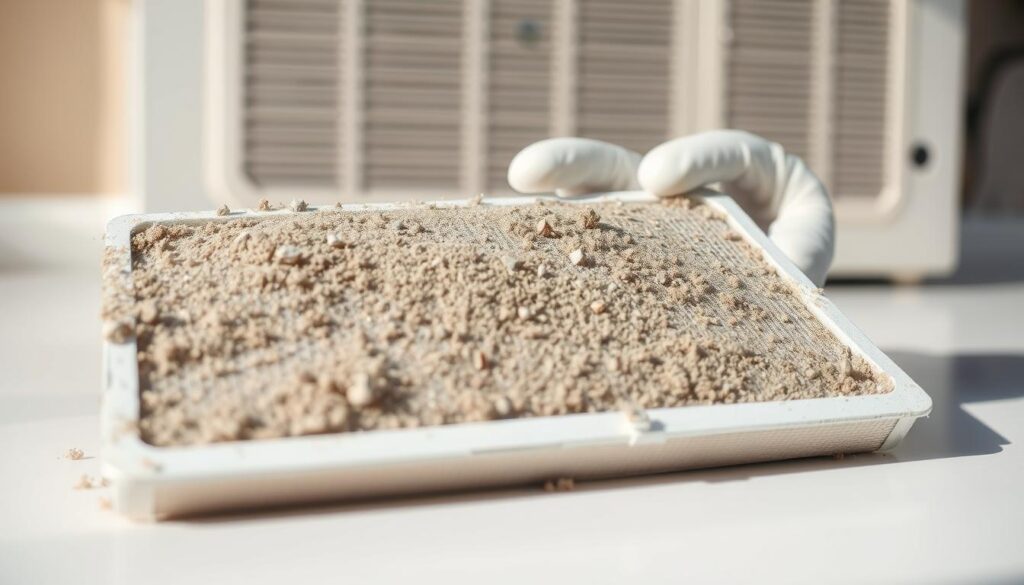
Your HVAC system sends out clear signals when it needs a new filter. If you see dust and debris on the filter, it’s time to act. Look out for these important signs that mean you need to change the filter right away.
- Reduced Airflow: If air from vents feels weak, your filter is probably too full
- Temperature Inconsistencies: If rooms heat or cool unevenly, air can’t flow well
- Energy Bill Spikes: A big jump in your energy bill means your system is working too hard
When allergy symptoms get worse and vents are dusty, it’s a sign. If your AC isn’t cooling right, it might be the filter’s fault. A burning smell from the furnace could mean dust is causing a fire risk.
If your system runs all the time but doesn’t cool down, it’s a big problem. These signs together mean you need to act fast. Waiting too long can cost you a lot or even break your system.
Don’t wait until your HVAC system fails—replace your filter at the first sign of trouble!
By fixing these issues quickly, you’ll keep your HVAC system running well. You’ll also improve the air you breathe indoors and keep your system working at its best.
The Consequences of Neglecting Filter Changes
Not changing your HVAC filter can cause big problems. It can mess up your home’s comfort, air quality, and your wallet. It might seem like a small thing, but it can really hurt your heating and cooling system.
Decreased Energy Efficiency and Higher Bills
A dirty air filter makes your HVAC system work too hard. This leads to:
- Higher energy use
- Less system performance
- Big jumps in your utility bills
When your filter gets full of dust, pet hair, and dirt, air can’t flow well. Your system tries to make up for it by running longer and using more electricity. This means your energy bills will go up.
| Filter Condition | Energy Efficiency Impact | Estimated Cost Increase |
|---|---|---|
| Clean Filter | Optimal Performance | Baseline Costs |
| Partially Clogged | Reduced Efficiency | 15-20% Higher Bills |
| Severely Blocked | Significant Performance Drop | 25-40% Cost Increase |
Reduced Indoor Air Quality
A dirty filter is a bad place for allergens, dust, and other bad stuff. Your home’s air quality gets really bad if you don’t change filters often. This can make breathing problems and allergies worse.
Keeping your HVAC system and indoor air clean starts with regular filter changes. Changing filters often means cleaner air, better system performance, and saving money in the long run.
Explore Our HVAC Shop
Looking for top-rated HVAC tools, parts, and accessories? Visit our shop and find the perfect solution for your needs.
Visit the ShopHow to Choose the Right Replacement Filter for Your System
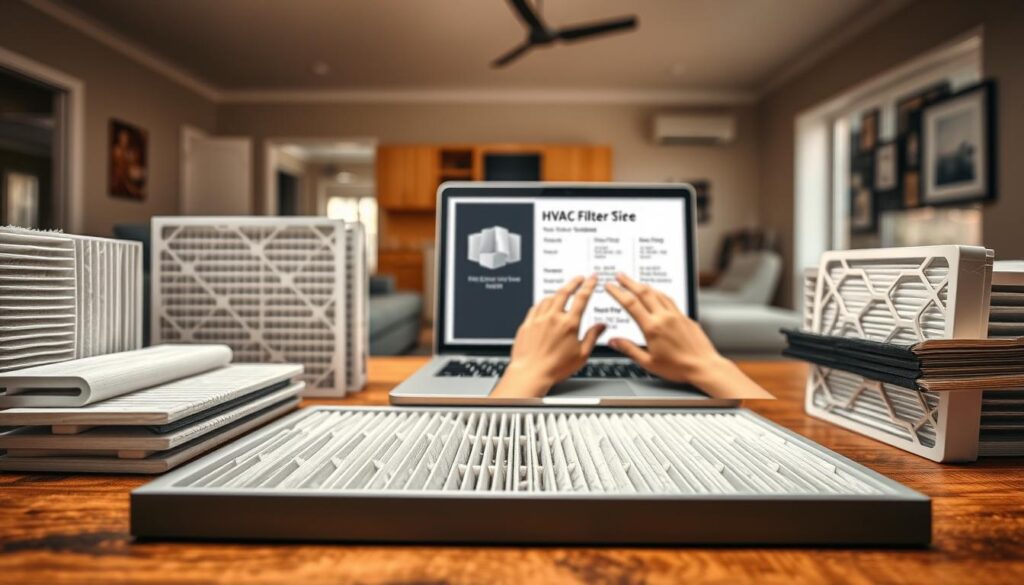
Choosing the right HVAC filter is important. You need to think about size, MERV rating, and type. These factors affect how well your system works and the air quality.
First, make sure the filter fits right. A wrong size can let unfiltered air through. Look at your current filter’s cardboard frame for size info like 16x25x1. Some homes have more than one filter spot, so measure each one.
- Measure existing filter dimensions
- Check furnace or air handler markings
- Consult equipment manual
MERV ratings show how well a filter catches particles. For most homes, MERV 8-11 filters are best. But, if you have allergies or pets, MERV 13-16 filters might be better. Make sure your system can handle the filter’s resistance.
“Not all filters are created equal. Choose wisely to protect your HVAC system and indoor air quality.”
The type of filter matters too. Pleated filters catch more particles than flat ones. Disposable cardboard filters are easy to use, while some systems prefer reusable metal ones.
HEPA filters are top-notch for catching tiny particles. They’re great for severe allergies but might need system changes.
- Hardware stores
- Home improvement centers
- Online retailers
- HVAC suppliers
Buying filters in bulk saves money. It also means you’ll always have a spare. Your HVAC system will appreciate your careful choice.
Conclusion
Keeping your HVAC filter clean is key to your home’s comfort and air quality. Knowing when to change it helps your system work better and saves energy. It also keeps your air clean and your home comfortable.
Changing your filter regularly stops your HVAC system from working too hard. Brands like Honeywell and Filtrete make it easy to find the right filter for your home. Think about your pets, home size, and air quality to choose the best filter.
By changing your filter often, you can cut down on energy costs and avoid costly repairs. Just a few minutes every few months can make a big difference. It keeps your HVAC system running smoothly and your air clean for your family.
Every home is different, so finding the right filter schedule is important. Talking to a professional HVAC technician can help. They can give you advice that fits your home’s needs perfectly.