Affiliate Disclosure
HVAC Guide Guys is a participant in the Amazon Services LLC Associates Program, an affiliate advertising program designed to provide a means for sites to earn advertising fees by advertising and linking to Amazon.
What is Commissioning in HVAC Systems? Ever wondered how building managers make sure HVAC systems work as planned? The HVAC commissioning process is a key part of this.
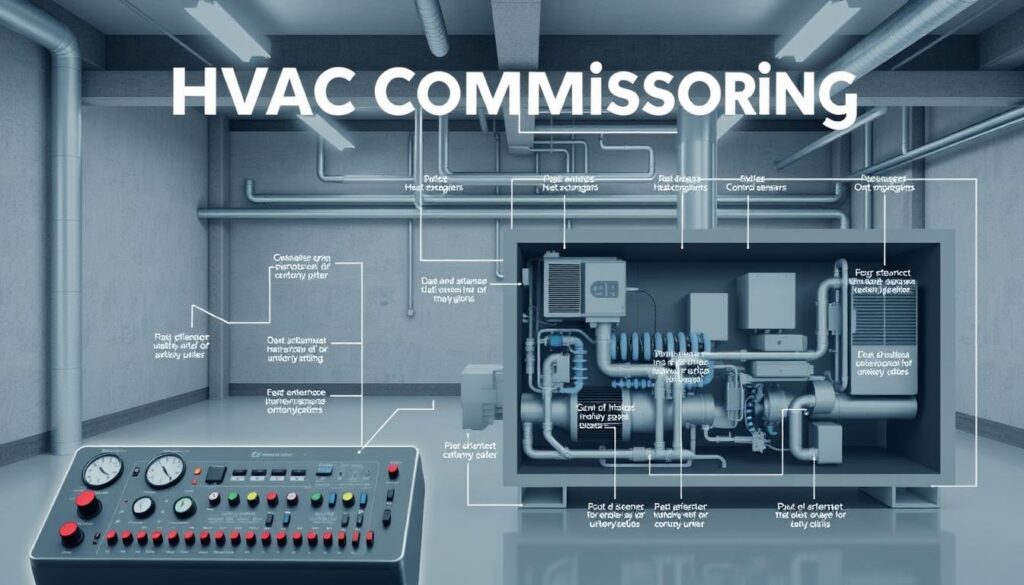
Commissioning in HVAC systems is a detailed check to make sure systems work at their best. It’s a step-by-step process that checks each part to see if it meets the original design.
By choosing HVAC commissioning, you’re doing a deep quality check. This check makes sure your systems are not just set up, but also work efficiently and reliably.
Commissioning is important for both new buildings and upgrades to existing ones. It’s a quality check that can save you time, money, and avoid future problems.
Key Takeaways
- Commissioning validates HVAC system performance against original design specifications
- Applies to both new construction and existing building systems
- Ensures optimal energy efficiency and system reliability
- Provides a comprehensive quality assurance methodology
- Helps prevent system failures and operational issues
Table of Contents
Understanding the Fundamentals of HVAC Commissioning
HVAC commissioning is key to making sure your building’s heating, ventilation, and air conditioning systems work their best. It’s more than just setting up the systems. It involves checking, testing, and fine-tuning them.
Definition and Core Purpose
HVAC commissioning checks if your system meets its design and performance goals. It’s a way to ensure quality and catch any issues early. This saves you from expensive problems later on.
- Verify system functionality
- Ensure energy efficiency
- Validate design intent
- Reduce long-term maintenance costs
Key Components of the Commissioning Process
Testing and balancing your HVAC system is essential for its performance. Here are the main steps:
| Commissioning Stage | Key Activities |
|---|---|
| Pre-Construction | Design review and system planning |
| Construction | Equipment installation verification |
| Post-Installation | Performance testing and documentation |
Role in Building Performance
Your building’s performance greatly depends on HVAC commissioning. Proper commissioning can improve energy efficiency by 10-15%. It also cuts down on costs and makes your indoor space more comfortable.
“Commissioning is not an expense, but an investment in building quality and performance.” – HVAC Industry Expert
Explore Our HVAC Shop
Looking for top-rated HVAC tools, parts, and accessories? Visit our shop and find the perfect solution for your needs.
Visit the ShopThe Importance of HVAC System Commissioning
HVAC system commissioning is key for buildings to work well. It makes sure systems run efficiently in both homes and businesses. By doing this, you get more than just a system installed.
The main reasons for hvac functional performance testing are:
- Maximizing energy efficiency
- Ensuring system reliability
- Reducing operational costs
- Improving indoor environmental quality
In offices, HVAC systems use a lot of energy. Good commissioning can cut energy use by up to 20%. This means big savings and less harm to the environment. Your building’s success relies on careful testing of all parts.
Professional HVAC commissioning brings many benefits:
- Enhanced System Performance: Finds and fixes problems early
- Safety Optimization: Makes sure systems are safe and work right
- Long-Term Reliability: Makes equipment last longer with thorough checks
By focusing on detailed commissioning, you safeguard your investment. You also make your space more green and efficient.
What is Commissioning in HVAC System: A Complete Overview
HVAC commissioning is key to making sure your building’s heating, ventilation, and air conditioning systems work their best. It’s more than just setting up the systems. It checks if everything works well together.
The role of a commissioning engineer is vital. They manage and oversee the whole process from start to end.
Pre-commissioning Requirements
Before starting the HVAC startup procedures, some important steps must be done:
- Make sure all equipment is installed right
- Check electrical connections and power supplies
- Look over ductwork and piping for correct alignment
- Ensure all safety controls work
Documentation and Verification Steps
Good documentation is essential for successful commissioning. Your team will:
- Make detailed system documentation
- Do thorough performance testing
- Record baseline measurements
- Compare actual performance with design specs
“Precision in documentation ensures system reliability and long-term performance.” – HVAC Engineering Professionals
Quality Assurance Measures
Quality assurance in HVAC commissioning means strict testing and validation. This includes functional performance tests, calibration of control systems, and checking if all parts meet design requirements.
By following these detailed commissioning steps, you can boost system efficiency, cut down energy use, and ensure great indoor air quality.
Types of HVAC Commissioning Services
Understanding the different HVAC commissioning services is key to keeping your system running well. Each service meets specific needs and ensures your climate control works efficiently.
HVAC commissioning includes three main types, each for different system needs:
- Initial Commissioning: Great for new HVAC systems installed in the last year
- Retro-commissioning: Best for older systems that haven’t been checked yet
- Re-commissioning: Good for checking and improving existing system performance
Initial Commissioning: Setting the Foundation
Initial commissioning is for new HVAC systems. Technicians do a detailed check to make sure the system works right and efficiently. This step is vital to meet performance standards from the start.
Retro-commissioning: Breathing New Life into Older Systems
Retro-commissioning is for systems over a year old that haven’t been checked. It finds ways to make the system better, saving energy and money.
Re-commissioning: Maintaining Peak Performance
Re-commissioning is like a health check for HVAC systems. Technicians inspect and test the system to catch and fix problems early. This keeps the system reliable and efficient.
Explore Our HVAC Shop
Looking for top-rated HVAC tools, parts, and accessories? Visit our shop and find the perfect solution for your needs.
Visit the ShopThe HVAC Commissioning Process Timeline
Knowing the HVAC commissioning process timeline is key for a building’s best performance. This process goes through many stages of building construction. Each stage has its own needs and goals.
Building commissioning usually involves four main stages:
- Pre-Design Stage: Initial planning and system conceptualization
- Design Stage: Detailed system specifications and technical drawings
- Construction Stage: Equipment installation and preliminary testing
- Occupancy Stage: Final system verification and performance validation
The time needed for HVAC commissioning varies. For small projects, it can take 45 minutes to 1.5 hours. Bigger projects need more time.
Several things affect how long commissioning takes:
- Building size and complexity
- Number of HVAC systems
- Equipment type and manufacturer specifications
- Specific building commissioning requirements
Proper planning and detailed documentation are vital for a smooth HVAC commissioning process.
Experts say to plan commissioning early in construction. This helps avoid delays and ensures systems work well from the start.
Essential Tools and Equipment for HVAC Commissioning
HVAC commissioning needs a full toolkit for accurate system checks. Professional technicians use special gear for detailed hvac tests and startup steps.
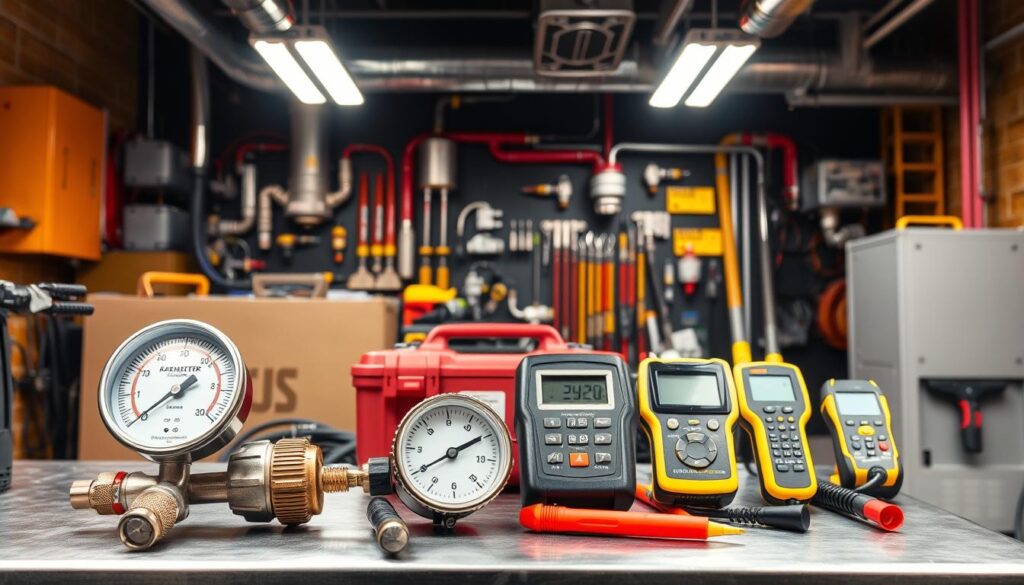
Success in HVAC commissioning comes from the right tools for system checks. Here are the key tools for top results:
Digital Testing Equipment
- Digital manifold gauge sets
- Digital leak detectors
- Advanced multimeters
- Infrared thermal cameras
Measurement Instruments
| Instrument | Primary Function | Accuracy Level |
|---|---|---|
| Digital Thermometers | Temperature Measurement | ±0.1°F |
| Digital Psychrometers | Humidity Analysis | ±2% RH |
| Dual Port Manometers | Pressure Testing | ±0.01 inches WC |
Documentation Tools
Today’s commissioning pros use digital and old-school methods for tracking system performance. Laptop computers, tablet devices, and special software make data collection and reports easier during hvac tests.
High-quality tools mean accurate measurements and thorough system checks. Your choice of equipment affects HVAC system efficiency and reliability.
Explore Our HVAC Shop
Looking for top-rated HVAC tools, parts, and accessories? Visit our shop and find the perfect solution for your needs.
Visit the ShopBenefits of Professional HVAC Commissioning
Professional HVAC commissioning brings big benefits to building owners and managers. It’s more than just setting up the system. It offers long-term gains that boost efficiency and save money.
Investing in HVAC commissioning gives you key advantages:
- Improved Energy Efficiency
- Extended Equipment Lifespan
- Enhanced Occupant Comfort
- Reduced Operational Costs
This process finds and fixes problems early, saving you money later. Experts test your HVAC system to make sure it works best.
| Benefit Category | Potential Impact |
|---|---|
| Energy Savings | 10-30% reduction in energy consumption |
| Equipment Reliability | 20% increase in system longevity |
| Maintenance Costs | 15-25% decrease in repair expenses |
Professional commissioning means comprehensive system optimization. You get better air, even temperatures, and big savings over time.
“Professional HVAC commissioning is not an expense, but a strategic investment in your building’s performance and efficiency.”
By focusing on HVAC commissioning, you protect your system and make your space better for everyone.
Common Challenges in HVAC Commissioning
HVAC system testing and balancing is tough for commissioning engineers. They face complex problems that need smart solutions and deep technical knowledge.
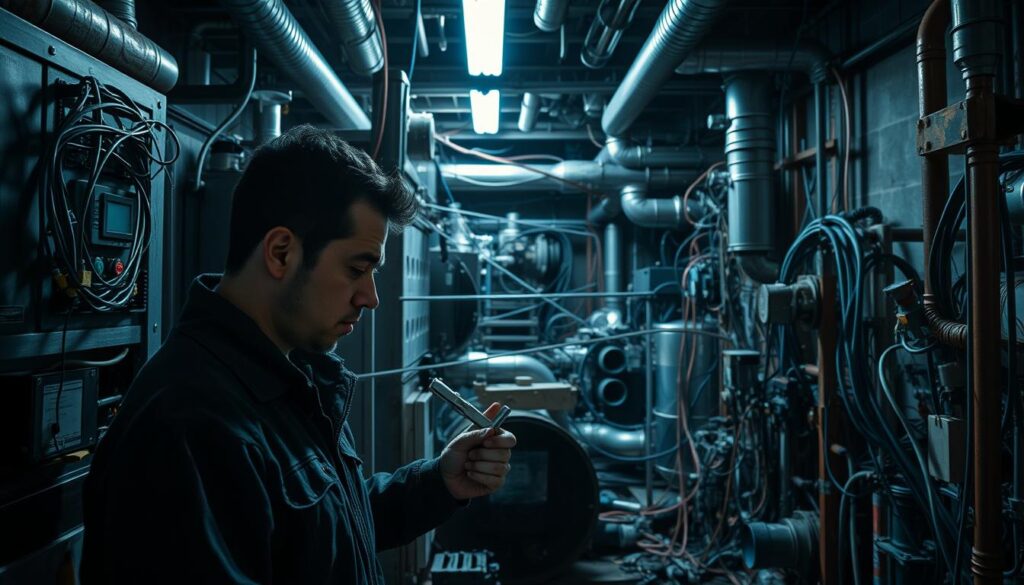
When working on HVAC system testing and balancing, the job gets more complex and demanding for commissioning engineers.
Technical Obstacles in System Performance
Technical issues can really affect how well an HVAC system works. These problems include:
- Unexpected equipment malfunctions
- Complex system integration problems
- Inconsistent airflow measurements
- Refrigerant charge discrepancies
Documentation Complexities
Keeping accurate records is key in commissioning. Issues with documentation can be:
- Incomplete system performance records
- Inconsistent technical specifications
- Missing equipment maintenance logs
“Precision in documentation is the foundation of successful HVAC commissioning.” – HVAC Engineering Professionals
Communication Barriers
Good communication is another big challenge. Commissioning engineers must deal with:
- Mechanical contractors
- Building owners
- Design engineers
- Installation teams
By tackling these challenges, experts can make sure HVAC systems work well and reliably.
Explore Our HVAC Shop
Looking for top-rated HVAC tools, parts, and accessories? Visit our shop and find the perfect solution for your needs.
Visit the ShopBest Practices for Successful Commissioning
Success in HVAC commissioning comes from a mix of technical know-how and systematic steps. Your team can boost commissioning quality by following key best practices. These ensure systems work at their best.
A detailed pre-commissioning checklist for HVAC systems is key. It spots issues early, before they grow big.
- Conduct thorough system inspections
- Verify equipment specifications and installation
- Perform detailed Testing, Adjusting, and Balancing (TAB)
- Document all system parameters
The HVAC commissioning process needs careful attention. Using advanced tools and sticking to industry standards boosts system reliability and efficiency.
| Best Practice | Key Benefits |
|---|---|
| Comprehensive System Evaluation | Identifies performance gaps |
| Standardized Documentation | Ensures consistent quality control |
| Advanced Diagnostic Testing | Provides precise system insights |
Professional commissioning needs ongoing learning and keeping up with new tech and standards. Stay proactive to get the most out of HVAC systems.
Conclusion
Knowing what HVAC commissioning is key for building managers and owners. It ensures your HVAC system works its best from start to finish. This process checks and fine-tunes your system for top performance.
HVAC commissioning is very important. It uses strict tests and checks to keep your HVAC system in great shape. This helps find problems early, saves energy, and makes your system last longer. It also keeps the air inside your building clean and healthy.
By choosing commissioning, you turn your HVAC system into a custom-made solution for your building. This smart move saves you money in the long run. It also makes your building more comfortable and eco-friendly.
Don’t wait to get help from certified HVAC commissioning experts. They can check your system and create a plan to make it better. This effort will lead to a more efficient, reliable, and better-performing building.