Affiliate Disclosure
HVAC Guide Guys is a participant in the Amazon Services LLC Associates Program, an affiliate advertising program designed to provide a means for sites to earn advertising fees by advertising and linking to Amazon.
Are you risking your home’s safety by hiring an unverified HVAC contractor? Learning how to look up HVAC license can save you from legal and financial nightmares.
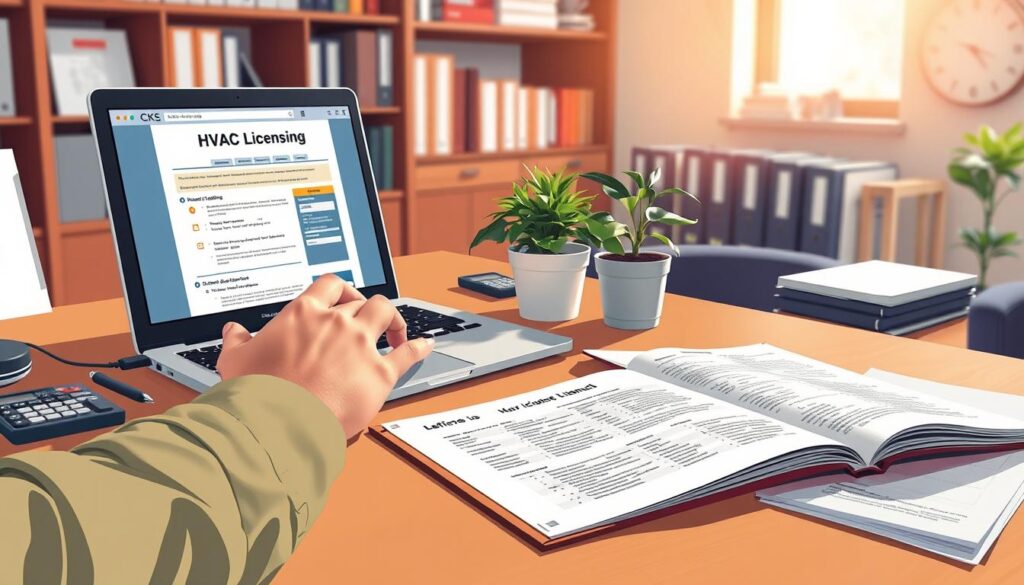
The HVAC industry is growing fast. The U.S. Bureau of Labor Statistics says it will expand by 4% by 2029. Knowing how to find HVAC license info is key to protect your investment and get quality service.
Unlicensed contractors are a big risk. They can make dangerous installations, void warranties, and leave you with expensive repairs and legal issues. It’s now critical to check contractor credentials.
This guide will show you how to check HVAC professional credentials. It will help you make smart choices about your heating and cooling needs.
Key Takeaways
- Verify HVAC contractor licenses before hiring
- Understand the risks of unlicensed work
- Learn about state-specific licensing needs
- Protect your home and financial investments
- Know professional certification standards
Table of Contents
Understanding HVAC Licensing and Certification
For homeowners, the world of HVAC credentials can seem complex. Knowing about different professional certifications helps you choose the right technician for your heating and cooling needs.
HVAC certification is a big step for technicians. It shows they have the skills, knowledge, and follow industry standards. When you check a technician’s credentials, you know they’ve gone through tough training.
What HVAC Certification Means for Homeowners
HVAC certification offers many benefits for homeowners:
- Ensures technicians have current technical knowledge
- Validates proper installation techniques
- Confirms understanding of complex heating and cooling systems
- Demonstrates commitment to professional standards
Certified technicians are more likely to do energy-efficient installations and fix system problems right. By checking HVAC certification, you keep your home comfortable and safe.
The Difference Between Business Licenses and HVAC Credentials
Business licenses and HVAC credentials are not the same. A business license lets a company operate legally. HVAC certification shows a technician’s technical skills. It’s important to know local laws when checking a technician’s credentials.
Professional certifications usually involve:
- Completing authorized training programs
- Passing thorough exams
- Keeping up with ongoing education
- Showing practical skills
Understanding these differences helps you pick a qualified HVAC professional for your home.
Why Verifying HVAC Contractor Credentials Matters
When you need HVAC services, checking your contractor’s license is key. Unlicensed contractors can harm your home, wallet, and safety. By checking the HVAC contractor license status, you avoid financial and legal issues.
Hiring an unlicensed HVAC professional can cause big problems:
- Potential legal penalties for both homeowner and contractor
- Voided equipment warranties
- Increased risk of improper installation
- Potential property damage
- Lack of insurance coverage
The risks with HVAC systems are high. Improper installation can shorten your system’s life. A well-installed central air conditioning system should last 12-15 years. But, an unlicensed technician might shorten this with bad work.
| Contractor Type | Potential Risks | Recommended Action |
|---|---|---|
| Unlicensed HVAC Technician | Poor installation, no warranties | Verify license before hiring |
| Licensed HVAC Contractor | Professional installation, warranties | Confirm credentials and insurance |
Protecting your investment means doing your homework. Always check credentials and license status. Make sure you hire a qualified professional for safe, reliable service.
How to Look Up HVAC License
It’s important to check an HVAC contractor’s credentials before hiring them. This ensures quality service and protects your home. Knowing how to use an hvac license lookup tool can help avoid costly mistakes and bad work.
Checking a contractor’s license is easy and can give you peace of mind. It’s a simple step before you hire someone for your HVAC project.
State HVAC License Database Resources
Most states have online databases for license checks. These tools let you quickly and thoroughly check HVAC contractors.
- Gather the contractor’s full business name
- Collect their license number
- Prepare the contractor’s full name
Online HVAC License Validation Tools
There are many online tools for verifying HVAC contractor credentials. These tools make it easy to check if a contractor is qualified.
| Resource Type | What You Can Verify |
|---|---|
| State Licensing Boards | License status, expiration dates, classifications |
| Professional Directories | Certification levels, professional standing |
| Third-Party Verification Services | Additional background checks, complaint history |
When using an hvac license lookup tool, always check with official state licensing authorities. Digital credentials can be wrong, so it’s important to confirm directly.
Pro Tip: Always cross-reference multiple sources when validating a contractor’s credentials.
Some states might not have one place for licenses. In these cases, check local rules and keep detailed records of your checks.
Explore Our HVAC Shop
Looking for top-rated HVAC tools, parts, and accessories? Visit our shop and find the perfect solution for your needs.
Visit the ShopState-by-State HVAC License Requirements
Understanding HVAC licensing can be tough. Each state has its own rules for HVAC workers. Knowing these rules is key for contractors and homeowners.
States handle HVAC licensing in different ways. Some have detailed systems, while others have simple or no rules.
Understanding License Classifications
HVAC licenses come in several types:
- Apprentice Level: For beginners, with a lot of supervision
- Journeyman Level: For those with a lot of experience
- Master Level: For the most skilled professionals
State Licensing Variations
| State | Licensing Requirement | Experience Needed |
|---|---|---|
| Florida | Class A (Unlimited) and Class B (Limited) | 4-5 years |
| California | C-20 License for work over $500 | 4 years in preceding 10 years |
| Georgia | Class I (Restricted) and Class II (Unrestricted) | 4-5 years experience |
Some states, like Colorado and Illinois, don’t have state licenses. But, cities in these states might have their own rules. Always check the state hvac license database for the latest info.
Reciprocal Licensing
Some states near each other have deals that make licensing easier. These deals let licensed workers move between states with less hassle. Talk to your local licensing board to see if you can use these deals.
Finding Licensed HVAC Professionals in Your Area
Finding licensed HVAC pros can seem daunting. Start with trusted recommendations from those you know. Personal referrals offer insights that online searches can’t.
Begin by asking:
- Neighbors who recently had HVAC work
- Friends and family members
- Local homeowners associations
- Coworkers with recent HVAC installations
Digital tools can also help. Use these resources:
- State licensing board directories
- Professional association websites
- NATE (North American Technician Excellence) contractor locator
- Local business review platforms
When looking at HVAC contractors, ask for several quotes. Compare their:
| Evaluation Criteria | What to Look For |
|---|---|
| License Verification | Current state licensing credentials |
| Experience | Years in business and specialized expertise |
| Certifications | NATE certification and additional professional credentials |
| References | Verifiable customer testimonials |
Be cautious with online reviews. Look for patterns, not single comments. Seasonal timing matters – book in spring or fall for better prices.
Explore Our HVAC Shop
Looking for top-rated HVAC tools, parts, and accessories? Visit our shop and find the perfect solution for your needs.
Visit the ShopVerifying HVAC Technician Credentials and Certifications
When you hire an HVAC pro, it’s more than just a basic license. Look for professional certifications and financial protections. These ensure you get the best service.

Checking hvac technician credentials means looking at two key areas. These are professional certifications and insurance needs.
NATE Certification: The Gold Standard
The North American Technician Excellence (NATE) certification is the top mark in HVAC skills. Technicians must pass tough exams to show their skills.
- Proves advanced technical knowledge
- Demonstrates ability to handle complex heating and cooling systems
- Offers specialty certifications in specific HVAC areas
EPA Section 608 Certification Requirements
All technicians working with refrigerants must have EPA Section 608 certification. This ensures they are technically skilled and environmentally safe.
- Type I: Small appliances
- Type II: High-pressure refrigerants
- Type III: Low-pressure refrigerants
- Universal: Covers all refrigerant types
Insurance and Bonding Protections
Checking a technician’s insurance and bonding is key for homeowners’ financial safety.
Important insurance coverages include:
- General Liability Insurance: Protects against property damage
- Workers’ Compensation: Covers worker injuries
- Surety Bonds: Financial guarantee of contract completion
Always ask for proof of current insurance. Then, check coverage with the insurance provider. This protects you from financial risks.
Red Flags When Checking HVAC Contractor Licenses
When you check HVAC contractor licenses, watch out for warning signs. These signs can help you avoid scams and bad service. Knowing what to look for is key to protecting yourself.
Professional contractors value transparency in their licenses. When you look up HVAC contractor licenses, be on the lookout for these red flags:
- Reluctance to share license numbers or certification details
- Claims that licensing is “unnecessary” for your specific job
- Significantly lower price quotes compared to other contractors
- Pressure tactics demanding immediate decisions or cash-only payments
- Lack of a permanent business address
Real HVAC pros spend a lot of time and money on getting the right credentials. A genuine contractor will welcome your efforts to verify their license. They usually offer:
- Verifiable state license numbers
- Proof of current insurance and bonding
- References from recent customers
- Detailed written estimates
- Clear contract specifications
Trust your gut when checking HVAC contractor licenses. If something seems off or too good, it likely is. Any contractor who doesn’t want to show their credentials is a sign to look elsewhere.
Explore Our HVAC Shop
Looking for top-rated HVAC tools, parts, and accessories? Visit our shop and find the perfect solution for your needs.
Visit the ShopWhat to Do If Your HVAC Contractor Is Unlicensed
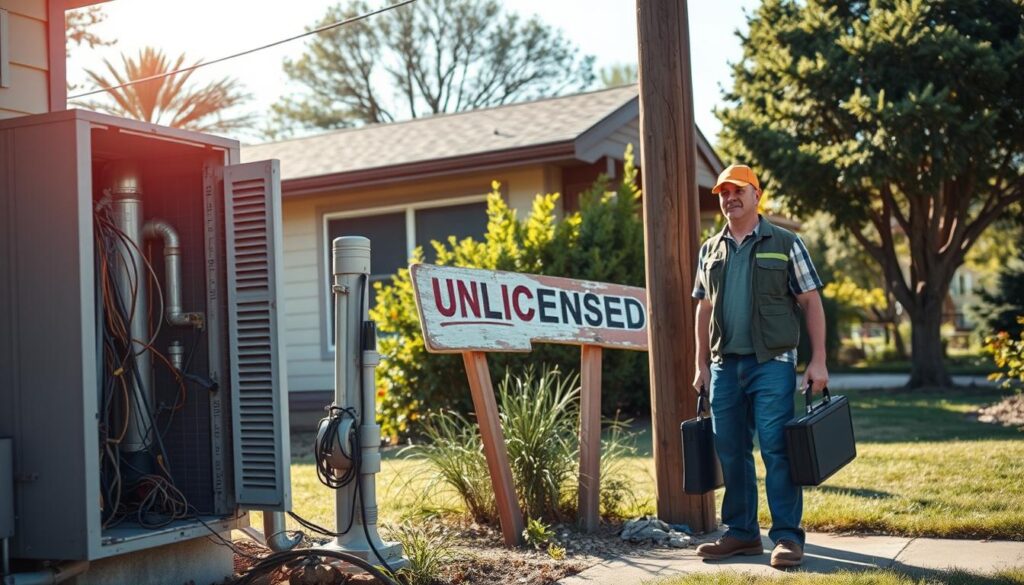
Discovering that your HVAC contractor is not licensed can be stressful. It’s important to protect yourself and your property. Look for registered HVAC companies to find solutions.
Legal Consequences for Homeowners
Using an unlicensed HVAC contractor can lead to big financial and legal problems. Homeowners might face serious issues that affect their property and money:
- Potential liability for on-site worker injuries
- Voided manufacturer warranties
- Possible code violations
- Insurance claim rejections
“An unlicensed contractor can turn your home improvement project into a legal nightmare.” – HVAC Industry Expert
Immediate Steps to Protect Yourself
Act fast if you find out your contractor is unlicensed. Here are key steps:
- Stop all ongoing work immediately
- Withhold final payment
- Document all communications and contract details
- Consult with a legal professional
Reporting Unlicensed Contractors
Reporting unlicensed HVAC contractors is important. It helps protect others and keeps the industry standards high. Contact these places:
- State contractor licensing board
- Local building departments
- Consumer protection agencies
- Better Business Bureau
Remember, acting quickly reduces your risks and protects your community from unqualified contractors.
Questions to Ask Before Hiring an HVAC Technician
Before you hire an HVAC technician, it’s important to ask the right questions. Your home’s comfort and safety depend on a qualified professional. They should show they really know what they’re doing.
Before you sign anything, make a list of key questions. These will help you check if your HVAC contractor is qualified:
- What is your current license number and which state issued it?
- Are you and your technicians NATE-certified?
- Do all technicians have EPA Section 608 certification?
- How long have you been operating under your current license?
When you look up an HVAC license, look for clear, professional information. Ask for these important documents:
- Certificates of insurance for general liability
- Workers’ compensation documentation
- Proof of bonding
- Written verification of credentials
Technical skills are very important. Ask about specific details:
- Will you perform a Manual J load calculation?
- How will you verify indoor and outdoor unit compatibility?
- What SEER rating do you recommend?
- Do you inspect and seal ductwork during installation?
Good contractors are happy to answer your questions. They know you want the best for your home. Be careful of those who get defensive or avoid answering your questions.
Remember: A truly qualified HVAC technician will appreciate your diligence in verifying their professional standing.
Conclusion
Starting your journey as an informed homeowner means learning how to find HVAC license details. The HVAC field is growing fast, with a 4% increase expected by 2029. It’s important to research and check the credentials of contractors to protect your home’s systems.
Checking an HVAC contractor’s license status is more than just a routine task. It’s about protecting your big investment. Replacing a system can cost between $5,000 and $12,000. So, it’s key to vet contractors well.
By using state licensing databases and online tools, you can make sure only qualified pros work on your home. This guide gives you the tools to make wise choices.
Legitimate HVAC pros are happy to show their licenses. This step keeps your family comfortable, extends system life, and avoids legal issues.
Save your state’s licensing sites and the verification tools. Share this info with others too. A well-installed HVAC system can last 12-15 years. Being proactive about HVAC licenses saves you time, money, and stress.