
Affiliate Disclosure
HVAC Guide Guys is a participant in the Amazon Services LLC Associates Program, an affiliate advertising program designed to provide a means for sites to earn advertising fees by advertising and linking to Amazon.
What if your basement’s exposed ductwork could become an asset instead of an eyesore? Many homeowners struggle with unsightly pipes and ventilation systems that dominate their lower-level spaces.
These visible components often detract from your home’s overall appeal. They can make an otherwise functional area feel industrial and unfinished. Addressing this challenge transforms your basement into a welcoming environment for family and guests.
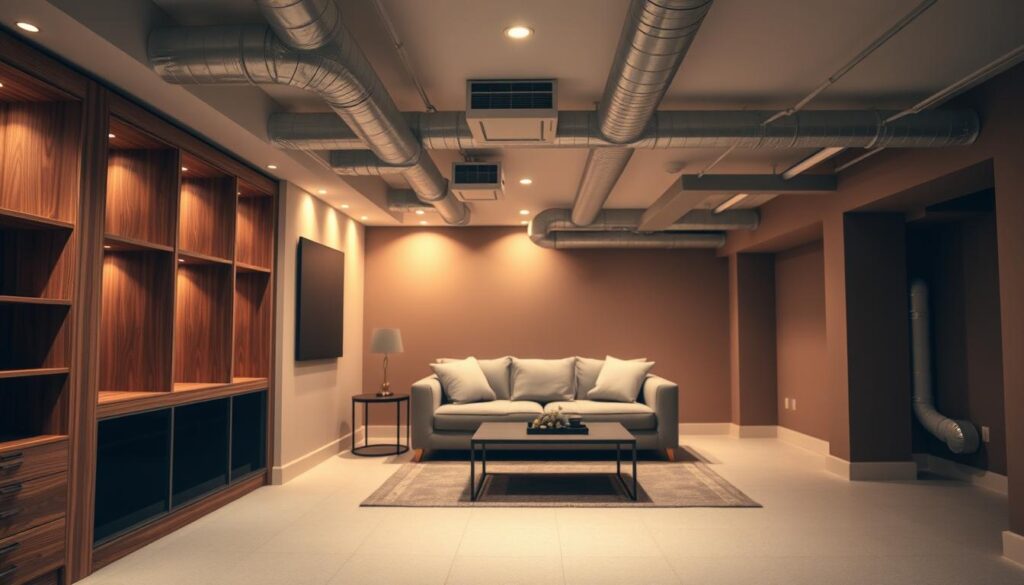
Concealing your mechanical systems offers more than just visual benefits. It creates additional usable space for entertainment areas, family rooms, or guest suites. Proper integration maintains system performance while enhancing your home’s design.
This guide explores practical approaches for dealing with exposed mechanical components. You’ll discover both DIY and professional methods that balance aesthetics with functionality. The solutions maintain proper access for maintenance while improving your basement’s appearance.
Key Takeaways
- Concealing mechanical systems transforms basement aesthetics dramatically
- Proper integration maintains HVAC performance and accessibility
- Multiple approaches exist for different skill levels and budgets
- Additional usable space becomes available after concealment
- Dust and debris protection improves with proper covering
- Home value can increase with professional-looking results
- Planning ensures both visual appeal and functional requirements
Table of Contents
Benefits of Concealing Your HVAC and Ductwork
The decision to conceal mechanical components delivers both visual and practical rewards for your living environment. When you address visible systems, you transform the entire character of your lower-level area.
Enhancing Aesthetic Appeal
Visible mechanical elements create an unfinished appearance that undermines your design efforts. Concealing exposed ductwork transforms the space from utilitarian storage to inviting living quarters.
This approach creates a polished, organized environment that feels intentional. Your basement becomes a true extension of your home rather than an afterthought.
Improving Air Quality and Energy Efficiency
Uncovered ducts accumulate dust and debris that circulate through your ventilation system. Proper concealment protects these components from contamination.
This protection maintains cleaner air for your family while preventing pest intrusion. Additionally, concealed and insulated ductwork maintains temperature more effectively.
Energy efficiency improves as properly covered systems reduce heat loss. Your HVAC investment receives better protection while operating more efficiently.
Explore Our HVAC Shop
Looking for top-rated HVAC tools, parts, and accessories? Visit our shop and find the perfect solution for your needs.
Visit the ShopExpert Methods on How to Hide HVAC in Basement
Professional contractors offer several sophisticated approaches for integrating mechanical systems into your basement design. These solutions provide permanent concealment while maintaining full access for necessary maintenance.
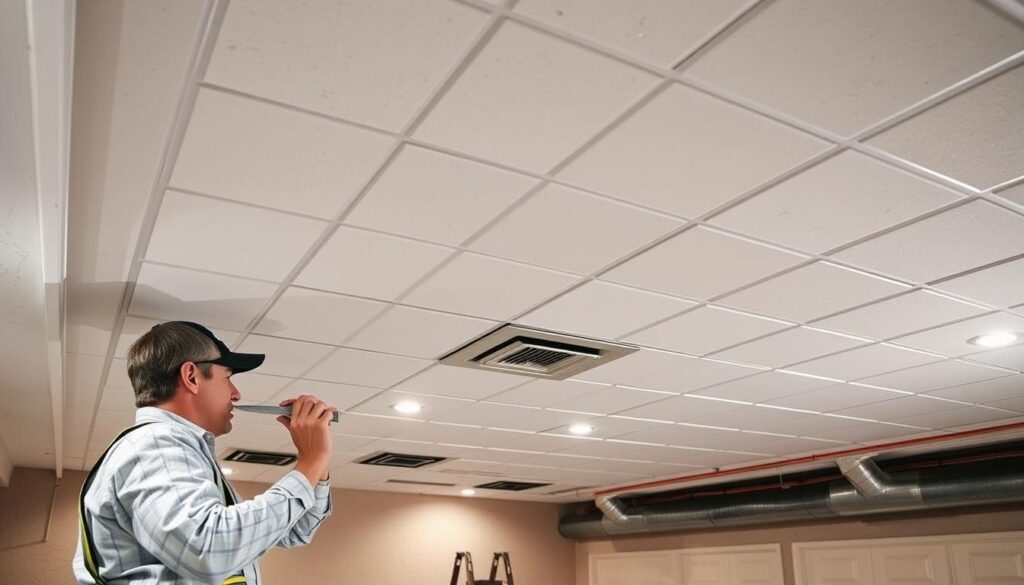
Utilizing Drop Ceilings and Acoustic Panels
Suspended ceiling systems create a secondary ceiling that effectively conceals overhead ductwork. The lightweight metal grid supports various tile materials that match your decor.
Acoustic panels serve dual purposes by improving sound quality while hiding visible components. You can choose from numerous styles and textures to complement your space.
These systems provide easy access for maintenance through removable tiles. This method maintains functionality while creating a polished appearance.
Incorporating Custom Soffits and False Rafters
Custom soffits frame exposed ductwork to create architectural interest. They transform functional elements into design features using various materials.
False rafters use faux beams to mimic traditional ceiling structures. This technique effectively conceals ducts while adding character to your space.
Both approaches offer quick installation and customization options. They provide professional results that enhance your basement’s overall appeal.
Explore Our HVAC Shop
Looking for top-rated HVAC tools, parts, and accessories? Visit our shop and find the perfect solution for your needs.
Visit the ShopDIY Solutions for Concealing Ductwork
Creative solutions exist for homeowners seeking to integrate exposed systems into their basement’s aesthetic vision. These approaches provide cost-effective ways to achieve professional-looking results.
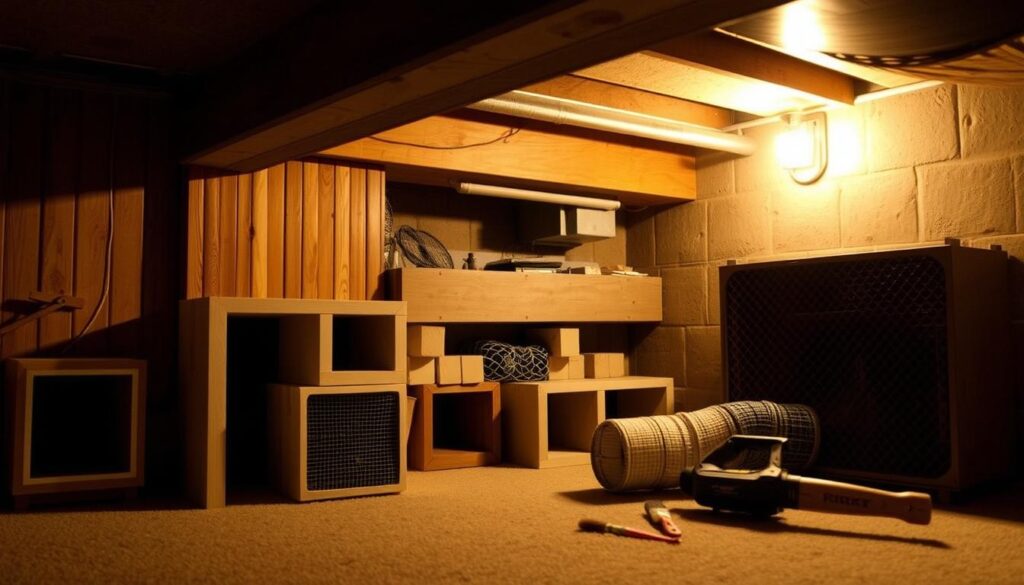
You can explore various materials and techniques that transform functional elements into design features. The right choice depends on your skill level and desired outcome.
Creative Ductwork Covers and Panels
Custom covers offer one of the most accessible options for concealing ductwork. You’ll find materials ranging from metal grilles to fabric panels.
Decorative grilles provide an elegant solution that blends functionality with style. These components attach easily and can be painted to match your existing decor.
| Material Type | Installation Difficulty | Cost Range | Maintenance Access |
|---|---|---|---|
| Metal Grilles | Easy | $20-50 per section | Excellent |
| Fabric Panels | Very Easy | $15-40 per panel | Good |
| Plastic Covers | Easy | $25-60 per unit | Excellent |
Painting and Camouflaging Techniques
Simple painting methods can effectively conceal ducts while adding visual interest. Choose colors that complement your wall or ceiling surfaces.
“The most successful DIY projects balance aesthetic improvement with practical functionality.”
For seamless blending, match your ductwork color to the ceiling. This approach works particularly well with light, neutral tones.
Proper surface preparation ensures long-lasting results. Clean surfaces thoroughly and use appropriate primers before applying your chosen paint.
You can also embrace bold colors or patterns to make ducts a design feature. This creative way to address visible systems adds personality to your space.
Professional Installation Options and Advanced Techniques
Advanced concealment techniques elevate your basement’s appearance while maintaining full system functionality. Professional contractors employ specialized methods that create permanent, polished results.
These solutions transform visible components into integrated design elements. They ensure proper access for maintenance while enhancing your space’s visual appeal.
Explore Our HVAC Shop
Looking for top-rated HVAC tools, parts, and accessories? Visit our shop and find the perfect solution for your needs.
Visit the ShopExplore Our HVAC Shop
Looking for top-rated HVAC tools, parts, and accessories? Visit our shop and find the perfect solution for your needs.
Visit the ShopBuilding Suspended Ceilings and Enclosures
Suspended ceiling systems provide excellent concealment for overhead ductwork. They feature lightweight metal grid frameworks supporting acoustic tiles.
This approach creates a clean, finished look throughout your space. Removable panels ensure easy access for any necessary maintenance work.
Custom enclosures built around ductwork offer another professional solution. Contractors use materials like drywall or plywood to construct these boxes.
| Method | Materials Used | Access Level | Installation Time |
|---|---|---|---|
| Suspended Ceiling | Metal grid, acoustic tiles | Excellent | 2-3 days |
| Drywall Enclosure | Drywall, framing lumber | Good | 3-4 days |
| Custom Panel System | Wood, PVC, vinyl panels | Very Good | 2-3 days |
Integrating Built-In Cabinets and Storage Space
Built-in cabinets serve dual purposes in basement design. They conceal ductwork while providing valuable storage space.
Professional installers create custom units that fit perfectly around mechanical systems. This approach maximizes your available square footage efficiently.
Installing Wall Chases and Custom Molding
Wall chases offer discreet concealment for vertical duct runs. These thin metal or plastic boxes mount flush with wall surfaces.
Custom molding provides elegant framing around exposed components. Crown molding and other trim pieces create seamless integration with your room’s design.
For complex projects, professional installation guidance ensures optimal results. Expert contractors balance aesthetic goals with practical maintenance requirements.
Incorporating Design Elements for a Finished Look
Strategic aesthetic choices can seamlessly blend mechanical systems with your basement’s overall decor. The right design approach transforms functional spaces into inviting environments.
Ceiling Treatments, Soffits, and Tray Ceilings
Beadboard panels create charming cottage-style appeal. Light colors brighten the space while concealing components.
Rustic wood planks add warmth and character. Install them parallel to ductwork for streamlined appearance.
Tray ceilings offer luxury with raised centers. They accommodate various molding styles for architectural interest.
| Treatment Type | Visual Effect | Installation Complexity | Material Options |
|---|---|---|---|
| Beadboard | Cottage charm | Moderate | Wood, PVC, MDF |
| Wood Planks | Rustic warmth | Moderate | Pine, Cedar, Reclaimed |
| Fabric Draping | Cozy atmosphere | Easy | Canvas, Muslin, Polyester |
Lighting, Color Schemes, and Material Options
Layered lighting compensates for limited natural light. Combine ambient, task, and accent fixtures.
“Great design happens when function and beauty work in perfect harmony.”
Light, neutral color schemes create brighter, more open feelings. They complement concealment efforts beautifully.
Various materials and styles transform utilitarian spaces over time. Explore creative DIY ideas for personalized solutions.
Conclusion
Achieving a finished look in your home’s lower level involves thoughtful concealment strategies. You now have a comprehensive understanding of various approaches for integrating mechanical systems into your living space.
The variety of options available ensures you can find the perfect solution for your specific needs. From simple DIY covers to professional built-in cabinetry, each method offers unique benefits. Consider your budget, timeline, and design preferences when selecting the right approach.
Remember that proper planning maintains essential access for maintenance while creating visual appeal. Your transformed room becomes a valuable addition to your home where your family can gather comfortably.
Take the next step toward creating a beautiful, functional area that serves your household for years. The right concealment strategy turns utilitarian space into welcoming living quarters with genuine character and interest.