Affiliate Disclosure
HVAC Guide Guys is a participant in the Amazon Services LLC Associates Program, an affiliate advertising program designed to provide a means for sites to earn advertising fees by advertising and linking to Amazon.
What if the very substance that keeps your home cool is silently escaping, undermining your comfort and your wallet? This scenario is more common than many homeowners realize. Your air conditioning system relies on a special fluid to function properly.
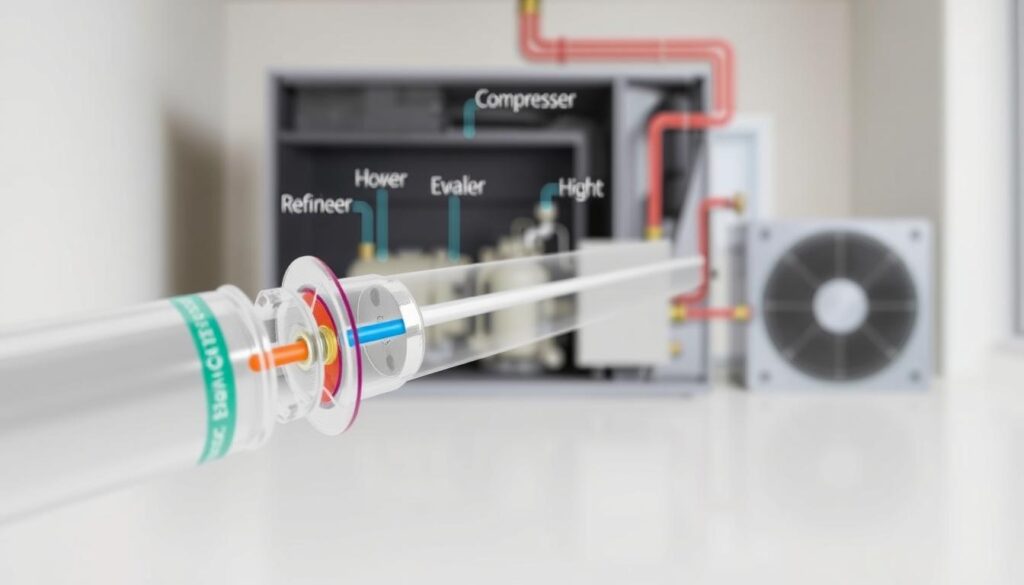
This fluid, called refrigerant, is the lifeblood of your cooling unit. It constantly cycles through the system, changing from a liquid to a gas. This process absorbs heat from your indoor air and releases it outside, keeping your living space comfortable.
A breach in this closed-loop system is a serious problem. It disrupts the entire heat exchange process. When the refrigerant level drops, your system must work much harder. This leads to poor cooling performance and can cause significant damage to critical components.
Understanding this issue is crucial for maintaining a comfortable home environment. This article will guide you through identifying the signs of a problem, the detection methods available, and the necessary steps for resolution. We will also clarify when it is essential to call a professional technician.
Key Takeaways
- Refrigerant is essential for your air conditioning system to absorb and remove heat from your home.
- A leak disrupts the cooling cycle, forcing the system to work inefficiently.
- Ignoring this issue can lead to higher energy bills and potential system failure.
- While you can spot some warning signs, repairs require specialized skills and equipment.
- Environmental regulations make professional handling of refrigerant necessary.
- Prompt attention to a suspected leak prevents more extensive and costly damage.
Table of Contents
Understanding the Importance of Repairing Refrigerant Leaks
The financial impact of ignoring cooling system issues often surprises homeowners until it’s too late. Addressing a suspected problem promptly prevents minor concerns from escalating into major expenses.
Potential Damage and Cost Implications
When your air conditioning unit operates with insufficient fluid levels, the compressor faces excessive strain. This vital component can fail completely, requiring replacement that typically costs $1,200 to $3,000.
Other parts like evaporator coils and condenser units may also sustain damage. The cascade effect begins with reduced efficiency and progresses to component failure.
Impact on Cooling Efficiency and Energy Bills
Your system works much harder to achieve the same cooling results when fluid levels drop. This increased effort translates directly to higher energy consumption.
Monthly energy bills can rise by hundreds of dollars annually as the unit runs continuously. Timely repairs represent the most cost-effective solution compared to ignoring the issue.
Beyond financial concerns, operating a compromised system releases harmful substances into the environment. Professional handling ensures both legal compliance and environmental protection.
Explore Our HVAC Shop
Looking for top-rated HVAC tools, parts, and accessories? Visit our shop and find the perfect solution for your needs.
Visit the ShopSigns You May Have a Refrigerant Leak in Your HVAC System
Your air conditioner might be trying to tell you something is wrong long before it breaks down completely. Recognizing these early warnings is key to preventing extensive damage. The clues generally fall into two categories: things you can see or hear, and changes in how your unit performs.
Visual and Audible Clues
Start by inspecting the unit itself. Look for oily spots or residue around valves and connection points. This grease often escapes with the leaking fluid.
Listen carefully near the refrigerant lines. A hissing or bubbling sound can mean the substance is escaping under pressure. Some older types have a faint, sweet smell, similar to nail polish remover.
Abnormal AC Performance Symptoms
The most obvious sign is weak cooling. Your air conditioner may blow air that feels warm or just not very cold. This indicates a lack of the necessary fluid for proper heat absorption.
You might also notice uneven temperatures in different rooms. Your system struggles to maintain a consistent climate. Ice forming on the coils is another paradox—it often points to low pressure.
Watch for short, frequent cycles where the unit turns on and off rapidly. This shows it cannot complete a full cooling cycle. Finally, a sudden spike in your energy bill, without a rate change, signals your system is overworking.
Explore Our HVAC Shop
Looking for top-rated HVAC tools, parts, and accessories? Visit our shop and find the perfect solution for your needs.
Visit the ShopStep-by-Step Process: How to Fix HVAC Refrigerant Leak
When your air conditioning shows signs of trouble, knowing the right steps can save you time and money. The resolution process involves both initial assessment and professional intervention.
DIY Inspection and Initial Assessment
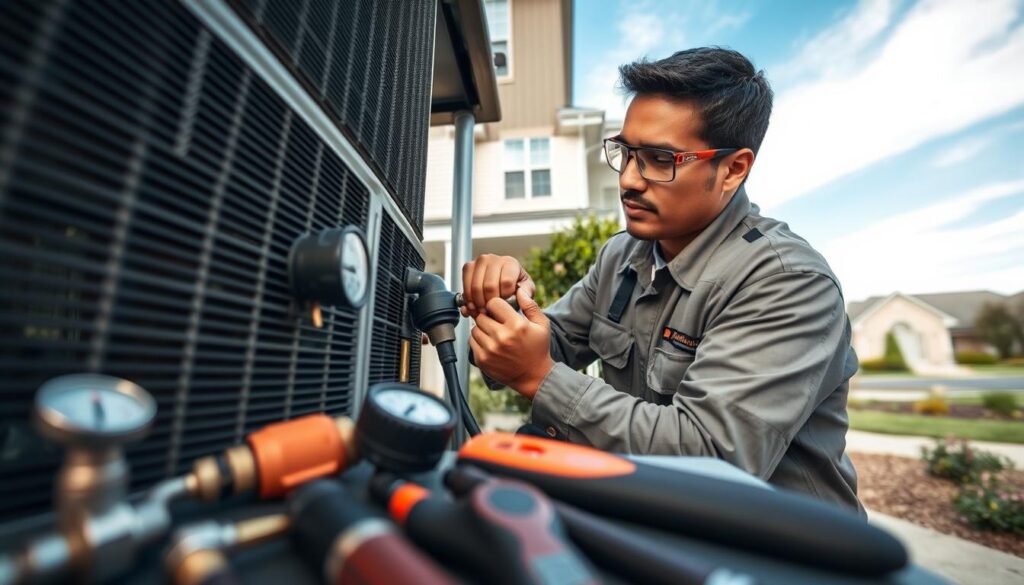
Begin with a careful visual examination of your cooling equipment. Look for oily residue around connections and coils. This often indicates where substance has escaped.
Listen for unusual hissing sounds near refrigerant lines. You can also perform a simple soapy water test on suspected areas. Bubbles forming indicate escaping pressure.
When to Call a Professional HVAC Technician
These initial checks help identify potential issues. However, actual repair work requires specialized skills and equipment. Certified professionals use electronic detectors to pinpoint exact leak locations.
The technician will assess severity and determine the appropriate solution. This may involve sealing small breaches or replacing damaged components. Proper service ensures your system operates efficiently and safely.
Common Causes of Refrigerant Leaks in HVAC Systems
Several underlying issues can compromise your home’s climate control by allowing essential fluid to escape. Understanding these root causes helps you recognize risk factors and take preventive measures.
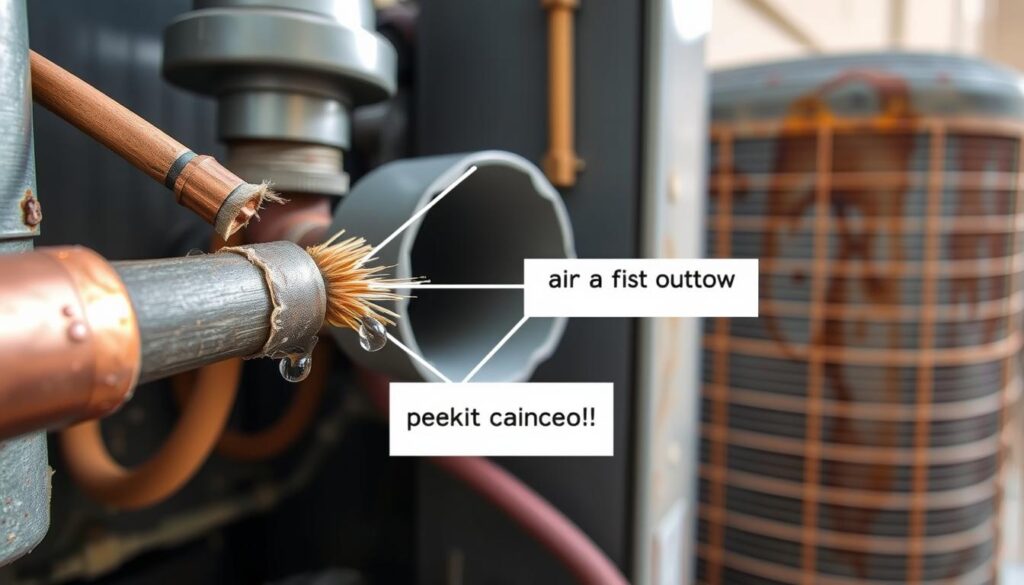
Normal wear and tear gradually degrades seals and connection points throughout your equipment. Over time, gaskets and fittings lose their integrity, creating pathways for substance loss.
Explore Our HVAC Shop
Looking for top-rated HVAC tools, parts, and accessories? Visit our shop and find the perfect solution for your needs.
Visit the ShopExplore Our HVAC Shop
Looking for top-rated HVAC tools, parts, and accessories? Visit our shop and find the perfect solution for your needs.
Visit the ShopWear, Tear, and Corrosion
Corrosion presents a significant threat to your cooling system. Moisture and environmental factors eat away at copper lines and aluminum coils. This creates weak spots that eventually develop into breaches.
Physical damage from lawn equipment or debris can puncture refrigerant lines. Even hail storms may crack critical components. Frozen evaporator coils also cause problems through expansion and contraction cycles.
Improper installation often creates future trouble spots. Poorly brazed connections or over-tightened fittings fail prematurely. Older systems naturally become more vulnerable as parts age beyond their design lifespan.
Outdoor condenser units face accelerated deterioration from weather exposure. Road salt and pollution gradually compromise their integrity. Understanding what causes refrigerant leaks helps you maintain your equipment effectively.
Methods and Tools for Detecting Refrigerant Leaks
Modern detection methods have revolutionized how technicians locate system vulnerabilities. Professionals use specialized equipment to identify problem areas accurately. This prevents wasted time and ensures comprehensive repairs.
Electronic Detectors and UV Dye Testing
Electronic leak detectors sense cooling fluid molecules in the air. They alert technicians with audible signals when near a breach. These devices can identify losses as small as 0.1 ounces annually.
UV dye testing involves injecting fluorescent dye into your equipment. The substance circulates and glows brightly under ultraviolet light at escape points. This method excels at finding small or intermittent issues that other techniques might miss.
Pressure Testing and Soapy Water Application
Nitrogen pressure testing stresses all connections and components. Technicians pressurize the system with nitrogen gas to reveal weaknesses. This approach works well for larger problems before adding new fluid.
The soapy water method uses simple dish soap mixed with water. Spraying this solution on suspected areas creates bubbles where pressure escapes. While helpful for obvious breaches, it cannot detect subtle losses that often cause ongoing problems.
Experts frequently combine multiple approaches for complete leak detection. Starting with electronic sensors and confirming with dye or pressure tests ensures no issue goes unnoticed. Proper identification saves money by preventing repeated service calls and fluid waste.
Exploring Repair Options and Cost Considerations
The crossroads between repairing your existing equipment and investing in new technology requires careful financial analysis. Your decision impacts both immediate expenses and long-term home comfort.
Minor Repairs Versus Component Replacement
Simple fixes typically range from $200 to $500. These address small issues without major component changes. More extensive work may cost $500 to $1,000.
Replacing critical parts like evaporator coils or compressors increases expenses significantly. These repairs often reach $1,000 to $1,500 or more.
When to Replace the Entire HVAC Unit
Consider new equipment when your system exceeds 10-15 years old. Repeated issues or high repair bills signal replacement time.
| Repair Type | Cost Range | Recommended For |
|---|---|---|
| Minor Leak Repair | $200 – $500 | Systems under 10 years old |
| Evaporator Coil Replacement | $600 – $2,000 | Isolated component failure |
| Compressor Replacement | $1,200 – $3,000 | Major system failure |
| Full Unit Replacement | $3,500 – $7,500 | Systems over 10-15 years old |
Energy Efficiency and Refrigerant Types
Modern refrigerants like R-410A offer better performance than older types. Newer units reduce monthly energy bills significantly.
Upgrading to current technology provides long-term savings. Consider getting a grip on AC repair before making your final decision.
Conclusion
Maintaining optimal home comfort means staying ahead of potential system failures through proactive monitoring. Recognizing early warning signs like reduced cooling capacity or unusual sounds allows you to address issues before they escalate into major problems.
Professional leak detection ensures all vulnerabilities are identified and properly addressed. This prevents further damage to critical components like the compressor and evaporator coil. Timely intervention saves you from expensive breakdowns and rising energy bills.
Remember that while you can spot initial symptoms, actual repairs require certified expertise. Regular maintenance helps catch problems early and extends your equipment’s lifespan. For related issues like unexpected moisture around your unit, professional assessment is equally important.
Investing in proper solutions protects your home’s climate control and provides peace of mind during hot weather. Your air conditioning system’s performance and longevity depend on addressing refrigerant concerns promptly with qualified assistance.