

Affiliate Disclosure
HVAC Guide Guys is a participant in the Amazon Services LLC Associates Program, an affiliate advertising program designed to provide a means for sites to earn advertising fees by advertising and linking to Amazon.
What Is HVAC Technician Salary? Ever wondered how much you could make as an HVAC technician? The field of heating, ventilation, and air conditioning has surprising financial perks. Many people don’t even consider it.

Learning about HVAC technician salaries can open up new career and financial possibilities. These skilled workers earn good money for their technical skills and important role in keeping us comfortable.
The pay for HVAC technicians varies a lot. It depends on experience, where you work, and your specialty. They handle everything from home setups to big industrial systems, making sure our spaces are comfy and work well.
Key Takeaways
- HVAC technicians can earn competitive salaries across different specializations
- Entry-level and experienced technicians have distinct pay scales
- Geographic location significantly impacts earning
- Specialized certifications can boost income opportunities
- Career growth is strong in the HVAC industry
Table of Contents
Understanding the HVAC Technician Career Path
Starting a career as an HVAC technician is exciting. It’s perfect for those who love technical skills and want stable work. To succeed, you need the right education, certifications, and ongoing skill improvement.
Required Qualifications and Certifications
To kickstart your HVAC career, you need the right education and certifications. Employers usually look for these:
- High school diploma or equivalent
- Vocational training in HVAC systems
- EPA Section 608 Certification
- State-specific licensing requirements
Getting extra certifications can really help your salary. Specialized credentials from groups like NATE show you’re a pro. They can increase your earnings.
Career Growth Opportunities
HVAC technicians have many career paths to choose from:
- Residential service technician
- Commercial HVAC specialist
- HVAC system designer
- Technical instructor
- Business owner
Industry Demand and Job Security
The HVAC industry is growing fast. New tech in green energy and smart homes opens up more jobs. There’s a big need for HVAC experts in homes, businesses, and factories.
Your success depends on learning, being good at your job, and keeping up with new tech. Investing in your skills can lead to big career wins and better pay.
Explore Our HVAC Shop
Looking for top-rated HVAC tools, parts, and accessories? Visit our shop and find the perfect solution for your needs.
Visit the ShopWhat Is HVAC Technician Salary Across Different Experience Levels
Knowing how much HVAC technicians make at different career stages is key to planning your future. Your salary in the HVAC field changes a lot as you get more experience and skills.
HVAC career earnings vary a lot based on your career path. Here’s what you can expect at different experience levels:
- Entry-Level (0-2 years): $32,000 – $42,000 annually
- Mid-Level (3-5 years): $45,000 – $58,000 annually
- Experienced (6-10 years): $58,000 – $75,000 annually
- Senior-Level (10+ years): $75,000 – $95,000 annually
Your salary goes up based on a few important things:
| Experience Level | Key Salary Drivers |
|---|---|
| Entry-Level | Certifications, apprenticeship completion |
| Mid-Level | Technical skills, specialized training |
| Experienced | Advanced certifications, complex project management |
| Senior-Level | Leadership roles, expert technical knowledge |
Invest in continuous learning and skill development to maximize your HVAC career earnings.
Entry-Level HVAC Technician Pay Rates
Starting as an HVAC technician can be a great way to earn money. Your salary will depend on several factors. Knowing what you can earn helps you plan your career.
When you start in HVAC, your pay will vary. It depends on where you work, your training, and the job itself. Most new technicians get good starting wages for their skills.
Starting Salary Expectations
New HVAC techs usually make between $35,000 to $45,000 a year. Your pay can change based on:
- Where you live
- How much HVAC work is needed locally
- The job’s specific needs
- Your education
First-Year Earnings
In your first year, you’ll likely see your salary go up. This is because you’ll get more experience. Many places pay more as you get better at your job.
Training Period Pay
Most HVAC jobs pay well during training. Apprentice technicians make 30-50% of what a fully trained one does. As you get better, you can move up fast.
Investing in your HVAC training can significantly boost your long-term earning in this dynamic industry.
Explore Our HVAC Shop
Looking for top-rated HVAC tools, parts, and accessories? Visit our shop and find the perfect solution for your needs.
Visit the ShopAverage HVAC Technician Salary by Region

Looking at hvac technician salaries shows big differences across the US. Where you work can greatly affect how much you earn.
Salaries vary due to many reasons. These include local economy, HVAC service demand, and living costs. Some places pay more than others for HVAC jobs.
| Region | Average Annual Salary | Key Factors |
|---|---|---|
| Northeast | $62,500 | High urban density, extreme weather |
| West Coast | $58,700 | Tech-driven markets, green technology |
| Midwest | $52,300 | Stable industrial base, seasonal demands |
| Southern States | $49,800 | Lower cost of living, growing construction |
Exploring hvac salaries by state reveals some top spots:
- California: Highest average salaries due to tech industry and complex climate control needs
- New York: Strong union presence and urban infrastructure support higher wages
- Texas: Rapidly growing market with consistent demand
Your salary depends on your skills, experience, and the local job market. Cities usually pay more than rural areas.
Factors Affecting HVAC Tech Compensation
Your salary as an HVAC technician depends on several key factors. Knowing these can help you plan your career better. This way, you can earn more as a commercial HVAC technician.
Many things affect your salary in the HVAC field. By managing these well, you can see big increases in your earnings.
Education and Certification Impact
Investing in your skills can lead to better pay. Here are some ways to do this:
- Pursuing advanced HVAC certifications
- Completing specialized training programs
- Obtaining industry-recognized credentials
- Participating in continuous learning opportunities
Company Size and Type Considerations
Your employer greatly affects your salary. Big commercial HVAC companies usually pay more than small local ones.
Specialization Areas
Choosing a specific area in HVAC can really boost your earnings. New areas like green tech and smart systems are very promising for skilled techs.
By improving your skills and knowing the market, you can earn more. This will help you grow in your career.
Commercial vs Residential HVAC Salary Comparison
Exploring HVAC careers means understanding the pay gap between commercial and residential jobs. Commercial HVAC techs make more money than those in residential roles. This difference offers financial benefits for skilled workers.
Commercial HVAC techs earn more than residential ones. This is because commercial systems are more complex. They need specialized skills, which means higher pay.
- Commercial HVAC average annual salary: $55,000 – $75,000
- Residential HVAC average annual salary: $45,000 – $65,000
What makes the pay different? It’s mainly because of:
- System complexity – Commercial systems are more complex
- Work environment – Commercial settings need advanced technical skills
- Project scale – Bigger commercial projects pay more
Your career path and specialization greatly affect your earnings. Residential techs start with lower pay but can gain experience. Commercial techs need advanced certifications, leading to higher starting pay.
Investing in specialized training can dramatically increase your commercial HVAC earning.
Both paths offer stable income and growth in the HVAC field. Your skills, dedication to learning, and career choices will shape your financial future.
Explore Our HVAC Shop
Looking for top-rated HVAC tools, parts, and accessories? Visit our shop and find the perfect solution for your needs.
Visit the ShopBenefits and Additional Compensation
HVAC technician income is more than just a salary. Your total earnings can grow with various benefits and opportunities.
Professional HVAC technicians get great compensation packages. These packages make the job more appealing. Knowing about these benefits can help you earn more.
Health Insurance and Retirement Plans
Top HVAC employers offer excellent benefits. These include:
- Comprehensive medical insurance coverage
- Dental and vision plans
- 401(k) retirement savings programs
- Life insurance options
“The right benefits can add thousands of dollars in value to your annual compensation.” – HVAC Industry Expert
Bonus Structures
Your income can increase with bonuses based on performance. Many companies offer bonuses for:
- Exceptional customer service ratings
- Completing complex installations
- Meeting efficiency targets
- Referring new clients
Overtime Opportunities
HVAC technicians can earn more with overtime. Seasonal peaks and emergency repairs offer extra pay.
Using these opportunities wisely can turn your HVAC career into a profitable profession.
Union vs Non-Union HVAC Technician Wages
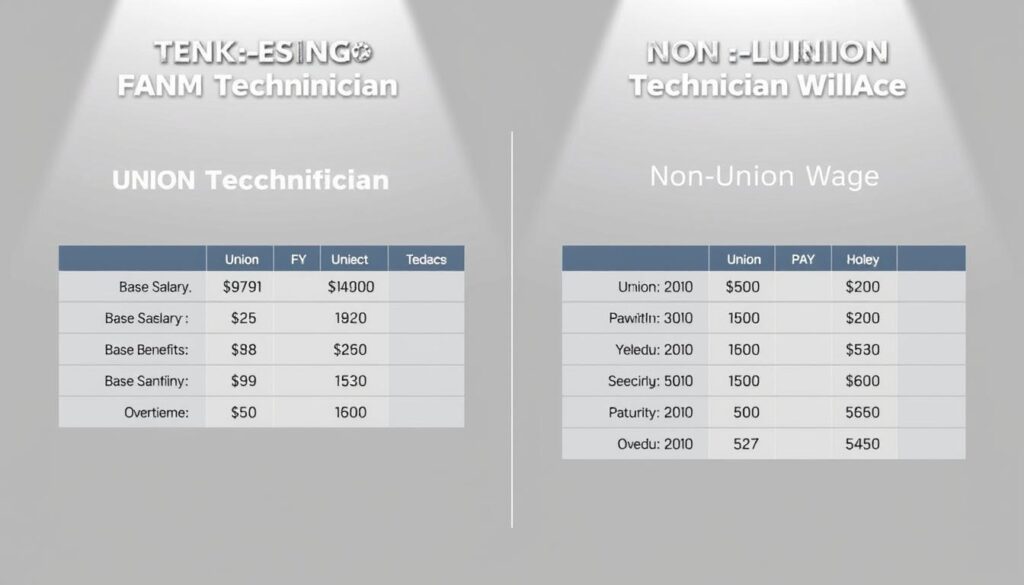
Knowing about union HVAC pay rates can change your career path in the HVAC field. Being in a union brings special benefits that affect your salary.
Union technicians usually make more money than non-union ones. The main differences are:
- Standardized wage scales
- Guaranteed minimum pay rates
- Regular negotiated salary increases
- Comprehensive benefits packages
In the U.S., union HVAC workers earn 20-30% more than non-union ones. This pay gap comes from agreements that protect workers and set fair pay standards.
| Membership Type | Average Annual Salary | Benefits Coverage |
|---|---|---|
| Union HVAC Technicians | $65,000 – $85,000 | Comprehensive |
| Non-Union HVAC Technicians | $50,000 – $70,000 | Limited |
Choosing to join a union depends on many things. Unions offer job security, training, and steady pay. They fight for contracts that protect workers from unfair pay cuts and ensure fair treatment.
Where you live also matters. States like New York and California have more union members. This means better pay and working conditions for HVAC techs.
Career Advancement and Salary Growth
Your HVAC career is full of chances for growth and more money. As you get more experience and skills, your earnings can really go up. This is true in the fast-changing HVAC world.
Technicians have many ways to move up and earn more. The best paths include:
- Technical Specialization
- Management Roles
- Business Ownership
- Advanced Systems Design
To get highest paying hvac jobs, you need to focus on improving your skills. Experienced technicians can make a lot more money by:
- Getting advanced certifications
- Being experts in complex systems
- Knowing the latest technologies
- Building a strong network
Salaries grow as you get more experience. New technicians might start at $35,000. But, those with special skills can earn $75,000 to $100,000 a year. Those who move into management or start their own businesses can earn even more.
Your career path depends on learning, being good at your job, and planning well. Investing in your growth can lead to big financial wins in HVAC.
Explore Our HVAC Shop
Looking for top-rated HVAC tools, parts, and accessories? Visit our shop and find the perfect solution for your needs.
Visit the ShopTop-Paying HVAC Specializations and Markets
The HVAC industry offers exciting opportunities for professionals seeking high-paying career paths. As technology advances, certain specializations have emerged as the highest paying hvac jobs in the market. Understanding these lucrative niches can help you strategically plan your career growth.
Exploring the most financially rewarding HVAC career paths requires strategic insight into emerging technologies and specialized markets. Different regions offer unique opportunities based on local industry demands and hvac salary by state variations.
Industrial HVAC Systems
Industrial HVAC specialists command top salaries due to the complex nature of their work. These professionals manage sophisticated climate control systems in:
- Manufacturing facilities
- Large commercial complexes
- Research laboratories
- Pharmaceutical production environments
Green Technology Expertise
Sustainable HVAC solutions represent a growing market with exceptional earning. Technicians specializing in energy-efficient systems and renewable technologies can expect higher compensation rates.
- Solar-powered climate control systems
- Advanced energy management solutions
- Geothermal heating and cooling installations
Smart Systems Integration
The rise of intelligent building technologies has created lucrative opportunities. HVAC professionals who understand digital integration are in high demand. Smart system experts who can design and implement advanced climate control networks are in high demand across multiple industries.
By focusing on these specialized areas, you can position yourself for some of the highest paying hvac jobs in the market. Your earning will depend on your expertise, location, and willingness to continuously upgrade your skills.
Conclusion
The HVAC technician salary landscape is full of opportunities for those who want to grow. Your earnings depend on your experience, specialization, and where you work. Knowing about HVAC technician salaries can help you plan your career better.
Technicians who get advanced certifications and focus on new technologies like green systems can earn more. The HVAC industry is growing fast. It needs more skilled workers for homes, businesses, and factories.
Planning your career means always learning, getting the right certifications, and keeping up with new tech. If you’re starting or looking to move up, the HVAC field offers great chances for success. It rewards those who are dedicated and excellent at their job.
Your success in HVAC comes from your skills, education, and a drive to grow. By knowing about salary trends and improving your skills, you can have a fulfilling and stable career in this exciting field.