

Affiliate Disclosure
HVAC Guide Guys is a participant in the Amazon Services LLC Associates Program, an affiliate advertising program designed to provide a means for sites to earn advertising fees by advertising and linking to Amazon.
Ever walked into your home and been greeted by a musty, unpleasant smell wafting from your air vents? What if you could transform your HVAC system from an odor source to a fresh-smelling air circulation powerhouse?

Keeping your HVAC system smelling good isn’t just about masking odors—it’s about understanding and eliminating their root causes. Whether you’re battling musty smells, pet odors, or just want a more pleasant home environment, this guide will walk you through practical solutions to make your HVAC air freshener techniques work effectively.
Your heating and cooling system plays a key role in indoor air quality. By implementing simple maintenance techniques and innovative air freshener strategies, you can breathe easier and enjoy a cleaner, more inviting home atmosphere.
Key Takeaways
- Understand the common sources of HVAC odors
- Learn DIY air freshener techniques for your vents
- Discover natural solutions for eliminating unpleasant smells
- Implement regular maintenance to prevent odor buildup
- Improve overall indoor air quality with simple steps
Table of Contents
Why Your HVAC System Smells Bad
Your home’s HVAC system can smell bad for many reasons. Knowing these causes helps you get rid of the smell and make your home smell fresher. Things like microbial growth and environmental pollutants can make your HVAC system smell bad.
Common Sources of Unpleasant Odors
Several things can make your HVAC system smell bad:
- Accumulated dust and debris in ductwork
- Dirty air filters with trapped pollutants
- Pet dander circulating through vents
- Trapped cooking odors in air handler
- External environmental contaminants
The Role of Bacteria and Mold in HVAC Odors
Bacteria and mold are big contributors to bad smells. They thrive in dark, damp places in your HVAC system. When you turn on your AC, you might smell a musty smell that means bacteria or mold are present.
“The key to fresh air is understanding and addressing the root causes of HVAC odors.” – HVAC Maintenance Experts
Moisture in places like evaporator coils and drain pans helps bacteria and mold grow. These can spread fast, making your cooling system a health risk. Keeping your system clean and well-maintained is key to avoiding these smells.
Explore Our HVAC Shop
Looking for top-rated HVAC tools, parts, and accessories? Visit our shop and find the perfect solution for your needs.
Visit the ShopEssential Maintenance Steps to Eliminate HVAC Odor
To keep your HVAC system smelling fresh, regular maintenance is key. HVAC maintenance for odor control involves understanding and following important steps. These steps help prevent bad smells from spreading through your home’s air system.
Replacing your air filters regularly is a must. Dirty filters can trap moisture, dust, and particles that cause bad smells. This makes your home’s air smell unpleasant.
- Replace air filters every 1-3 months
- Check filter condition monthly
- Use high-quality filters with good particle capture ratings
Professional HVAC maintenance is vital in stopping odors. Schedule yearly inspections. Technicians can then:
- Clean evaporator coils
- Check condensate drain lines
- Inspect system components for odor sources
Outdoor unit maintenance is equally important. Clear away debris like leaves and grass clippings. These can rot and cause musty smells. Keep the area around your condenser unit clean to avoid odor buildup.
Controlling humidity is also essential for hvac maintenance. Keep indoor humidity between 30-50%. This stops mold and mildew from growing. Use a dehumidifier in basements or areas with high moisture.
How to Make HVAC Smell Good Using Essential Oils
Improving your home’s air quality is easy with essential oils in your HVAC system. HVAC experts share a clever trick. It makes your home smell great with little effort.
Discovering how to make your HVAC smell good is simple. You don’t need expensive items or hard methods. The trick is a basic furnace filter technique that naturally improves your air.
The Furnace Filter Air Freshener Hack
This clever method lets you spread lovely scents around your home easily. Here’s how to do it:
- Turn off your HVAC system completely
- Carefully remove the air filter
- Apply 3-5 drops of pure essential oil directly on the filter pleats
- Allow the filter to dry for a few minutes
- Reinstall the filter, ensuring airflow arrows point correctly
Best Essential Oils for Your HVAC System
Not all essential oils are the same. Some are better for certain times and moods:
- Lavender: Calming and relaxing
- Eucalyptus: Fresh and invigorating
- Peppermint: Energizing and cool
- Vanilla: Warm and comforting
- Lemon: Clean and uplifting
“Running the HVAC fan at a continuous low speed helps distribute the scent more effectively throughout your home,” recommends Andy Fox from 3M.
Pro tip: Use only pure, high-quality essential oils for the best results. Try different scents to create your ideal home atmosphere.
Explore Our HVAC Shop
Looking for top-rated HVAC tools, parts, and accessories? Visit our shop and find the perfect solution for your needs.
Visit the ShopClean Your Air Ducts to Remove Musty Smells
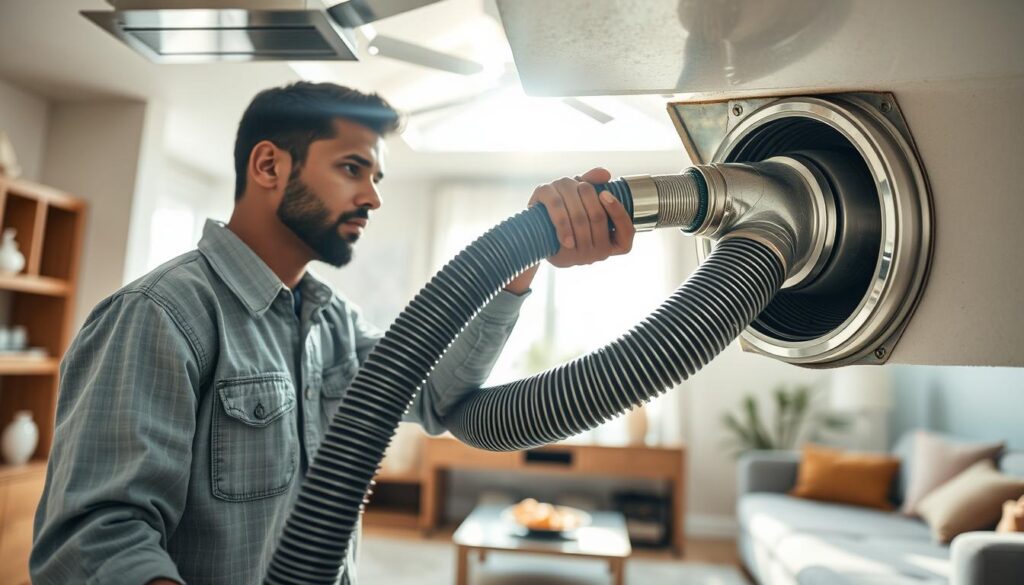
Dirty air ducts often cause musty smells in homes. If your air ducts smell stale, it’s time to clean them. Dust, debris, and microbes can build up, making smells worse and lowering air quality.
Knowing when to clean your air ducts is key. Look out for these signs:
- Visible dust buildup around air vents
- Musty odors when your HVAC system starts
- Inconsistent airflow between rooms
- Increased allergy symptoms among household members
Professional duct cleaning is a detailed process. Technicians use special tools like powerful vacuums and brushes to clean out debris. They also use cameras to check your duct system, clean both types of vents, and sanitize to kill bacteria and mold.
Most homes should get their ducts cleaned every 3-5 years. If you have pets, smoke, or have recently renovated, you might need to do it more often. To keep your ducts clean between professional cleanings, you can:
- Vacuum accessible vent covers
- Make sure vents aren’t blocked by furniture
- Wipe visible dust from register openings
Clean air ducts do more than just get rid of smells. They also make your HVAC system work better and improve your home’s air quality. This makes your home fresher and healthier.
Natural DIY Air Freshener Solutions for Your Home
Making your own hvac air freshener is easy and cheap. You just need a few things from home. This way, you can make your home smell better without spending a lot.
Here are three easy ways to make your home smell great without spending a lot. You’ll find these methods simple and effective.
Popsicle Stick Vent Air Fresheners
This method is quick and easy:
- Choose a wooden popsicle stick
- Select your favorite essential oil
- Apply 5-10 drops of oil directly to the stick
- Place in a supply vent
Binder Clip HVAC Air Freshener Technique
This is another way to make your home smell nice:
- Select a medium or large binder clip
- Secure a popsicle stick within the clip
- Add essential oil drops to the stick
- Carefully place in a supply vent
Pro tip: Make sure the binder clip is big enough so it doesn’t fall into the ductwork.
Clothespin Scent Distribution Method
This is another simple way to freshen your home:
- Choose a wooden clothespin
- Apply essential oil drops directly
- Clip to the bottom of a supply vent
Remember to add more essential oils every few days. Try different scents in each room to make your home unique.
Improve Indoor Air Quality with Air Purification Systems
Changing your home’s air quality is more than just using air fresheners. Professional air purification systems tackle the real causes of bad smells and health risks. They offer a deep solution to make your indoor air better.
There are many air purification technologies that can make a big difference in your home’s air:
- Bi-Polar Ionization Systems: Neutralize pollutants at the molecular level
- UV Light Systems: Eliminate microorganisms passing through HVAC units
- HEPA Filtration: Capture 99.97% of microscopic particles
- Activated Carbon Filters: Absorb odors and chemical vapors
When picking an air purification system, think about these important benefits:
| Technology | Key Benefits | Cost Range |
|---|---|---|
| Whole-Home Purifiers | Continuous air cleaning, reduced allergens | $500-$2,500 |
| Advanced Ionization Systems | Virus elimination, odor neutralization | $800-$3,000 |
Getting a good air purification system is a smart move if you have:
- Family members with allergies or respiratory issues
- Persistent home odors
- Concerns about airborne pathogens
- Pets that generate additional air contaminants
“Clean air is not a luxury, it’s a necessity for a healthy home environment.”
By tackling air quality at its source, you’ll make your living space fresher and healthier. It will smell clean naturally, without needing temporary fixes.
Additional Tips for a Fresh Smelling Air Conditioner
To keep your air conditioner smelling fresh, it’s not just about the HVAC. Your home’s environment is key to clean, pleasant air. Here are some tips to get rid of odors and keep your home smelling good.
Tackling Kitchen Odors at the Source
Your garbage disposal can make your air conditioner smell bad. Here’s a quick way to clean it:
- Squeeze scented dish soap into the disposal
- Run hot water for one minute
- Let it sit for 5 minutes
- Run hot water again and activate disposal for 10-20 seconds
Furniture and Carpet Care Strategies
Upholstered furniture and carpets soak up smells. To keep them smelling fresh and help your air conditioner, try these:
| Method | Benefits |
|---|---|
| Baking Soda Treatment | Absorbs odors and bacteria from carpets |
| Regular Vacuuming | Prevents odor buildup with HEPA filters |
| Seasonal Steam Cleaning | Deep cleans upholstery and carpets |
For the baking soda method, sprinkle a thin layer across your carpet, let it sit for 30 minutes, and vacuum thoroughly. This simple trick will help keep your air conditioner smelling fresh by reducing airborne odors.
Explore Our HVAC Shop
Looking for top-rated HVAC tools, parts, and accessories? Visit our shop and find the perfect solution for your needs.
Visit the ShopSafety Considerations When Using HVAC Air Fresheners
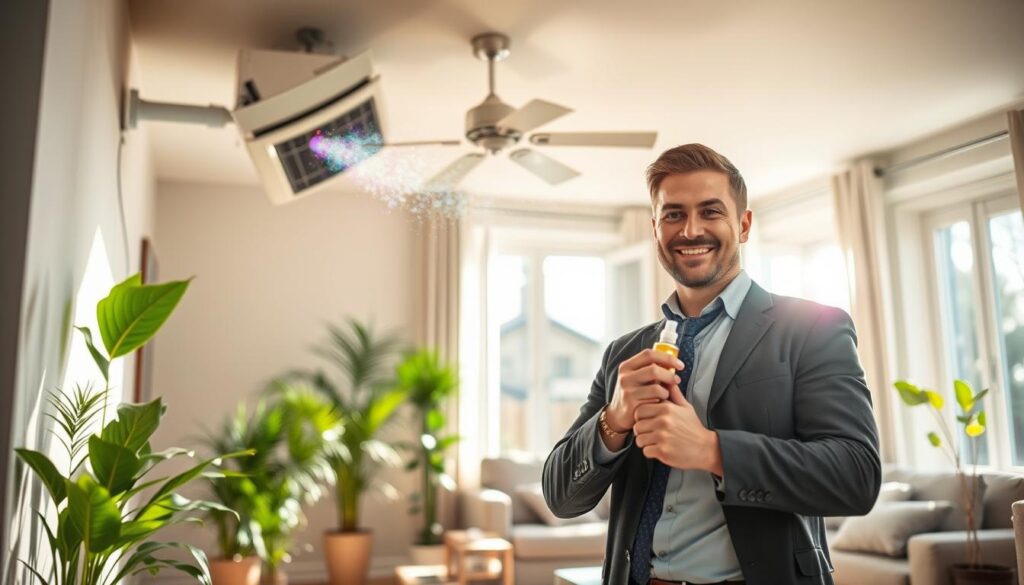
When trying to get rid of hvac odor, safety is key. Essential oils can work well, but you must use them carefully. This is to avoid health problems and damage to your system.
Before you start, remember these important safety tips:
- Use only pure essential oils meant for indoor use
- Begin with small amounts (3-5 drops)
- Avoid mixing different essential oils
- Watch for any breathing issues in family members
People with health issues need extra care. This includes those with asthma or COPD, pregnant women, and families with pets. Always talk to a doctor before adding essential oils to your HVAC system.
There are risks to watch out for:
- Respiratory problems from VOCs
- Damage to filter materials
- Creation of harmful pollutants
- Filters might not work as well
To keep your system and health safe, test new scents carefully. Make sure there’s good air flow. Stop using them right away if you or anyone else has bad reactions like headaches or trouble breathing.
Conclusion
Creating a fresh-smelling HVAC system is more than just getting rid of bad smells. It’s about making your HVAC smell good and improving the air in your home. The strategies you’ve learned offer a complete way to handle those tough smells and make your home healthier.
Begin with easy fixes like the DIY filter freshener hack or using essential oils. These budget-friendly methods can quickly improve your home’s air. For tougher smells, try deeper cleaning like professional duct work or an air purifier.
Every home is different. What works for you depends on your HVAC’s age, local weather, and your home’s needs. Feel free to try different methods to find the best way to improve your air and get rid of bad smells.
Your journey to a fresher home begins today. Choose one method from this guide and start this week. With a bit of effort and the right techniques, you can turn your HVAC into a source of clean air. This will make your whole home feel more welcoming and comfortable.