

Affiliate Disclosure
HVAC Guide Guys is a participant in the Amazon Services LLC Associates Program, an affiliate advertising program designed to provide a means for sites to earn advertising fees by advertising and linking to Amazon.
Ever wondered how HVAC systems distribute air perfectly in buildings? The key is the HVAC plenum, a part most homeowners overlook.
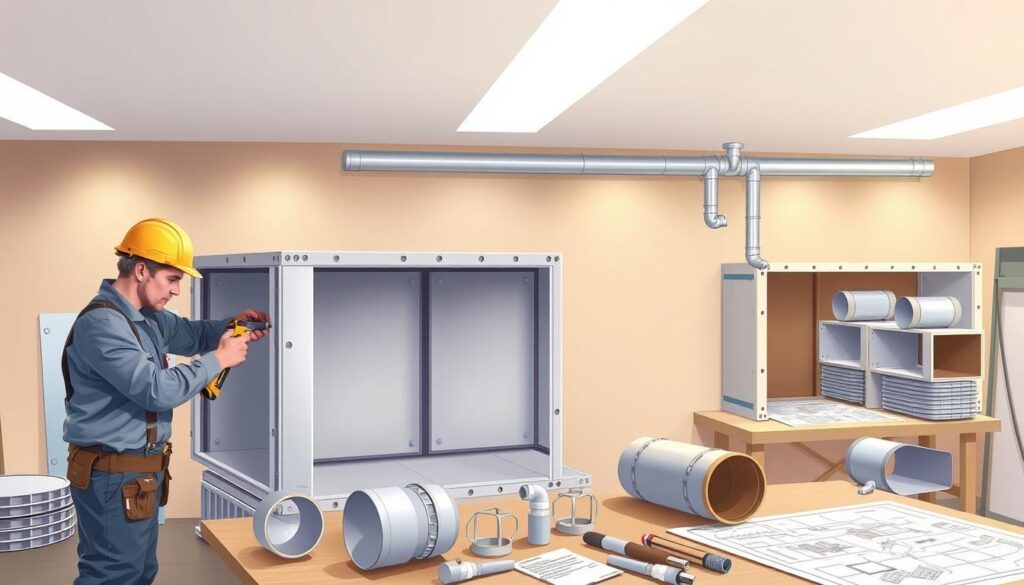
Making a HVAC plenum might seem hard, but with the right help, you can improve your home’s air flow. DIY duct plenum building is not just for pros; it’s something any homeowner can learn.
Your HVAC plenum is like the main road for air, guiding it where it’s needed. Whether you’re updating or replacing your system, knowing how to build a plenum can save you money and make your home more comfortable.
Key Takeaways
- HVAC plenums are key for efficient air flow
- DIY plenum building is possible with the right guidance
- Getting the size and sealing right is vital for performance
- Understanding air flow can boost your HVAC’s efficiency
- Custom plenums might be cheaper than pre-made ones
Table of Contents
Understanding the HVAC Plenum and Its Critical Role in Air Distribution
Your HVAC system is like a network of air circulation. The plenum is its central command center. Knowing its role is key for good furnace plenum design and hvac system efficiency.
The plenum connects your heating and cooling equipment to the ductwork. It’s a big air distribution box. It makes sure every room gets the right amount of air.
What Is a Plenum Box and Why Does It Matter
A plenum box is vital in air distribution box installation. It’s a transitional chamber between your HVAC unit and ductwork. Here’s why it’s important:
- Manages air pressure and flow from the blower
- Reduces air turbulence and noise
- Ensures even air distribution across your home
Supply Plenum vs Return Plenum: Key Differences
| Supply Plenum | Return Plenum |
|---|---|
| Distributes conditioned air | Collects air for reconditioning |
| Connected to air handler output | Connected to return air vents |
| Pushes air into ductwork | Pulls air back to HVAC system |
How the Plenum Impacts System Efficiency and Comfort
Proper plenum design is key for your home’s comfort. An incorrectly sized plenum can lead to significant energy waste and uneven temperature distribution. The U.S. Department of Energy says poorly designed duct systems can lose up to 30% of airflow efficiency.
By understanding and designing your plenum correctly, you’ll make your home more comfortable and energy-efficient.
Explore Our HVAC Shop
Looking for top-rated HVAC tools, parts, and accessories? Visit our shop and find the perfect solution for your needs.
Visit the ShopEssential Materials and Tools for Building a Custom HVAC Plenum
Making a top-notch residential HVAC plenum needs the right materials and tools. Your success comes from picking the best parts for sheet metal ductwork. This ensures your system works well and lasts long.
For your galvanized steel plenum project, you’ll need a few key materials:
- Galvanized sheet metal (24-gauge to 20-gauge)
- Foil-faced mastic sealant
- Professional-grade foil tape
- Sheet metal screws (#8 or #10 self-tapping)
- Corner reinforcement angles
- Insulation materials
Your toolkit should have tools for metal work:
- Aviation snips or electric metal shears
- Sheet metal brake
- Drill with metal bits
- Measuring tape and straight edge
- Safety equipment
| Material | Purpose | Recommended Thickness |
|---|---|---|
| Galvanized Steel | Primary Plenum Construction | 20-24 gauge |
| Aluminum | Lightweight Alternative | 22-26 gauge |
| Foil Tape | Sealing Connections | Professional Grade |
“Proper material selection is the foundation of an efficient HVAC plenum system.” – HVAC Engineering Professionals
Choosing quality materials means a better HVAC plenum system. Spending on top-notch materials saves you time and money. It also means less maintenance and better system efficiency.
Calculating the Correct Plenum Size for Your HVAC System
Creating a custom air supply plenum needs precision and a deep understanding of airflow. The size of your HVAC air supply manifold affects how well your system works. It also impacts comfort and energy use.
Calculating plenum size involves two key measurements. These measurements help ensure air is distributed correctly:
- CFM (Cubic Feet per Minute) – measures air volume movement
- Static Pressure – measures air resistance in the system
Understanding CFM Requirements
The standard CFM calculation is 400 cubic feet per minute per ton of cooling. Here’s a simple guide:
- 2-ton system: 800 CFM
- 3-ton system: 1,200 CFM
- 4-ton system: 1,600 CFM
Matching Plenum Dimensions to Blower Output
When making your custom air supply plenum, aim for a size 1.5 to 2 times the trunk duct’s cross-sectional area. This ensures air velocity is reduced and air is distributed evenly.
Pro Tip: Undersized plenums restrict airflow, while oversized plenums cause slow air movement.
Residential systems usually run between 0.5 and 0.8 inches of static pressure. Your plenum’s design should keep these pressure levels. This ensures your HVAC system works efficiently.
Explore Our HVAC Shop
Looking for top-rated HVAC tools, parts, and accessories? Visit our shop and find the perfect solution for your needs.
Visit the ShopHow to Make a HVAC Plenum: Step-by-Step Fabrication Process
Making a custom HVAC plenum needs precision and planning. Whether you’re doing a DIY duct plenum or a professional plenum box, knowing the fabrication process is key for good air flow.

- Sheet metal sheets
- Aviation snips
- Measuring tape
- Metal brake or sturdy work surface
- Foil tape
- Sheet metal screws
Here are the main steps to make a HVAC plenum well:
- Measure and Template: Mark sheet metal with exact measurements and fold lines
- Cut Panels: Use aviation snips for clean, straight edges on each section
- Form Box Shape: Use a metal brake for perfect 90-degree angles
- Connect Panels: Use sheet metal screws every 6-8 inches to join panels
Professional tip: Use high-quality foil tape to seal seams. This prevents air leaks and boosts system efficiency. Apply a 1/4-inch thick layer, extending 2 inches on each seam.
| Fabrication Stage | Key Considerations |
|---|---|
| Cutting | Use sharp aviation snips, follow marked lines precisely |
| Bending | Ensure 90-degree angles for tight seal |
| Sealing | Apply continuous foil tape on all joints |
Proper technique in making a HVAC plenum is vital for system performance. Take your time, double-check measurements, and cut once for professional results.
Sheet Metal Ductwork Fabrication Techniques for Larger Plenums
Creating large HVAC air supply manifolds is a detailed and precise task. Contractors need to know special techniques for making strong plenums. These plenums must handle a lot of airflow and stay strong.
Building large plenums needs advanced metal skills and picking the right materials. Your plan will depend on a few key things:
- System pressure needs
- Plenum size
- Expected airflow
- Where it will be installed
Using Gas Station Panels for Built-Up Systems
Gas station panel methods are great for ductwork. These panels are made to be strong and stiff. They come in 2″, 3″, or 4″ depths and can be tailored to fit your system.
Standing Seams and Reinforcement Methods
Standing seam construction makes metal panels connect well. It locks panel edges together for airtight, strong joints. Adding steel angles helps keep panels straight and the system working right.
Determining Material Gauge and Panel Requirements
Picking the right material thickness is key for big plenums. The thickness should match the plenum’s size and pressure needs. Smaller plenums need thinner materials, while bigger ones need thicker ones for strength.
HVAC experts say to figure out material needs based on standards and your project’s needs.
Explore Our HVAC Shop
Looking for top-rated HVAC tools, parts, and accessories? Visit our shop and find the perfect solution for your needs.
Visit the ShopProper Sealing and Insulation Methods to Prevent Air Leaks
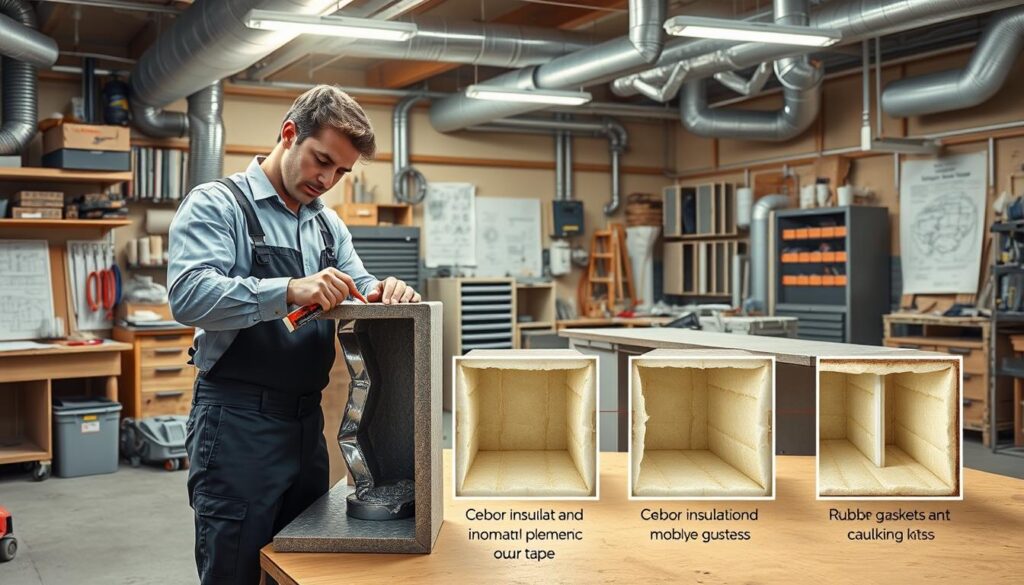
Keeping air leaks at bay is key to your custom air supply plenum’s success. The U.S. Department of Energy says duct leaks can waste up to 30% of airflow. Using the right sealing methods can boost your HVAC’s performance and cut energy costs.
When installing air distribution boxes, focus on sealing and insulation. Here’s how to make your plenum tight and efficient:
- Use professional-grade mastic sealant for all seams and joints
- Apply UL-181 rated foil tape for extra protection
- Steer clear of standard duct tape, as it breaks down fast
- Insulate plenums in unheated areas
Sealing your custom air supply plenum is vital. Begin by cleaning all metal surfaces well. Spread a 1/4-inch thick layer of mastic sealant over all seams, extending 2 inches on each side of connections. For hard spots, use specialized foil tape made for HVAC use.
Insulation is also key. You can choose between foil-faced fiberglass wrap (R-6 or R-8 value) or rigid foam board insulation. In damp climates, good insulation stops condensation and water damage. Make sure insulation fits tightly, with no gaps that could lower thermal efficiency.
Pro Tip: In cooling climates, position the vapor barrier facing outward. In heating-dominated regions, the vapor barrier should face inward.
By using these sealing techniques, you’ll have an airtight, energy-saving HVAC system. It will offer the best comfort and performance.
Installing Your Custom Air Supply Plenum and Connecting Ductwork
After making your custom HVAC plenum, installing it is key for top system performance. The right mounting and ductwork connection are vital for your furnace plenum’s success.
The installation needs precision and attention to detail. You must focus on two main things: mounting the plenum right and making good duct transitions.
Mounting and Securing the Plenum Box
Here’s how to mount your plenum:
- Align the plenum with your furnace’s blower outlet
- Use metal strapping or threaded rod hangers for support
- Keep the plenum level to avoid sagging
- Fasten with sheet metal screws every 6 inches
- Apply mastic sealant to stop air leaks
Creating Duct Transitions and Access Doors
Good duct transitions are key for airflow. Here are some tips:
- Use gradual transitions with angles under 30 degrees
- Make custom reducing fittings to reduce turbulence
- Install reinforced access doors for maintenance
- Place access openings wisely
- Use angle iron to strengthen door frames
Your well-installed plenum will ensure smooth air flow in your HVAC system. This boosts comfort and energy savings.
Common Plenum Construction Mistakes and How to Avoid Them
Building a DIY duct plenum needs careful attention. Using the right materials for residential HVAC plenums is key. Knowing common mistakes helps make your air system better and more reliable.
Big mistakes can hurt your HVAC system’s performance and life. Here are the most common plenum construction mistakes to avoid:
- Improper Sealing Materials: Don’t use regular duct tape. It breaks down fast and lets air leak.
- Incorrect Sizing: Don’t guess the plenum size. The wrong size can make your system less efficient.
- Neglecting Insulation: Without insulation, plenums in unheated spaces waste a lot of energy.
- Poor Connection Quality: Bad connections can come loose over time.
When working on your HVAC plenum, watch out for these mistakes. Use mastic or UL-181 foil tape for sealing. Make sure your plenum size fits your system’s needs.
Big plenums need strong support. Without it, they can flex and make noise. This can mess up your whole system. Place duct takeoffs right to keep air flowing well.
Pro Tip: Always install access doors to simplify future maintenance and filter changes.
Avoid these DIY duct plenum mistakes to make a better HVAC system. This will keep your home comfortable all the time.
Testing Your HVAC Plenum for Airflow Balance and Efficiency
After building your HVAC return box, it’s important to test its performance. This ensures your system works well. You need to check how air moves and if the system is efficient.
Testing your plenum involves several steps. These steps help check if your HVAC system is working right. They also find problems early on.
Initial Visual Inspection Checklist
- Check all seam connections for proper sealing
- Verify insulation coverage without gaps
- Inspect for any structural damage or defects
- Ensure secure mounting of plenum components
Static Pressure Measurement Techniques
Static pressure is like the system’s blood pressure. It shows how hard the blower works to move air. If it’s too high or too low, it can cause big problems.
| Pressure Range | System Impact |
|---|---|
| 0.5 – 0.8 inches | Optimal residential system performance |
| Above 0.8 inches | Potential blower strain and reduced efficiency |
| Below 0.5 inches | Weak air distribution and uneven comfort |
Leak Detection Methods
Here are ways to find air leaks:
- Smoke test with incense stick near seams
- Infrared thermometer to detect temperature variations
- Manometer readings for precise pressure measurement
Experts say to keep records of all test results. This helps with future maintenance and fixing problems.
“Proper plenum performance testing is not optional – it’s the key to ensuring your HVAC system operates at peak efficiency.” – HVAC Engineering Professionals
Remember, regular testing stops expensive repairs and keeps your home comfortable.
Conclusion
Learning to make a HVAC plenum is a big step in managing your home’s comfort. This guide has given you the skills to improve your home’s air flow. Understanding the plenum’s role in your HVAC system is key to success.
Investing in good measurements, quality materials, and careful work pays off. You’ll see better airflow, lower energy bills, and a more reliable system. A well-made plenum means no more hot spots, less noise, and a happier blower motor.
For most homes, a 20x20x36 inch plenum is just right for systems up to 4 tons. It balances size and performance well.
Patience and detail are essential for a successful plenum project. Double-check your measurements, seal everything well, and use top-notch materials. Even though it’s a complex task, your dedication will lead to a result that’s as good as a commercial one.
But your skills in making HVAC plenums don’t stop here. You’ll use these techniques for future projects. This means you can confidently handle your home’s comfort systems on your own.