

Affiliate Disclosure
HVAC Guide Guys is a participant in the Amazon Services LLC Associates Program, an affiliate advertising program designed to provide a means for sites to earn advertising fees by advertising and linking to Amazon.
Installing an HVAC vent under cabinets is a key home improvement skill. It greatly improves your living space. Many homeowners face issues with air circulation when cabinets block vents. This leads to uncomfortable temperatures and less efficient HVAC systems.
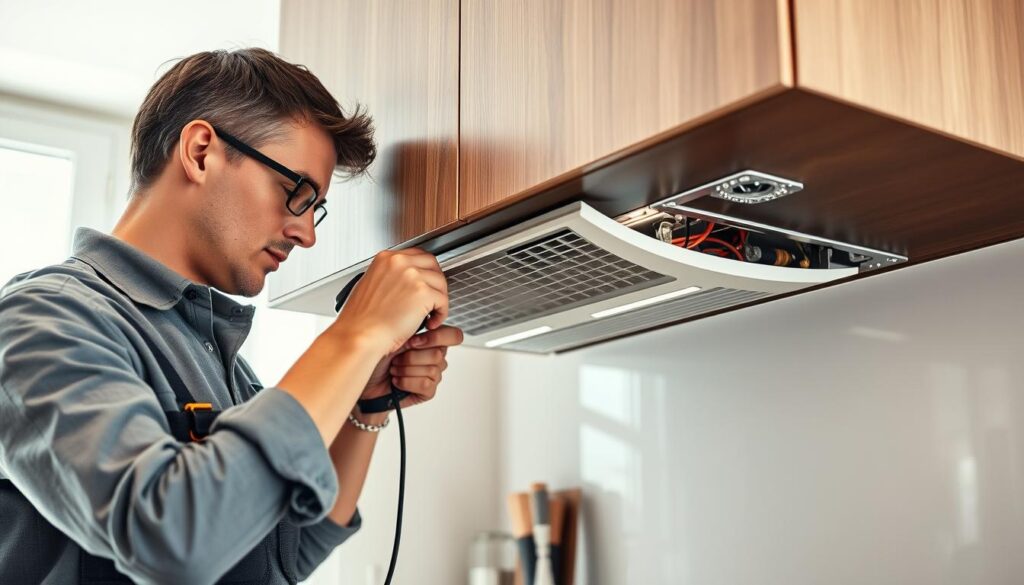
Setting up an under cabinet vent needs careful planning and precise work. Whether you’re redoing your kitchen or improving your home’s climate control, knowing how to direct airflow is essential. It makes your living area more comfortable and functional.
This guide will show you how to install HVAC vents under cabinets. You’ll learn how to choose the right tools and understand ventilation needs. You’ll be ready to do a top-notch job.
Key Takeaways
- Learn essential techniques for under cabinet vent installation
- Understand critical HVAC airflow management strategies
- Discover tools and methods for effective ventilation routing
- Prevent common installation mistakes
- Improve home comfort and HVAC system efficiency
Table of Contents
Understanding Cabinet Ventilation Requirements
Proper kitchen cabinet ventilation is key for a safe and comfy cooking space. When setting up your HVAC, you’ll face complex codes and safety rules. These protect your home and family.
Your kitchen’s air system is more than just moving air. It needs careful planning and strict rules for top performance and safety.
Code Compliance Essentials
Building codes for kitchen ventilation are strict and change by area. You’ll need to focus on several important points:
- Minimum clearance from cooking surfaces
- Proper vent placement for cabinets
- Air circulation needs
- Fire safety standards
Measuring Critical Distances
The most important part of kitchen ventilation is keeping safe distances. Current rules usually say:
- At least 8 feet away from cooking areas
- Clear from heat-producing appliances
- Enough room for air flow
Pro tip: Always check local building codes, as they can vary.
Proper ventilation isn’t just about comfort—it’s about safety and protecting your home’s structure.
Knowing these rules helps you create a kitchen ventilation system that works well and follows local building standards.
Explore Our HVAC Shop
Looking for top-rated HVAC tools, parts, and accessories? Visit our shop and find the perfect solution for your needs.
Visit the ShopAssessing Your Existing HVAC System
Getting ready for an HVAC under cabinet retrofit means checking your current heating and cooling setup. It’s important to know how your system is set up. This helps ensure good airflow and comfort in your home.
Before starting your retrofit, do a detailed check of your system. Look at your ductwork and how air moves around. You should:
- Find where the main air supply lines are
- Measure the size of vents on floors and walls
- Check how well air flows
- Look for any obstacles to installing new systems
Understanding your home’s HVAC system is key. Watch out for things like:
- Plumbing lines
- Electrical wiring
- Structural supports
- Current cabinet setups
Knowing if your ductwork is flexible or rigid is important. Rigid ducts might need more work, but flexible ones are easier to adjust for under cabinet setups.
| Ductwork Type | Installation Complexity | Retrofit Suitability |
|---|---|---|
| Flexible Ductwork | Low | High |
| Rigid Ductwork | High | Moderate |
By carefully checking your HVAC system, you can plan your under cabinet retrofit well. This helps avoid surprises and makes the installation go smoothly.
Tools and Materials Needed for Under Cabinet Vent Installation
Starting a diy cabinet vent installation needs careful planning and the right tools. Having all the necessary tools and materials ready will make your project go smoothly. It also helps you avoid delays.
Essential Equipment for Your Project
To finish your diy cabinet vent installation, you’ll need a good toolkit:
- Circular saw or jigsaw for precise cutting
- Power drill with multiple drill bits
- Measuring tape and carpenter’s level
- Pencil for accurate marking
- Safety gear (protective goggles and work gloves)
Selecting the Perfect Vent Cover
Choosing the right vent cover is key for good airflow and looks. Think about these points when picking your toe kick register:
| Vent Cover Characteristic | Recommended Specification |
|---|---|
| Material | Durable metal or high-quality plastic |
| Size | Match cabinet base and baseboard dimensions |
| Airflow Design | Adjustable louvers for controlled ventilation |
| Color/Finish | Complement existing cabinet color scheme |
For your diy cabinet vent installation, you’ll also need 2×4 lumber for framing, 3/4-inch plywood, caulk for sealing, and moisture-resistant paint. Choosing the right materials ensures a professional and lasting result.
Building a Cabinet Base with Floor Vent Access
Creating effective cabinet ventilation solutions needs careful planning and precise construction. Your cabinet base can be a key spot for managing airflow. It also keeps your space clean and professional-looking.
First, gather your materials for the cabinet base frame. You’ll need:
- 2×4 lumber
- 3/4″ plywood or MDF
- Caulk
- Paint
- Measuring tape
- Saw
Build the base frame using 2x4s, making sure it fits your floor vent. Add an extra 2×4 behind the vent for extra support. Precision is key in cabinet ventilation solutions.
Remember these important measurements when building your base:
- Make the base 4″ narrower than your cabinet depth if adding a decorative toe-kick
- Ensure the top layer matches your baseboard height
- Cut out a precise opening for the vent cover
Seal the inside of your base well. Caulk around the air chamber’s entire perimeter to stop air leaks. Paint the interior walls around the vent to stop mold growth. This makes your ventilation system clean and efficient.
Pro Tip: Proper cabinet ventilation solutions are about more than just aesthetics—they’re about creating a functional, healthy kitchen environment.
How to Install HVAC Vent Under Cabinet Using Toe Ductor Kits
Installing a toe kick vent needs precision and the right tools. HVAC experts say using toe ductor kits is best. These kits help fit ventilation systems under kitchen cabinets smoothly.
Toe ductor kits are a new way to manage air flow in tight spaces. They give homeowners a top-notch way to control air in their kitchens.
Connecting Boots to Toe Kick Registers
The installation process has key steps:
- Measure the boot size carefully
- Choose the right toe ductor adapter
- Align the boot with the register opening
- Make sure it fits well and is secure
Creating Sealed Connections for Efficient Airflow
Getting a good seal is key for effective installation. Toe ductor kits are designed to:
- Keep air from leaking
- Ensure air flows well
- Keep temperatures even
Experts suggest using special sealants to keep air in and performance up.
| Toe Ductor Kit Feature | Performance Benefit |
|---|---|
| Flexible Routing | Adapts to various cabinet configurations |
| Airtight Connections | Prevents energy loss |
| Universal Compatibility | Works with round and square boots |
Pro tip: Always buy toe ductor kits from the makers. This ensures quality and fit with your HVAC system.
Explore Our HVAC Shop
Looking for top-rated HVAC tools, parts, and accessories? Visit our shop and find the perfect solution for your needs.
Visit the ShopRouting Ductwork Around Obstacles
Installing hvac ductwork for cabinets needs careful planning. You must navigate around structural challenges. This ensures efficient airflow in tight spaces.
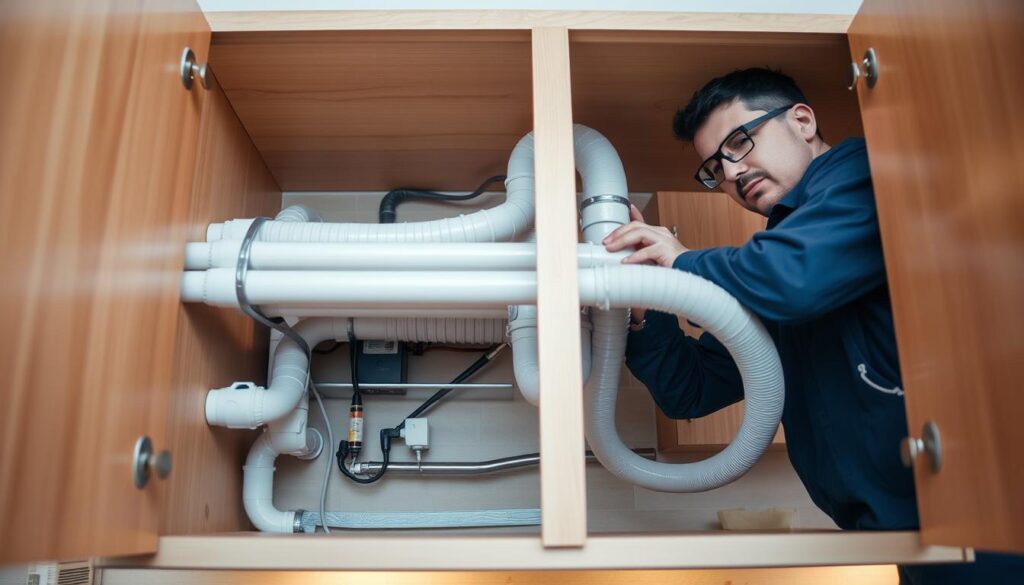
When setting up hvac ductwork for cabinets, you’ll face several obstacles:
- Plumbing pipes
- Electrical wiring
- Floor joists
- Structural supports
There are two main strategies: moving obstacles or routing ductwork around them. Flexible ductwork is very helpful in tight spots. It lets you bend and move around structural parts.
| Obstacle Type | Routing Strategy | Recommended Action |
|---|---|---|
| Minor Obstructions | Flexible Routing | Use flexible ductwork with gentle curves |
| Structural Supports | Precise Navigation | Use elbows and connectors to redirect airflow |
| Fixed Electrical Lines | Careful Circumvention | Maintain minimum safety clearances |
Key points for successful ductwork routing include:
- Keeping duct sizes right
- Avoiding sharp bends
- Ensuring enough airflow
Always focus on system efficiency and long-term performance.
Professional tip: When in doubt, consult an HVAC specialist to evaluate complex routing challenges.
Sealing and Finishing Your Cabinet Vent Installation
Finishing your under cabinet vent needs careful attention. The last steps are key for good kitchen ventilation and avoiding air leaks and mold.
Sealing well is essential for a good vent job. You must make sure there’s no air leak and no moisture buildup.
Critical Sealing Techniques
- Use high-quality silicone caulk around all vent connections
- Inspect every joint and seam for air leak points
- Apply weatherstripping for more air barriers
When working on kitchen ventilation, watch out for moisture. It can cause mold, so be proactive.
Mold Prevention Strategies
- Apply a moisture-resistant primer to surfaces
- Use mold-inhibiting paint around the vent
- Ensure good ventilation and air flow
“A well-sealed vent is the difference between an efficient system and an energy-wasting problem.” – HVAC Professional
Your under cabinet vent should look professional. Make sure caulk lines are smooth and the vent cover fits right. This will not only make your kitchen look better but also improve ventilation.
Remember, sealing well is an investment in your home’s air and energy. A bit of extra time on finishing can save you a lot in the future.
Explore Our HVAC Shop
Looking for top-rated HVAC tools, parts, and accessories? Visit our shop and find the perfect solution for your needs.
Visit the ShopTroubleshooting Common Installation Challenges

When you work on cabinet ventilation, you might run into unexpected problems. Knowing how to find and fix common issues can save you time and money.
First, check if there’s a problem with airflow in your toe kick register. If the airflow is low, it could mean a few things:
- Blocked ductwork that stops air from moving
- Ductwork that’s too small for good ventilation
- Ducts with too many bends
Dealing with the depth of your cabinets can also be tricky. Creative solutions are often needed to fit vent components right.
“Flexibility is key when retrofitting HVAC systems in existing spaces.” – HVAC Installation Professionals
Sound problems can also pop up during installation. Look out for:
- Whistling sounds that mean air pressure is off
- Rattling noises from loose parts
- Vibrations that show poor sealing
If you hit a snag, don’t be afraid to ask for help. Some jobs need the skills of experts in cabinet ventilation to avoid damage.
Always test your system after you’ve installed it. Look for air leaks, check the airflow, and make sure it’s safe and efficient.
Conclusion
Installing an HVAC vent under a cabinet needs careful planning and precision. Your DIY journey involves understanding complex technical needs and paying close attention to every detail. By following the guide you just explored, you’ve learned how to create an efficient ventilation system.
Safety and following local codes are key when installing an HVAC vent. You must take the right measurements, make sure connections are sealed, and check if your work meets local building rules. Getting professional-grade results requires patience, strategic planning, and double-checking your work.
Whether you do it yourself or get help from an HVAC expert, the knowledge you’ve gained is very useful. Remember, each cabinet and home is different, so being flexible is important. Your dedication to learning and following best practices will make your ventilation system a success.
Doing a DIY cabinet vent installation can make your living space better by improving air flow and keeping temperatures comfortable. By spending time on research, getting the right tools, and doing each step carefully, you’ll have a strong and efficient ventilation system. This will make your home more comfortable and functional.