
Affiliate Disclosure
HVAC Guide Guys is a participant in the Amazon Services LLC Associates Program, an affiliate advertising program designed to provide a means for sites to earn advertising fees by advertising and linking to Amazon.
How to Check Refrigerant Level in HVAC? AC refrigerant level testing is more than just routine maintenance. It’s a vital diagnostic process. It ensures your cooling system works at its best. Refrigerant is crucial for heat transfer, helping your air conditioner cool your space effectively.

Do you know that your air conditioning system’s performance could be slipping away? This is because of improper refrigerant levels. Learning how to check refrigerant levels in HVAC is key. It can save you money and prevent system breakdowns.
Your HVAC system needs the right refrigerant levels to work well. Low refrigerant can lead to higher energy use, less cooling, and even damage to the compressor. By knowing how to check refrigerant levels, you can spot issues early and keep your system running smoothly.
Key Takeaways
- Refrigerant levels directly impact HVAC system efficiency
- Regular testing prevents potential system failures
- Low refrigerant can increase energy costs
- Professional tools are essential for accurate measurements
- Understanding refrigerant levels helps extend system lifespan
Table of Contents
Understanding HVAC Refrigerant and Its Importance
HVAC refrigerant is key to keeping your home cool and comfy. It’s the heart of your air conditioning system. It absorbs heat and moves it outside.
Your AC system uses refrigerant to cool your space. It goes through a cool cycle of heat transfer. This keeps your home cool in the summer.
What Refrigerant Does in Your HVAC System
Refrigerant changes from liquid to gas to move heat outside. This process is vital for cooling your home right.
- Absorbs indoor heat
- Transforms from liquid to gas
- Transfers heat outside
- Returns to liquid state
Common Types of HVAC Refrigerants
There are many refrigerants, but some are no longer used. The most common ones are:
- R-22 (being phased out)
- R-410A (current standard)
- R-32 (newer eco-friendly option)
- R-454B (environmentally conscious choice)
Environmental Considerations
Today, HVAC recharge indicators focus on green options. Technicians use refrigerants with lower global warming potential. This helps protect our planet.
Choosing the right refrigerant is not just about cooling efficiency, but also about protecting our planet.
Explore Our HVAC Shop
Looking for top-rated HVAC tools, parts, and accessories? Visit our shop and find the perfect solution for your needs.
Visit the ShopSigns Your HVAC System Has Low Refrigerant Levels
Spotting low refrigerant levels early can prevent expensive repairs and keep your home cool. It’s important to know the signs that your system might be low on refrigerant. This can help you fix problems before they get worse.
Your HVAC system shows signs of refrigerant issues. Knowing these signs can help you fix problems before they turn into big system failures.
- Warm Air from Vents: When refrigerant levels drop, your system can’t cool properly, so it blows warm air instead
- Increased Energy Bills: With low refrigerant, your system works harder, using more electricity
- Ice Buildup: Ice on evaporator coils or copper lines means you have refrigerant problems
- Weak Airflow: Less cooling means your air circulation feels weaker
Experts say to watch for odd system behaviors. Strange noises like hissing or bubbling mean you might have a refrigerant leak. This needs a pro to fix right away.
| Symptom | Potential Refrigerant Issue |
|---|---|
| Warm Air Output | Critical Refrigerant Shortage |
| Ice on Coils | Potential Refrigerant Leak |
| Higher Energy Consumption | System Inefficiency |
Even small symptoms can turn into big problems fast. Regular checks and quick action can avoid expensive fixes and keep your system running longer.
Essential Tools and Safety Equipment for Checking Refrigerant
Measuring refrigerant charge needs the right tools and safety gear. This ensures accurate and safe HVAC maintenance. Professional technicians know that being prepared is key to protecting both the equipment and themselves.
Required Testing Equipment
To get accurate readings, you need specific tools:
- HVAC manifold gauge set
- Digital thermometer
- Electronic refrigerant leak detector
- Scale for weighing refrigerant
- Refrigerant charging hoses
Personal Protection Gear
When measuring refrigerant, safety is first. You need protective equipment:
- Chemical-resistance rubber gloves
- Safety glasses with side shields
- Long-sleeve protective clothing
- Closed-toe work boots
- Respirator mask rated for chemical exposure
Professional Certification Requirements
Working with refrigerants is not for DIYers. The Environmental Protection Agency (EPA) requires specific certifications. HVAC technicians must complete approved training and get certified before handling refrigerants.
Safety and expertise are paramount when working with complex HVAC systems and refrigerant chemicals.
How to Check Refrigerant Level in HVAC
Checking the refrigerant level in your HVAC system needs care and precision. When you test the ac refrigerant level, you’ll need the right tools and knowledge. This ensures you get accurate results.
Before you start, make sure you have these important tools:
- Manifold gauge set
- Digital thermometer
- Protective safety glasses
- Refrigerant scale
Here are the key steps for measuring refrigerant correctly:
- Turn off the HVAC system completely
- Find the service ports on your unit
- Connect manifold gauges to high and low-pressure ports
- Run the system for 10-15 minutes
- Read and record pressure measurements
- Compare readings with manufacturer specifications
Warning: Refrigerant handling requires expertise. If you’re unsure about any step, contact a certified HVAC technician. This prevents system damage or personal injury.
Experts say it’s best to test the ac refrigerant level regularly. This keeps your system running well and prevents breakdowns. The right refrigerant levels mean better cooling and saving energy.
Understanding Pressure Gauge Readings
When you check the refrigerant pressure, knowing your HVAC gauge reading is key. It helps keep your system running well. Accurate readings can spot problems early and keep your system at its best.
Pressure gauge readings are vital for your HVAC system’s health. They show the refrigerant levels and system status. Both technicians and homeowners use these readings to find issues before they cost a lot.
Decoding High-Pressure Side Measurements
The high-pressure side of your HVAC system is where the condensing happens. When checking the refrigerant pressure, watch these readings closely:
- Typical high-side pressures range between 150-250 PSI
- Pressures above 250 PSI might indicate system overcharge
- Ambient temperature significantly impacts high-side readings
Low-Pressure Side Interpretations
Low-pressure side measurements are key to understanding refrigerant levels and system performance. Here’s what to look for during your hvac pressure gauge reading:
- Normal low-side pressures typically fall between 30-40 PSI
- Readings below 25 PSI suggest potential refrigerant leaks
- System-specific variations exist across different HVAC models
Optimal Pressure Ranges
| Refrigerant Type | Low-Side PSI | High-Side PSI |
|---|---|---|
| R-22 | 68-72 | 225-250 |
| R-410A | 35-45 | 130-170 |
| R-134A | 30-40 | 150-220 |
Always check your HVAC system’s manual for exact pressure specs. Temperature, system age, and manufacturer advice can affect these readings.
Explore Our HVAC Shop
Looking for top-rated HVAC tools, parts, and accessories? Visit our shop and find the perfect solution for your needs.
Visit the ShopCommon Refrigerant Issues and Troubleshooting
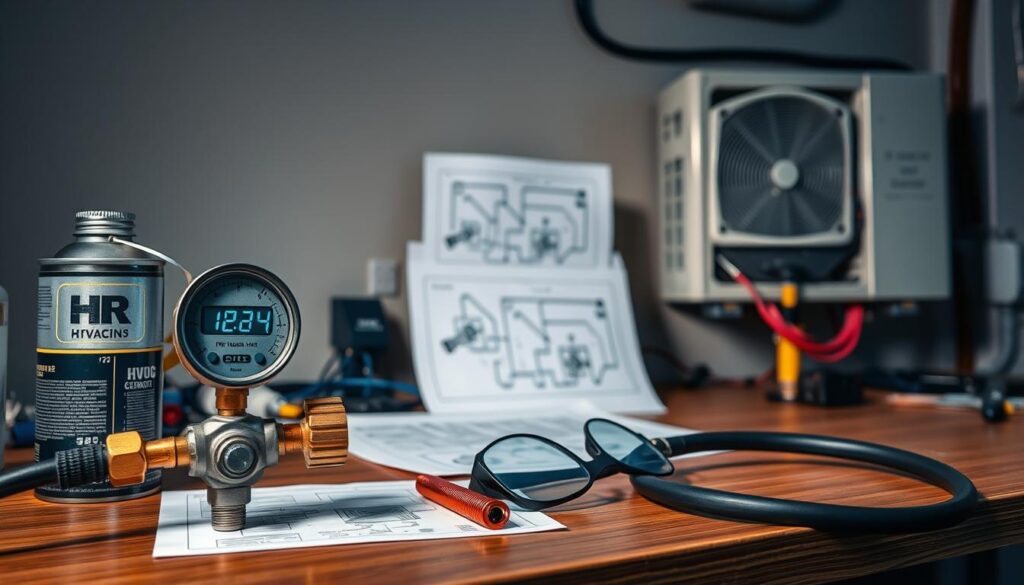
It’s important to find and fix refrigerant level problems to keep your HVAC system working well. Low refrigerant can make your cooling less effective and shorten your system’s life.
There are a few key issues that can mess with your refrigerant levels:
- Refrigerant leaks
- System pressure imbalances
- Incorrect initial charging
- Component wear and damage
Fixing refrigerant level problems needs careful steps. Leaks are a big problem, and they can happen in a few ways:
- Corroded refrigerant lines
- Damaged coil connections
- Worn compressor seals
- Micro-punctures in refrigerant pipes
“Detecting refrigerant issues early prevents expensive system repairs and maintains optimal cooling performance.” – HVAC Professional Insight
Experts use special tools like UV dye detectives and electronic leak detectives to find leaks. These tools can spot tiny leaks that are hard to see.
If you notice your system isn’t cooling right, look out for these signs:
- Reduced cooling capacity
- Longer cooling cycles
- Ice formation on evaporator coils
- Unexpectedly high energy bills
Regular maintenance and checks by pros can stop big refrigerant problems in your HVAC system.
Proper Refrigerant Charging Procedures
Charging an HVAC system with refrigerant needs care and skill. It’s key to check the ac system charge to keep it running well and avoid damage. Technicians must follow certain steps for a safe and correct refrigerant recharge.
Before starting the refrigerant recharge, get your HVAC system ready. The hvac refrigerant recharge indicators will help you through the important steps of checking and preparing the system.
System Preparation Steps
- Inspect the entire HVAC system for visible damage
- Check for any existing refrigerant leaks
- Ensure all connections are secure and tight
- Verify system components are clean and functioning
Adding Refrigerant Safely
When working with refrigerant, safety is the top priority. You’ll need special tools and protective gear to do the job right.
| Equipment | Purpose |
|---|---|
| Manifold Gauge Set | Measure system pressure |
| Refrigerant Charging Hose | Connect to service port |
| Refrigerant Cylinder | Provide correct refrigerant type |
Post-Charging Verification
After adding refrigerant, do a full system check. Check pressure readings, system performance, and make sure there are no leaks.
“Precision in refrigerant charging is not just about quantity, but about maintaining the delicate balance of your HVAC system’s performance.” – HVAC Professional
Experts say regular maintenance keeps your system running at its best. Always talk to a certified HVAC pro if you’re not sure about any part of the refrigerant charging process.
Maintaining Optimal Refrigerant Levels
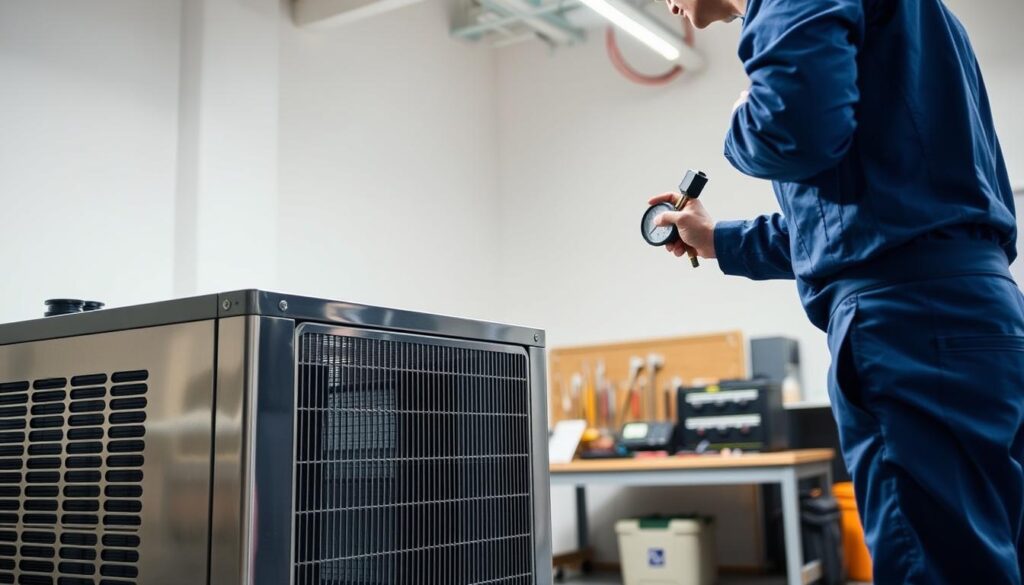
Keeping your HVAC system in top shape is all about the refrigerant levels. Regular checks are key to avoiding system failures and keeping it running smoothly. Your system’s refrigerant is essential for cooling and needs constant monitoring.
Here are some important steps to keep your refrigerant levels just right:
- Do regular refrigerant pressure checks
- Get professional maintenance every year
- Look out for signs of low refrigerant
- Fix any leaks quickly
Experts say your HVAC system should get a full check-up every 12 months. During these inspections, they:
- Check the refrigerant pressure accurately
- Find any weak spots in the system
- Make sure the system is working well
- Tell you what repairs or tweaks are needed
Regular maintenance can make your HVAC system last longer. Ignoring refrigerant levels can cause your system to use more energy and might even break down.
Proper refrigerant management is not just about performance—it’s about protecting your investment.
Only certified pros should handle refrigerant tests and add more. Trying to do it yourself can harm your system and break the law.
Explore Our HVAC Shop
Looking for top-rated HVAC tools, parts, and accessories? Visit our shop and find the perfect solution for your needs.
Visit the ShopProfessional vs DIY Refrigerant Checks
Measuring refrigerant charge needs special skills and knowledge. It’s more than just simple DIY maintenance. Trying to save money by doing it yourself might seem good, but it’s not the best choice.
Checking refrigerant levels without the right training can be risky. Here are some reasons why:
- Potential system damage
- Personal safety hazards
- Legal compliance issues
- Voiding manufacturer warranties
Certified HVAC technicians have the skills needed for refrigerant management. They know how complex systems work, have the right tools, and can read pressure readings accurately.
| DIY Approach | Professional Service |
|---|---|
| Limited equipment | Advanced diagnostic tools |
| Potential system damage | Guaranteed safe procedures |
| Incomplete diagnosis | Comprehensive system evaluation |
Professional technicians do more than just check refrigerant levels. They find and fix system problems. They make sure your HVAC system works well and meets environmental rules.
Safety and expertise always trump potential cost savings when managing complex HVAC systems.
Choosing professional refrigerant charge services is smart. It keeps your equipment safe, ensures it works well, and avoids expensive repairs later.
Conclusion
Knowing how to check refrigerant levels in HVAC systems is key for top performance. Your air conditioning needs the right amount of refrigerant to cool your home well. If you ignore this, you might face higher energy bills and system failures.
Getting your ac system checked by experts is vital. They can spot problems early, saving you from costly fixes. Regular checks keep your system running smoothly, especially when it’s hot outside.
Looking after your HVAC system is more than just upkeep. It also helps the environment and cuts down on carbon emissions. Learning about refrigerant checks lets you make smart choices for your home’s cooling. This can save you money on energy and repairs.
Your effort to keep refrigerant levels right will make your air conditioning better. Invest in professional checks and stay on top of your HVAC’s health. This way, you’ll enjoy a comfortable home all year round.