
Affiliate Disclosure
HVAC Guide Guys is a participant in the Amazon Services LLC Associates Program, an affiliate advertising program designed to provide a means for sites to earn advertising fees by advertising and linking to Amazon.
How to Add HVAC Register? Are you tired of uneven temperatures and poor airflow in your home? What if you could dramatically improve your comfort with a simple HVAC register installation?
Adding an HVAC register is a straightforward home improvement project. It can transform your living space’s comfort and air circulation. Whether you’re looking to enhance airflow in a specific room or upgrade your entire HVAC system, this comprehensive guide will walk you through the process of how to add an HVAC register with confidence.
HVAC register installation isn’t as complicated as you might think. With the right tools, knowledge, and a bit of patience, you can successfully complete this project. This will improve your home’s overall air distribution system.
Key Takeaways
- HVAC register installation is a manageable DIY project
- Proper placement impacts overall home comfort and air circulation
- Understanding your home’s HVAC system is crucial before installation
- Correct measurements and tools are essential for success
- Improved airflow can enhance energy efficiency
Table of Contents
Understanding HVAC Registers and Their Functions
HVAC registers are key parts of your home’s heating and cooling system. They help manage airflow and keep your spaces comfy all year. Knowing how they work can improve your HVAC system’s performance.
The design and where you put your registers greatly affect HVAC airflow. These aren’t just for looks; they’re designed to control air flow and temperature.
Key Components of HVAC Registers
HVAC register covers have several important parts:
- Grille or faceplate
- Adjustable louvers
- Damper mechanism
- Mounting frame
Role in Air Distribution
Registers connect your ductwork to your living areas. They send conditioned air exactly where you want it, ensuring even temperatures. This helps keep your home comfortable.
“A well-designed register can significantly improve your home’s overall heating and cooling efficiency.” – HVAC Engineering Professionals
Impact on Home Comfort
Working HVAC register covers can change how your home feels. They balance air flow, cut down on hot and cold spots, and save energy. With the right placement and care, every room gets the right amount of air.
Understanding these basics helps you manage your home’s climate better.
Explore Our HVAC Shop
Looking for top-rated HVAC tools, parts, and accessories? Visit our shop and find the perfect solution for your needs.
Visit the ShopTypes of HVAC Registers for Different Applications
Choosing the right HVAC register is key for good air flow and comfort at home. Each register type is made for a specific purpose in hvac vent installation. They meet different heating and cooling needs in various rooms.
When looking to replace an hvac register, you’ll find several main types. They fit different room setups and air flow needs:
- Floor Registers: Great for rooms with little wall space. They sit on the floor and offer direct heat or cool air.
- Ceiling Registers: Best for cooling, these send air out evenly from above.
- Wall Registers: Flexible and work well in most room layouts.
- Toe-Kick Registers: Special for use near the floor, often in kitchens and bathrooms.
Your home’s design and layout will help pick the best register type. Room size, ceiling height, furniture, and ductwork are important. They help choose the right HVAC register for good air flow.
Each register type has its own benefits in hvac vent installation. Floor registers are good for rooms with radiant heating. Ceiling registers are best for even cool air distribution. Wall registers are flexible for rooms with limited space.
Essential Tools and Materials for Register Installation
Getting ready for hvac system upgrades means planning and the right tools. When you add new air vents, the right tools make the job easier. This guide will show you what you need for a good HVAC register installation.
Professional Tools for the Job
Your toolkit should have tools for precise and safe work:
- Claw hammer for general construction work
- Tape measure for precise measurements
- Circular saw for cutting precise openings
- Reciprocating saw for detailed cutting
- Hand seamers for metal shaping
- Right and left hand metal snips
- Drill with 1/4″ hexhead driver
Essential Materials
For adding new air vents, you’ll need specific materials:
- Self-tapping sheet metal screws
- Ductwork connectors
- Sealant for airtight connections
- Measuring tape
- Marker or chalk for marking
Safety Equipment
Protecting yourself is key during hvac upgrades. Always wear:
- Safety glasses to protect eyes from debris
- Work gloves to prevent cuts
- Dust mask for respiratory protection
- Sturdy work boots
Pro Tip: Invest in quality tools and safety equipment for a professional and safe installation of your new HVAC register.
Explore Our HVAC Shop
Looking for top-rated HVAC tools, parts, and accessories? Visit our shop and find the perfect solution for your needs.
Visit the ShopPlanning Your Register Installation Location

Choosing the right spot for your HVAC register is key. It affects air flow and keeps your home comfortable and energy-efficient.
Think about these important points when picking a spot:
- Room layout and furniture positioning
- Existing ductwork configuration
- Potential obstacles like windows and doors
- Proximity to heating and cooling sources
Remember these tips for a smooth installation:
- Put registers about 8 inches from walls for curtain space
- Make holes 1/4 inch bigger than the register for adjustments
- Place floor registers between floor joists, not across them
| Register Placement Considerations | Recommended Action |
|---|---|
| Wall Registers | Install 18 inches above floor level |
| Ceiling Registers | Center in room for balanced air distribution |
| Floor Registers | Avoid high-traffic areas to prevent damage |
Good register placement means even temperatures and better HVAC performance. Plan carefully for the best outcome.
How to Add HVAC Register: Preparation Steps
Getting ready to install a new HVAC register needs careful planning. It’s important to prepare well to avoid any issues. Before you start, make sure you know your space well and have all the tools and measurements you need.
There are a few key steps to follow to add an HVAC register successfully:
- Find the best spot for good air flow
- Get all the tools you’ll need for measuring and cutting
- Check if your ductwork can handle the new register
- Make sure there’s enough space around where you’ll install it
Measuring and Marking the Installation Area
Getting the right measurements is very important. Use a tape measure to find out the exact size of your register. Pro tip: Double-check your measurements to avoid mistakes. Mark the spot where you’ll cut with a pencil to guide you.
Preparing for Ductwork Modifications
Modifying ductwork needs careful thought. Look at your current duct system to see if it’s:
- Strong enough
- Clear of any blocks
- Set up for good air flow
- Right for the new register size
Safety Considerations for Cutting
Always be safe when cutting into walls or floors. Wear protective glasses and use a strong knife or tool. Make sure you know where any wires or pipes are before you start.
Precision and patience are key to a successful HVAC register installation.
Explore Our HVAC Shop
Looking for top-rated HVAC tools, parts, and accessories? Visit our shop and find the perfect solution for your needs.
Visit the ShopDuctwork Modification and Connection Methods
Adding a new HVAC register needs proper ductwork changes for best system performance. Your HVAC system upgrades need careful planning and exact execution. This ensures air flows well throughout your home.
Several key steps are essential for successful ductwork modifications:
- Carefully measure existing duct dimensions
- Select appropriate connection methods
- Prepare precise cutting and fitting techniques
- Ensure airtight seal between new and existing ductwork
Professional HVAC technicians suggest specific connection methods for different ductwork setups. You’ll need to think about:
- Take-off connections for branching new register lines
- S-cleats for securing duct joints
- Proper drive closure techniques
- Sealing mechanisms to prevent air leakage
Ductwork modifications need precision. Each supply air duct section should be carefully prepared before installation. Drives must be placed along the duct sides to lock components securely.
Proper technique prevents energy loss and maintains system efficiency.
When upgrading your HVAC system, always focus on clean cuts, tight connections, and thorough sealing. This maximizes airflow and performance.
Installing Different Register Types
When you install HVAC vents, think about the location and type of register. Each space needs a special approach for the best air flow and comfort.
Every HVAC register has its own role in your home’s climate control. Knowing how to install them right can boost their performance and your system’s efficiency.
Floor Register Installation
Floor registers are great for rooms that need extra heat. Here’s what to do when installing them:
- Measure the duct opening carefully
- Choose registers that fit your room’s style
- Make sure they line up with the ductwork
- Seal them well to stop air leaks
Ceiling Register Mounting
Ceiling registers need extra care to avoid air flow problems. Keep these points in mind:
- Check if the ceiling can support the cut
- Use special brackets for ceiling mounting
- Make sure the register is well-insulated
- Seal the edges to keep air out
Wall Register Placement
Wall registers come with their own set of challenges. The right spot is key for comfort and air flow. Here are some tips:
- Don’t put registers near curtains or furniture
- Keep them at a steady height from floor or ceiling
- Match them with the room’s heating and cooling
- Use adjustable covers for better airflow
Pro tip: Always double-check measurements and ensure a tight seal to maximize your HVAC system’s efficiency.
Explore Our HVAC Shop
Looking for top-rated HVAC tools, parts, and accessories? Visit our shop and find the perfect solution for your needs.
Visit the ShopSecuring and Sealing the Register
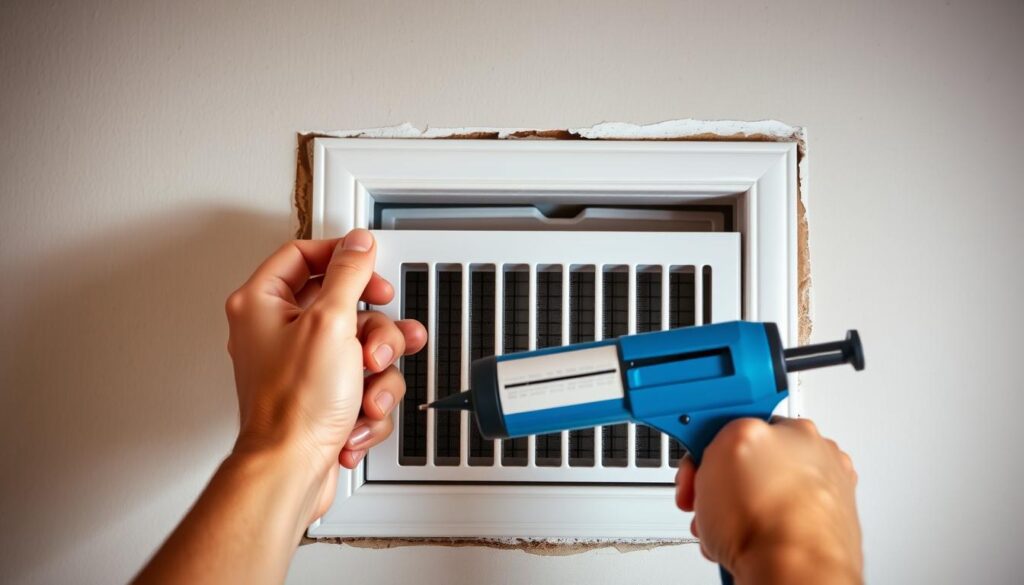
Proper hvac register installation needs careful attention to securing and sealing. An airtight seal stops air leaks and boosts system efficiency. Your aim is to cut down energy waste and improve air flow in your home’s ventilation.
To get a professional seal, you’ll need the right materials and techniques. The sealing process has several key steps to keep your HVAC system running well.
- Use high-quality mastic sealant or foil tape made for ductwork
- Make sure all connection points are tightly secured
- Apply sealant around the whole register perimeter
- Look for any gaps or places where air might escape
When installing your register, follow these key sealing tips:
| Sealing Method | Effectiveness | Recommended Use |
|---|---|---|
| Mastic Sealant | High | Permanent installations |
| Foil HVAC Tape | Medium | Temporary or flexible connections |
| Silicone Caulk | Low | Small gap filling |
Use at least three screws for each joint for a secure connection. Double-check your work to make sure it’s sealed tight. This ensures good air distribution and system efficiency.
Improving HVAC Airflow Balance
Getting the right HVAC airflow balance is key for comfort and system efficiency. A new register can change how air moves in your home. Knowing how to test and adjust airflow helps your heating and cooling work best.
Improving HVAC airflow needs focus on several important areas. HVAC pros use special methods to check and improve air flow in your home.
Professional Airflow Testing Methods
Testing airflow accurately means using precise tools and methods. Here’s what pros usually do:
- Anemometer readings to measure air velocity
- Pressure differential measurements
- Computational fluid dynamics analysis
- Thermal imaging to detect air movement patterns
Balance Adjustment Techniques
To get the best HVAC airflow balance, try these steps:
- Regularly check and clean air registers
- Adjust dampers in ductwork for even distribution
- Make sure register size fits the room
- Look for any airflow blockages
System Optimization Tips
Here are some tips to make your HVAC system work better:
- Seal any ductwork leaks
- Make sure ducts are well-insulated
- Get professional maintenance every year
- Use Manual T calculations for exact register sizing
By following these tips, you can greatly improve your HVAC airflow balance. This will make your home more comfortable and energy-efficient.
Explore Our HVAC Shop
Looking for top-rated HVAC tools, parts, and accessories? Visit our shop and find the perfect solution for your needs.
Visit the ShopMaintenance and Troubleshooting Tips
Keeping your HVAC registers in good shape is key for comfort and efficiency. Regular care can stop expensive repairs and make your system last longer.
Cleaning your registers regularly is a must. Dust and dirt can build up fast, cutting down airflow and air quality. Here’s how to keep them clean:
- Remove register covers carefully
- Vacuum interior ductwork and register openings
- Wash covers with mild soap and water
- Dry completely before reinstalling
Look out for these signs that might mean you need system upgrades or new registers:
| Warning Sign | Potential Issue |
|---|---|
| Unusual noises | Loose mounting or ductwork damage |
| Reduced airflow | Blockage or register malfunction |
| Visible rust or corrosion | Age-related deterioration |
Pro tip: Get your HVAC checked by a pro every year. This helps find problems early and keeps your system running well.
When you’re fixing things, safety first. If you can’t handle it, call a skilled HVAC tech. They can fix it right.
Conclusion
Learning to add an HVAC register can make your home more comfortable and well-ventilated. This guide will help you install registers with confidence. It involves planning, measuring, and paying attention to details.
Registers are key to good air flow in your home. Installing them right helps air move better, saves energy, and keeps temperatures even. Every step, from picking the right spot to securing the register, is important for the system’s best performance.
Now, you can install HVAC registers yourself. With a bit of practice and patience, you can improve your home’s climate control. Always be safe, use the right tools, and ask a pro if you need help.
Learning these skills will make your home more comfortable and could even save you money on bills. Plus, you’ll feel proud of doing it yourself. Keep your system in good shape to keep it working well for a long time.