
Affiliate Disclosure
HVAC Guide Guys is a participant in the Amazon Services LLC Associates Program, an affiliate advertising program designed to provide a means for sites to earn advertising fees by advertising and linking to Amazon.
How Much Does It Cost to Install a New HVAC System? Are you curious about the cost to upgrade your home’s comfort system? Figuring out the HVAC installation cost can seem like a puzzle. It involves many numbers and choices.
Thinking about installing a new HVAC system? Prices usually fall between $5,000 and $12,500. Your exact cost depends on your home’s size, the system type, and local rules.
Every home is different, and so is its HVAC system. The right installation can change your home, making it more comfortable and possibly saving you money. Whether it’s a new system or a replacement, knowing the costs helps you choose wisely.
Key Takeaways
- Average HVAC installation costs range from $5,000 to $12,500
- Costs vary based on home size, system type, and efficiency ratings
- Professional assessment is key for accurate pricing
- Energy-efficient systems may offer long-term savings
- Multiple factors influence the total hvac installation cost
Table of Contents
Understanding HVAC System Basics and Components
Your home’s HVAC system does more than just control the temperature. It’s a complex system of parts working together to make your home comfortable. Knowing about hvac system pricing helps you choose the best for your home’s comfort and energy use.
HVAC systems are complex machines that control your home’s climate. They do more than just heat or cool your space. They also manage air quality, humidity, and comfort levels.
Essential Parts of an HVAC System
Every HVAC system has key parts that work together:
- Thermostat: The control center that manages temperature settings
- Furnace: Provides heating by warming air or water
- Condensing unit: Releases or absorbs heat from outside the home
- Evaporator coil: Helps cool and dehumidify indoor air
- Ductwork: Distributes conditioned air throughout your home
Different Types of HVAC Units
When looking at hvac unit prices, you’ll find different types:
- Central Air Conditioning Systems: Best for whole-home cooling
- Heat Pumps: Efficient for both heating and cooling
- Ductless Mini-Split Systems: Ideal for targeted temperature control
- Packaged HVAC Systems: Compact units suitable for smaller spaces
Primary Functions and Benefits
Modern HVAC systems do more than just control temperature. They improve indoor air quality, reduce humidity, and make your home healthier. By understanding these systems, you can make smart choices that balance comfort and energy efficiency.
Investing in the right HVAC system can significantly impact your home’s comfort and energy costs.
Explore Our HVAC Shop
Looking for top-rated HVAC tools, parts, and accessories? Visit our shop and find the perfect solution for your needs.
Visit the ShopAverage HVAC Installation Costs by System Type
Knowing the cost of different HVAC systems helps you choose the right one for your home. Each system has its own price and factors that affect the cost.
When you’re looking to replace your HVAC, you’ll find three main types: central air, furnaces, and heat pumps. Each has its own benefits and costs.
Central Air Conditioning Systems
Central air units cost between $3,500 and $7,500 to install. The price depends on several things:
- Home size
- Efficiency rating
- Local weather
- Installation difficulty
Furnace Installation Expenses
Furnace installations can cost between $2,500 and $6,500. Gas furnaces are usually pricier than electric ones. Prices are influenced by:
- Fuel type
- Efficiency
- Brand
- Local labor costs
Heat Pump System Pricing
Heat pumps are great for both heating and cooling, costing $4,000 to $8,000 to install. They’re energy-efficient for mild climates.
| HVAC System Type | Average Installation Cost | Typical Lifespan |
|---|---|---|
| Central Air Conditioning | $3,500 – $7,500 | 10-15 years |
| Gas Furnace | $4,000 – $6,500 | 15-20 years |
| Heat Pump | $4,000 – $8,000 | 10-15 years |
Keep in mind, these prices are just estimates. Your actual cost may change based on your home and local market.
Explore Our HVAC Shop
Looking for top-rated HVAC tools, parts, and accessories? Visit our shop and find the perfect solution for your needs.
Visit the ShopHow Much Does It Cost to Install a New HVAC System?
When planning to upgrade your home’s comfort system, knowing the hvac installation cost is key. The price of a new HVAC system can vary a lot. For most homeowners, expect to spend between $10,000 and $15,000 for a standard installation.
Your total hvac installation cost depends on several factors:
- Home square footage
- System efficiency rating
- Equipment complexity
- Local labor rates
- Ductwork requirements
When figuring out the cost of a new hvac system, consider these ranges:
| System Type | Average Cost Range | Installation Complexity |
|---|---|---|
| Basic Central AC | $5,000 – $10,000 | Low |
| Mid-Range Heat Pump | $10,000 – $15,000 | Medium |
| High-Efficiency System | $15,000 – $25,000 | High |
Pro tip: Always get multiple quotes from certified HVAC professionals. This ensures you get the best value for your money. Professional installation can greatly improve your system’s performance and efficiency over time.
HVAC Size and Home Square Footage Requirements
Choosing the right HVAC system for your home is more than just looking at prices. The size of your home is key to finding the right heating and cooling.
The U.S. Department of Energy has guidelines for matching HVAC prices to your home’s needs. Your home’s square footage affects the HVAC unit’s capacity and efficiency.
Calculating Required HVAC Capacity
Professional HVAC contractors use a detailed method to find the right system size. Important factors include:
- Total square footage of your home
- Ceiling height
- Insulation quality
- Number of windows and doors
- Local climate conditions
“Proper HVAC sizing can reduce energy costs by up to 30%” – Energy Star
Cost Variations by Home Size
HVAC prices usually go up with home size. A small 1,000 square foot home might need a 2-ton unit. A 3,000 square foot home could need a 5-ton system. This big difference affects the total cost.
Here’s a quick breakdown of estimated capacity needs:
- 1,000-1,500 sq ft: 2-3 ton unit
- 1,500-2,500 sq ft: 3-4 ton unit
- 2,500-3,500 sq ft: 4-5 ton unit
Remember, the wrong size unit can cause inefficiency, higher bills, and damage. Always get a professional HVAC technician to find the best size for your home.
Energy Efficiency Ratings and Their Impact on Cost
Knowing about energy efficiency ratings is key when looking at new HVAC costs. The latest SEER2 rating system helps homeowners see how much they can save on energy and what HVAC prices are.
Energy efficiency ratings show how well your HVAC system uses electricity to cool or heat. The newest SEER2 ratings go from 13.4 to 23.6. This is a big jump from older models, which scored between 8 and 10.
- Higher SEER2 ratings mean more efficient HVAC systems
- More efficient units usually cost more at first
- Long-term energy savings can make up for the initial cost
When looking at HVAC prices, remember that a high-efficiency system can save a lot on energy bills. A more expensive unit with a higher SEER2 rating might save you hundreds of dollars a year on energy costs.
Important efficiency ratings to think about include:
- SEER2 (Seasonal Energy Efficiency Ratio)
- AFUE (Annual Fuel Utilization Efficiency)
- EER (Energy Efficiency Ratio)
Your home’s needs and local weather will help decide the best energy efficiency rating for your new HVAC system.
Explore Our HVAC Shop
Looking for top-rated HVAC tools, parts, and accessories? Visit our shop and find the perfect solution for your needs.
Visit the ShopDuctwork Installation and Replacement Costs
Ductwork is key when figuring out your HVAC installation cost. It makes sure air flows well in your home. This is vital for your heating and cooling system.
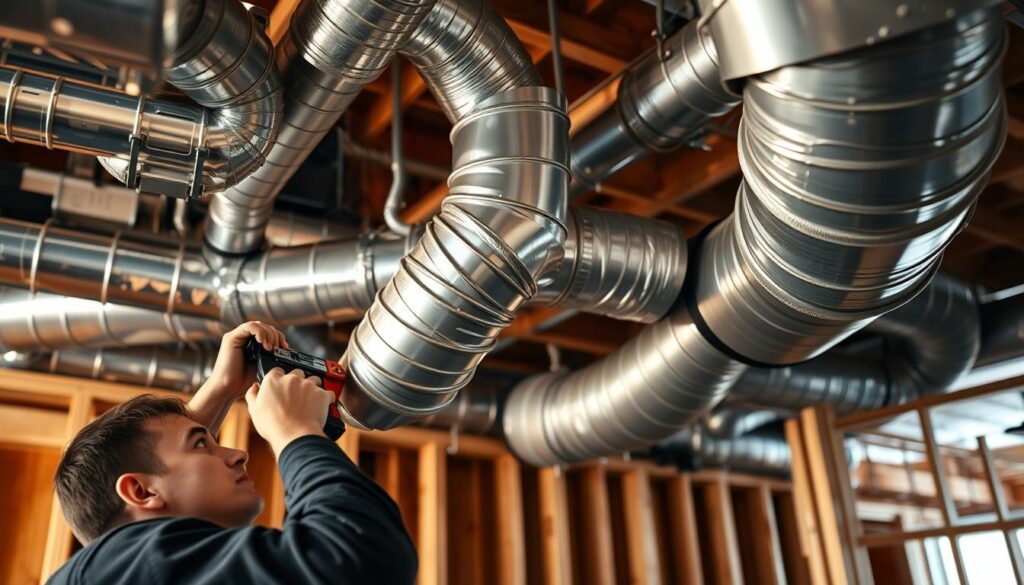
The cost of ductwork installation can change a lot. Several things affect the price, like:
- Home square footage
- Existing duct configuration
- Material types
- Accessibility of installation areas
New Ductwork Installation Pricing
Installing new ductwork costs between $10 to $20 per foot. For a typical home, this means a total of $1,500 to $5,000. The exact cost depends on your home’s size and layout.
| Duct Material | Cost per Linear Foot | Typical Home Cost |
|---|---|---|
| Flexible Ducts | $1 – $4 | $1,500 – $2,500 |
| Sheet Metal Ducts | $7 – $15 | $3,500 – $5,500 |
| Fiberglass Ducts | $4 – $8 | $2,500 – $4,000 |
Ductwork Modification Expenses
Changing existing ductwork is often cheaper than replacing it. Repairs or small changes can cost $500 to $2,000. This depends on how much work is needed.
Pro tip: Always get multiple quotes from licensed HVAC professionals to ensure you’re getting the best value for your ductwork installation or modification project.
Brand Comparison and Equipment Costs
When looking at hvac unit prices, knowing the differences between top brands is key. The HVAC market has many reputable brands with different prices and features.
The cost of your hvac system depends on several things. These include the brand’s reputation, technology, and specific features. Some top brands are known for their quality and value:
- Carrier: Known for innovative technology and reliable performance
- Trane: Offers premium systems with advanced durability
- Lennox: Recognized for high-efficiency units
- Rheem: Provides cost-effective solutions for budget-conscious homeowners
- Mitsubishi: Specializes in ductless and mini-split systems
To compare hvac system pricing, here’s a detailed breakdown of average equipment costs for different brands:
| Brand | Average Unit Cost | Efficiency Rating |
|---|---|---|
| Carrier | $3,500 – $7,500 | Up to 21 SEER |
| Trane | $4,000 – $8,000 | Up to 22 SEER |
| Lennox | $3,800 – $7,800 | Up to 23 SEER |
| Rheem | $3,200 – $6,500 | Up to 20 SEER |
| Mitsubishi | $2,500 – $6,000 | Up to 30.5 SEER |
Pro tip: While price is important, consider long-term energy efficiency and warranty coverage when selecting your HVAC system.
Remember, hvac unit prices can change based on specific models, local market conditions, and installation complexity. Always talk to a professional HVAC technician to find the best system for your home.
Additional Components and Accessories Pricing
When planning your new HVAC system, think about extra parts that boost comfort and efficiency. These accessories add to your total cost but offer lasting benefits for your home’s climate control.
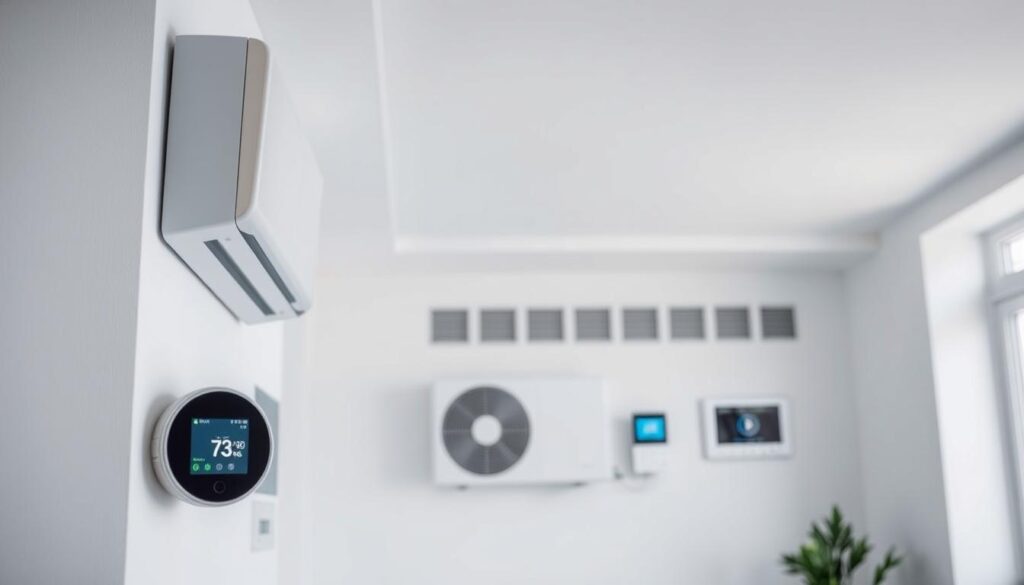
Upgrading your HVAC system is more than just installing it. Today’s homeowners can use cutting-edge tech to change their home’s comfort and energy use.
Smart Thermostats and Controls
Smart thermostats are a big step up for your HVAC system. They cost between $120 to $260, based on their features. They offer many benefits:
- Remote temperature control via smartphone apps
- Energy usage tracking and optimization
- Learning capabilities that adapt to your preferences
- Integration with home automation systems
Air Quality Enhancement Systems
Keeping your indoor air clean is key for a healthy home. Air quality systems can raise your HVAC costs but are great for your health:
- HEPA air purifiers ($300-$800)
- UV light air sanitization systems ($500-$1,500)
- Whole-home humidity control units ($200-$700)
Adding these components can make your HVAC system better, improve comfort, and cut energy costs over time.
Explore Our HVAC Shop
Looking for top-rated HVAC tools, parts, and accessories? Visit our shop and find the perfect solution for your needs.
Visit the ShopLabor Costs and Installation Considerations
When planning your HVAC system installation, it’s key to understand labor costs. The total cost of installation includes a big part for labor. This cost can change a lot based on several important factors.
HVAC labor costs are affected by many things that can change your budget. Contractors usually charge based on:
- Complexity of the installation
- Home or building accessibility
- Local labor rates
- Required system modifications
- Regional market conditions
Labor costs for HVAC installation usually fall between $500 to $2,500. This is about 35-45% of the total cost. If your installation is special or hard, labor costs might go up even more.
How much you’ll pay for labor depends on a few key things:
- System type and complexity
- Existing ductwork condition
- Home’s structural characteristics
- Geographic location and local market rates
- Required electrical or structural modifications
Professional HVAC contractors give detailed estimates. They show you what labor costs are for. This helps you know what you’re paying for during the installation.
Pro tip: Always ask for detailed quotes from several licensed contractors. This way, you can get the best price and see what each labor cost includes.
Spending time to learn about labor cost factors can help you budget better. It can also prevent surprise costs during your HVAC system installation.
HVAC Financing Options and Payment Plans
Getting a new HVAC system can cost a lot for homeowners. But, there are many hvac financing options to help with the cost. These options make upgrading your home’s comfort more affordable.
Many HVAC makers and local contractors have different financing plans. These plans fit various budgets:
- Personal loans from banks or credit unions
- Manufacturer-specific financing programs
- Home equity lines of credit
- Energy-efficient equipment financing
When looking at hvac financing, keep these points in mind:
- Interest rates – Look at rates from different lenders
- Repayment terms – Find flexible payment plans
- Qualification requirements – Check the credit score needed
Some HVAC companies offer special payment plans. Zero-interest financing might be available for certain customers. This can last from 12 to 36 months. It can lower your initial costs a lot.
Pro tip: Always read the fine print and understand the complete financial commitment before signing any financing agreement.
By looking at your financing options well, you can make your HVAC investment easier to handle. This way, you can keep your home comfortable and save on energy costs.
Conclusion
Getting a new HVAC system needs careful planning and budgeting. The cost to install a new HVAC system can vary a lot. It usually ranges from $5,000 to $12,000, based on several factors.
These factors include the size of your home, the type of system, and how energy-efficient it is. Your exact costs will depend on your home’s size, the local climate, and the quality of the equipment.
When looking at hvac installation cost, remember that cheaper isn’t always better. Systems from top brands like Carrier, Trane, and Lennox might cost more upfront. But they can save you money in the long run by being more energy-efficient and needing less maintenance.
Getting a professional to assess your home’s needs is key to making a good choice.
Planning ahead can help you manage the cost of a new hvac system. Think about financing options, energy rebates, and the long-term benefits of efficient equipment. Getting quotes from certified HVAC pros can help you find the best price and ensure your system is installed right for your home.
Your HVAC investment is a big deal—it’s about keeping your home comfortable and saving energy. By understanding what affects installation costs, you can make a choice that’s smart and cost-effective in the long run.
FAQ
What is the average cost of installing a new HVAC system?
How do I determine the right HVAC system size for my home?
What factors most significantly impact HVAC installation costs?
Are there financing options available for HVAC installations?
How long does a typical HVAC system last?
What are the most energy-efficient HVAC system options?
Do I need to replace ductwork when installing a new HVAC system?
What is the average cost of installing a new HVAC system?
How do I determine the right HVAC system size for my home?
What factors most significantly impact HVAC installation costs?
Are there financing options available for HVAC installations?
How long does a typical HVAC system last?
What are the most energy-efficient HVAC system options?
Do I need to replace ductwork when installing a new HVAC system?
FAQ
What is the average cost of installing a new HVAC system?
Installing a new HVAC system costs between ,000 to ,000. This depends on your home’s size, the type of system, and how energy-efficient it is. For an average-sized home, expect to pay about ,500. But costs can vary a lot based on your specific needs.
How do I determine the right HVAC system size for my home?
To find the right size, professionals use a Manual J Load Calculation. They consider your home’s size, insulation, windows, and climate. You’ll need about 20 BTUs per square foot, but a pro is needed for the exact size.
What factors most significantly impact HVAC installation costs?
Costs are affected by your home’s size, the system type, and energy efficiency. Ductwork condition, local labor rates, and extra features like smart thermostats also play a role. More efficient systems and complex setups will cost more.
Are there financing options available for HVAC installations?
Yes, there are many financing options. You can use manufacturer programs, home equity loans, personal loans, credit cards, or contractor plans. Many companies offer zero-interest or low payments to help with costs.
How long does a typical HVAC system last?
HVAC systems usually last 15 to 20 years with good care. Air conditioners, furnaces, and heat pumps have different lifespans. Regular maintenance can extend your system’s life and avoid early replacement.
What are the most energy-efficient HVAC system options?
Top choices include heat pumps, high-efficiency air conditioners with SEER ratings over 16, and gas furnaces with AFUE ratings of 95% or more. Geothermal heat pumps are also very efficient but cost more upfront.
Do I need to replace ductwork when installing a new HVAC system?
Not always, but it’s wise if your ducts are old, damaged, or not efficient. Replacing ductwork can cost
FAQ
What is the average cost of installing a new HVAC system?
Installing a new HVAC system costs between $5,000 to $12,000. This depends on your home’s size, the type of system, and how energy-efficient it is. For an average-sized home, expect to pay about $7,500. But costs can vary a lot based on your specific needs.
How do I determine the right HVAC system size for my home?
To find the right size, professionals use a Manual J Load Calculation. They consider your home’s size, insulation, windows, and climate. You’ll need about 20 BTUs per square foot, but a pro is needed for the exact size.
What factors most significantly impact HVAC installation costs?
Costs are affected by your home’s size, the system type, and energy efficiency. Ductwork condition, local labor rates, and extra features like smart thermostats also play a role. More efficient systems and complex setups will cost more.
Are there financing options available for HVAC installations?
Yes, there are many financing options. You can use manufacturer programs, home equity loans, personal loans, credit cards, or contractor plans. Many companies offer zero-interest or low payments to help with costs.
How long does a typical HVAC system last?
HVAC systems usually last 15 to 20 years with good care. Air conditioners, furnaces, and heat pumps have different lifespans. Regular maintenance can extend your system’s life and avoid early replacement.
What are the most energy-efficient HVAC system options?
Top choices include heat pumps, high-efficiency air conditioners with SEER ratings over 16, and gas furnaces with AFUE ratings of 95% or more. Geothermal heat pumps are also very efficient but cost more upfront.
Do I need to replace ductwork when installing a new HVAC system?
Not always, but it’s wise if your ducts are old, damaged, or not efficient. Replacing ductwork can cost $1,500 to $7,000, depending on your home. A pro can check if your ducts work with a new system.
What additional components can enhance my HVAC system?
Enhancements like smart thermostats, air purifiers, humidity controls, zoning systems, and UV air sanitizers can boost comfort and air quality. They also improve energy efficiency but add to the cost.
,500 to ,000, depending on your home. A pro can check if your ducts work with a new system.
What additional components can enhance my HVAC system?
Enhancements like smart thermostats, air purifiers, humidity controls, zoning systems, and UV air sanitizers can boost comfort and air quality. They also improve energy efficiency but add to the cost.