Affiliate Disclosure
HVAC Guide Guys is a participant in the Amazon Services LLC Associates Program, an affiliate advertising program designed to provide a means for sites to earn advertising fees by advertising and linking to Amazon.
Are you ready to start a rewarding career in Virginia’s HVAC industry? But, you might wonder how to get an HVAC license in Virginia. Getting a license might seem hard, but it’s easier than you think.
In Virginia, HVAC technicians need a professional license from the Department of Professional and Occupational Regulation (DPOR). With over 13,540 HVAC workers and a 6% growth rate, it’s a great time to begin.
To get your license, you’ll need to follow a few steps. First, complete your education. Then, get some hands-on experience. Next, pass the state’s required exams. Lastly, meet the professional standards. Each step brings you closer to becoming a certified HVAC technician in Virginia.
Key Takeaways
- Virginia mandates professional licensing for HVAC technicians
- The licensing process typically takes 4-7 years
- State-specific requirements differ from other jurisdictions
- HVAC industry in Virginia shows strong employment growth
- Professional certification increases earning
Table of Contents
Understanding HVAC Licensing Requirements in Virginia
Getting an HVAC license in Virginia can be tough. The state has strict rules to make sure work is top-notch and safe. This is for the heating, ventilation, and air conditioning industry.
The Virginia Department of Professional and Occupational Regulation (DPOR) is key. They set the rules for HVAC work. This helps both professionals and customers in the HVAC field.
Who Needs an HVAC License in Virginia
Not everyone can do HVAC work in Virginia. You need a license if you:
- Install heating and cooling systems
- Repair commercial or residential HVAC equipment
- Design complex ventilation systems
- Work as an independent HVAC contractor
Virginia Department of Professional and Occupational Regulation Overview
DPOR is in charge of the licensing process. They have high standards for HVAC professionals. This includes:
- Educational requirements
- Professional experience verification
- Comprehensive background checks
- Technical competency examinations
Legal Requirements for HVAC Work in the Commonwealth
Virginia law has strict rules for HVAC workers. You must be at least 18 years old, have a physical home address, and reveal any criminal history. The state is serious about these rules to keep the industry honest and safe.
Compliance with DPOR regulations is not optional – it’s a legal necessity for HVAC professionals in Virginia.
Explore Our HVAC Shop
Looking for top-rated HVAC tools, parts, and accessories? Visit our shop and find the perfect solution for your needs.
Visit the ShopTypes of HVAC Licenses Available in Virginia
Understanding the different HVAC licenses in Virginia is key. The state has a clear licensing system. It helps professionals grow and ensures quality work.
The Virginia HVAC licensing system has several levels. They match your professional growth:
- Apprentice Level: No license needed, but must work under direct supervision
- Journeyman License: First independent credential for unsupervised work
- Master License: Advanced certification for project planning and supervision
- Contractor License: Business-level authorization with three distinct classes
In Virginia, there are three contractor license classes:
- Class C: Projects up to $10,000 (annual cap of $150,000)
- Class B: Projects under $120,000 (annual limit of $750,000)
- Class A: Unlimited project scope and value
Each license level has its own experience and qualification requirements. Your journeyman license is a big step. It lets you do independent HVAC work on projects under $1,000. With more experience, you can move up to master and contractor levels, opening more doors.
But, contractor licenses are for businesses, not people. So, you’ll need to start a business to get the top certification.
Educational and Experience Requirements for Virginia HVAC Technicians
To start a career in HVAC in Virginia, you need to know about education and experience. It’s important for those wanting to become certified technicians.
Virginia has many ways to become a licensed HVAC pro. Your path depends on your background and goals.
Formal Vocational Training Programs
In Virginia, you can choose from several educational paths for an HVAC apprenticeship:
- Associate’s degree in HVAC technology
- Bachelor’s degree in mechanical engineering
- Technical school certification programs
- Community college vocational training
Apprenticeship Program Options
HVAC apprenticeships in Virginia combine classroom learning with real-world experience. These programs last five years and include:
- Structured classroom education
- Supervised on-the-job training
- Opportunities to earn while learning
- Direct pathway to professional licensure
| Education Path | Experience Required | Training Hours |
|---|---|---|
| Bachelor’s Degree | 1 year | Minimal additional training |
| Associate’s Degree | 2 years | 240 hours |
| Work Experience | 4-10 years | Varies based on experience |
Combining Work Experience with Classroom Hours
In Virginia, you can swap work experience for classroom hours. Each year of work can replace up to 80 hours of training. This makes it easier to mix education with work.
Tip: Always check that your training program is approved by the Virginia Department of Professional and Occupational Regulation. This ensures your credits count for licensure.
How to Get HVAC License in Virginia
Getting an HVAC license in Virginia means following a few key steps. You’ll need to meet certain requirements and go through a process set by the Virginia Department of Professional and Occupational Regulation (DPOR).
To get your HVAC license in Virginia, you must take these important steps:
- Verify Age and Education Eligibility
- Be at least 18 years old
- Possess a high school diploma or GED
- Complete Required Training
- Finish approved vocational programs
- Accumulate necessary work experience
- Prepare Application Materials
- Gather educational transcripts
- Document work experience
- Collect proof of training hours
Understanding the application process is key when learning how to get an HVAC license in Virginia. You’ll apply through DPOR’s online portal or by mailing a form to their Richmond office.
| Application Method | Processing Time | Required Documents |
|---|---|---|
| Online Submission | 7-10 business days | Digital credentials |
| Mail-in Application | 14-21 business days | Physical copies of credentials |
DPOR will review your application to see if you can take the licensing exam. Once approved, you’ll schedule your exam with PSI Testing Services. This is a big step towards becoming a licensed HVAC professional in Virginia.
Virginia HVAC Licensing Examination Process
Getting ready for the virginia hvac exam might seem tough. But with good prep, you’re on your way to getting certified. This exam is a big step to becoming a licensed HVAC tech in Virginia.
The Commonwealth of Virginia works with PSI Testing Services for HVAC exams. This makes sure all techs meet high standards.
Exam Registration and Testing Details
Here’s what you need to do for your virginia hvac exam:
- Finish your application with the Virginia Department of Professional and Occupational Regulation
- Check if you’re eligible for the test
- Sign up with PSI Testing Services
- Book your test at a local center
Exam Preparation Strategies
Doing well on the virginia hvac exam takes hard work. Here are some good study tips:
- Get the PSI Candidate Information Bulletin
- Look over study guides for Virginia’s HVAC rules
- Practice with sample exams to get used to the format
- Focus on important topics like system design and safety
“Preparation is the key to success in any professional examination.” – HVAC Professional Insight
Different licenses need different exams. Journeyman and master licenses usually have a technical test. Contractor licenses need tests on business laws too.
Call PSI Testing Services at 1-855-340-3910 or visit www.psiexams.com for exam info. Some people might not need to take the test because of reciprocity or apprenticeships.
Explore Our HVAC Shop
Looking for top-rated HVAC tools, parts, and accessories? Visit our shop and find the perfect solution for your needs.
Visit the ShopAdvancing from Journeyman to Master HVAC License
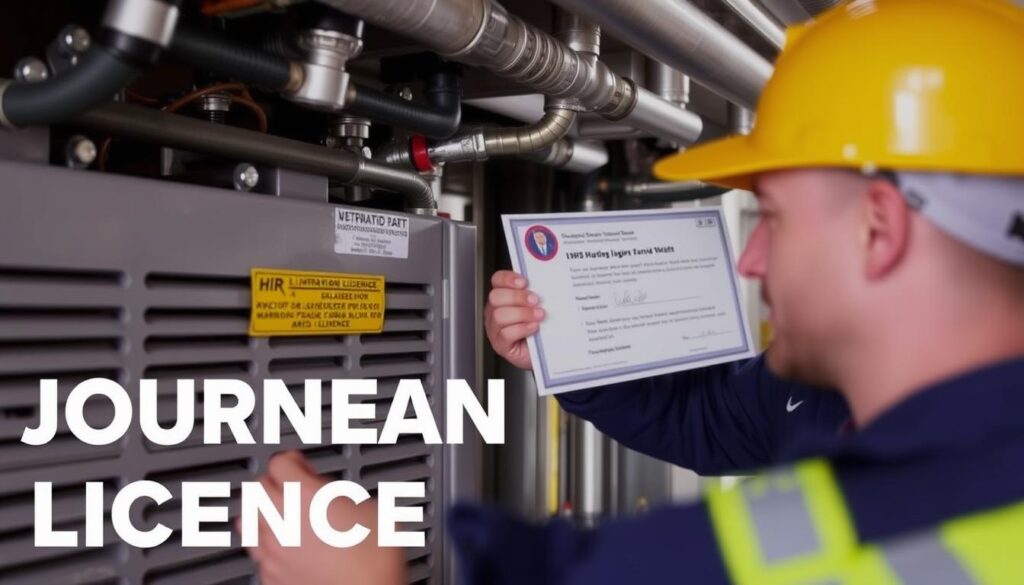
Getting your hvac journeyman license in Virginia to the next level means aiming for a master license. This big step opens up new chances for growth and more duties in the HVAC field.
To get a master HVAC license in Virginia, you have two main ways:
- One year of experience as a licensed journeyman
- Ten years of verified practical HVAC experience
The master license lets you do more, like:
- Plan and design HVAC installations
- Supervise other technicians
- Make sure work follows Virginia Uniform Statewide Building Code
Getting your master license involves a few important steps:
| Step | Requirement |
|---|---|
| Application | Submit to Board for Contractors |
| Experience Verification | Provide documented HVAC work history |
| Examination | Pass advanced HVAC knowledge test |
| Fees | $255 total ($125 exam + $130 license) |
Pro tip: Keep good records of your projects during your journeyman time. This detailed record will be key when applying for your master license.
Your master license is more than a piece of paper. It’s a door to new chances, like becoming a contractor or a manager in the HVAC world.
Obtaining Your HVAC Contractor License in Virginia
To become a licensed HVAC contractor in Virginia, you must follow certain steps. These steps help you move from being a skilled technician to a business owner. You’ll get the legal right to work in the HVAC industry.
Virginia has three types of contractor licenses. Each type is designed for different levels of experience and business size:
- Class C License: For new contractors with two years of experience
- Class B License: For those with three years of experience
- Class A License: For top-level contractors with five years of experience
Contractor License Class Requirements
To meet the requirements for a Virginia HVAC contractor license, you need to fulfill certain criteria for each class:
- Minimum years of experience
- Enough business capital
- Pass a licensing exam
- Finish pre-license courses
Financial and Insurance Considerations
Your application must show you’re financially stable. You’ll need to provide proof of:
- Enough business capital
- General liability insurance
- Workers’ compensation insurance (if you have employees)
- Potential surety bond requirements
Pre-License Education Mandates
Before getting your license, you must take an 8-hour pre-license course. This course is approved by the state. It covers important topics like business practices, contract law, and HVAC regulations in Virginia.
Explore Our HVAC Shop
Looking for top-rated HVAC tools, parts, and accessories? Visit our shop and find the perfect solution for your needs.
Visit the ShopCosts and Fees for HVAC Licensing in Virginia
Getting an HVAC license in Virginia needs careful money planning. The path to licensure has many costs that affect your career investment. Knowing these expenses helps you plan your budget and prepare for your career.
The costs for your license vary based on the type you want. Here’s a list of main expenses:
- Journeyman License
- Exam Fee: $100
- License Fee: $130
- Total Initial Cost: $230
- Master License
- Exam Fee: $125
- License Fee: $130
- Total Initial Cost: $255
- Contractor Licenses
- Class A: $470 total
- Class B: $442 total
- Class C: $235 (no additional exam with master license)
There are also extra costs beyond the licensing fees. Educational programs can cost between $1,000 and $5,000. EPA certification is $100-$150, and study materials can add $200-$500.
Remember, there are ongoing costs too. License renewal is $90 every two years. You’ll also need professional insurance and possibly a surety bond as a contractor.
Good financial planning is key to handling all the costs in your HVAC career.
Approved HVAC Training Programs and Schools in Virginia
Getting your hvac certification in Virginia means picking the right training program. The state has many ways for future HVAC pros to learn and grow.
Looking into hvac certification in Virginia? You’ll find several educational paths to explore:
- Community College Programs
- Technical Center Training
- High School Career Programs
- Online Learning Platforms
HVAC Excellence Accredited Programs
Virginia has many HVAC Excellence accredited programs. They offer top-notch technical education. Students get training that meets industry needs.
Some top places for this training are:
- Advanced Career Education Center at Hermitage
- Northern Virginia Community College
- Norfolk Technical Center
- Virginia Beach Technical and Career Education Center
Virginia Community College System Options
The Virginia Community College System has great HVAC training. These programs are affordable and flexible. They help students get their hvac certification in Virginia.
Community college HVAC programs offer:
- Associate of Applied Science degrees
- Certificate programs
- Hands-on training facilities
- Strong industry connections
Make sure the program is approved by the Virginia Department of Professional and Occupational Regulation. This ensures your training meets state licensing needs.
Career Outlook and Salary Expectations for Licensed HVAC Professionals
The HVAC industry in Virginia is booming. It offers great job opportunities and competitive pay. You can build a successful career in this vital field.
There’s a bright future for HVAC pros. About 13,540 HVAC mechanics and installers work in Virginia. The job market is expected to grow by 9% from 2023 to 2033. This means more job security and career growth.
Salary by Position
| HVAC Position | Average Hourly Rate | Annual Base Salary | Potential Overtime |
|---|---|---|---|
| HVAC Technician | $29.17 | $60,674 | $6,750 |
| HVAC Installer | $25.63 | $53,310 | $6,750 |
| HVAC Mechanic | $28.46 | $59,197 | N/A |
| HVAC Supervisor | N/A | $92,343 | N/A |
Your salary depends on several things:
- Education level and certifications
- License type (journeyman, master, or contractor)
- Specialized skills
- Years of experience
- Geographic location within Virginia
Business owners can earn more. Northern Virginia and urban areas pay more than rural areas. HVAC is a great career in Virginia because of job growth, good pay, and chances to move up.
Your skills are in demand: 100% of Virginia contracting firms reported unfilled hourly craft positions in 2022.
Starting or advancing in HVAC in Virginia is a smart move. It’s a stable and rewarding career with good pay.
Conclusion
Getting an HVAC license in Virginia is a smart career move. It turns you from an apprentice to a skilled pro with lots of chances. Keeping your HVAC license up to date in Virginia helps you grow professionally and financially.
The path to getting licensed takes hard work—usually four years to become a journeyman and another year for master status. Each step teaches you important skills and shows you’re a pro. By meeting Virginia’s HVAC licensing needs, you get more than a piece of paper. You open the door to good jobs and pay.
Renewing your HVAC license in Virginia every two years at $90 keeps you in line with the latest rules. Licensed folks get more job chances, like getting permits and starting their own businesses. Your education and certification mean better jobs and more money.
Start this journey with excitement. Virginia’s licensing system helps you grow from a trainee to a respected pro. Keep learning and keeping your license up to date. This makes you a key player in the fast-changing HVAC world.
FAQ
How long does it take to get an HVAC license in Virginia?
What are the initial requirements to apply for an HVAC license in Virginia?
How much does it cost to get an HVAC license in Virginia?
Do I need to renew my HVAC license in Virginia?
What are the different types of HVAC licenses in Virginia?
How long does it take to get an HVAC license in Virginia?
What are the initial requirements to apply for an HVAC license in Virginia?
How much does it cost to get an HVAC license in Virginia?
Do I need to renew my HVAC license in Virginia?
What are the different types of HVAC licenses in Virginia?
FAQ
How long does it take to get an HVAC license in Virginia?
Getting an HVAC license in Virginia takes 4-7 years. It starts with an apprenticeship and goes up to a master license. You need to finish approved programs, get work experience, and pass state exams at each step.
What are the initial requirements to apply for an HVAC license in Virginia?
You must be 18 or older and have a high school diploma or GED. You also need to complete an approved program and gain work experience. A physical address and passing a background check are required too.
How much does it cost to get an HVAC license in Virginia?
Costs vary by license level. A journeyman license is about 0. A master license is 5, and contractor licenses range from 5 to 0. You’ll also spend money on education, materials, and insurance.
Do I need to renew my HVAC license in Virginia?
Yes, you must renew your license every two years for . You need to keep up with industry changes and maintain insurance and certifications.
What are the different types of HVAC licenses in Virginia?
Virginia has three main licenses: Journeyman, Master, and Contractor. Journeyman licenses allow work on projects under
FAQ
How long does it take to get an HVAC license in Virginia?
Getting an HVAC license in Virginia takes 4-7 years. It starts with an apprenticeship and goes up to a master license. You need to finish approved programs, get work experience, and pass state exams at each step.
What are the initial requirements to apply for an HVAC license in Virginia?
You must be 18 or older and have a high school diploma or GED. You also need to complete an approved program and gain work experience. A physical address and passing a background check are required too.
How much does it cost to get an HVAC license in Virginia?
Costs vary by license level. A journeyman license is about $230. A master license is $255, and contractor licenses range from $235 to $470. You’ll also spend money on education, materials, and insurance.
Do I need to renew my HVAC license in Virginia?
Yes, you must renew your license every two years for $90. You need to keep up with industry changes and maintain insurance and certifications.
What are the different types of HVAC licenses in Virginia?
Virginia has three main licenses: Journeyman, Master, and Contractor. Journeyman licenses allow work on projects under $1,000. Master licenses are for designing and supervising projects. Contractor licenses have three classes with different project value limits.
Can I transfer my HVAC license from another state to Virginia?
Virginia offers some reciprocity. If you have a valid HVAC license from another state, you might not need to take all tests. But, you’ll need to meet Virginia’s standards and apply.
What educational programs are accepted for HVAC licensing in Virginia?
Virginia accepts programs from accredited colleges, community colleges, and Virginia Apprenticeship Council programs. Schools must be approved by the Virginia Department of Education and recognized by HVAC Excellence.
Do I need additional certifications beyond my HVAC license?
Yes, you need EPA Section 608 certification for refrigerants. This is a federal requirement separate from your state license. You’ll need to pass an additional exam.
What is the average salary for licensed HVAC professionals in Virginia?
HVAC professionals in Virginia make an average of $58,770 a year. Earnings can increase with experience, specialization, and license level. Contractor-level professionals can earn more by owning their own businesses.
How often do I need to take continuing education courses?
Virginia doesn’t require specific continuing education hours for renewal. But, it’s wise to stay updated with industry changes, building codes, and new technologies. This keeps you competitive and professional.
,000. Master licenses are for designing and supervising projects. Contractor licenses have three classes with different project value limits.
Can I transfer my HVAC license from another state to Virginia?
Virginia offers some reciprocity. If you have a valid HVAC license from another state, you might not need to take all tests. But, you’ll need to meet Virginia’s standards and apply.
What educational programs are accepted for HVAC licensing in Virginia?
Virginia accepts programs from accredited colleges, community colleges, and Virginia Apprenticeship Council programs. Schools must be approved by the Virginia Department of Education and recognized by HVAC Excellence.
Do I need additional certifications beyond my HVAC license?
Yes, you need EPA Section 608 certification for refrigerants. This is a federal requirement separate from your state license. You’ll need to pass an additional exam.
What is the average salary for licensed HVAC professionals in Virginia?
HVAC professionals in Virginia make an average of ,770 a year. Earnings can increase with experience, specialization, and license level. Contractor-level professionals can earn more by owning their own businesses.
How often do I need to take continuing education courses?
Virginia doesn’t require specific continuing education hours for renewal. But, it’s wise to stay updated with industry changes, building codes, and new technologies. This keeps you competitive and professional.