Affiliate Disclosure
HVAC Guide Guys is a participant in the Amazon Services LLC Associates Program, an affiliate advertising program designed to provide a means for sites to earn advertising fees by advertising and linking to Amazon.
Ever walked into your home and smelled something weird coming from your air conditioning? These smells might not just be annoying. They could be warning signs of big HVAC problems.
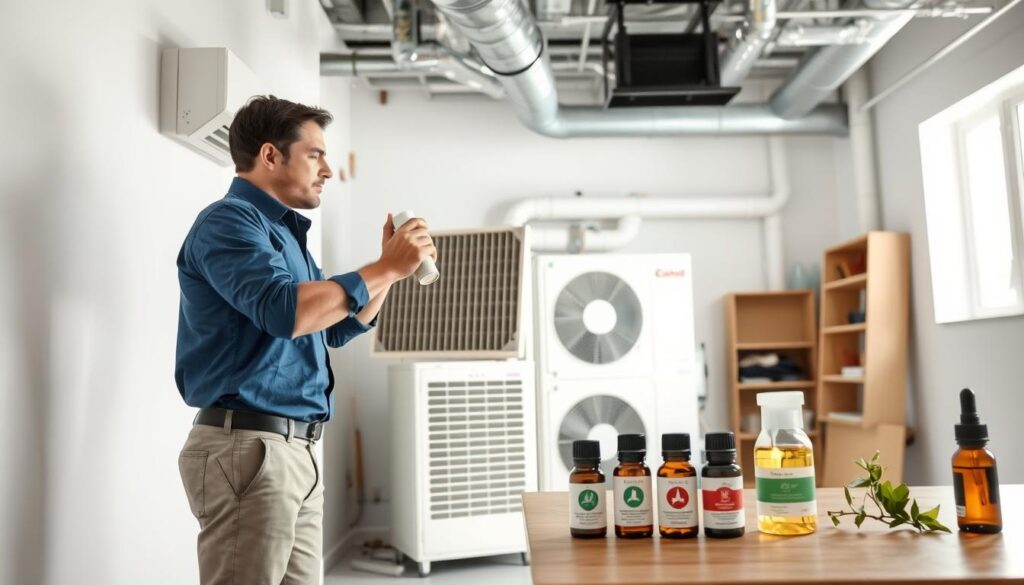
Getting rid of air conditioner odors is key for your health and home’s air. Smells like burning, musty, or chemical can mean serious issues. Your HVAC system might be trying to tell you something important.
Knowing how to get rid of HVAC smells is vital for a healthy home. This guide will show you six effective ways to fix those smells. Professional HVAC maintenance is also important to prevent and solve these smell problems.
Key Takeaways
- HVAC odors can signal health and system risks
- Regular maintenance prevents smell issues
- Some solutions are simple DIY fixes
- Professional help may be needed for complex problems
- Finding the source of the smell is the first step
Table of Contents
Understanding Why Your HVAC System Smells
Your home’s air conditioning system can develop various unpleasant odors. These smells signal underlying issues. Identifying and addressing these problems quickly can prevent health risks and system damage.
Common Types of HVAC Odors
Different smells from your HVAC system can indicate specific problems. To effectively fix hvac system smell, recognize these common odor types:
- Musty/Earthy Odor: Indicates mold or mildew growth in system components
- Burning Smell: Suggests electrical issues or overheating mechanical parts
- Chemical Smell: Possible refrigerant leaks
- Rotten Egg Smell: Possible dangerous gas leak
- Sour/Vinegar Smell: Bacterial buildup in drain lines or coils
Health Risks Associated with HVAC Smells
Ignoring unusual HVAC odors can lead to serious health complications. Mold spores, bacterial growth, and poor air quality can trigger:
- Respiratory problems
- Allergic reactions
- Asthma attacks
- Chronic fatigue
- Potential long-term health issues
“Maintaining indoor air quality is key for protecting your family’s health,” says the Environmental Protection Agency.
Understanding these odors empowers you to take proactive steps. This keeps your home clean and safe for your family.
Identifying the Source of Your Air Conditioner Odor
To get rid of the musty smell from your AC, first find out where it’s coming from. Knowing the source helps you fix the problem right away. This saves you time and money on fixes that don’t work.
Begin by looking closely at your HVAC system. Check a few important spots:
- Air filters with visible dirt or discoloration
- Ductwork for signs of moisture or debris
- Condensate drain pan and line for standing water
- Evaporator coils for possible mold growth
When trying to remove the musty smell, focus on these key areas:
- Visual Inspection: Look for dirt, mold, or moisture
- Smell Test: Find out where the smell is strongest
- Sound Check: Listen for odd noises that might mean a mechanical problem
At times, you might need a pro’s help. HVAC techs use tools like moisture meters and thermal cameras. These tools can spot problems you can’t see.
| Odor Type | Potential Source | Recommended Action |
|---|---|---|
| Musty | Mold or Mildew | Deep cleaning or professional inspection |
| Burning | Electrical Issues | Immediate professional examination |
| Rotten Eggs | Potential Gas Leak | Evacuate and call professionals immediately |
Quickly finding the source is essential. It helps you get rid of the musty smell and keep your home healthy.
Explore Our HVAC Shop
Looking for top-rated HVAC tools, parts, and accessories? Visit our shop and find the perfect solution for your needs.
Visit the ShopClean and Replace Your Air Filters Regularly
Your HVAC system’s air filters are key to keeping the air inside your home clean. They catch dust, allergens, and particles that can make your air smell bad and lower your system’s performance.
Keeping your filters clean is a simple way to make your HVAC system work better. Dirty filters can block air flow, increase your energy bills, and even damage your system.
Determining Filter Replacement Frequency
The right time to replace your filters depends on a few things:
- Standard households: Replace every 60-90 days
- Homes with pets: Replace monthly
- Homes with allergy sufferers: Replace every 30-45 days
- During high pollen seasons: Consider more frequent replacements
Selecting the Best Filters for Your System
When picking filters, think about these important points:
- MERV Rating: Make sure it fits your system
- HEPA Filters: They catch 99.97% of particles as small as 0.3 microns
- Think about what you need for your air quality
“Clean filters are the key to a healthy, efficient HVAC system.” – HVAC Maintenance Experts
By keeping your air filters clean and replacing them often, you’ll make your home’s air better. You’ll also save on energy and make your HVAC system last longer.
Remove Mold and Mildew from Your HVAC System
Mold and mildew can quickly become a nightmare for your HVAC system. They create unpleasant odors and can be harmful to your health. To prevent ac mildew smell, you’ll need a strategic approach to cleaning and maintenance.
Understanding where mold grows is key. Your air conditioning system is a perfect place for mold to thrive. It’s dark, moist, and full of organic material. Common mold hotspots include:
- Evaporator coils
- Condensate drain pans
- Air ducts
- Air filters
When tackling mold, safety is first. Here are essential precautions to take:
- Wear an N95 respirator mask
- Put on protective gloves
- Use safety goggles
- Open windows for ventilation
Create a powerful natural cleaning solution to prevent ac mildew smell. Mix:
| Ingredient | Proportion | Purpose |
|---|---|---|
| White Vinegar | 50% | Natural disinfectant |
| Water | 50% | Dilution |
| Tea Tree Oil | Few drops | Antifungal properties |
For extensive mold growth, professional remediation might be necessary. Remember, prevention is always easier than removal. Keep humidity levels below 50% and ensure proper system drainage to stop mold before it starts.
Clear Clogged Condensate Drain Lines
Clogged condensate drain lines can make your HVAC smell bad. Your air conditioner makes moisture, which flows through these lines. This can attract bacteria and mold.
Learning to clean your drain lines can boost your system’s performance and air quality. Here are some effective methods to tackle drain line issues:
DIY Vinegar Solution for Drain Cleaning
Using white vinegar is a simple yet effective way to clean your drain lines. Follow these steps:
- Locate the drain line access point near your indoor air handler
- Turn off the HVAC system’s power
- Pour 1 cup of white vinegar into the drain line
- Let the vinegar sit for 30 minutes
- Flush with warm water
For an extra boost, add a few drops of tea tree essential oil. It helps stop mold growth and gives a fresh scent.
Preventing Future Blockages
Regular maintenance keeps your drain lines clear and prevents bad smells. Consider these preventive techniques:
- Perform vinegar flush monthly during cooling season
- Install a condensate drain line trap
- Use UV lights near the drain pan to reduce microbial growth
- Check for warning signs like water pooling or unexpected system shutdowns
Pro tip: Consistent maintenance can help stop HVAC from smelling and extend your system’s lifespan.
Explore Our HVAC Shop
Looking for top-rated HVAC tools, parts, and accessories? Visit our shop and find the perfect solution for your needs.
Visit the ShopHow to Get Rid of HVAC Smell from Evaporator Coils
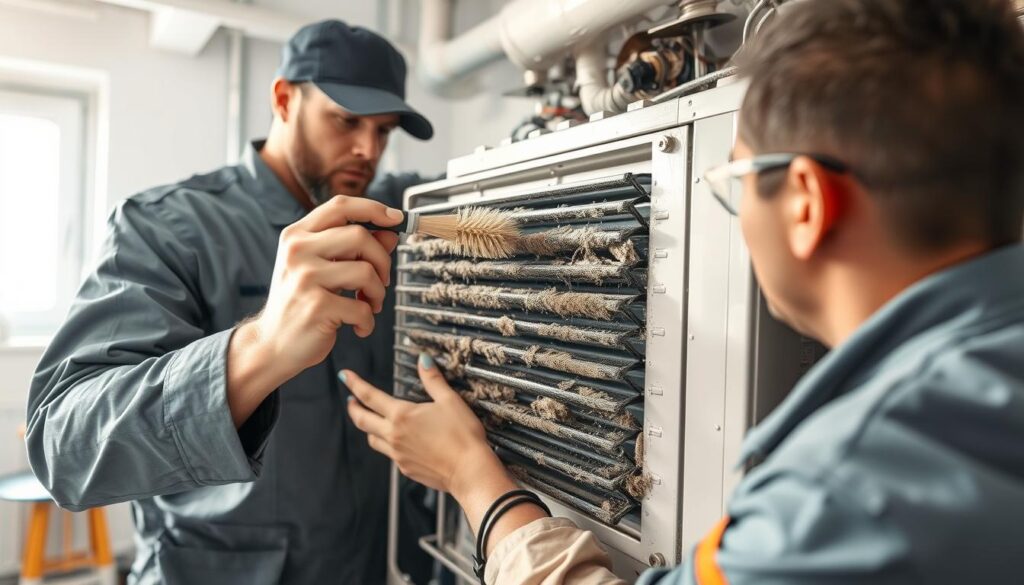
Evaporator coils can harbor bacteria and mold, causing bad smells. These parts of your HVAC system can spread odors throughout your home. Learning how to remove these smells can greatly improve your air quality.
Before you start cleaning, make sure to follow these important steps:
- Turn off power at the thermostat
- Switch off the circuit breaker
- Gather necessary cleaning supplies
Cleaning your evaporator coils needs attention to detail. First, remove the air handler’s access panel with a screwdriver. Use a soft brush to remove debris from the coil fins. Be very careful not to damage the aluminum fins.
For a deep clean, use a no-rinse HVAC coil cleaner. These cleaners foam up and get into buildup without needing to rinse a lot. Apply the cleaner, let it sit for 10-15 minutes, then wipe with a soft cloth.
| Cleaning Method | Effectiveness | Difficulty Level |
|---|---|---|
| Soft Brush Cleaning | Moderate | Easy |
| No-Rinse Coil Cleaner | High | Intermediate |
| Professional UV Light Treatment | Very High | Advanced |
Pro Tip: Think about getting UV-C lights for your evaporator coils. These lights kill bacteria and mold, keeping your air fresh.
If you see a lot of corrosion or damage, call an HVAC expert. Some problems need special care that’s not part of regular cleaning.
Address Electrical and Mechanical Issues Causing Burning Smells
Burning smells from your HVAC system can be scary and risky. These smells mean something is wrong with your heating or cooling system. Knowing the different smells and when to act can keep your home and family safe.
When you smell burning while trying to fix the smell, notice the smell’s details. Different smells point to different problems:
- Burning dust smell: Usually harmless when first turning on the system after months of inactivity
- Burning rubber smell: Could indicate worn fan belts or overheating motor components
- Electrical burning smell: Suggests wiring issues or electrical component failures
Critical Warning Signs Requiring Immediate Action
Some burning smells need quick action to fix the HVAC system smell safely. If you keep smelling burning, here’s what to do:
- Shut off your HVAC system immediately
- Do not try to fix electrical parts yourself
- Contact a licensed HVAC professional
“Electrical and mechanical issues in HVAC systems can pose serious safety risks. Always prioritize professional inspection when unusual smells persist.” – HVAC Safety Experts
When to Call an HVAC Professional
Calling a pro is key when you notice:
• Persistent burning smells that don’t go away
• Burning odors with strange noises
• Visible smoke or sparking from electrical parts
• Possible gas or refrigerant leaks
Trying DIY fixes can cause bigger problems. Licensed technicians can safely find and fix complex issues.
Improve Ventilation to Eliminate Stale Air
Good ventilation is key to keeping your HVAC system fresh and getting rid of stale air at home. Modern homes are built to save energy, but they can trap pollutants. This leads to bad smells and moisture building up fast.
To make your HVAC system smell better, try these ventilation tips:
- Open windows on opposite sides of your home for 15-30 minutes daily
- Use exhaust fans in bathrooms and kitchens
- Install whole-house ventilation systems like energy recovery ventilators (ERVs)
- Utilize ceiling fans to improve air circulation
Your home’s air quality is greatly affected by how well it ventilates. Sunlight’s natural UV rays can kill bacteria and stop them from growing. Ceiling fans and opening windows help push out old air and bring in new.
If you have trouble spots like basements or closets, you might need more help. Portable fans, dehumidifiers, and moving air around can stop moisture and bad smells. This helps your HVAC system work better.
Effective ventilation is not just about eliminating odors—it’s about creating a healthier indoor environment.
By using these ventilation methods, you’ll not only make your HVAC system smell better. You’ll also improve the air quality inside and maybe even make your system last longer.
Explore Our HVAC Shop
Looking for top-rated HVAC tools, parts, and accessories? Visit our shop and find the perfect solution for your needs.
Visit the ShopInstall UV Lights and Antimicrobial Treatments
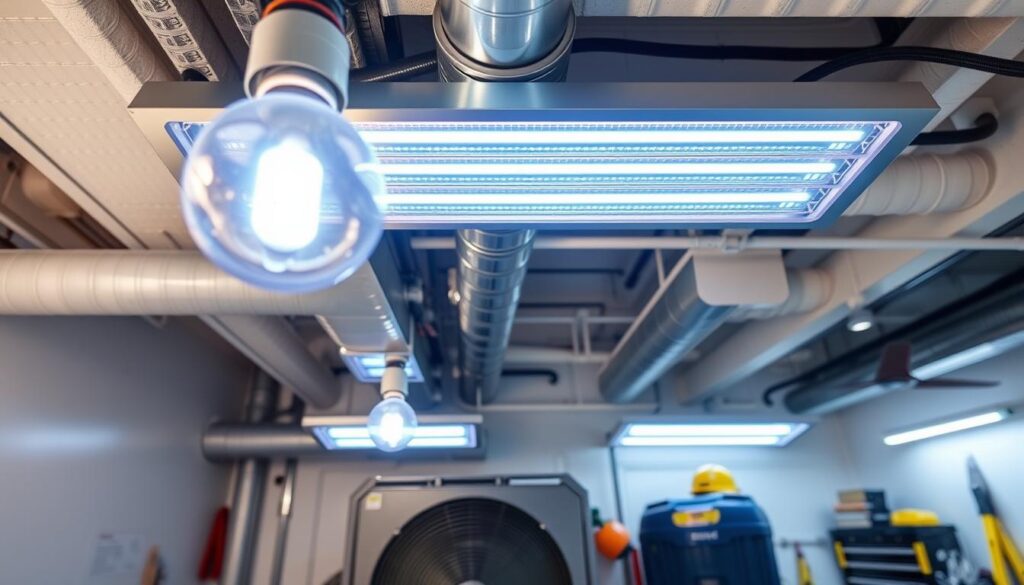
Keeping your HVAC system safe from harmful germs is key. UV light and antimicrobial treatments are top choices. They stop mildew smell before it starts, making your air cleaner and healthier.
Benefits of UV Light Installation
UV-C light is a new way to fight ac mildew smell. It’s placed near evaporator coils or in ducts. These lights kill germs all day long.
- Damages microbial DNA at 254 nanometers wavelength
- Stops bacteria and mold reproduction
- Improves overall indoor air quality
- Reduces allergy and asthma triggers
Getting it installed costs $500-$1,500. You’ll need to replace bulbs every year to keep it working well.
Scheduling Antimicrobial Treatments
UV lights are great, but antimicrobial treatments add extra protection. Technicians use special foggers to cover your HVAC system with EPA-registered agents.
- Recommended twice yearly treatments
- Best before cooling and heating seasons
- Creates protective coating against microbial growth
- Ideal for humid climates and sensitive respiratory conditions
With these treatments, you’ll cut down on bad smells. Your HVAC system will stay clean and healthy.
Control Humidity Levels with Dehumidifiers
Keeping humidity in check is key to better air quality at home. Too much moisture leads to mold, mildew, and bad smells in your HVAC system.
The Environmental Protection Agency says indoor humidity should be between 30% and 50%. If it goes higher, you face several issues:
- Mold growth in HVAC systems
- Musty odors throughout your home
- Increased dust mite populations
- Potential structural damage
There are ways to manage humidity and get rid of bad odors:
- Portable Dehumidifiers
- Great for single rooms
- Perfect for basements and bathrooms
- Cost-effective at first
- Whole-Home Dehumidifiers
- Works with your HVAC system
- Keeps humidity steady
- Handles moisture all over
Choose a dehumidifier based on your needs. A 500-square-foot area needs a 30-40 pint unit. Professional installation is key for best results and air quality.
| Humidity Level | Potential Issues | Recommended Action |
|---|---|---|
| Below 30% | Dry skin, respiratory irritation | Add moisture |
| 30-50% | Optimal comfort zone | Maintain current levels |
| Above 50% | Mold, odors, dust mites | Use dehumidifier |
It’s important to keep your dehumidifier in good shape. Clean filters every month, empty the tank often, and think about a direct drain line for constant use. By controlling humidity, you’ll make your home healthier and smell fresher.
Use Whole-Home Air Purifiers to Freshen Your HVAC System
Starting to improve your indoor air quality means getting a whole-home air purification system. These systems are more than just portable units. They work directly with your HVAC ductwork to get rid of smells and harmful particles all over your home.
Whole-home air purifiers bring many benefits for a healthier home:
- They filter air all over your home
- They remove tiny particles and smells
- They cut down on allergens and health risks
- They make your HVAC system work better
When picking a whole-home air purifier, look for certain technologies:
- HEPA Filtration: Catches 99.97% of particles as small as 0.3 microns
- Activated Carbon Filters: Gets rid of smells and chemicals
- UV Light Technology: Kills germs and bacteria
Getting a pro to install your whole-home air purifier is key. It makes sure it fits well with your HVAC system. You’ll spend between $1,000 and $4,000, based on your home’s size and system complexity.
Clean air is not an expense, but an investment in your health and comfort.
To keep your system running well, change filters every 6-12 months. This will make sure your air stays fresh and clean all the time.
Conclusion
Getting rid of HVAC odors starts with regular home maintenance. Knowing why smells happen helps keep your air and system clean. You can try simple fixes or call in the pros.
Keeping up with maintenance stops odors before they start. Clean filters, control humidity, and get regular checks. Adding air purifiers like UV lights and HEPA filters helps even more.
Unusual smells mean something’s wrong. It could be mold, electrical issues, or clogged lines. Acting fast can avoid big repairs and health risks. Taking care of your HVAC means a healthier home.
Fixing HVAC smells is about more than just solving the problem. It’s about making your home comfortable. By following these tips, you’ll keep your home smelling great. Stay alert and enjoy a fresh HVAC system.