Affiliate Disclosure
HVAC Guide Guys is a participant in the Amazon Services LLC Associates Program, an affiliate advertising program designed to provide a means for sites to earn advertising fees by advertising and linking to Amazon.
Did you know a single power surge can destroy your HVAC system in seconds? Most homeowners don’t know about the electrical threats in their systems. These threats can instantly ruin expensive cooling and heating equipment.
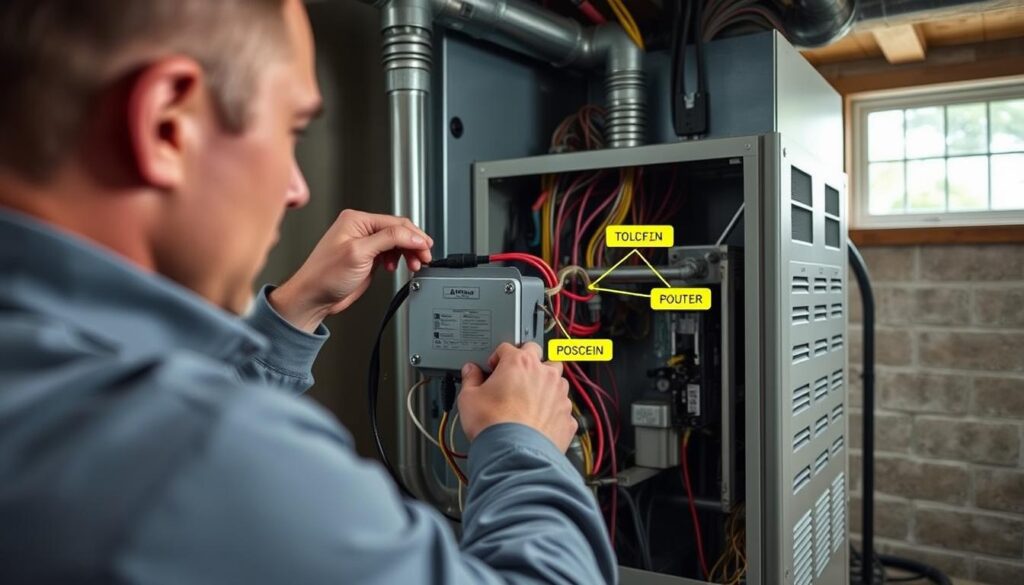
Installing an HVAC surge protector is your first defense against electrical damage. This guide will teach you how to protect your home’s critical electrical systems from voltage spikes.
Power surges happen more often than you think. The average American home faces up to 20 power surges a year. These surges can reach up to 20,000 volts, much higher than your HVAC system’s usual 120-240 volts. Without protection, these surges can destroy expensive parts like compressors, costing $1,200 to $2,500 to replace.
Key Takeaways
- Protect your HVAC system from costly electrical damage
- Learn professional surge protector installation techniques
- Understand the risks of unprotected electrical systems
- Save thousands in potentially costly repairs
- Extend your HVAC system’s operational lifespan
Table of Contents
Understanding HVAC Surge Protection and Why You Need It
Power surges can damage your home’s HVAC system, costing thousands of dollars. Your heating and cooling equipment is a big investment. It’s important to protect it from electrical problems to keep it working well and lasting longer.
Electrical surges happen more often than you think. The average home in the U.S. faces up to 20 power surges a year. These can come from inside your home or from outside, like lightning.
The Cost of Power Surges on Your HVAC System
The damage from surges can be very expensive. Here’s what you might pay to fix or replace important parts of your HVAC system:
| HVAC Component | Replacement Cost |
|---|---|
| Compressor | $1,200 – $2,500 |
| Control Board | $500 – $1,500 |
| Capacitor | $100 – $400 |
| Fan Motor | $200 – $700 |
| Complete HVAC System | Up to $10,000 |
How Surge Protectors Work to Safeguard Your Equipment
A good hvac surge protector is like a shield for your system. It uses special technology to protect your equipment from too much voltage. When you install a surge protector, you’re making a big step to keep your HVAC safe from damage.
- Typical surge protectors handle 1,000-2,000 joules of energy
- Response times are measured in nanoseconds
- Investments range from $150-$700
“Protecting your HVAC system from electrical surges is far more economical than replacing expensive components.” – HVAC Industry Expert
Remember, prevention is always more cost-effective than repair. A smart surge protection plan can save you thousands in avoiding HVAC system damage.
Choosing the Right Surge Protector for Your HVAC System
Choosing the right surge protector for your HVAC system is important. You need to find the perfect match for your equipment. This is key in the step-by-step installation process.
When looking at surge protectors, pay attention to these important details:
- Voltage rating matching your system’s needs
- Amperage capacity for your HVAC unit
- Joule rating for full surge protection
For a 5-ton central air conditioner, you need a surge protector that supports at least 240 volts and 30 amps. It’s best to choose models with 1,000-2,000 joule ratings. This helps protect against extreme electrical surges.
| Surge Protector Type | Amp Handling | Price Range |
|---|---|---|
| Whole-House Panel Protector | Up to 50,000 amps | $300-$700 |
| Unit-Specific Protector | 10,000-20,000 amps | $150-$300 |
| Thermostat Circuit Protector | Up to 15,000 amps | $50-$150 |
Brands like Ditek and RectorSeal offer reliable surge protectors for HVAC systems. Look for features like LED indicators, thermal disconnect mechanisms, and warranty coverage. These ensure your system is well-protected.
Essential Tools and Materials for Installation
Getting ready for a surge protector installation needs careful planning and the right tools. You must gather the correct equipment and safety gear before starting. A good surge protector installation guide focuses on detail and preparation.
Safety Equipment Checklist
When working with electrical systems, safety comes first. Professional tips for HVAC surge protector installation stress the need to protect yourself.
- Insulated electrical gloves (rated for 500+ volts)
- Safety glasses with side shields
- Non-contact voltage tester
- Rubber-soled shoes
- Class C fire extinguisher
Essential Electrical Components and Hardware
Having the right electrical parts is key for a smooth installation. Your surge protector installation guide will list specific tools and materials.
| Tool Category | Specific Items |
|---|---|
| Cutting Tools | Wire strippers, utility knife |
| Fastening Tools | Screwdrivers (flathead and Phillips), drill |
| Electrical Supplies | Wire nuts, electrical tape, 10-12 AWG wire |
| Mounting Materials | Cable clamps, mounting hardware |
“Proper preparation prevents poor performance.” – Professional HVAC Installation Mantra
Pro Tip: While DIY installation can save money, think about your electrical skills. Wrong installation can be dangerous or damage warranties.
Explore Our HVAC Shop
Looking for top-rated HVAC tools, parts, and accessories? Visit our shop and find the perfect solution for your needs.
Visit the ShopInstalling a Surge Protector at the Electrical Panel
Installing an HVAC surge protector at your electrical panel protects your home’s electrical systems. This step can save you thousands of dollars from power surges.
Before starting, take important safety steps:
- Shut off the main electrical breaker completely
- Use a non-contact voltage tester to verify no electricity is present
- Wear appropriate electrical safety gear
- Confirm you have the correct surge protector for your panel
The installation process needs careful steps for maximum protection:
- Identify a dedicated double-pole breaker slot (15-20 amps)
- Carefully strip wire insulation to manufacturer specifications
- Connect surge protector wires to the designated breaker
- Attach ground wire to the panel’s ground bus bar
- Secure the surge protector unit within or adjacent to the panel
“A properly installed surge protector can reduce dangerous 6,000-volt spikes to just 600 volts, protecting your entire home’s electrical system.”
After installation, check the LED indicators for proper function. Professional installation typically costs between $300-$700. This is much less than what you might spend on replacing damaged equipment.
How to Install HVAC Surge Protector Near the Unit
Installing a surge protector near your HVAC unit is vital to protect it from electrical damage. It’s important to follow best practices for installing an HVAC surge protector. This ensures your cooling system is well-protected.
- Wire strippers
- Voltage tester
- Screwdriver set
- Electrical tape
- Safety gloves
Wiring to the Disconnect Box
Proper wiring is key when installing a surge protector near your HVAC unit. Follow these steps:
- Shut off power at both the main electrical panel and disconnect box
- Verify no electrical current is present using a voltage tester
- Remove the disconnect box cover carefully
- Identify incoming and outgoing power lines
Voltage and Amperage Requirements
Choosing the right surge protector depends on your HVAC system’s electrical specs. Here’s a guide to help:
| System Size | Voltage | Amperage | Recommended Joule Rating |
|---|---|---|---|
| 5-ton Central AC | 240V | 30 Amps | 1,000-2,000 Joules |
| 3-ton Central AC | 240V | 20 Amps | 800-1,500 Joules |
Pro tip: Always check your HVAC system’s manufacturer specs for surge protector compatibility.
Installing a surge protector for your HVAC system is an investment in long-term protection. Experts suggest replacing surge protectors every 3-5 years, based on your local power grid’s stability.
Explore Our HVAC Shop
Looking for top-rated HVAC tools, parts, and accessories? Visit our shop and find the perfect solution for your needs.
Visit the ShopMounting a Surge Protector on the Disconnection Box
Installing an HVAC surge protector on the disconnection box is key. It protects your system. Professional tips stress the need for the right spot to get the most protection.
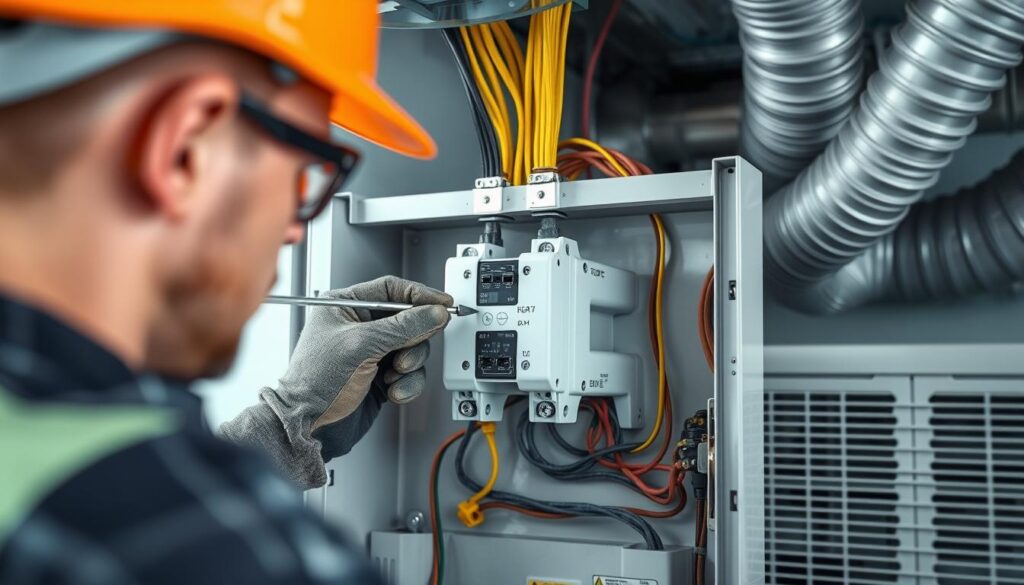
When you install your HVAC surge protector, pick a spot carefully. Look for a place that:
- Is close to the disconnect box
- Stays dry
- Shows the LED indicators clearly
- Has easy spots to connect the electricity
First, get the right tools ready:
- Drill with the right bits
- Weatherproof sealant
- Mounting hardware that won’t rust
- A voltage meter
Here are some tips for mounting:
- Put the surge protector where you can easily get to it
- Mark where to drill for holes
- Use the right anchors for your surface
- Seal the mounting points with weatherproof stuff
Experts say to use surge protectors that can handle up to 600 volts and 10,000 amps. Spending $100-$300 can save you $400-$1,500 in damage from power surges.
Installing Surge Protection Inside the Compressor Panel
Protecting your HVAC system’s most critical parts is key. You need to install surge protectors carefully inside the compressor panel. This can save you thousands in repair costs.
The compressor panel has sensitive electrical parts. These parts are at risk from voltage changes. A surge protector installation guide suggests steps to protect these parts.
Critical Components Needing Protection
- Capacitor
- Contactor
- Circuit board
Before starting, take important safety steps. Always turn off power completely. Use a professional voltage tester to check.
Installation Steps for Maximum Protection
- Turn off electrical power at the main breaker
- Remove compressor panel cover carefully
- Identify power supply terminals
- Select appropriate mounting location for surge protector
- Connect surge protector following manufacturer’s wiring diagram
- Secure all electrical connections
- Route wires to prevent interference
| Component | Replacement Cost | Surge Protection Rating |
|---|---|---|
| Capacitor | $100 – $400 | Up to 600 volts |
| Circuit Board | Up to $1,500 | 10,000-20,000 amps |
| Compressor | $1,200 – $2,500 | Protects against lightning strikes |
Professional installation costs $150 to $400. This is much less than fixing damaged parts. In areas prone to thunderstorms, replace surge protectors every 2-3 years for best protection.
Explore Our HVAC Shop
Looking for top-rated HVAC tools, parts, and accessories? Visit our shop and find the perfect solution for your needs.
Visit the ShopAdding Surge Protection to the Thermostat Circuit
Protecting your HVAC system’s thermostat circuit is key in your setup. Smart thermostats cost between $100 to $300. So, surge protection is vital to avoid expensive repairs.
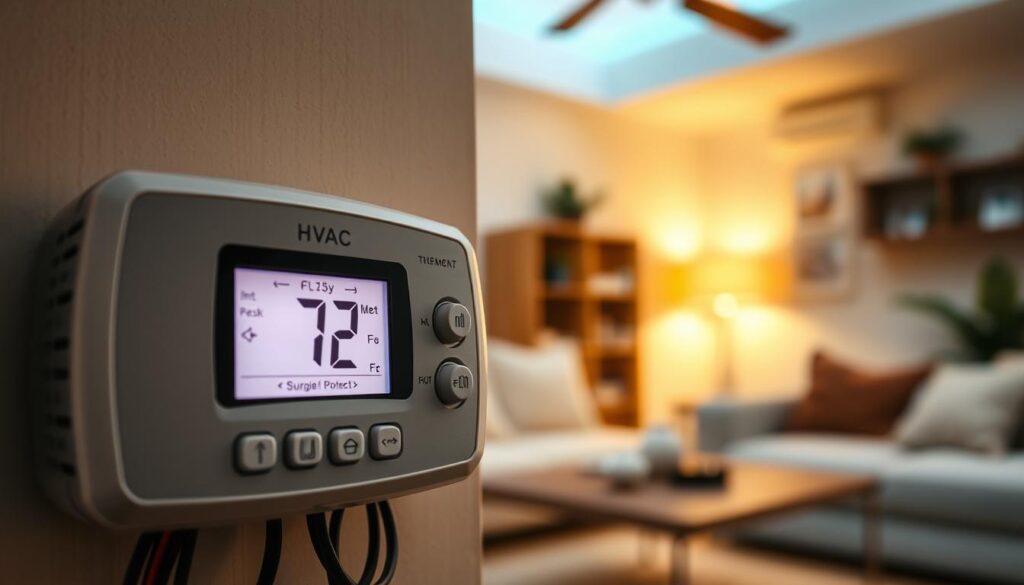
When setting up surge protection for your HVAC, pay close attention to the thermostat circuit. These circuits run at 24 volts but can be damaged by power spikes.
- Voltage protection up to 600 volts
- Prevents damage to expensive control components
- Protects transformers and relay systems
Here’s how to install surge protection correctly:
- Shut off power to the HVAC system
- Remove thermostat from wall plate
- Identify circuit wiring (R, C, W, Y, G)
- Install surge protector between transformer and thermostat
- Secure all wire connections
- Remount thermostat
“A $50 surge protector can save you hundreds in possible replacement costs” – HVAC Protection Experts
Surge protectors for thermostat circuits last 3-5 years. They protect against grid events that could cause 300-volt power spikes.
Testing Your Surge Protector After Installation
After installing an HVAC surge protector, it’s key to test it well. This ensures your system is safe and working right. Experts say checking everything thoroughly is a must before you’re done.
Verifying Electrical Connections
Here’s how to make sure your HVAC surge protector is working right:
- Look over all wire connections
- Make sure the connections are tight
- Check for any exposed copper wiring
- Verify that everything is securely mounted
- Confirm that wires are properly routed
Understanding Protection Status Indicators
Most surge protectors have LED lights that show if they’re working. Green lights mean they’re protecting you. Red lights or no light at all mean it’s time to replace it.
Some surge protectors also have:
- Status LED indicators
- Audible alarm systems
- Voltage monitoring
Ongoing Monitoring Recommendations
Check your surge protector’s status every month. Watch for any changes in LED colors or alarm sounds. If your area has a lot of power changes, check it more often.
Experts say to replace surge protectors every 3-5 years or right after big power issues.
Maintenance and Replacement Schedule for HVAC Surge Protectors
Keeping your HVAC system safe needs a proactive plan. Your surge protector guide stresses the need for regular checks and timely swaps. This keeps your equipment safe and running well.
Knowing how long your surge protector lasts is key. It affects how often you’ll need a new one. Several things can change how often you replace it:
- Areas with unstable power grids: Replace every 3 years
- Regions with frequent thunderstorms: Replace every 2-3 years
- Stable power regions: Surge protectors may last up to 5 years
Regular upkeep lets you spot problems early. Here’s a simple maintenance guide:
- Check LED indicators monthly
- Inspect for physical damage
- Verify mounting hardware stability
- Look for moisture or debris accumulation
- Document power outages and storm events
Signs that mean you need a new one include:
- Red or non-functioning LED indicator
- Visible damage to the surge protector
- Burning smell near the unit
- Unexplained electrical issues with HVAC system
Pro Tip: Keeping a maintenance log helps track your surge protector’s performance. It helps predict when you’ll need a new one. Regular maintenance can also make your HVAC system last longer and avoid electrical damage.
Conclusion
Installing an HVAC surge protector is more than just a technical task—it’s a critical investment in your home’s comfort and financial well-being. By following the steps for how to install an HVAC surge protector, you can significantly reduce the risk of electrical damage. This damage could cost thousands in repairs or replacement.
The HVAC surge protector setup process might seem complex, but it’s a straightforward way to safeguard your system. Power surges can reduce your equipment’s lifespan and cause unexpected breakdowns. Taking proactive steps is essential. Your investment of $50 to $700 in surge protection can prevent repair costs that could easily exceed $2,000 annually.
Whether you choose professional installation or a DIY approach, understanding the importance of surge protection is key. By implementing the techniques outlined in this guide, you can extend your HVAC system’s life from 10-15 years to potentially 20 years. Protect your equipment, save money, and ensure consistent home comfort with a surge protection strategy.
Remember, electrical damage can strike at any moment. Don’t wait for a power surge to compromise your HVAC system—take action now. Invest in reliable protection that will serve your home for years to come.