
Affiliate Disclosure
HVAC Guide Guys is a participant in the Amazon Services LLC Associates Program, an affiliate advertising program designed to provide a means for sites to earn advertising fees by advertising and linking to Amazon.
How Many HVAC Technicians Died A Year? Ever thought about the dangers in HVAC work? The hvac technician mortality rate shows a shocking truth. Every year, many skilled workers risk their lives to keep our places comfortable. But what’s the real cost?

The Bureau of Labor Statistics shows a grim picture. It tells us how many HVAC technicians die each year. In 2015, there were 29 fatalities in plumbing and HVAC trades. These numbers are more than just stats; they’re lives and families affected by work risks.
Your HVAC technician faces dangers most people don’t see. They work on hot rooftops and in tight spaces with electrical and toxic hazards. Their job requires skill, courage, and resilience that often goes unnoticed.
Key Takeaways
- HVAC technicians face significant workplace risks annually
- Fatalities in the trade are higher than many realize
- Safety awareness is key for technician protection
- Multiple hazards exist in HVAC work environments
- Professional training can lower workplace accidents
Table of Contents
Understanding HVAC Industry Fatality Statistics
The HVAC industry faces big safety challenges. These challenges affect worker health and survival. It’s important to understand the risks HVAC workers face every day.
Looking into hvac industry deaths gives us key insights. Experts have gathered important data. This data shows the dangers HVAC professionals face.
Annual Death Rate Overview
Recent stats show the risks in the HVAC sector. The annual fatality rate helps us understand the challenges technicians face:
- 20-30 HVAC workers die each year in work-related incidents
- Transportation accidents are a big part of these deaths
- Exposure to harmful substances is another serious risk
Comparison with Other Construction Trades
| Trade | Annual Fatalities | Primary Risk Factors |
|---|---|---|
| HVAC Technicians | 25-30 | Transportation, Falls, Chemical Exposure |
| Electrical Workers | 35-40 | Electrical Hazards, Heights |
| Roofing Contractors | 50-60 | Falls, Extreme Weather |
Statistical Trends Over Recent Years
Looking at hvac worker fatalities shows some good trends. Safety efforts and better training have lowered incidents. Technological advancements and stricter safety rules help protect HVAC workers.
- Safety training has gone up by 15% in five years
- Better protective gear has cut down on fatal accidents
- More people in the HVAC industry are aware of safety
Explore Our HVAC Shop
Looking for top-rated HVAC tools, parts, and accessories? Visit our shop and find the perfect solution for your needs.
Visit the ShopLeading Causes of HVAC Technician Deaths
HVAC workers face many dangers on the job. It’s important to know these risks to keep them safe.
The main dangers for HVAC workers include three main types of accidents:
- Transportation-related accidents
- Exposure to harmful substances
- Falls and workplace accidents
Transportation-Related Incidents
HVAC techs often travel a lot, which raises their risk of road accidents. These accidents are a big part of the job’s dangers. The reasons include:
- Long driving hours
- Frequent equipment transportation
- Challenging weather conditions
Exposure to Harmful Substances
Technicians deal with dangerous chemicals and toxic places often. Refrigerant leaks, asbestos, and other hazardous materials pose big health risks. Long-term exposure can cause serious breathing problems and health issues.
Falls and Related Accidents
Working high up is very dangerous for HVAC workers. They do rooftop jobs, ladder work, and complex maintenance. Slip and fall accidents are a big cause of death in HVAC jobs.
Electrical Hazards: The Silent Killer in HVAC Work
Electrical dangers are a big threat in HVAC work. They can turn simple tasks into deadly risks. This can lead to serious harm.
Many HVAC job-related deaths come from electrical accidents. Working with high-voltage equipment is risky. So, electrical safety is key in this field.
- Approximately 1,000 electrical-related fatalities occur annually in trade professions
- Electrical accidents account for 5% of severe workplace injuries
- HVAC systems involve complex electrical components with inherent risks
Knowing these dangers is vital. Professional electricians suggest using safety measures. This helps reduce electrical risks in HVAC work.
| Electrical Hazard Type | Risk Level | Prevention Strategy |
|---|---|---|
| Live Circuit Exposure | High | Use insulated tools and personal protective equipment |
| Unexpected Power Surges | Medium | Implement lockout/tagout procedures |
| Faulty Wiring | Critical | Regular system inspections and maintenance |
Getting the right training and staying alert can lower electrical risks in HVAC. Always follow safety rules and wear good protective gear. This keeps you safe and healthy.
Fall-Related Fatalities in HVAC Industry
HVAC workplace accidents are a big risk for technicians. Falls are a major safety issue. HVAC workers face unique dangers that can cause serious injuries or death.
In 2015, falls killed 11 HVAC and plumbing workers. These deaths highlight the need to prevent falls at work.
Rooftop Accidents
Rooftop work is very dangerous for HVAC techs. Heights, uneven surfaces, and equipment can cause accidents.
- Steep roof angles increase slip risks
- Weather conditions like rain or ice compromise surface traction
- Carrying heavy equipment increases balance challenges
Ladder and Scaffold Incidents
Using ladders and scaffolds wrong can lead to falls. Many accidents happen because of:
- Incorrect ladder placement
- Exceeding weight limitations
- Inadequate safety harness usage
- Unstable or damaged equipment
Prevention Strategies
To keep HVAC techs safe, we need strong safety plans:
- Regular safety training programs
- Mandatory fall protection equipment
- Thorough equipment inspection protocols
- Continuous workplace safety education
“Safety isn’t expensive, it’s priceless” – Unknown Safety Professional
With strict safety steps, HVAC companies can lower the risk of fatal accidents. This protects their most important asset: their employees.
Explore Our HVAC Shop
Looking for top-rated HVAC tools, parts, and accessories? Visit our shop and find the perfect solution for your needs.
Visit the ShopHow Many HVAC Technicians Died a Year: Recent Statistics
It’s key to know about the hvac technician mortality rate for safety at work. Recent numbers show the dangers HVAC workers face every day.
The Bureau of Labor Statistics has tracked how many hvac technicians died each year. In 2015, there were 29 deaths in HVAC and plumbing trades. This shows the risks of this important job.
- Workplace fatalities in HVAC industry range between 25-35 deaths annually
- Transportation-related incidents contribute significantly to mortality rates
- Electrical and fall-related accidents remain primary risk factors
Safety experts keep studying these numbers to create better safety plans. The aim is to cut down risks and keep HVAC technicians safe at work.
Safety is not an accident – it’s a continuous commitment to protecting workers in high-risk professions.
Knowing these stats can help improve safety and lower work deaths in HVAC. Your support is vital for these efforts.
Chemical and Toxic Exposure Risks
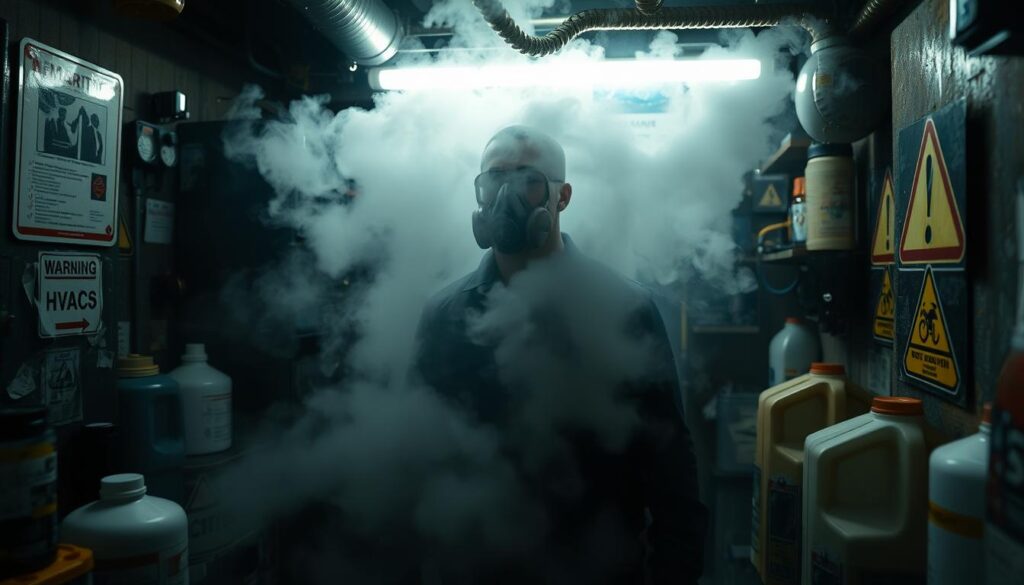
HVAC workers face big risks from chemicals and toxins every day. These dangers can lead to serious health problems. Many technicians might not know about these risks.
They can get hurt by touching harmful substances. Things like refrigerants, cleaning solvents, and other chemicals are dangers. These risks happen during regular work like maintenance and installation.
- Refrigerant chemicals can cause respiratory irritation
- Cleaning solvents may lead to skin burns or allergic reactions
- Toxic fumes from equipment can create long-term health complications
Chemicals can get into their bodies through:
- Inhalation of chemical vapors
- Skin contact during equipment servicing
- Accidental splashing or spraying
“Protecting yourself is not just about wearing protective gear, but understanding the possible risks,” says safety expert Michael Rodriguez.
Important safety steps include:
- Using the right personal protective equipment (PPE)
- Knowing about chemical safety data sheets
- Using good ventilation techniques
| Chemical Type | Potential Health Risk | Recommended Protection |
|---|---|---|
| Refrigerants | Respiratory Issues | Respirator Mask |
| Cleaning Solvents | Skin Irritation | Chemical-Resistant Gloves |
| Fuels | Toxic Vapor Exposure | Ventilation Equipment |
Being aware and taking safety steps are important to reduce chemical risks in HVAC work.
Mechanical and Equipment-Related Fatalities
HVAC worker fatalities often come from dangerous interactions with complex systems. The hvac industry deaths from equipment malfunctions are a big safety worry for technicians. They work in tough environments.
Mechanical equipment has many hazards that can lead to serious accidents. It’s key to know these risks to stop tragic incidents in the HVAC field.
Compressor Explosions: A Critical Threat
Compressor systems are dangerous for HVAC workers. The risks include:
- Extreme pressure buildup
- Unexpected mechanical failures
- Potential for catastrophic ruptures
Moving Parts: Silent Workplace Dangers
Sharp metal edges and fast-moving parts are big risks for technicians. These parts can cause:
- Severe lacerations
- Clothing entanglement
- Unexpected pinching injuries
Equipment Malfunction Incidents
HVAC worker fatalities often come from unexpected equipment failures. Power tools and complex machinery need careful maintenance and operation. This helps reduce risks.
Safety begins with awareness and proactive prevention strategies.
Protecting yourself means knowing the mechanical risks in HVAC work. It also means using strict safety practices at every job site.
Explore Our HVAC Shop
Looking for top-rated HVAC tools, parts, and accessories? Visit our shop and find the perfect solution for your needs.
Visit the ShopImpact of Weather Conditions on HVAC Worker Safety
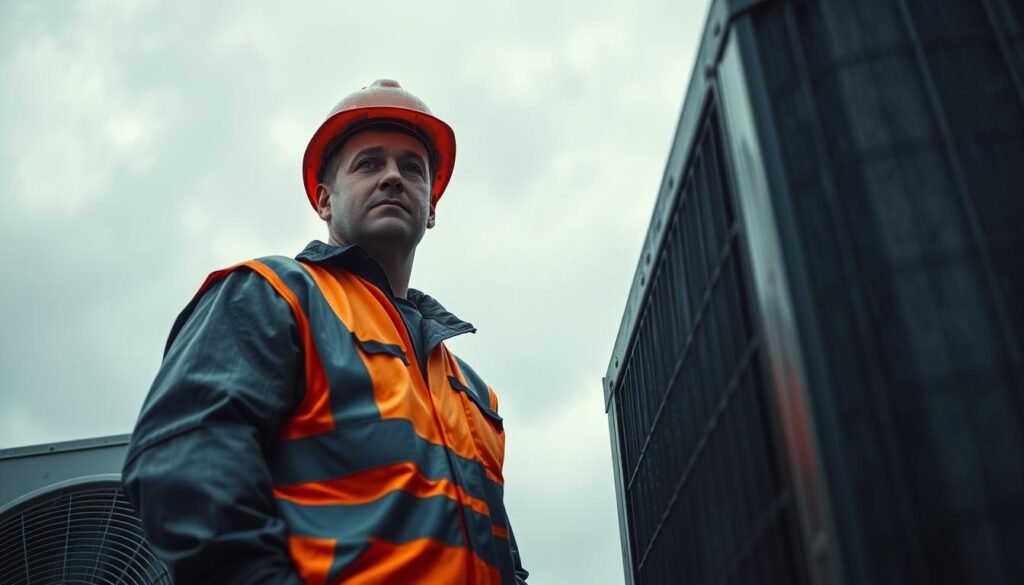
HVAC technicians face unique challenges in extreme weather. The statistics show that weather greatly affects their safety. Working outdoors or in uncontrolled areas can turn simple tasks into dangerous ones.
Extreme temperatures are a big threat to HVAC workers. In the summer, heat stress is a major concern. Technicians working outside or in hot spaces can suffer from:
- Rapid dehydration
- Heat exhaustion
- Potential heat stroke
- Reduced cognitive function
Winter brings its own dangers. Cold weather increases the risk of hypothermia and reduces physical ability. Icy surfaces, freezing equipment, and poor visibility make work conditions hazardous.
“In our industry, weather isn’t just a backdrop—it’s a critical safety factor that demands constant vigilance.” – Safety Professionals HVAC Association
To stay safe, plan ahead and use the right gear. Wear layered clothes, drink plenty of water, and take breaks. Employers should have safety plans for different seasons and weather risks.
- Use proper protective gear
- Monitor weather forecasts
- Schedule work during safer temperature ranges
- Implement mandatory rest periods
Awareness and preparation are your best defenses against weather-related occupational hazards.
Occupational Health Issues Leading to Long-term Fatalities
HVAC work comes with big health risks for those in the field. These risks can lead to serious health problems over time. HVAC workers face many dangers that can harm their health slowly.
It’s key to know the health challenges HVAC workers face. They are exposed to harmful substances and tough work conditions. These can cause serious health issues over the years.
Respiratory Challenges in HVAC Work
HVAC workers often face severe breathing problems. This is due to long-term exposure to harmful chemicals and particles. They handle dangerous materials that can harm their lungs:
- Asbestos fibers in older buildings
- Chemicals from refrigerants
- Dust and tiny particles in vents
- Mold spores from damaged parts
Chronic Exposure Effects
Long-term exposure to harmful substances can cause serious health issues. The health impacts can be severe:
| Exposure Type | Potential Health Risks | Estimated Impact |
|---|---|---|
| Chemical Exposure | Lung damage | 60-75% increased risk |
| Asbestos Exposure | Mesothelioma | 20-30 year latency period |
| Particulate Inhalation | Chronic respiratory disease | 40-55% higher likelihood |
Staying safe means always wearing personal protective equipment and getting regular check-ups. Knowing these risks helps HVAC workers protect their health for the long term.
Explore Our HVAC Shop
Looking for top-rated HVAC tools, parts, and accessories? Visit our shop and find the perfect solution for your needs.
Visit the ShopPrevention and Safety Protocols
Keeping HVAC technicians safe is key. By using strict safety rules and a strong safety culture, we can lower the risk of accidents. This helps protect HVAC workers from harm.
Important steps to avoid HVAC accidents include:
- Mandatory personal protective equipment (PPE)
- Comprehensive electrical safety training
- Regular equipment inspection procedures
- Strict lockout/tagout protocols
- Advanced fall protection techniques
Electrical safety is a big deal for HVAC workers. Always shut off power to HVAC units before starting work. They should wear nonconductive gloves and check all circuits for energy before touching anything.
| Safety Protocol | Key Actions | Risk Reduction |
|---|---|---|
| Electrical Safety | Power disconnection | 90% reduction in electrical hazards |
| Fall Protection | Harness use, secure anchoring | 85% decrease in fall-related incidents |
| Chemical Handling | Proper PPE, ventilation | 75% reduction in exposure risks |
Employers are vital in stopping accidents. They should offer regular safety training, top-notch protective gear, and foster a safety-first mindset. This helps cut down on accidents involving HVAC workers.
“Safety is not an accident. It’s a conscious choice made every moment of every workday.” – Safety Expert
By sticking to these safety rules, you can save lives in the tough HVAC field.
Conclusion
HVAC technician safety statistics show us the dangers these workers face every day. The job is complex, so they must always be careful and take safety steps. Knowing about job-related deaths helps us make better safety plans for workers in the U.S.
Staying safe at work is very important. The best way is through good training, using the right gear, and knowing about dangers. When HVAC workers follow strict safety rules and watch out for risks, they can avoid serious accidents.
New tech and better safety rules are changing how we protect workers. By always learning and following the latest safety tips, you can keep yourself and others safe. Working together, we can make HVAC jobs safer for everyone.
To stop accidents, we need a complete plan. This includes regular training, keeping equipment in good shape, and a focus on safety. Your hard work and attention to safety can greatly reduce risks. This makes the workplace safer for HVAC workers everywhere.