
Affiliate Disclosure
HVAC Guide Guys is a participant in the Amazon Services LLC Associates Program, an affiliate advertising program designed to provide a means for sites to earn advertising fees by advertising and linking to Amazon.
Ever thought about who makes your home comfy in hot summers and cold winters? HVAC technicians are the ones who keep your indoor temperature just right. They work with heating, ventilation, and air conditioning systems to make sure you’re comfortable.
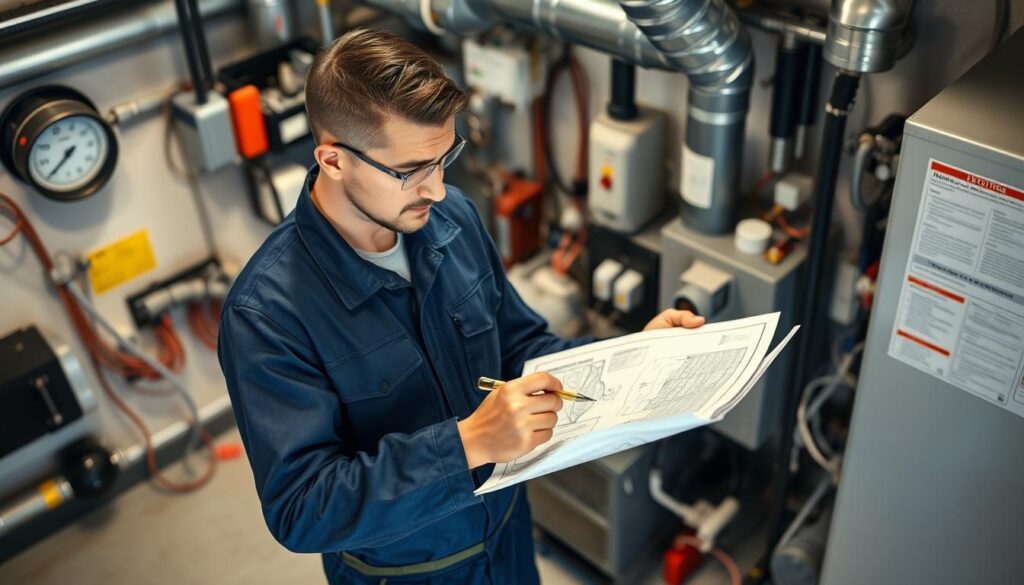
Being an HVAC technician is more than just fixing air conditioners. These experts install, maintain, and fix complex systems in homes, offices, and factories. They are key problem solvers.
The need for skilled HVAC technicians is rising as buildings get more advanced. This career offers job security, good pay, and chances to move up in different fields.
Key Takeaways
- HVAC technicians manage critical climate control systems
- Career offers diverse work environments
- Technical skills and problem-solving are essential
- Growing industry with strong job prospects
- Opportunities for specialization and advancement
Table of Contents
What is an HVAC Technician
An HVAC technician is key to keeping places comfy. They work in homes, offices, and factories. Their job is to make sure heating, cooling, and air systems work right.
This job is exciting and tough. It needs tech skills and the ability to solve problems. You’ll make sure people stay comfortable and safe by managing systems well.
Core Responsibilities and Duties
HVAC techs do many important things every day:
- Install new heating and cooling systems
- Do regular system checks
- Find and fix mechanical and electrical issues
- Fix or replace parts as needed
- Check how well systems work
Types of HVAC Systems Handled
| System Type | Primary Function | Common Applications |
|---|---|---|
| Central Air Conditioning | Cooling entire buildings | Homes, offices, commercial spaces |
| Heat Pumps | Heating and cooling | Residential and light commercial |
| Refrigeration Units | Temperature control for perishables | Restaurants, warehouses, food processing |
Work Environment Overview
Your job can take you to many places. You might work in a house one day and a big factory the next. It’s a job that requires physical effort, like climbing and lifting. You’ll also work outside in all kinds of weather.
HVAC techs need to be flexible, pay attention to details, and keep learning. This field is always changing.
Explore Our HVAC Shop
Looking for top-rated HVAC tools, parts, and accessories? Visit our shop and find the perfect solution for your needs.
Visit the ShopHVAC Technician Career Opportunities in Today’s Market
The HVAC industry is booming with career chances for skilled workers. Buildings are getting more complex, and saving energy is key. This means more jobs for HVAC service technicians across the U.S.
Here are some career paths you could take:
- Residential HVAC installation and maintenance
- Commercial systems engineering
- Industrial climate control specialist
- Energy efficiency consulting
HVAC technician salaries vary based on your skills and experience. Beginners start around $40,000 a year. Experienced pros can make up to $75,000 or more in big cities.
Where can you find HVAC jobs? Look in:
- Construction companies
- Mechanical contractors
- Equipment manufacturers
- Government agencies
- Educational institutions
New tech like smart homes and green energy opens doors for creative HVAC pros. Keeping up with new tech can boost your career in this fast-changing field.
The U.S. Bureau of Labor Statistics projects a 13% growth in HVAC technician jobs through 2028, faster than the average for all occupations.
By getting specialized skills and keeping certifications, you can thrive in this exciting field.
Explore Our HVAC Shop
Looking for top-rated HVAC tools, parts, and accessories? Visit our shop and find the perfect solution for your needs.
Visit the ShopEssential Skills and Qualifications Required
To be a top HVAC technician, you need both technical skills and personal traits. Your path in this field requires a wide range of abilities. Whether you aim to be an HVAC installation expert or improve your repair skills, knowing the essential qualifications is key.
Technical Skills for Professional Excellence
Your technical skills are the base of your HVAC career. Important skills include:
- Electrical system diagnostics and repair
- Blueprint reading and interpretation
- Advanced troubleshooting techniques
- Precision equipment calibration
- Understanding refrigeration cycles
- Proficiency with specialized HVAC tools
Soft Skills that Drive Success
Knowing technical stuff is not enough. HVAC pros stand out with their soft skills:
- Strong problem-solving abilities
- Excellent customer communication
- Time management expertise
- Adaptability in diverse work environments
- Attention to detail
- Patience and professional demeanor
Physical Requirements and Personal Capabilities
The HVAC world needs physical strength. Your ability to meet these needs will affect your success in repair and installation:
- Ability to lift heavy equipment (up to 50 pounds)
- Comfortable working in confined spaces
- Good physical stamina
- Excellent hand-eye coordination
- Flexibility to work in various weather conditions
By mastering these skills, you’ll become a leading HVAC installation specialist. You’ll be ready to handle tough challenges in the field.
Educational Path to Becoming an HVAC Technician
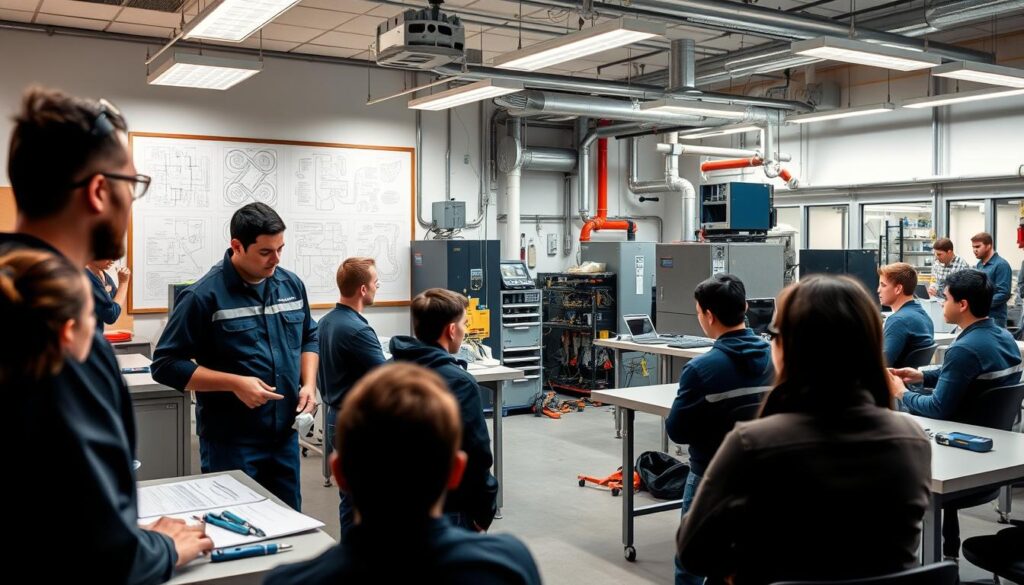
Starting a career as an HVAC technician needs a clear educational plan. Your path begins with a strong base of knowledge and skills.
To start your HVAC technician journey, follow these key steps:
- Get a high school diploma or GED
- Join a vocational training program
- Do pre-apprenticeship training
- Take an apprenticeship program
Your education will include special training programs. These mix classroom learning with real-world practice. Technical schools and community colleges have detailed HVAC programs. They teach you about heating, ventilation, and air conditioning systems.
What you’ll learn in these programs includes:
- Electrical systems basics
- Refrigeration technology
- System design and installation
- HVAC equipment maintenance
- Safety rules and laws
Apprenticeships are key for your HVAC career. They last 3-5 years and let you work and learn at the same time. You’ll get hands-on experience and recognized skills that make you stand out.
Investing in your HVAC education is the first step toward a rewarding technical career with significant growth.
HVAC Certification and Licensing Requirements
Understanding HVAC technician certification can be tricky. But knowing the requirements is key to your success. To become a licensed HVAC pro, you need to follow several steps and earn important credentials.
Getting certified as an HVAC technician involves several key steps. These steps show your skills and dedication to the field.
Required Certifications for HVAC Professionals
To be seen as a qualified HVAC tech, you must get a few important certifications:
- EPA Section 608 Certification (needed for working with refrigerants)
- NATE (North American Technician Excellence) Certification
- Refrigeration Service Engineers Society (RSES) Certification
State-Specific Licensing Requirements
HVAC certification rules change by state. You must:
- Look up your state’s licensing board rules
- Finish the needed educational hours
- Pass exams required by your state
Each state has its own rules, so it’s vital to check your local laws.
Continuing Education Requirements
To keep your HVAC certification, you must keep learning. Most states require:
| Certification Level | Annual CE Hours | Typical Topics |
|---|---|---|
| Entry-Level | 4-8 hours | Safety, Basic Technology |
| Intermediate | 8-16 hours | Advanced Systems, Energy Efficiency |
| Advanced | 16-24 hours | Specialized Technologies, Management |
Keeping up with industry standards keeps your HVAC technician certification current. It shows your commitment to being the best.
Explore Our HVAC Shop
Looking for top-rated HVAC tools, parts, and accessories? Visit our shop and find the perfect solution for your needs.
Visit the ShopHVAC Technician Salary and Benefits

Thinking about becoming an HVAC technician? It’s important to know what you can earn. The salary for HVAC technicians changes a lot based on several key factors.
At first, HVAC techs make between $35,000 and $45,000 a year. But, as you get more experience and skills, your salary can go up a lot. Experienced techs can make between $55,000 and $85,000 annually.
Factors Influencing HVAC Technician Earnings
- Geographic location
- Years of experience
- Specialized certifications
- Industry sector
- Advanced technical skills
Getting more qualifications can really help your salary. Specialized certifications can increase your salary by 10-20%. Techs in big cities or industrial areas usually make more than those in rural areas.
| Experience Level | Typical Salary Range | Potential Bonus |
|---|---|---|
| Entry-Level | $35,000 – $45,000 | $1,000 – $2,500 |
| Mid-Career | $55,000 – $70,000 | $2,500 – $5,000 |
| Senior Technician | $75,000 – $85,000 | $5,000 – $10,000 |
“Investing in your skills is the fastest way to increase your HVAC technician salary” – Industry Expert
HVAC techs also get great benefits. These include health insurance, retirement plans, and paid vacation. Some employers even give bonuses and help with tools and training.
Career Advancement and Specialization Options
The HVAC industry is full of exciting opportunities for growth. As an HVAC installation specialist, you can turn your skills into a fulfilling career. This career path is dynamic and rewarding.
Your career in HVAC maintenance can grow in many ways. This opens up chances to boost your status and earnings.
Advanced Career Paths
There are several ways to grow in the HVAC field:
- Becoming a senior technician with specialized skills
- Moving into supervisory or management roles
- Starting your own HVAC business
- Seeking training and consulting jobs
Specialization Areas
The industry offers many areas for specialization:
- Commercial Refrigeration – Managing complex systems
- Industrial HVAC systems
- Energy efficiency consulting
- Smart home technology integration
Industry Growth Opportunities
New technologies and green trends are creating niches for HVAC pros. These include green energy, smart buildings, and advanced climate control. These areas offer great chances for career growth.
The future of HVAC careers is bright, with continuous learning and adaptability being key to success.
Explore Our HVAC Shop
Looking for top-rated HVAC tools, parts, and accessories? Visit our shop and find the perfect solution for your needs.
Visit the ShopDay-to-Day Responsibilities and Challenges
Being an HVAC service technician is more than just fixing heating and cooling systems. You’ll face many challenges that test your technical skills and problem-solving abilities every day.
Typical work responsibilities include:
- Responding to emergency service calls
- Performing routine system maintenance
- Diagnosing complex mechanical issues
- Installing new HVAC equipment
- Conducting detailed system inspections
It’s not just about knowing how to fix things. You’ll also need to manage your time well, talk clearly with customers, and work in tough conditions. Some days, you might find yourself in tight spaces, on rooftops, or dealing with extreme temperatures.
Essential skills for success include:
- Physical stamina to handle demanding physical work
- Strong diagnostic capabilities
- Customer service communication
- Adaptability to changing work conditions
Safety is a big part of your job. You’ll use special tools, follow strict safety rules, and keep learning about new HVAC technologies.
Conclusion
Starting a career as an HVAC technician is exciting. It opens doors to a world where you play a key role. You’ll help keep places comfortable and safe for everyone.
To become an HVAC technician, you need to take a few steps. First, get the right education. Then, get hands-on experience. You’ll also need certifications and skills in working with people.
The HVAC field is full of chances for growth. You can earn good money and choose from many areas to work in. This career is perfect for those who love solving problems and working with technology.
Investing in your skills will make you stand out. You’ll be ready for new technologies and challenges. Being an HVAC technician means you’ll make a real difference in people’s lives every day.